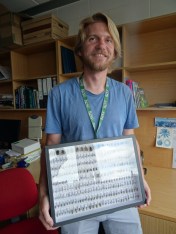
Hauke & collection of Kew bees
13/08/2019 8:56 pm
Hauke & collection of Kew bees
By: Michael Fox
Passionate about native bees with a love of sharing his knowledge Dr Hauke Koch PHD was a generous host for my personal tour of Kew Gardens solitary Bee Homes.
Hauke explained that his research focuses on bee microbiome: complex combination of of microorganisms found in plants and animals, including microbial parasites and the bacterial gut microbiota. He is looking at ways of improving native bee health by understanding the food value of pollen and nectar of different plants while reducing risk of parasite attack.
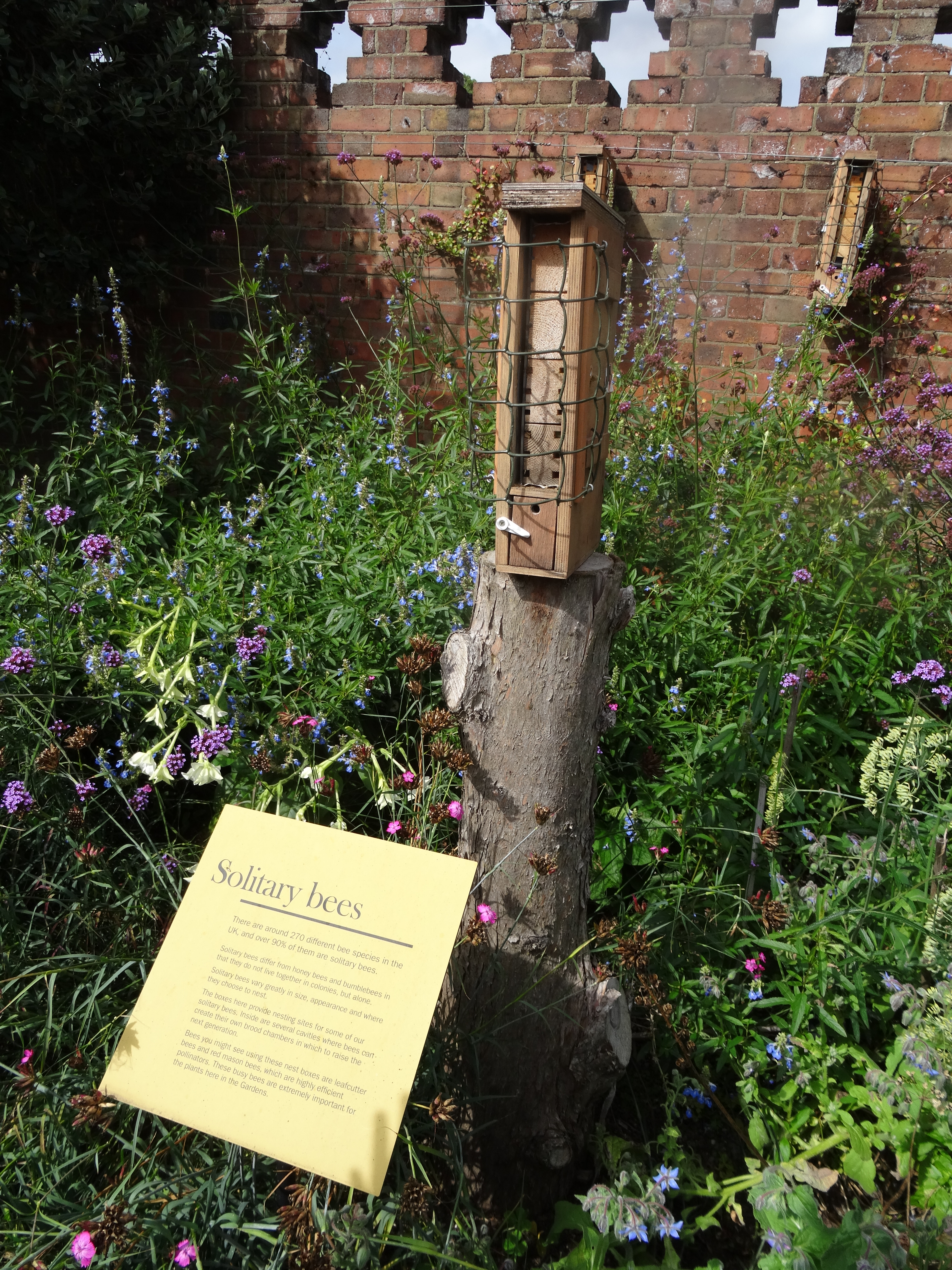
Solitary Bee Homes
Solitary nesting and the diversity of native bee species: around 240 species in UK and over 2,000 solitary Bee species in Australia, mean that these valuable pollinators are less likely to be impacted by diseases the way European Honey bees have been.
.
.
.
.
.

Observation window open
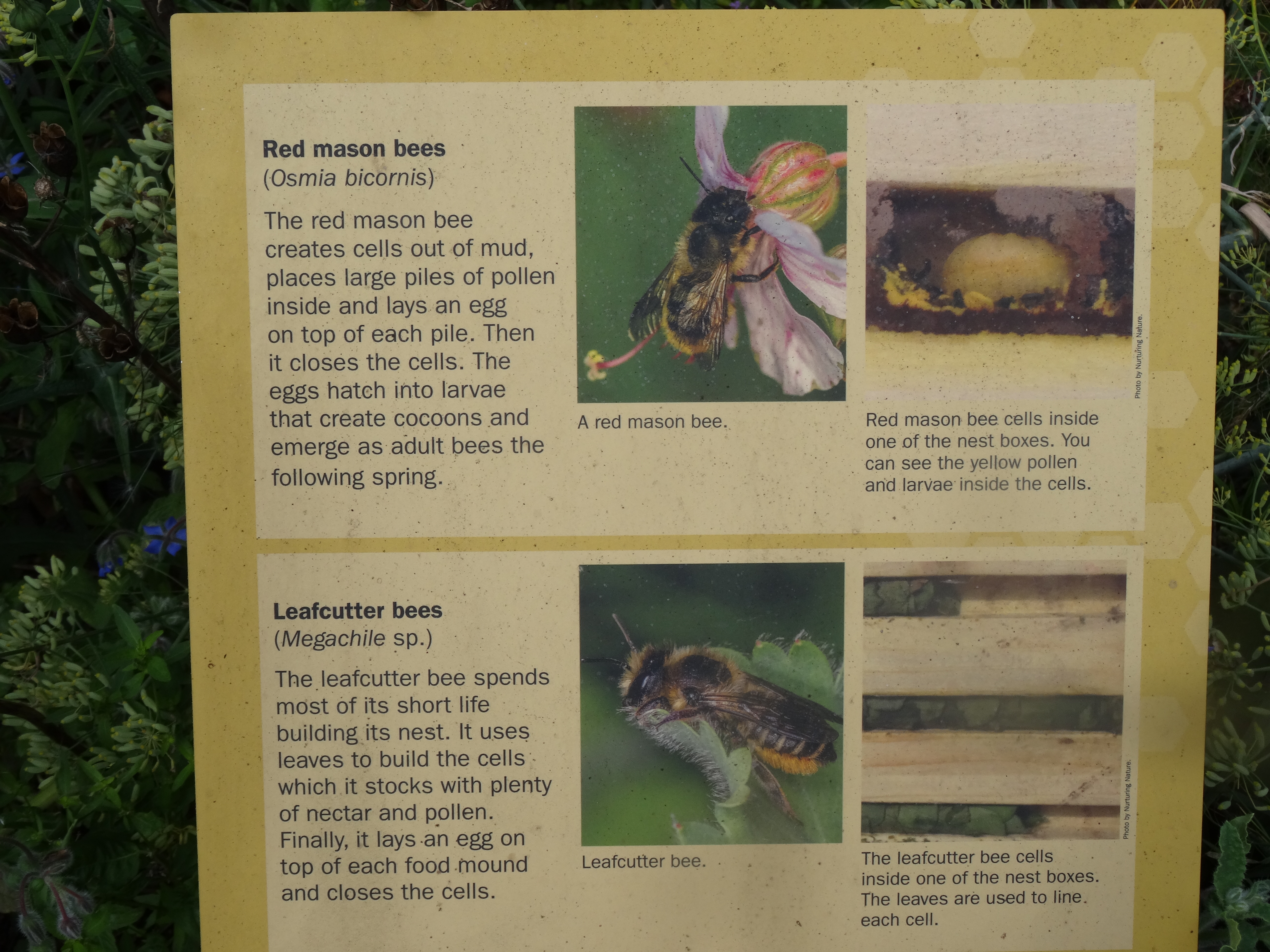
Removing the panel from the side allows the nesting activity to be monitored. Top orange rows are resin bee nests and the lower green rows are leaf-cutter bee nests.
The female bee prepares a nest then fills it with nectar and pollen before an egg is laid and nest is sealed. Another nest is then prepared.
The 150 to 170mm depth of the nest tunnels is vital because the female eggs are laid first then male eggs are laid close to the entry. If the tunnel is too short only a few female eggs will be laid before male eggs are laid to fill the tunnel.
.
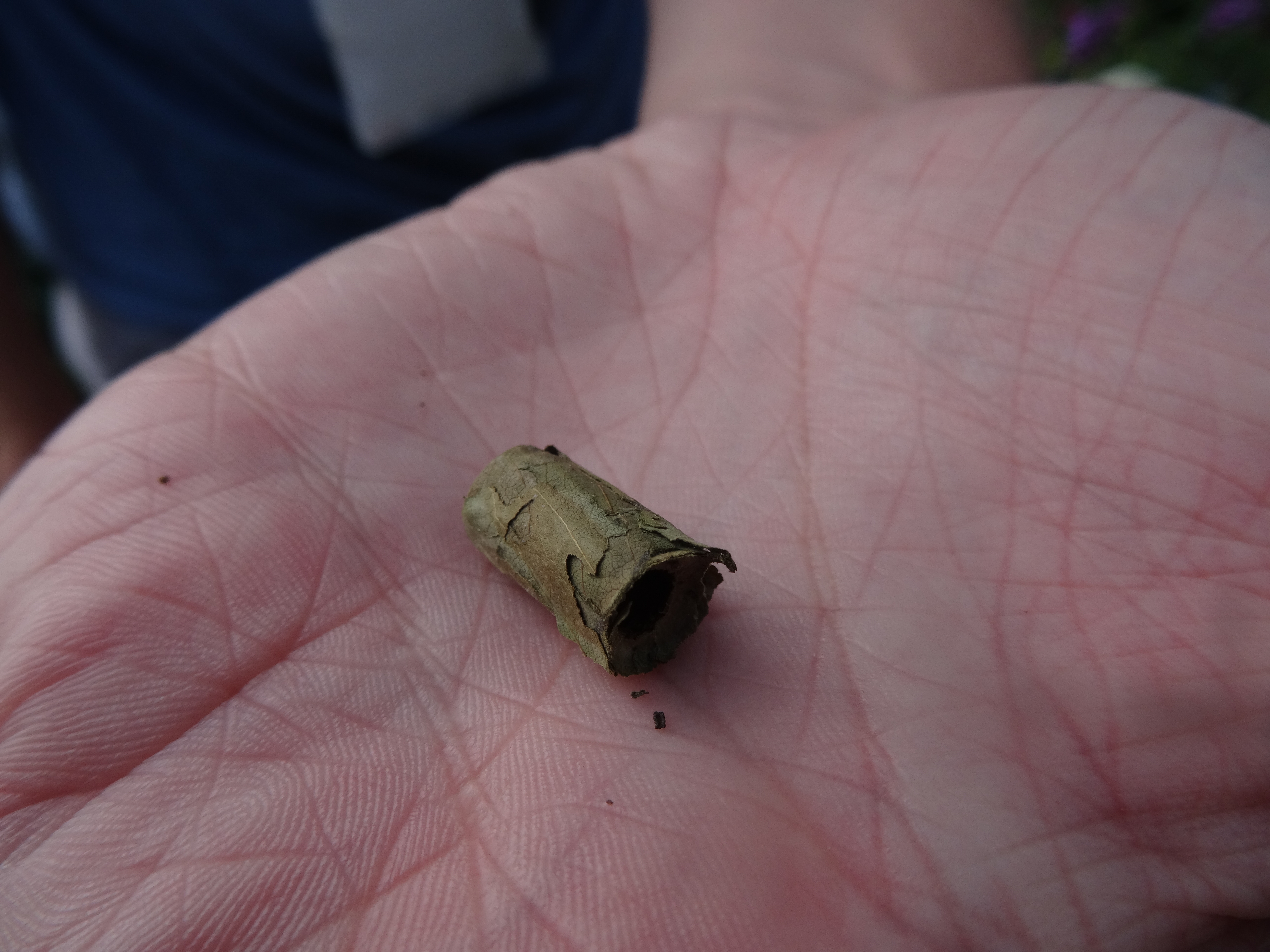
Neatly rolled leaf-cutter nest
.
Leaf-cutter bee nests are made by rolling sections of leaves cut from plants like roses or ginger. The cigar shaped nest is filled and sealed.
.
.
.
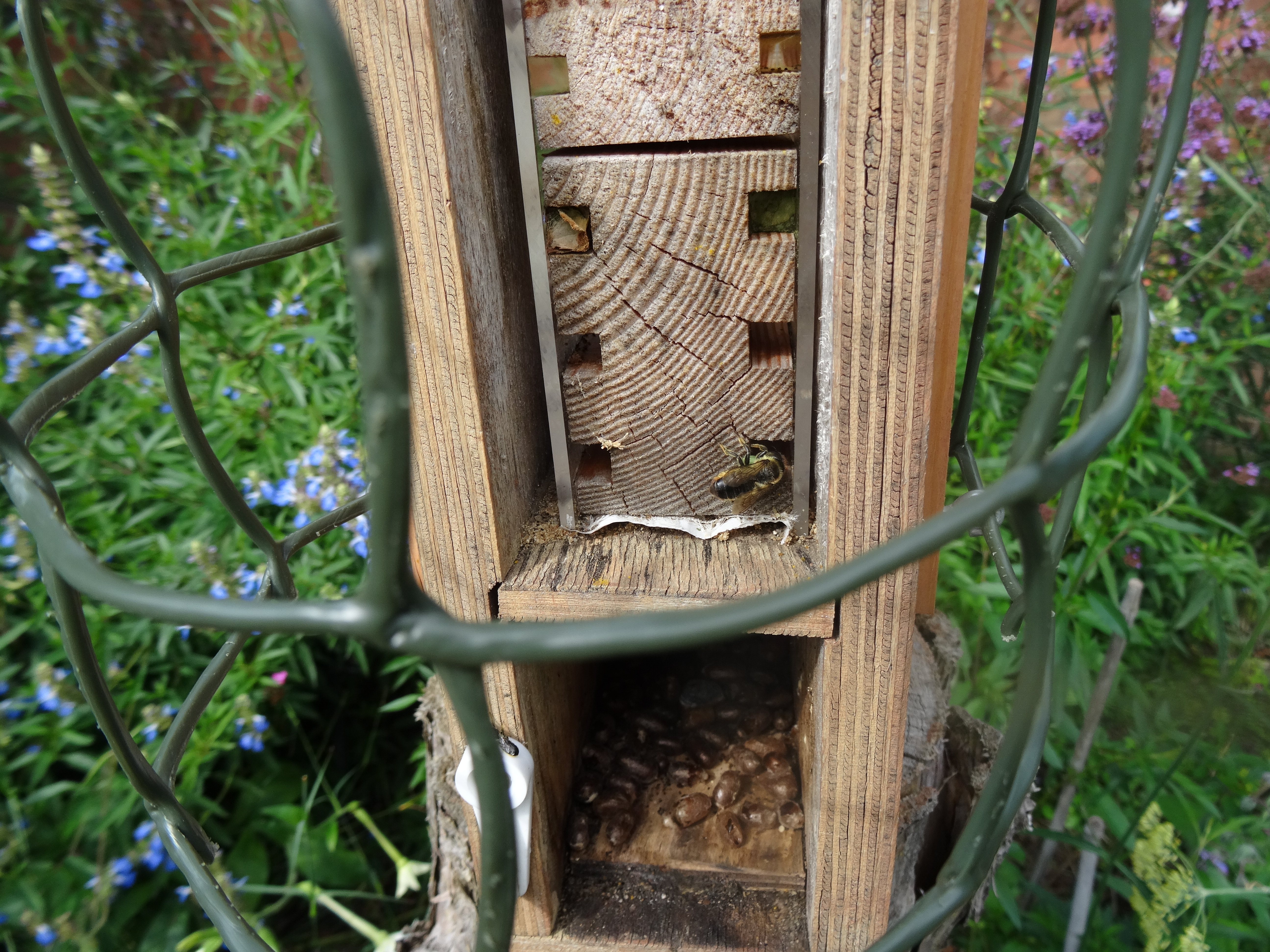
Modular units
The Bee Homes are made with removal modular units that allow for different sizes for different bees and facilitate cleaning with soapy water at end of the season. Cleaning reduces risk of parasites building up in Bee Homes.
The cage around the entry keeps woodpeckers from attacking the nest tunnels.
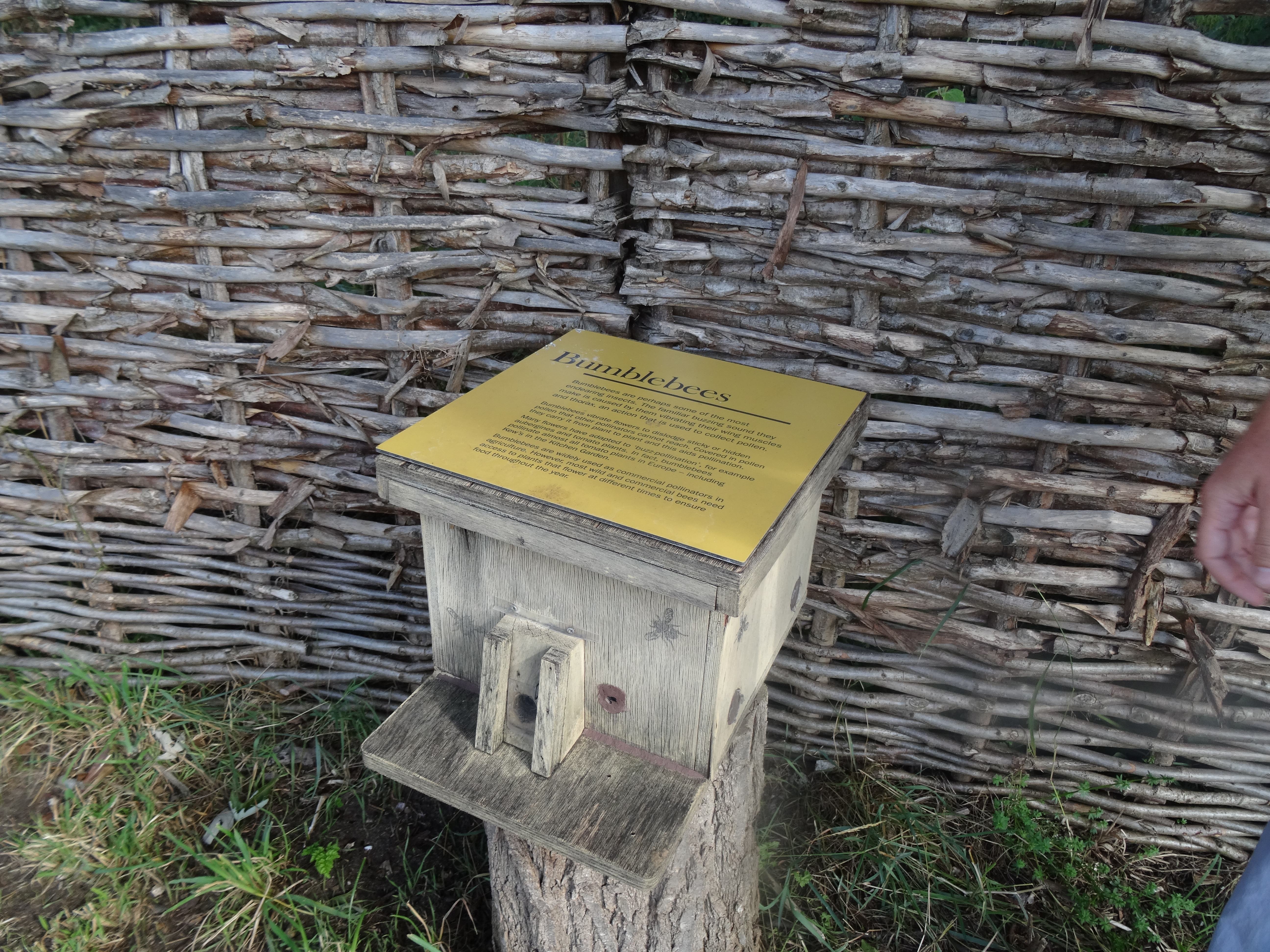
Bumble Bee nest box
.
One thing I didn’t realise is that Bumble Bees are actually social bees even though they don’t create hives and make honey.
.
.
.
.
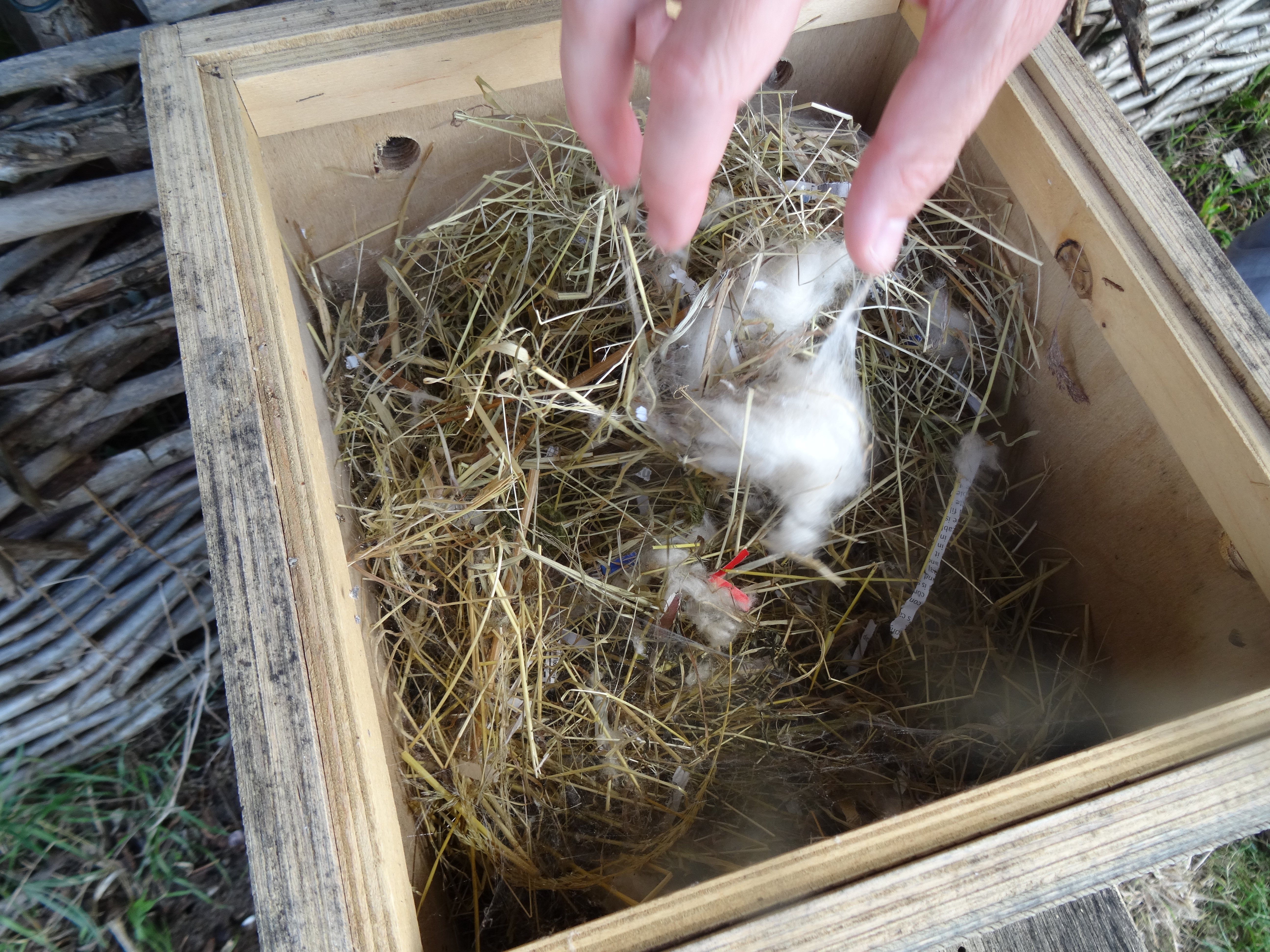
Grass and wool is used by Bumble Bees for nesting materials.
A number of Bumbles Bees will nest together in the one box using grass and wool to create nests.
.
.
.
.
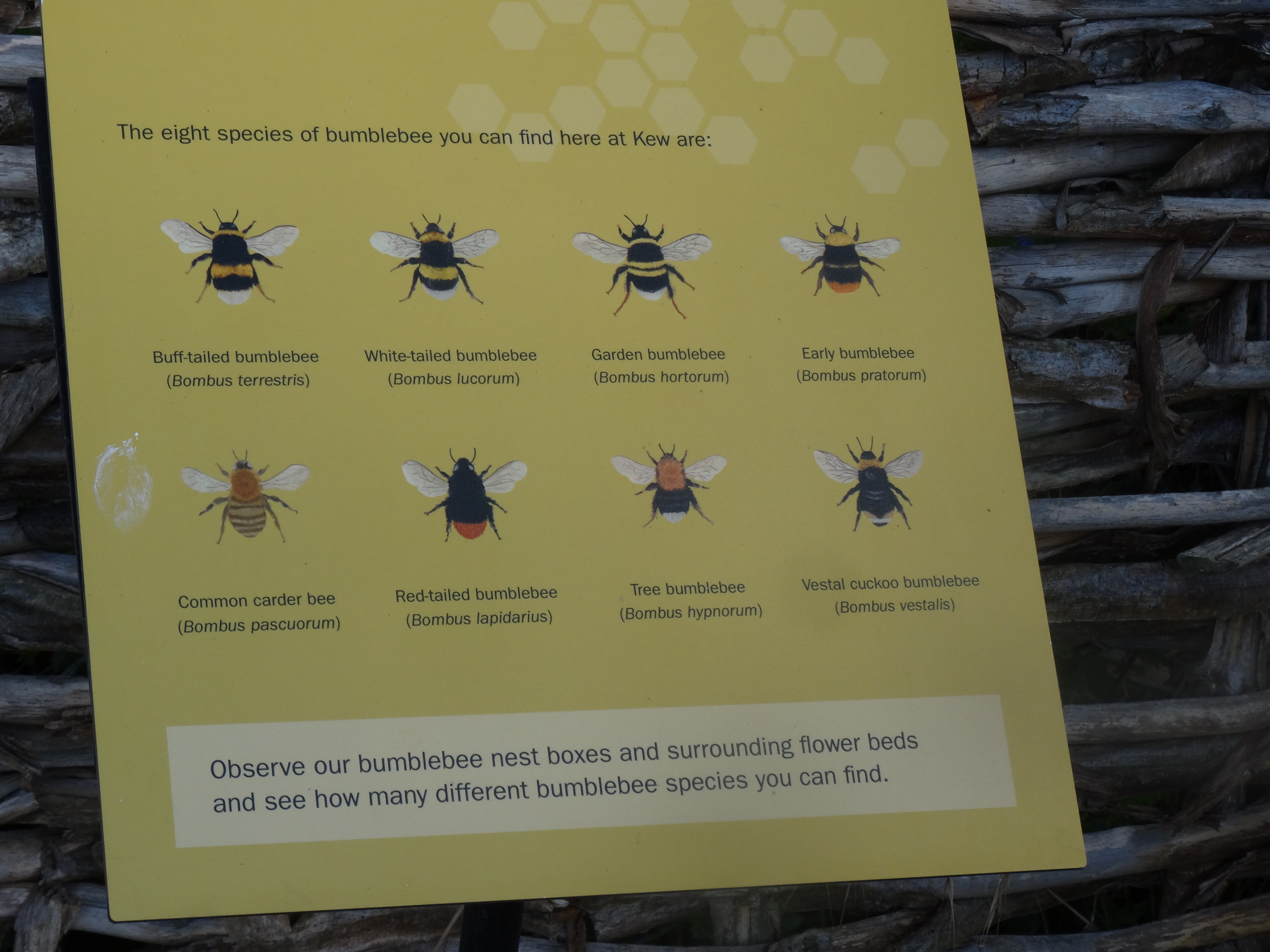
Bumble Bee species of Kew
Kew Gardens support eight species of Bumble Bees.
.
.
.
.
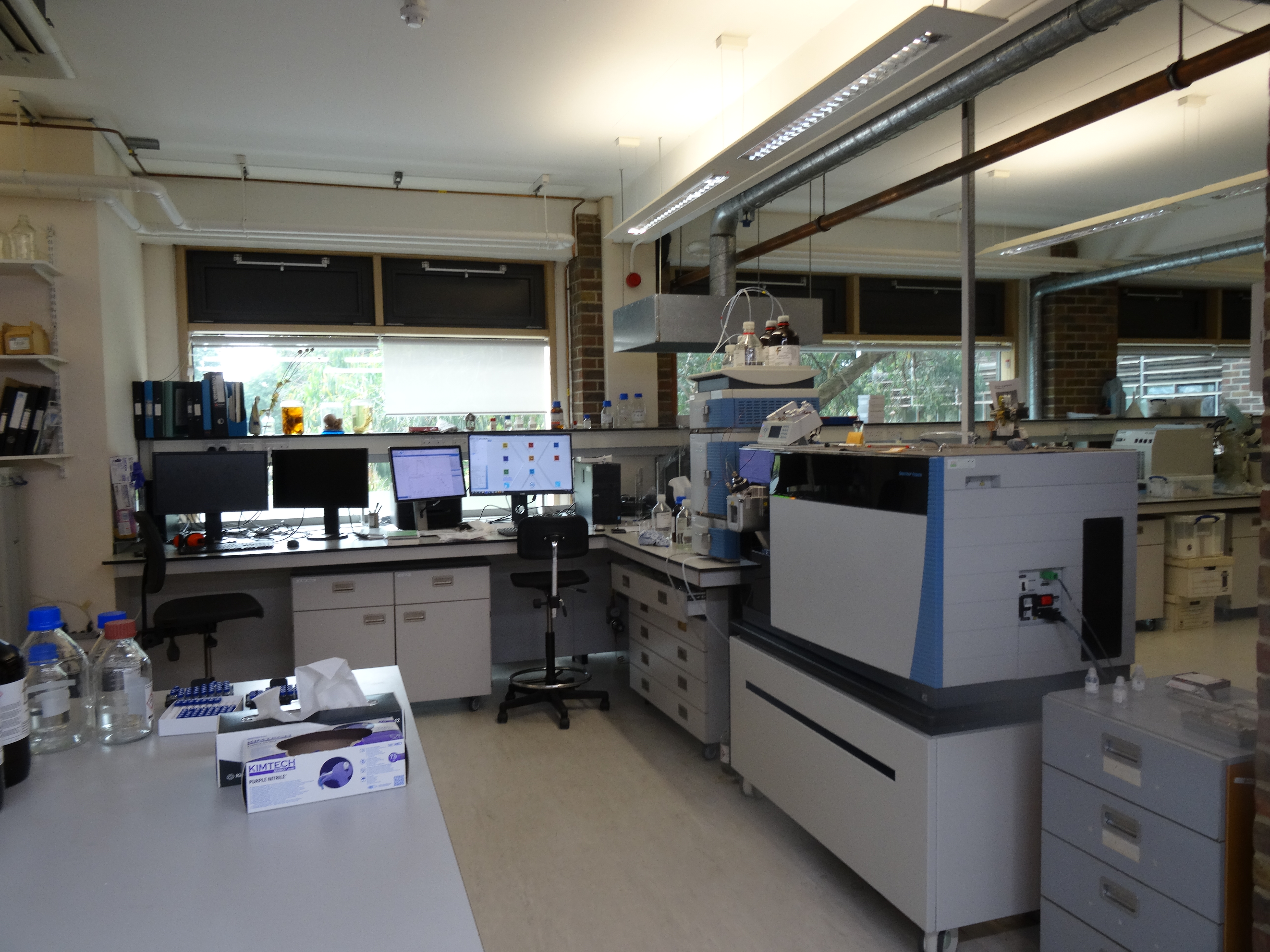
Kew research laboratory
Hauke also took me on a tour of the sophisticated laboratory used by researchers.
.
.
.
.

Solitary Bees found in Kew
Another surprise was the number of solitary bees that are tiny. I told Hauke that I have identified eight solitary bee species in Mt Gravatt Conservation Reserve including the beautiful Green Carpenter Bee Xylocopa (Lestis) aeratus. Hauke pointed out that there are probably a lot more to identify because so many species are tiny.
Thank you to Dr Hauke Koch PHD for your generous sharing of your time and research.
Posted by Mt Gravatt Environment Group
Categories: Bees, Pollinator Link
Tags: bee homes, bee hotels, bumble bees, Dr Hauke Koch PHD, Green Carpenter Bee Xylocopa (Lestis) aeratus, Kew Gardens, Leaf cutter bees, Mt Gravatt Conservation Reserve, resin bees, solitary native bees
Mobile Site | Full Site
Get a free blog at WordPress.com Theme: WordPress Mobile Edition by Alex King.
Glad you enjoyed the visit. All the best for your projects!
By Hauke Koch on 27/08/2019 at 9:50 pm
Thanks Hauke
I’m meeting with John at MasonBees in Shrewsbury on Monday.
Mike
By Mt Gravatt Environment Group on 28/08/2019 at 12:19 am
Our nest units are from https://nurturing-nature.co.uk/ , maybe drop George Pilkington a message if you haven’t done so already, he might be interested in your work in Australia.
By Hauke Koch on 28/08/2019 at 1:40 am
[…] 1862 Charles Darwin wrote to a friend at Kew [Gardens] “I have just received such a Box full from Mr Bateman with the astounding Angraecum […]
By Hummingbird Hawk Moth | Pollinator Link on 02/05/2020 at 6:58 pm