
By: Michael Fox
June, a stunning winter morning, and the Ausco Modular Team joined us to create a Wildflower Walk in the Mt Gravatt Showgrounds. Four months on and the plants are thriving.
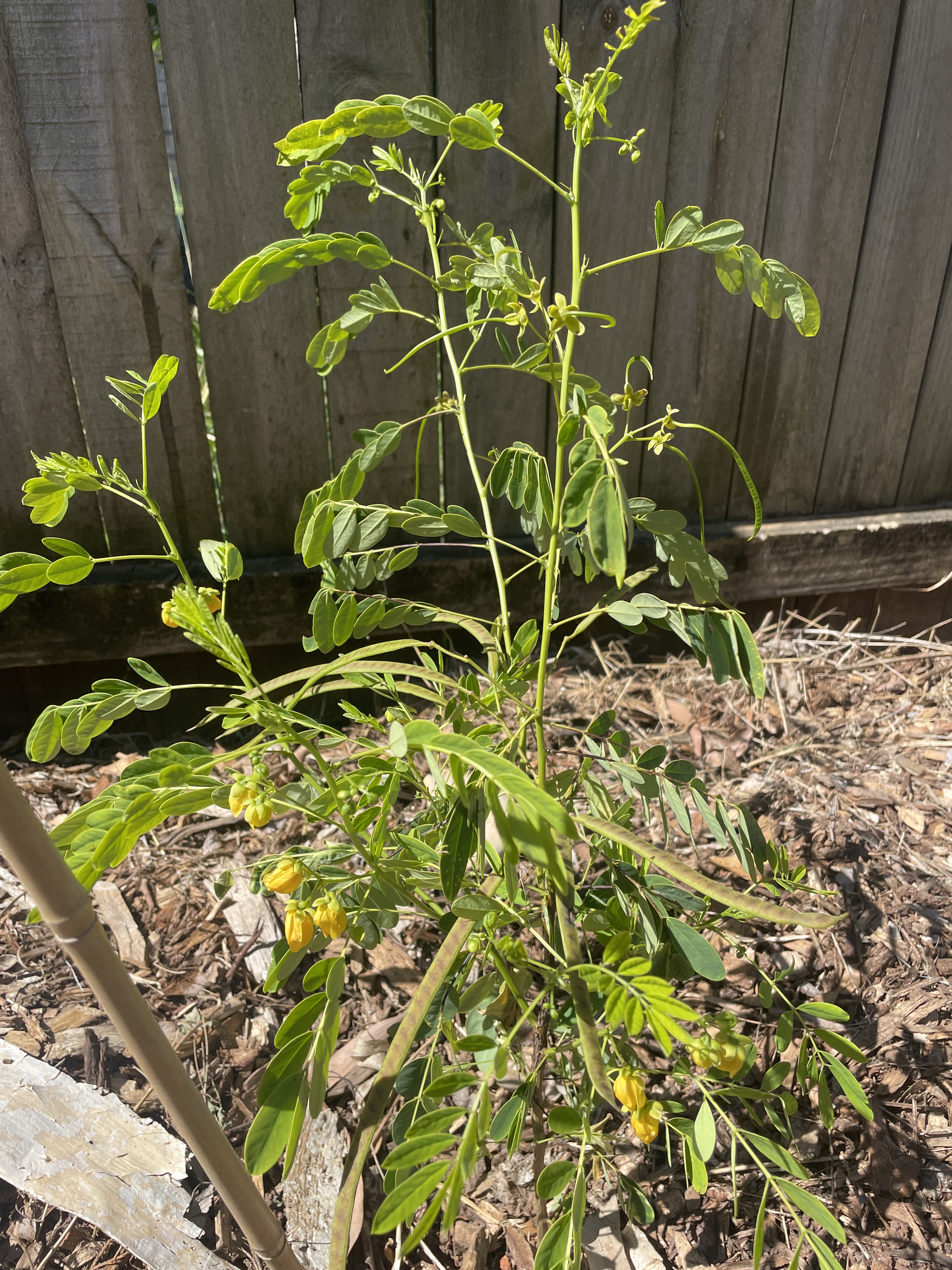

Rainforest Senna Senna acclinis is not only in flower but has also produced seed pods while the Cats’ Whiskers Orthosiphon aristatus is flowering with many more buds ready to bust out.

Swamp Paperbarks Melaleuca quinquenervia have been planted near an area that gets boggy to help soak up the excess water. Two months on and the Melaleucas are now higher than the plant shelters. My experience is that tube stock will out perform larger more expensive plants.
A row of water loving Swamp She-oaksCasuarina glauca was added this time to complement the Melaleucas.
.
.
.


Weeding done and plants in, it’s time for mulch. Damian saved a lot of wheelbarrow work with his end loader then the team dug in spread the mulch around the new plants.
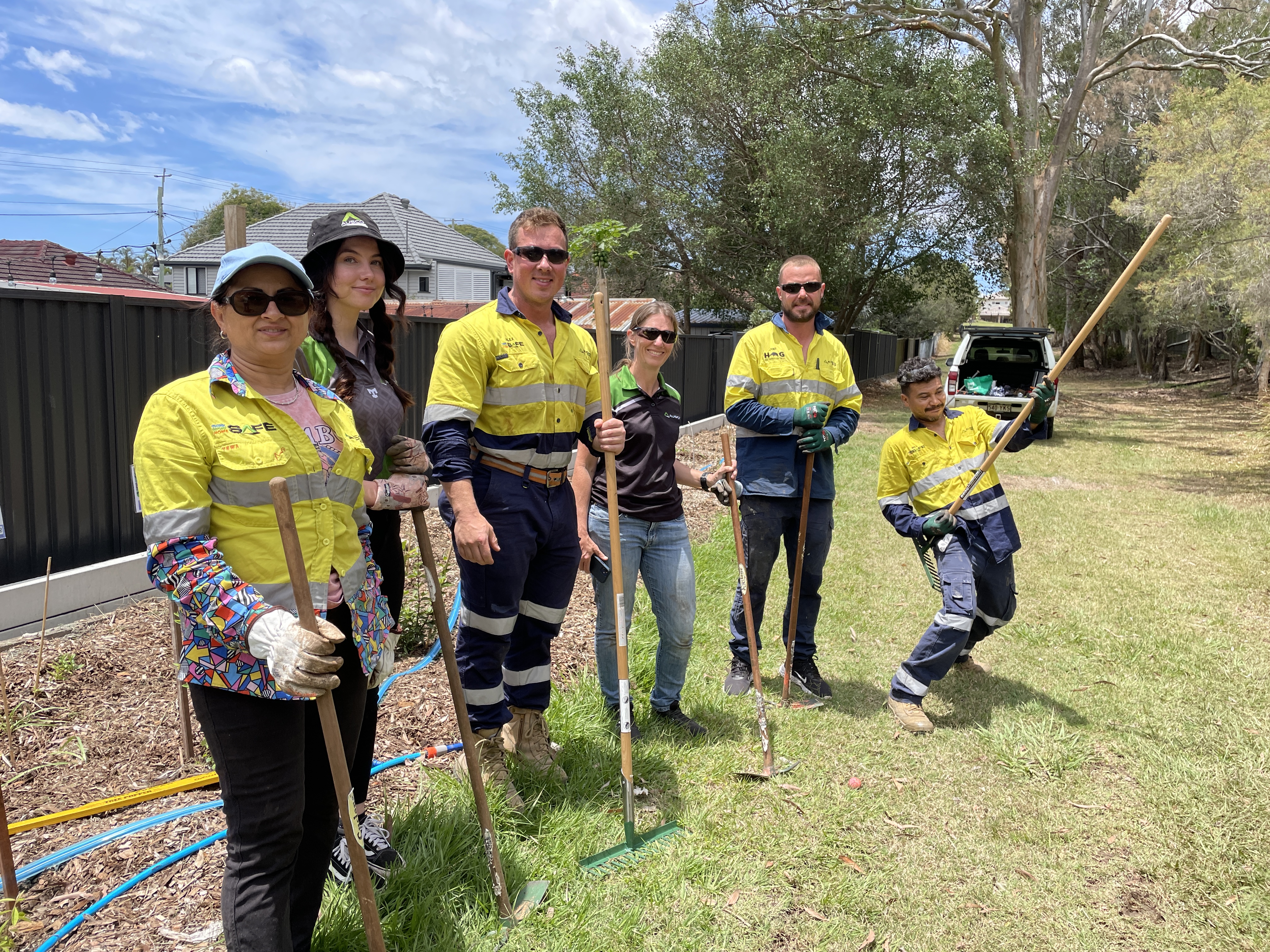
The Ausco team are very proud of their work and … the evidence suggests they had fun.
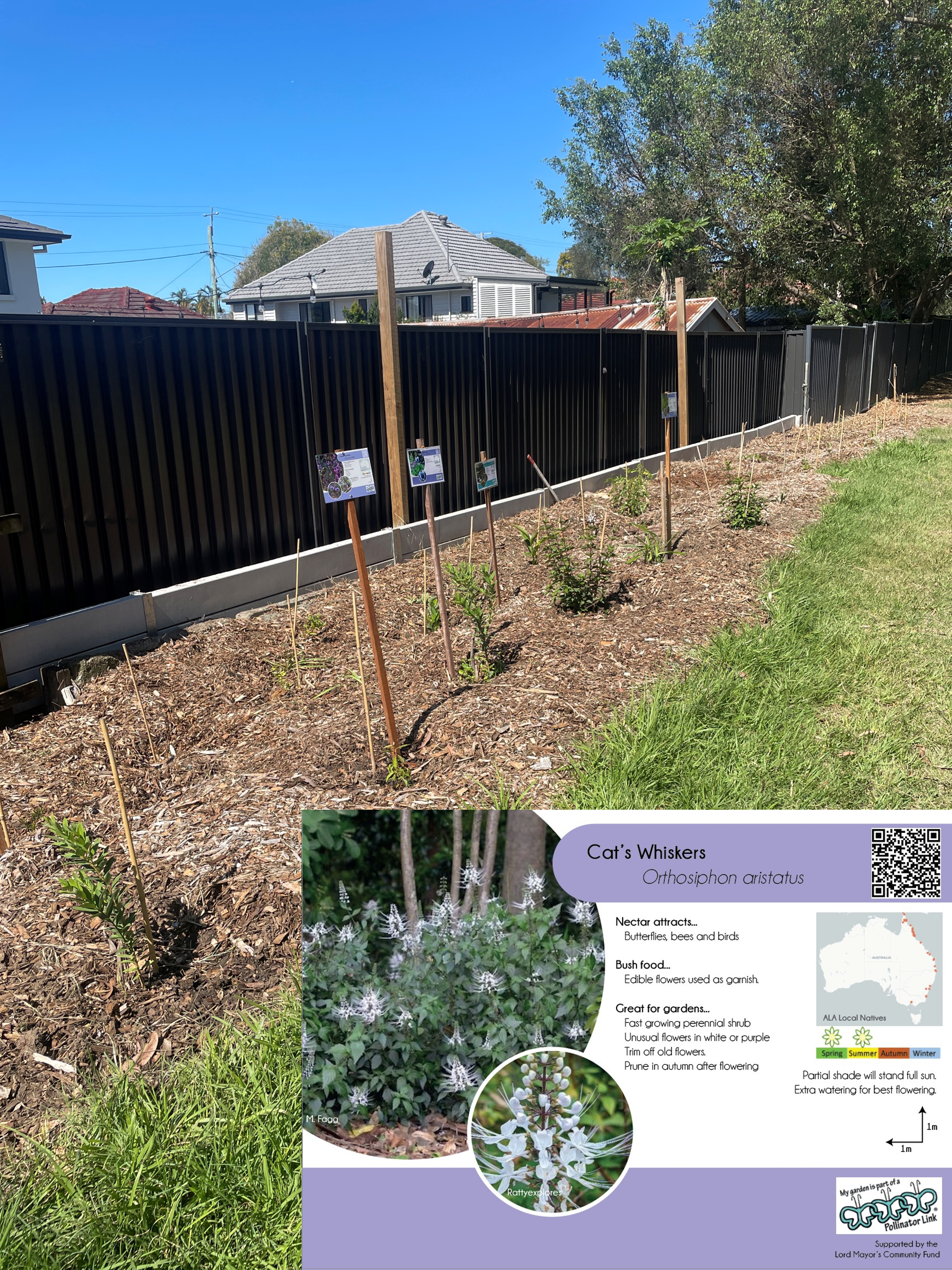
We have started placing our new plant information signs that show people not only what the plants look like but also what butterflies, bee, etc are attracted. Also included is information on use as bush food, where the plant occur naturally and when they flower. The objective is to have plants flowering all year to attract insects as food for insect eating birds.
I am now working with Jenny Winckworth, Sustainability & ESG Lead | Ausco Modular Pty Limited, to plan next year’s events. The Ausco team have a vision of the Wildflower Walk extending right along the fence line, so that is the plan for 2024.







 Pollinator Link
Hello, I recently moved to a house that has gigantic palms in the front yard. Could you help me identify then please. I believe they are exotic and understand palms are not good for our flying foxes and fruit bats. Attached is a photo.
Appreciate your help. Regards Norah
Definitely not a local Norah. From the Americas: Roystonea regia is found in Central America, Cuba, the Cayman Islands, Hispaniola (the Dominican Republic and Haiti), the Lesser Antilles, The Bahamas, southern Florida, and Mexico (in Veracruz, Campeche, Quintana Roo, and Yucatán) https://www.inaturalist.org/taxa/201453-Roystonea-regia
Yes, I think the fruit on these palms will cause similar problems for fruit bats as Cocos Palms https://bats.org.au/wp-content/uploads/2019/05/BCRQ_COCOS_PALMS_13_flyer.pdf … the fruit size is similar.
If you are looking for a local palm you can consider Piccabeen Palm which is local to south east Queensland https://inaturalist.ala.org.au/taxa/83634-Archontophoenix-cunninghamiana