Building community and training the next generation

By: Laurie Deacon15129920_10154296974994825_1418271102_n1

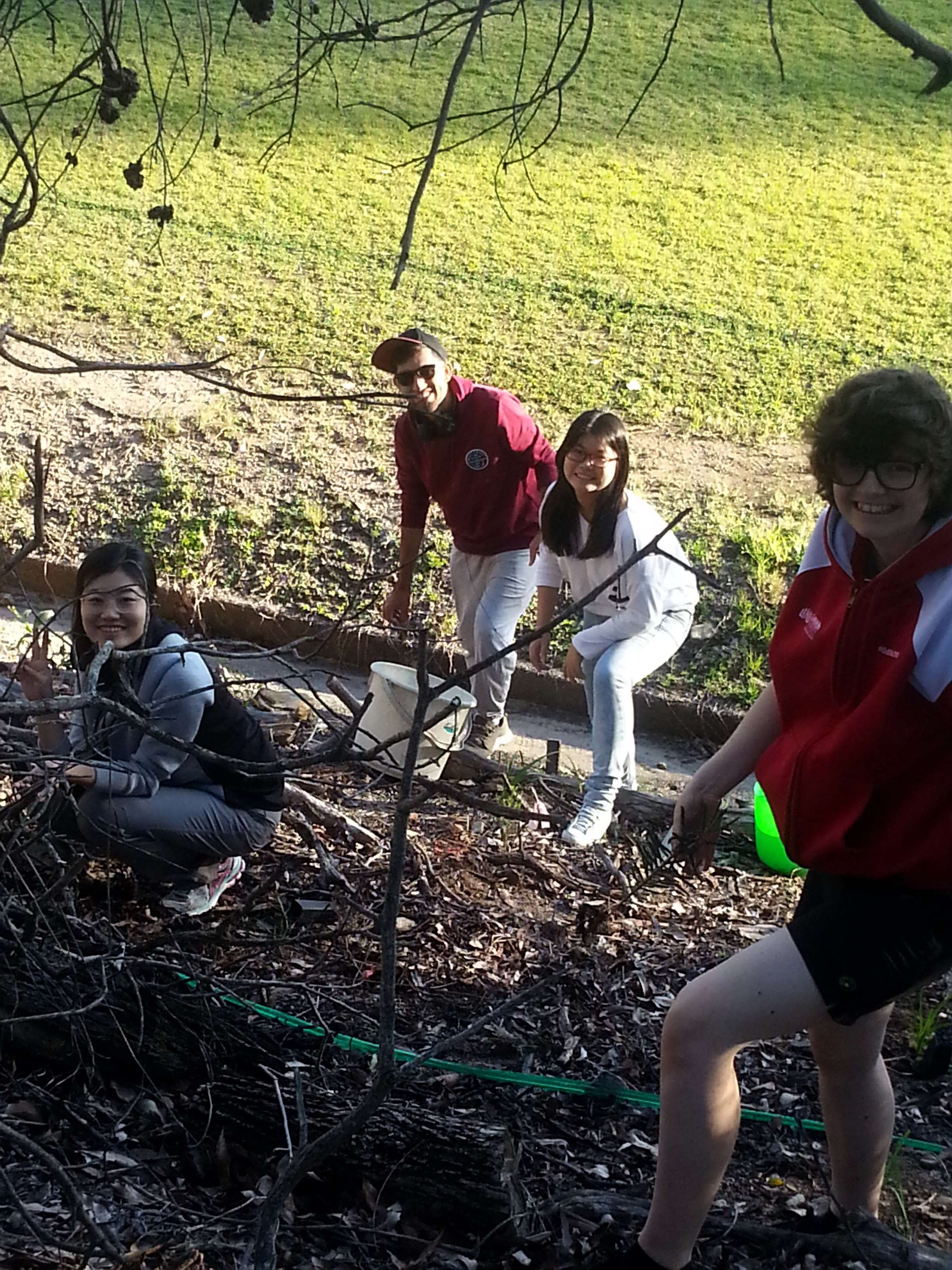
Twelve community members and one dog – 34 hours of volunteer work. It is a real pleasure to be out getting my hands dirty building habitat and building community.

The team were busy setting up irrigation systems for the summer. Planting, weeding, mulching and log stabilisation for the banks is all preparation for our stormy summers: managing erosion and retaining water means the new plants will make the most of the growing season.

15058546_10154296974614825_889295254_n1Education of a two year old on how to plant and use tools safely, as well as, how to keep dog on lead when walking in the bush.

Posted in Wildlife Corridor | Tagged , | 1 Comment

Pollinator Link display for events

By: Michael Fox

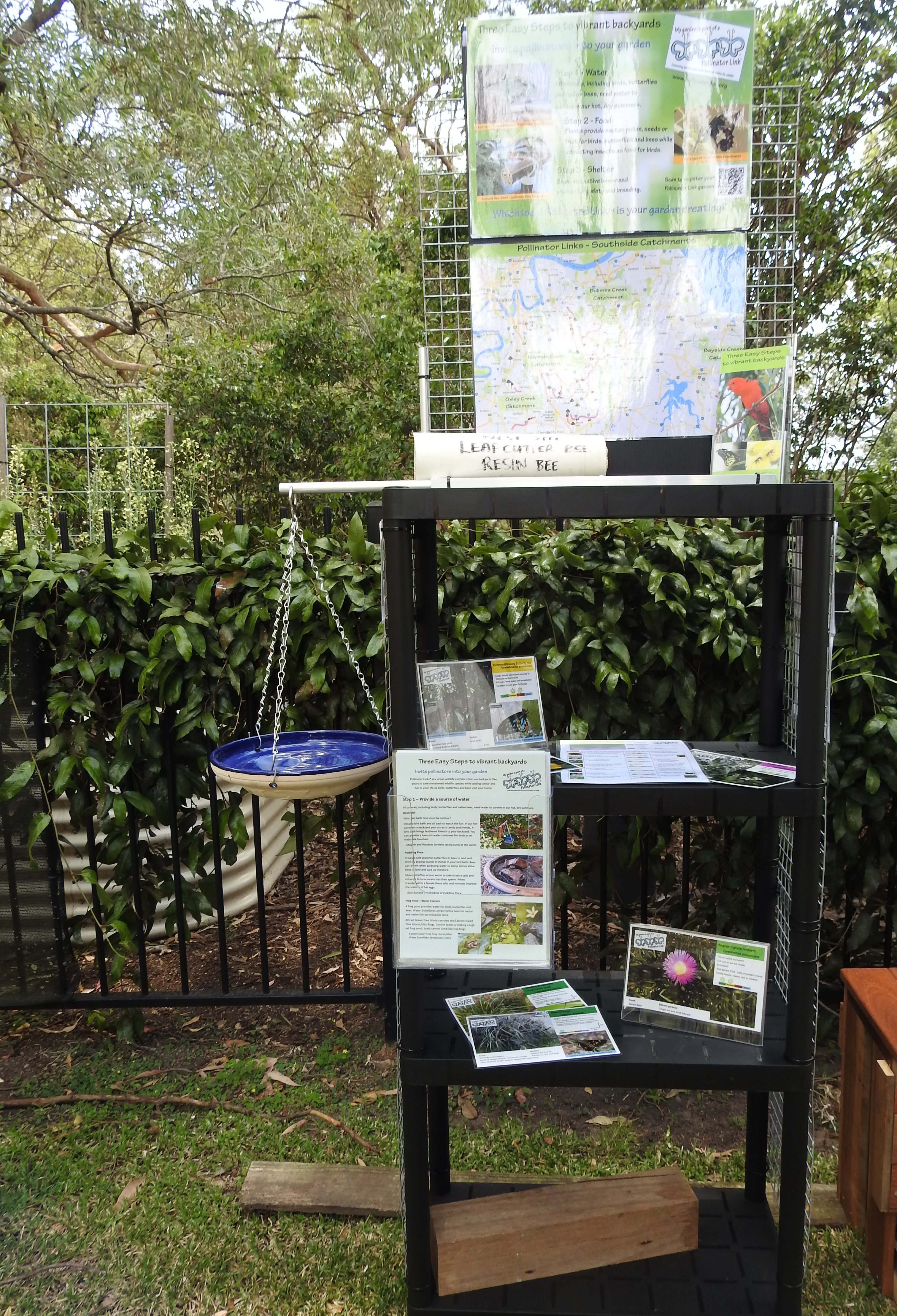
Purpose built portable Pollinator Link® now available for Community Nurseries, catchment groups, Community Gardens, Habitat Brisbane Bushcare events, schools, etc.

.

.

.

.

.

polliantor-link-display-close-3-nov-2016

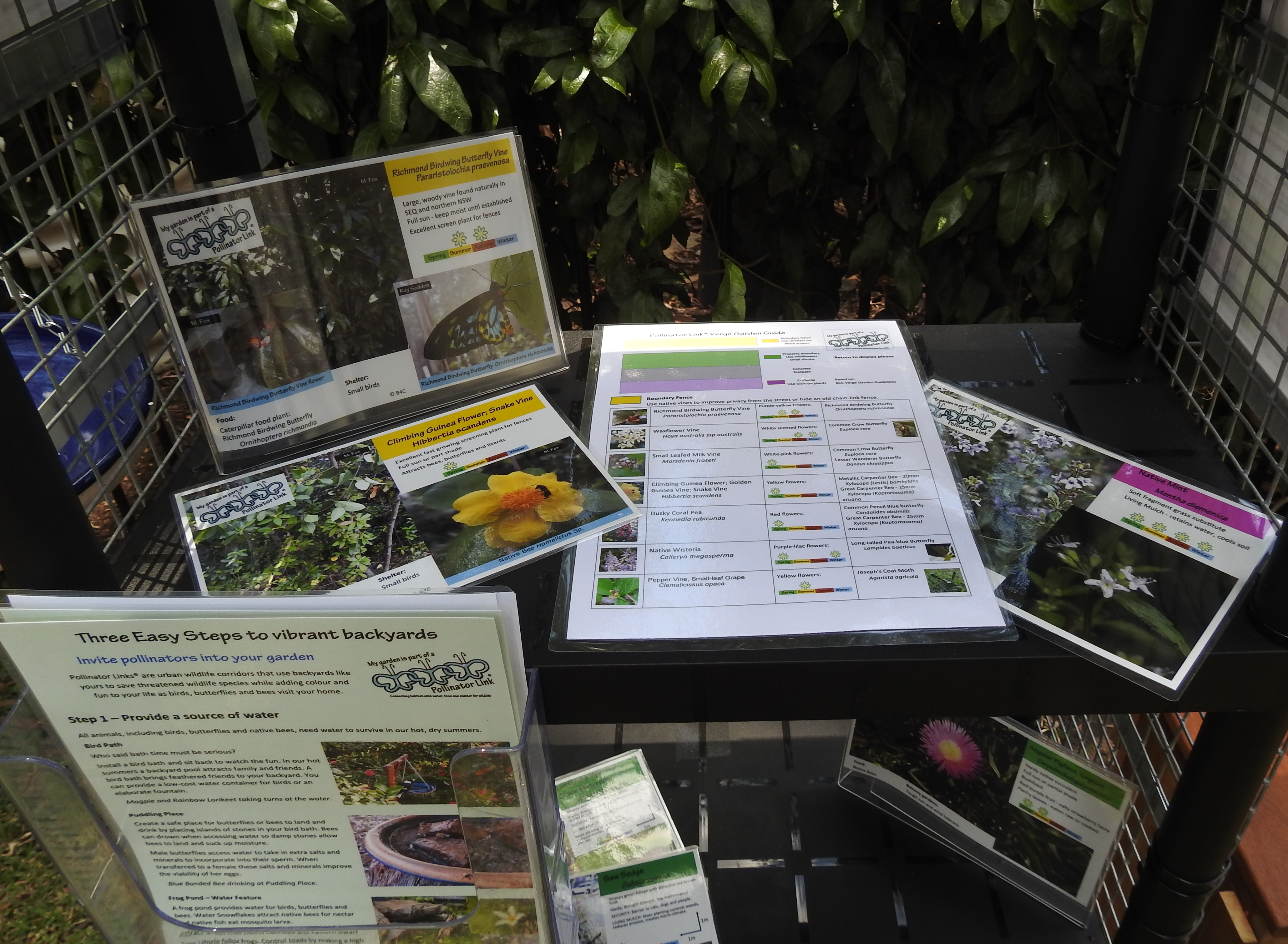
Customise display with laminated signs

The display is lightweight, easily transported and quickly customised with a local Pollinator Link® corridor map and hung with plants available at the Community Nursery or being planted at the Bushcare site.

Customise with Pollinator Link® plant signs to match the plants being sold in the nursery or being planted at the Bushcare site. The plant signs focus on Food and Shelter and include photos of pollinators attracted to each plant.

polliantor-link-display-sprinkler-3-nov-2016

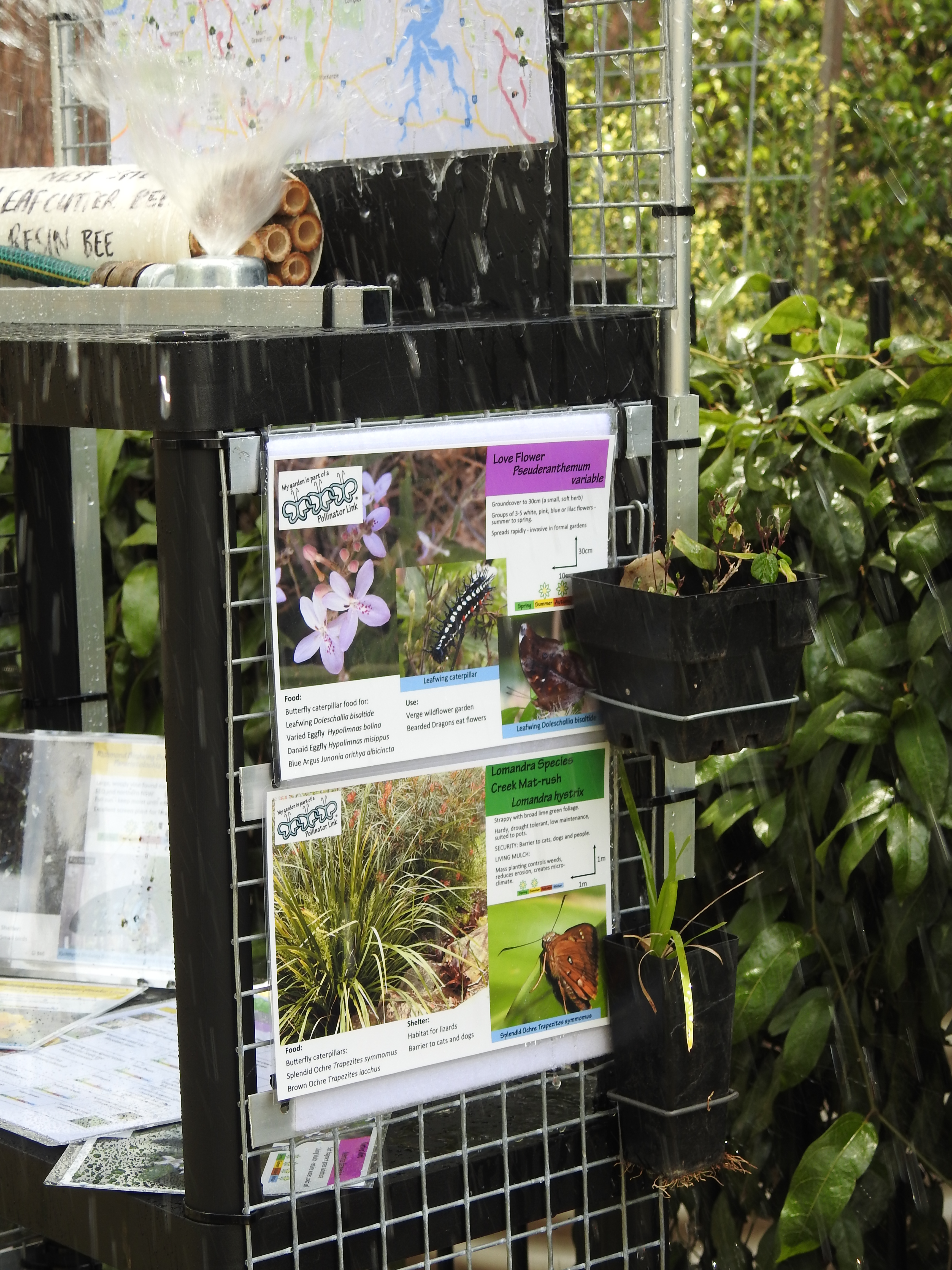
Hang plants and plant / hose as required

What pollinator plants are for sale in your nursery?
Tubestock and spacesaver hangers are available to hang plants you want to promote with relevant sign. Larger pots can be displayed on the shelves.

Of course you will need to water the plants so the display is designed to get wet when plants are watered or if it rains at an event.

Consider talking to your Habitat Brisbane Officer about plants to give away at your Bushcare plantings so participants can start building their Pollinator Link® garden at home.

.

native-wisteria

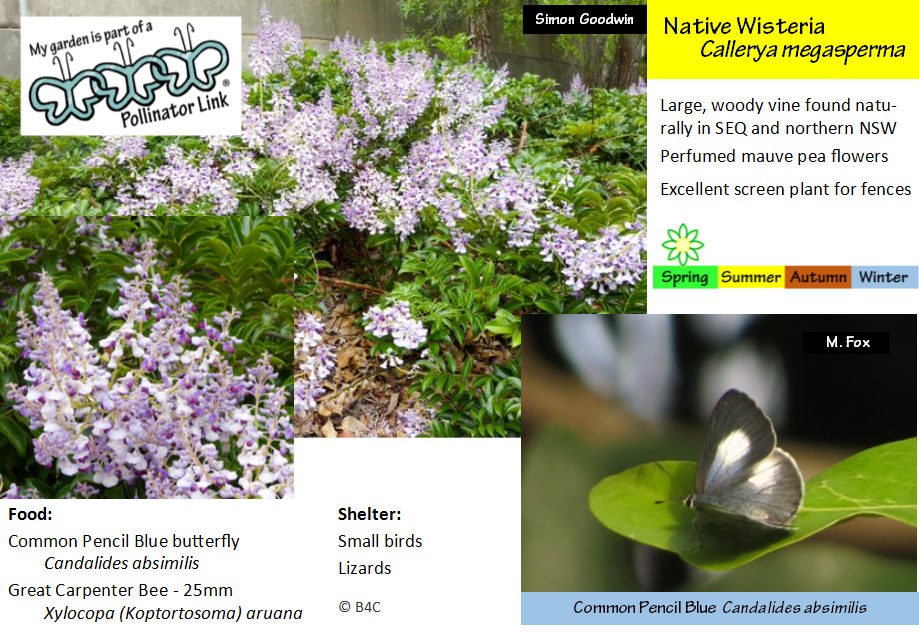
Plant sign Native WisteriaPlants can be provided with the display if required.

Plant signs attach to the display with velcro and are colour coded to help plant selection to suit site, for example, Verge Gardens.

Supported by Bulimba Creek Environment Fund.

Posted in Wildlife Corridor | Tagged , , , , , , | Leave a comment

Griffith Mates return to the garden

Mulching - 14 Aug 2016

Six Pack Ab Group

By: Laurie Deacon

It was a great Sunday afternoon with Griffith Mates students having fun and working with community members at Mt Gravatt SHS Pollinator Link Garden. An interesting mix of students mostly from  China, Korea, Taiwan and India and doing degrees in Business, Finance, Law and Engineering!

.

.

We had four groups operating:

  • Mulching new plants ..or the Six Pack Ab Group J
Weeding - 14 Aug 2016

Weeding Mother-of-Millions

  • Weeding Mother-of-Millions Bryophyllum tubiflorum from the hillside
  • Watering  new plants and setting  up drip irrigation hoses
  • Responsible Dog walking practice in the bush

.

.

.

.

.

Afternoon tea - 14 Aug 2016

Stories and honey cream cakes

.


Sharing stories  and eating honey cream cakes of course!

.

.

.

.

.

Lauries mum - Judith Derrick - 14 Aug 2016

My dear Mum

.

My dear Mum ( Judith Derrick)  was there too, to speak as an Elder of the Tribe. From the local community were Sheamus O’Connor, Betty Scott, Dave Anderson and myself …and  a chaos of kids!!


Posted in Wildlife Corridor | Tagged , , , | Leave a comment

Pollinator Link Events

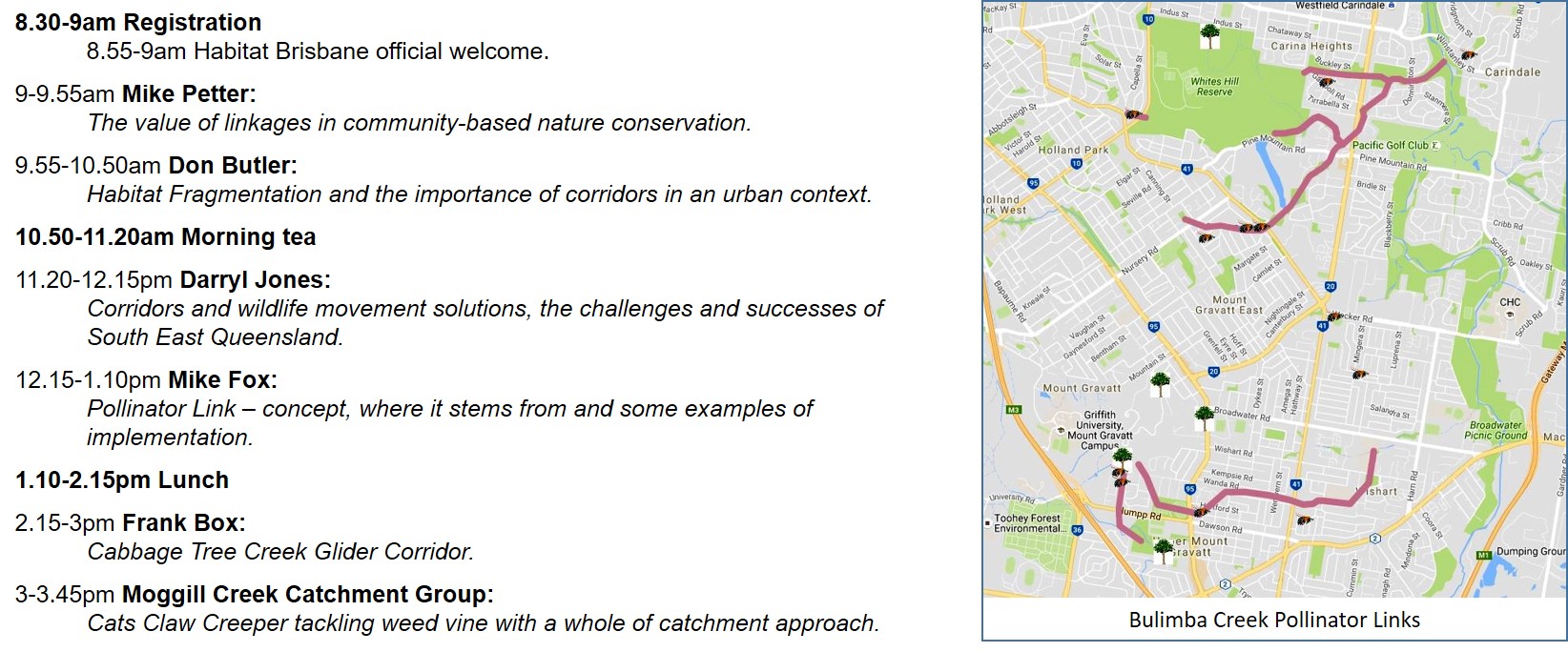
Restoring Habitats: Corridors and linkages – the dots that join us

BCC Community Conservation Partnership Program

Date: Sunday 11 September 2016
Time: 8:30am – 4 pm
Location: Griffith University EcoCentre, South Ring Road, Nathan Campus, Nathan
RSVP by 2 September 2016:

Call: Cath Cleary on (07) 3407 0050
or email: Catherine.cleary@brisbane.qld.gov.au

Event schedule

Posted in Pollinator Link, Wildlife Corridor | Leave a comment

The Hidden Beauty of Pollination by Louie Schwartzberg

By Sandra Tuszynska

Filmmaker Louie Schwartzberg is passionate about nature and its hidden treasures. His film Wings of Life, was inspired by the vanishing, humble honeybee.  Take a sneak peak at what seems like a must see feature for nature lovers, as Louise describes his passion for pollen, pollinators, and capturing their interactions in a TED talk:

Posted in Uncategorized | Tagged , , | Leave a comment

How to grow a tiny forest in your backyard

Forests don’t have to be far-flung nature reserves, isolated from human life. Instead, we can grow them right where we are — even in cities. Eco-entrepreneur and TED Fellow Shubhendu Sharma grows ultra-dense, biodiverse mini-forests of native species in urban areas by engineering soil, microbes and biomass to kickstart natural growth processes. Follow along as he describes how to grow a 100-year-old forest in just 10 years, and learn how you can get in on this tiny jungle party.

“Started in January 2011, Afforestt is a for profit social enterprise on a mission to bring back our native forests.”About Afforestt

.


Posted in Pollinator Link | Tagged , , | 1 Comment

Pollinator Link – influencing community to help wildlife

THIS ARTICLE HAS BEEN REPOSTED FROM

Bulimba Creek Catchment Coordinating Committee

Pollinator Link’s Mike Fox says pollinator network success has a lot to do with “influencing”.

Mike was a guest speaker at our Sustainability Centre Open Day on Saturday.

Mike Fox talking about Pollinator Link with guests at the Sustainability Centre Open Day

Mike Fox talking about Pollinator Link with guests at the Sustainability Centre Open Day

“Bees and butterflies are an easy sell,” Mike says.

“You can’t sell flying foxes in Queensland. Can’t even sell moths.”

However, he says that making our gardens more attractive to bees, butterflies and birds will have a positive flow-on effect for a diverse selection of wildlife, not just the popular ones.

The concept of Pollinator Link is to use backyards, parks, school grounds and even unit block balconies to link patches of bushland habitat fragments by our urban environment.

“It’s [Pollinator Link] about preparing the ground for other people to come along later,” Mike says.

“Unless we do something to connect it up we’re going to lose more species.”

He referred to the big metal fences that many people install. These are often a barrier to both wildlife as well as neighbours.

Mike highlighted the Pollinator Link garden at Mount Gravatt State High School. This project has been driven by Laurie Deacon, President of Mount Gravatt Environment Group (in the Bulimba Creek Catchment).

He said Laurie points out that it’s not just about creating wildlife links but creating valuable on-going community links.

“It’s about getting back to some of the neighbourhood relationships,” Mike says.

He also discussed structures like rain gardens and and other ways to encourage pollinators to your property.
Part of presentation

Part of presentation

“We’re getting rid of water on our habitats too much. So we’re now returning it where it would have been 100 years ago.”

The potential of neighbourhood gardens is greatly untapped.

“Getting people to bushcare can be hard but getting them to backyards is easier,” Mike says.

Several Open Day guests signed up to Pollinator Link immediately after the presentation. The welcome pack includes a sign you can put on your fence or letterbox as a talking point with your neighbours.

Pollinator Link has received support from both Brisbane City Council and theBulimba Creek Catchment Environment Fund.

If you’re wanting to sign-up to Pollinator Link, you can get the PDF form online or pick up some forms from our office. There will also be a form that can be completed online available soon.

The below video is a short snippet from the event (Mike is holding the Pollinator Link fence/letterbox sign).

Posted in Uncategorized | Tagged , , , , , , , , , , , , , | Leave a comment

Welcome Mitchelton Organic Gardners

Annette McFarlane and Anne-Mary - 25 June 2016

Anne-Mary McLoughlin (right) and Annette McFallane with Pollinator Link sign.

By: Michael Fox

Saturday morning and I’m listening to Annette McFarlane’s Gardening Tips on 612 ABC Saturday Breakfast, while I make breakfast. At the end of the segment Annette tells Katrina she is heading for Mitchelton Library to meet with the MOGI team: Mitchelton Organic Gardners.

Just the day before I had received an application from Anne-Mary McLoughlin to register the community garden as a Certified Pollinator Link Garden. A Google search told me that:

Dog bowl - 25 June 2016

Water for dogs and birds!

“Early in 2013 Annette McFarlane undertook a project for the BCC invited by the Manager Libraries to develop a Citris Grove in the redevelopment plans for the library.” (Mitchelton Organic Gardners)

As this is our first Community Garden registration, I obviously needed to deliver the Pollinator Link welcome pack in person, meet Successful Gardening’s Annette McFarlane and the MOGI team.

To qualify as a Certified Pollinator Link Garden there must be a minimum of:

  • one source of water for wildlife;
  • three sources of food for wildlife; and
  • shelter and places to raise young.

    Pied Butcherbird - 25 June 2016 low res

    Pied Butcher Bird 

Water for dogs turned out to also be water for birds. The MOGI team often see Pied Butcher Birds Cracticus nigrogularis sharing the dog drinking bowl at the garden entry.

The garden includes a variety of herbs and other plants providing nectar, pollen, berries, seed and, of course, citrus trees – a favourite of the spectacular Orchard Swallowtail Butterfly Papilio aegeus. Ask Anne-Mary to show you her photos of the butterfly life-cycle from caterpillar to butterfly.

Bee Lavender - 25 June 2016

European Honey Bees and native bees love Lavender

Shelter for wildlife comes in the form of mature trees, dense shrubs and ground covers. One unexpected source of shelter is the security mesh under the Library coffee shop. It will be interesting to see if small birds use this space – security for equipment may also become security for wildlife.

This beautiful garden space certainly ticks the boxes for wildlife. It is also becoming an interesting community resource with commuters nipping our of their cars to collect some herbs for dinner.

However, the really exciting thing was observing how library visitors also stopped to visit the garden.

Leanne with Anne-Mary - 25 June 2016

Anne-Mary with Leanne

MOGI team member Sandra took great pleasure in showing Amy and Zoe how to load plant material into the innovative in-ground composters: take an off-cut of PVC pipe, drill holes in the sides, bury in the garden and cover with a plant saucer, simple.  Max settled for watching Sandra chop the herbs ready for composting. Sandra also showed some of the healthy earth worms coming from the composters.

The children’s mother, Leanne, loved the garden space and the warm welcome, particularly for the kids. Leanne explained that Amy had discovered the garden with a friend and then bought the whole family along for a visit.

Mitchelton Organic Gardners - L to R - Joan, Anne-Mary, Christina, Sandra, Wendy

MOGI Team (l-r) Joan, Anne-Mary, Christina, Sandra and Wendy

I love libraries and my (grown) children always loved visiting the library on Saturday mornings. They would have loved this amazing BCC Library and the kid friendly MOGI team members. It was an honour to meet the MOGI team and welcome them to our Pollinator Link project.

Find out more about MOGI


Posted in Bees, Pollinator Link, Wildlife Corridor | Tagged , , , , , , , , , , | Leave a comment

Get “Into Horticulture”with Calyx

By: Michael Fox

Thanks to Gaye Gahler at Calyx Horticultural Services for the excellent article in the latest edition of Into Horticulture

Visit The Queensland Gardening Pages site to find a rich deep resource of local gardening knowledge which, like any exciting garden, has grown organically all based on the clear vision set out below:

The target audience are Queensland homeowners and other consumers of retail gardening products and services in Queensland. However, the site is also used by members of the horticultural and landscaping industries, in addition to visitors from other parts of Australia and the world.

Aims include:

  • to provide up-to-date horticultural news for Queensland residents, including notification of garden-related events
  • to promote plants, garden products, landscaping and associated services in Queensland
  • to link gardeners to information on warm climate horticulture from around the world
  • to contribute to the body of knowledge of subtropical gardening
  • to promote and provide information on environmentally sustainable gardening, landscaping and lifestyle practices
  • to generally promote and encourage the personal, social and environmental benefits of gardening
  • to organise information in a way that is easy to find and understand

The Queensland Gardening Pages

One of the services Gaye offers local nursery/landscape businesses is writing.

Is she any good?

Read Gaye’s article on the Pollinator Link initiative.  An excellent example of a valuable ability to communicate complex ideas in powerful simple language.


Posted in Uncategorized | Tagged , , , , , , | Leave a comment

Hiding in plain Site

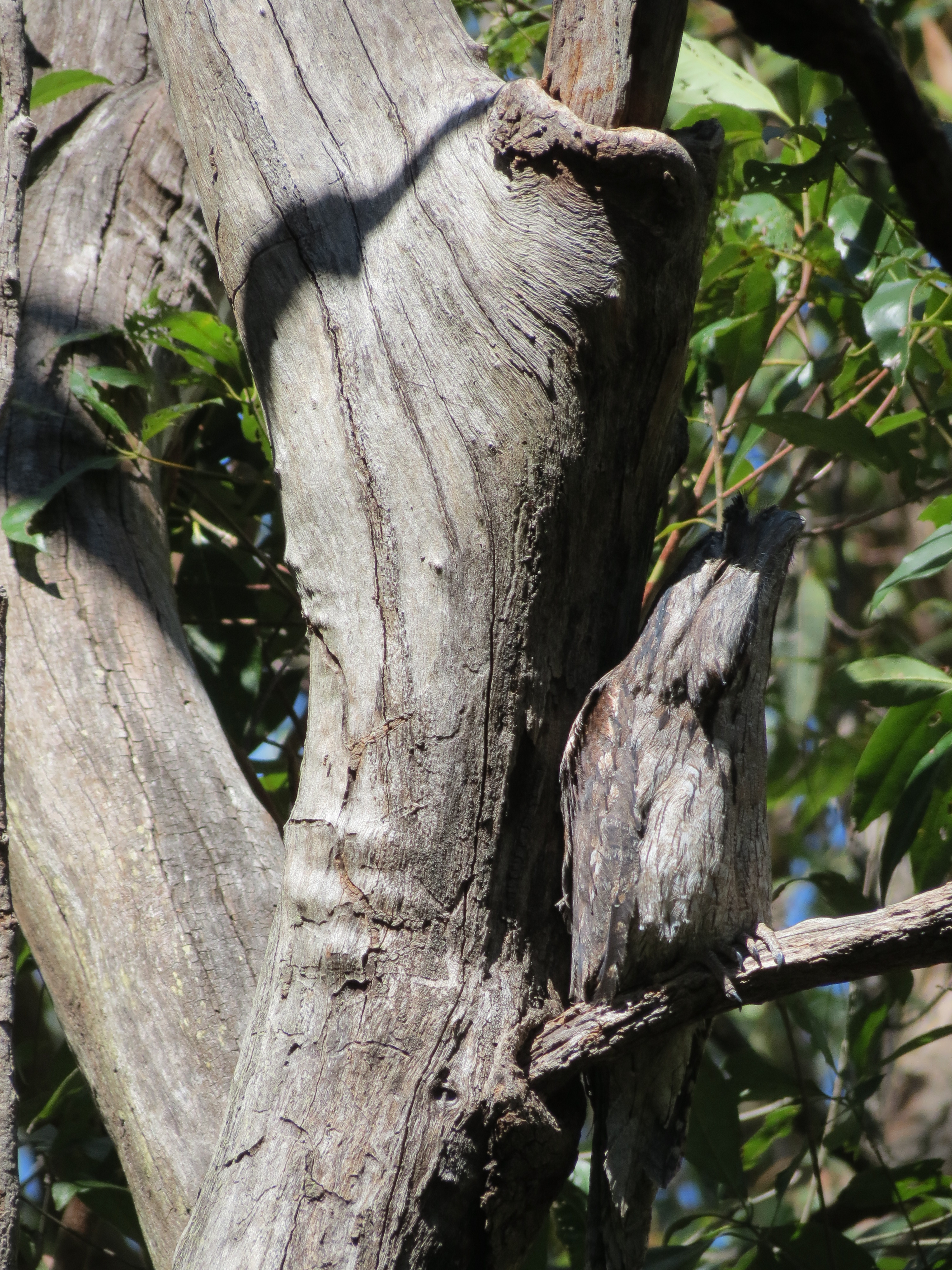
Tawny Frogmouth - Podagus strigoides - 13 Oct 2012

Spot the Tawny

By: Michael Fox

Tawny Frogmouths with their bushy eyebrows and their “I’m watching you stare.” are real characters in our suburban backyards.

Hiding in plain site is the fourth in my Pollinator Link articles for the Living in the Shires magazine with the aim of introducing people to the wildlife sharing our urban habitat.

Tawny Frogmouths Podagus strigoides are one of Australia’s most effective pest control birds consuming large numbers of moths, spiders, worms, slugs and snails as well as mice. This makes them particularly valuable in our urban habitat.

Kate Flink - Tawny

Tawny on Hills Hoist – Stable Swamp Creek Pollinator Link

Do you have Tawny pest controllers in your backyard? They are often found pretending to be a tree branch, although sometimes you may find them roosting on your fence or even your clothes line.

Tawny Frogmouths are often confused with owls, like our local Southern Boobook Ninox boobook.

Unlike Frogmouths, you rarely see Boobooks during the day. Owls spend the day hidden away in a nest hollow. Tony Ashworth was lucky to photograph this Southern Boobook at 7:45am, doing some hunting beside the Summit Track, Mt Gravatt Conservation Reserve.


Southern Boobook Owl Ninox novaeseelandiae - 27 May 2016 - T Ashworth

Southern Boobook Ninox novaeseelandia Photo: Tony Ashworth

Two key differences between frogmouths and owls are:

  • the beak – broad frog like beaks for catching insects while owls have narrow downwards facing beaks used to tear prey apart, and;
  • the eyes – frogmouths eyes tend to be on the side of the face while owls eyes are fully forward on the face.

.

..

Check if your garden qualifies as a Certified Pollinator Link Garden

Posted in Photography, Pollinator Link, Wildlife Corridor | Tagged , , , , , , | Leave a comment