Continuous Learning at The Planting Festival

by Sandra Tuszynska

As a biological scientist, I am always excited about new ways in which we can clean up, restore and support our soils and natural habitats. This is why I feel so passionate about the Planting Festival. It is a place of learning in a fun and engaging way through workshops, presentations and comical debates. The Planting Workshops are my idea of education. The experts that come to share their own passions, provide practical solutions to make our lives and those of the creatures, which support us, more symbiotic and sustainable.

Woodfrodian bred and born Harlequin beetle.

Woodfordian bred and born Harlequin beetle.

I have been fortunate this year to have been a part of the environmental workshops organising team. We have invited experts who provide a jigsaw piece of the puzzle, collaborating in conserving and increasing biodiversity in our habitats. If you are a continuous learner, interested in science that is ever evolving with new applications in the real world like I am, here are some workshops that I am extremely excited about:

  • Let’s Make Biochar, the soil amendment that your soil and the atmosphere will love. This charcoal-like structure provides exceptional habitat for beneficial soil microbes, which are essential for healthy plant growth. Creating biochar helps to fertilise soils and sequester carbon for potentially thousands of years, dramatically helping to reduce carbon, methane and nitrous oxide emissions. If this idea tickles your fancy, join Dr. Paul Taylor, the author of The Biochar Revolution, who will show you how it’s done.
Making Biochar in the Kon-Tiki cone kiln

Making Biochar in the Kon-Tiki cone kiln

  • Create a Frog Pond and Wildlife Habitat. Water is one of the most important resources for wildlife, especially for breeding frogs. Sean Morrow has the passion and the experience, to teach us about how to create a permanent water supply in our own backyards. If you would like to hear, observe and interact with frogs and other wildlife in your own habitat, this workshop is for you.
Green Tree Frog

Green Tree Frog

  • Attract birds, bees, and butterflies to your garden. Michael Fox, the founder of Pollinator-Link, is passionate about inviting wildlife to our urban habitats. If you love nature, Michael will help you to bring it closer to home, no matter how tiny your habitat might be.

Native bee pollinating a daisy flower

  • Survey insect diversity with an entomologist Christopher Carr. If you are like me and just love the small creatures, that are so essential to our survival, then the Insect Biodiversity workshops are for you. We will learn how to find, capture, count and perhaps identify some of these fascinating creatures that sustain Woodfordia. With thousands still to be identified, you might be in luck.
Michelle Gleeson from Bug Ed, holding a Goliath stick insect. Michelle will be presenting Insect Lifecycles workshops at the Children's Festival.

Michelle Gleeson from Bug Ed, holding a Goliath stick insect. Michelle will be presenting Insect Lifecycles workshops at the Children’s Festival.

If you wish to participate in any of these workshops, don’t forget that you need to book into them here, as spots are limited and filling up fast. And if you are Smart Enough to Know Better, you will want to join Greg Wah and Dan Beeston, of the podcast devoted to exploring science, comedy and ignorance, on Saturday evening at the Bunya. Feel free to participate and challenge some of the biggest scientific questions or discoveries of our time.

Smart Enough to Know Better

Finally, if you are interested in the wonders of healthy soil biology and the microbes that support and sustain all other terrestrial life forms, then join me at The Grove, at 9.15AM on Sunday. I’ll be presenting some of the most fascinating discoveries about fungi, the Soil Superheroes. Fungi are crucial to our survival, they devour disease causing microbes, oil spills, toxins, pesticides, heavy metals and even plastic. There is a never ending potential in using fungi in environmental remediation, medicine, design and architecture. I would love to hear your ideas about how we can use these fungal superheroes to help restore our planet into health.

Sandra Tuszynska (PhD), passionate about the intelligence and benevolence in all creatures great and small.

Sandra Tuszynska (PhD), passionate about the intelligence and benevolence in all creatures great and small.

Posted in Pollinator Link | Tagged , , , , , , , , , , , , , , , , , , , | 1 Comment

Brighton Bushcare – Boondall to Tinchi Tamba

By: Michael Fox

Brighton Wetlands Bushcare - 20 Mar 2016

Weeds and barbed wire – Brighton Habitat Group

It was a real pleasure to visit the dynamic Brighton Wetlands Habitat Group with group leaders Jenny and Nev Kingdom. I was particularly impressed by the number of volunteers including three first timers. I discuss this with Nev who showed me their Community Access advertisement that appears in the local free newspaper Bayside and Northern Suburbs Star. While the ad does not appear every week there is no cost and the Star simply repeats the ad when space is available. Nev tells me that they receive phone enquiries quite regularly from the ad.

Creek to Bramble Bay

Creek to Bramble Bay

The Brighton Wetlands Habitat is very different to Mt Gravatt Conservation Reserve. Tidal watercourses even bring Mangrove seeds into the habitat. Weeds, of course, like the Pampas Grass Cortaderia selloana thrive with plenty of water. However, Nev tells me it is popular habitat for Fairy Wrens.

.

.

Wood Ducks - 20 Mar 2016

Wood Ducks Chenonetta jubata

We also saw two Wood Ducks Chenonetta jubata almost invisible in the rushes. I would not have noticed the ducks if Nev had not pointed them out.

Very different habitat, however, I still saw a number of butterflies like Common Crow, Blue Tiger and Lemon Migrant that we also find on Mt Gravatt.

.

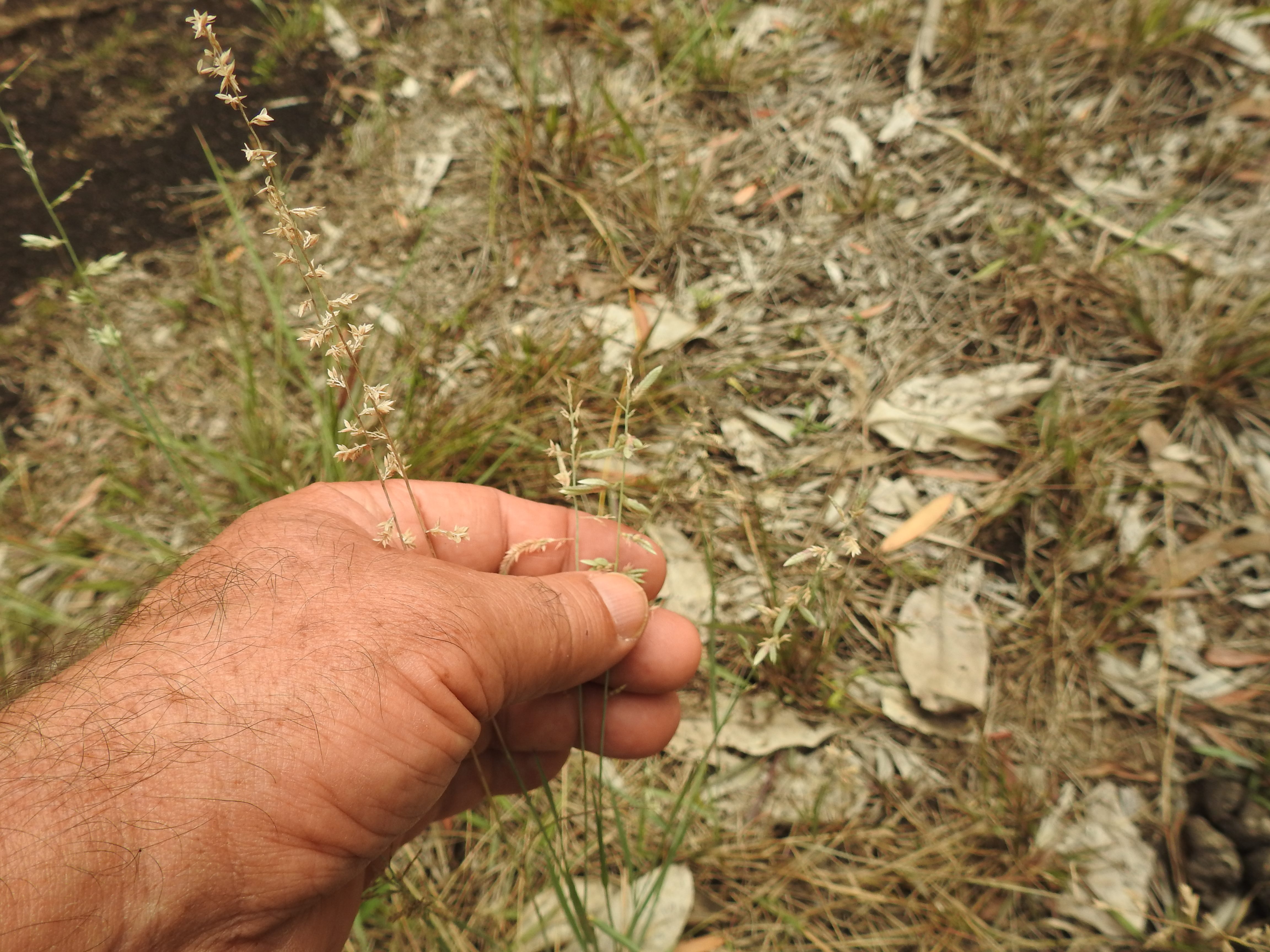
Wiry Love Grass Eragrostis elongata - 20 Mar 2016 low res

Wiry Love Grass Eragrostis elongata


I also found one of my favourite grasses, Wiry Love Grass Eragrostis elongata, which is a caterpillar food plant for Orange-streaked Ringlet Hypocysta irius.

.

.

Pond of recycle roof - 20 Mar 2016 low res

Raised garden beds and pond made with old bathtubs edged with recycled roofing iron.

After exploring the habitat and doing some weeding, we returned to an amazing morning tea of chocolate cake, biscuits, slice and more!


Jenny and Nev hosted us in their amazing Certified Pollinator Link™ Garden.

Water from bird baths and frog pond, Food from an amazing variety of native plants and kitchen herbs, Shelter in the form of scrubby small bird habitat, logs and rocks, and Stingless Native Bee hives.


Water Snowflake Nymphoides indica - 20 Mar 2016 low res

Water Snowflake Nymphoides indica


The pond has native fish to keep the mozzies down and beautiful Water Snowflake Nymphoides indica.

I talked to the group about the Pollinator Link™ project and the potential to link Boondall Wetlands with Tinchi Tamba.

Posted in Pollinator Link, Wildlife Corridor | Tagged , , , , , , , , | Leave a comment

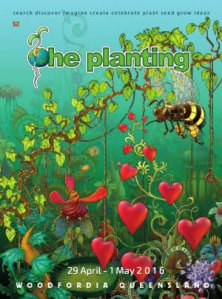
Pollinator Link at The Planting Woodfordia

By: Michael FoxThe Planting Programme

I will be sharing the Pollinator Link™ vision at The Planting Festival – Woodfordia – 29 April to 1 May

It is called The Planting and it is held at Woodfordia the Woodford Folk Festival site. At Woodfordia, that means lots of music, talks/workshops on everything from learning hip-hop dance to making see-through native bee home, as well as, food, fun, finding butterflies and some planting … watch the Promo Clip

Buy tickets for the The Planting weekend


Pollinator Link at Woodford resized

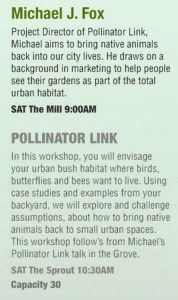
Pollinator Link – Saturday 30

Talk – 9am at The Mill

Workshop – 10:30 at The Sprout


Our Pollinator Link Project Manager: Sandra Tuszynska, will be presenting Soil Superheros on Sunday May 1 – 9:13am at The Grove.

Our butterfly guru: Helen Schwencke will be presenting

  • Create More Butterflies Sat, Sun 8am at Forest Woodford
  • Insects by Night Sat  7:15pm at Forest Woodford
  • Butterfly Plantings Sat, Sun 9:30am at Forest Woodford
Posted in Pollinator Link, Uncategorized | Tagged , , , , , , | Leave a comment

Learn Three Easy Steps to vibrant backyards

Wednesday 30 March – 10am to 12noon

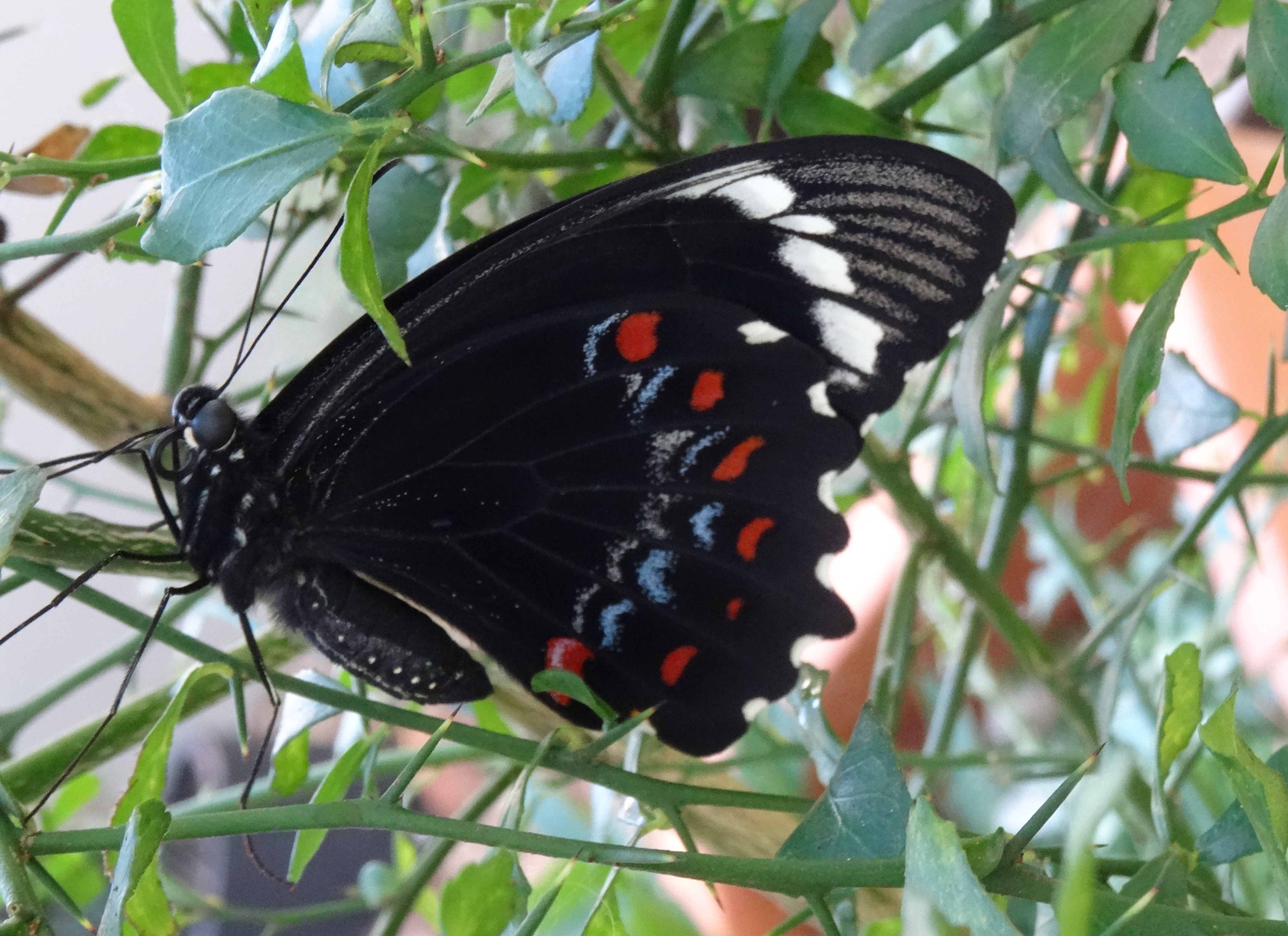
Orchard Swallowtail - female - 2 Jan 2016

Just hatched: Orchard Swallowtail on Native Finger Lime

Join Michael Fox at BigW Westfield Garden City when he presents his workshop “Learn Three Easy Steps to vibrant backyards” at the BigW Garden Club.

Do you remember backyards full of butterflies?

Would your children or grandchildren love to play in a backyard alive with colour and birdsong?

Would you like to be part of an innovative community initiative to return birds, butterflies and bees to backyards?

Step 1 Water – Step 2 Food – Step 3 Shelter

The-finch-family_IMG_9497

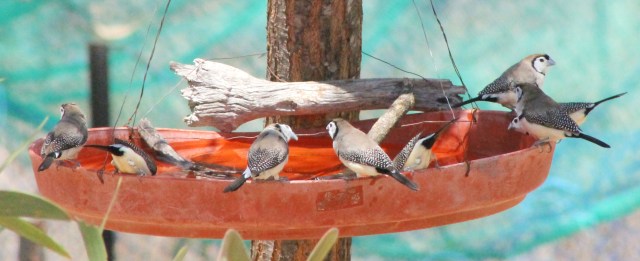
Double-barred Finch family at birdbath – Photo: Sandra Tuszynska


Posted in Pollinator Link, Uncategorized, Wildlife Corridor | Tagged , , , , | Leave a comment

Inviting Squirrel Gliders into Bill Hewitt Reserve

By: Michael Fox

Matt Campbell - Bill Hewitt meeting 5 March 2016

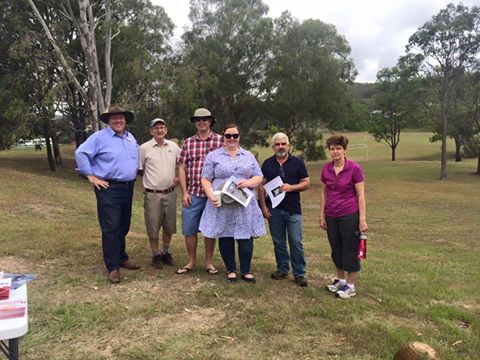
Matthew Campbell with community representatives

Matthew Campbell, ALP candidate for Coorparoo, met with community representatives from  Bulimba Creek Catchment Coordinating Committee (B4C) , Whites Hill State College P&C and other local community members about the future of Bill Hewitt Reserve.

.

.

.

.Precinct Plan cover

Wayne Cameron, Catchment Manager at B4C, and I presented Matthew with the new Whites Hill Reserve Precinct Landscape Plan.

The Precinct Plan outlines the potential for creating wildlife corridors with rope bridge road crossings and revegetation. Development of The Knoll Outlook with picnic and kids play area will also create a special place for families and visitors watching soccer on the fields below.

.

Whites Hill to Phillips Creek Glider Path - B

Whites Hill to Oates Hill Glider Path

Making Bill Hewitt Reserve wildlife friendly is a key step in creating a glider path between Whites Hill and Oates Hill Reserves.

Development will also support proof of concept research of low cost corridor solutions using rope bridges and solutions for water for wildlife in our local parks. Currently most BCC parks do not meet the standards for Certified Pollinator Link Gardens.


Posted in B4C Bulimba Creek Catchement Coordinating Committee, Pollinator Link, Wildlife Corridor | Tagged , , , , | Leave a comment

Certified Pollinator Link Gardens Launched

Fence signBy: Michael Fox

Register your Certified Pollinator LinkTM Garden today and receive your complementary fence sign.

Imagine your backyard alive with colour and birdsong. The quiet hum of bees in your veggie patch. You leave the city behind as you come home and relax with the peaceful sounds of nature.

Australian Painted  Lady - 14 Sept 2013 close

Australian Painted Lady Vanessa kershawi

Would you like to create this experience in your garden? Do you want to enhance and protect our unique wildlife? Picture your garden: a key link in a community built wildlife corridor. A corridor connecting bushland habitat and bringing birds, butterflies and bees back to our backyards.

You can create a Certified Pollinator LinkTM Garden and be part of the solution to long term sustainability of our urban habitat. Whether you have a large backyard or a balcony garden in a unit block you can create a welcome haven for local wildlife. By Certifying, you are also contributing to ongoing education programs, research and development of creative options for sustainable urban wildlife habitat.

Bowies Flat Pollinator Link temp

Example: Bowies Flat Pollinator Link

When you register, your Certified Pollinator LinkTM Garden, will become part of a digitally-mapped network of suburban gardens contributing to a sustainable urban habitat corridor. Your one-off $20 Registration covers printing, postage and contributes to expansion of the Pollinator LinkTM project, with development of new educational material and research.

Bowie’s Flat Wetland is an initiative of Norman Creek Catchment Coordinating Committee. .

Register your Certified Pollinator LinkTMGarden today.


Posted in B4C Bulimba Creek Catchement Coordinating Committee, Pollinator Link, Wildlife Corridor | Tagged , , , , | 5 Comments

Kids and tadpoles – backyard magic

Posted in Pollinator Link, Wildlife Corridor | Tagged , | Leave a comment

Metamorphosis complete she emerges

Orchard Swallowtail - female - 2 Jan 2016.jpg

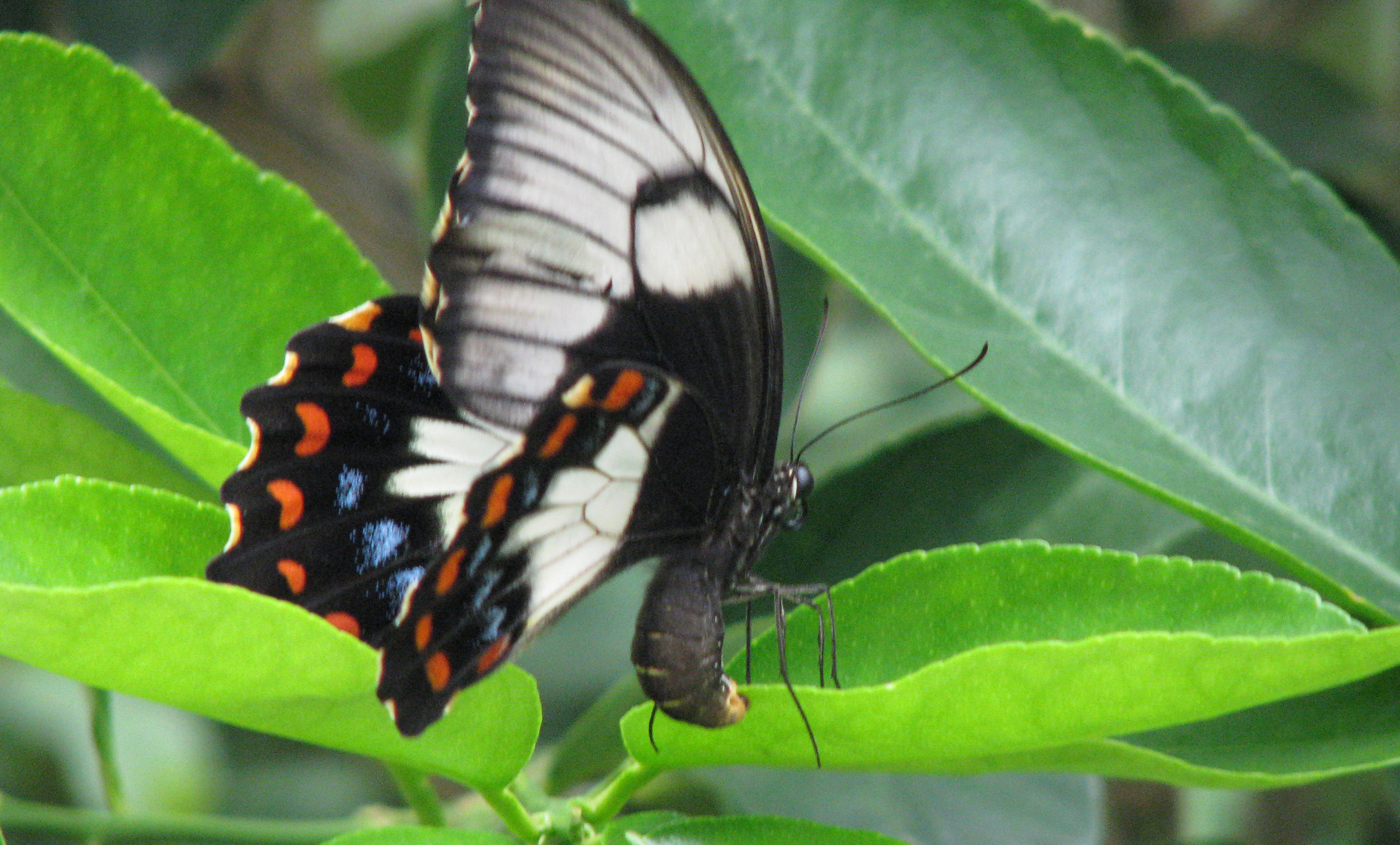
Female Orchard Swallowtail butterfly just emerged

By: Michael Fox

Orchard Swallowtail - chrysalis - 25 Dec 2015

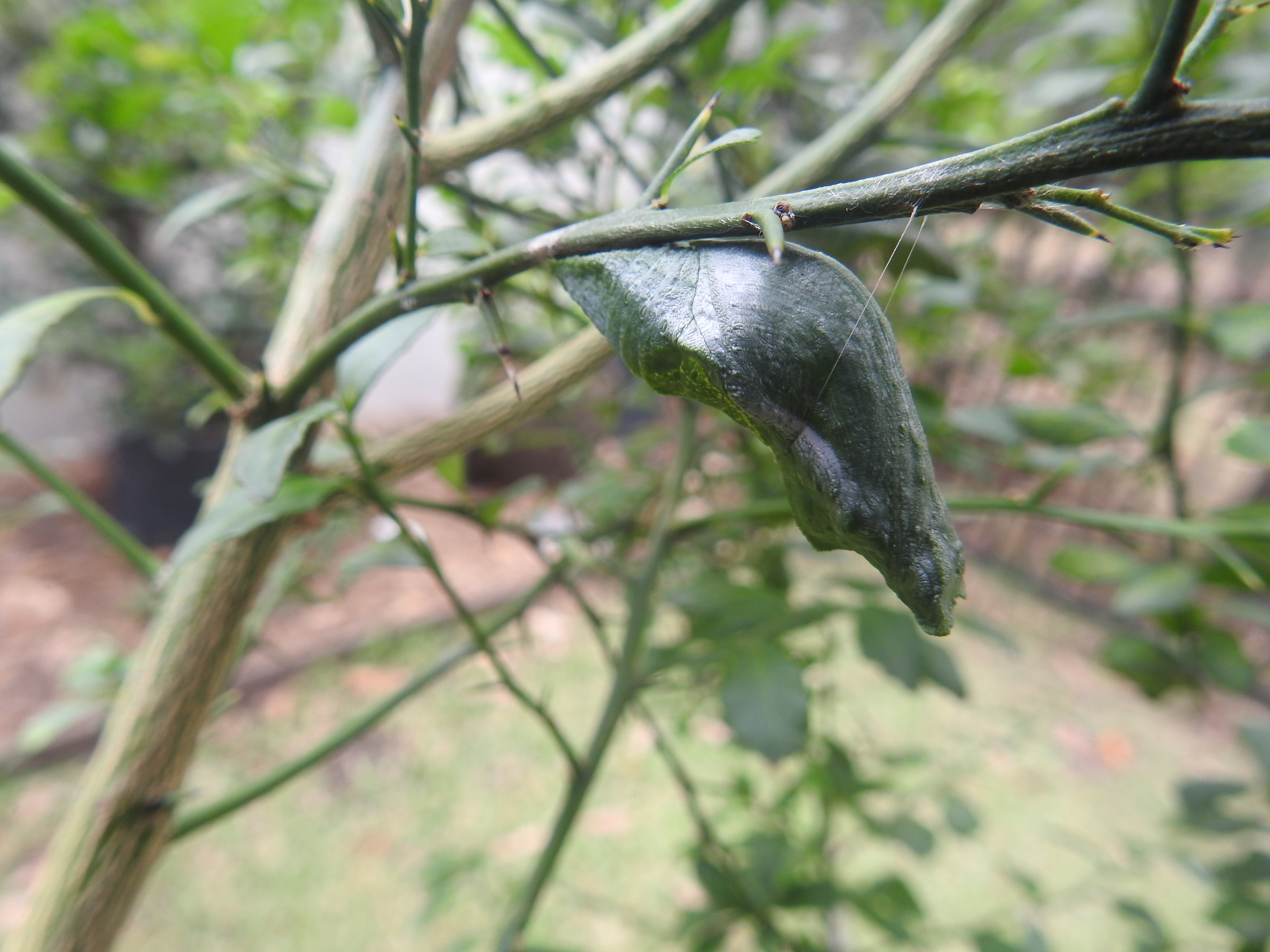
Orchard Swallowtail chrysalis on Finger Lime

Yesterday she was hidden in a chrysalis transforming ready to emerge this morning as beautiful new butterfly.


Posted in Pollinator Link | Tagged , , , | Leave a comment

Love butterflies? Host caterpillars!

Orchard Swallowtail - Nov 08

Female Orchard Swallowtail laying eggs on orange tree

By: Michael Fox

How often have you heard someone say, “We don’t see butterflies in the garden these days.”?

Female Orchard Swallowtail Papilio aegeus are laying eggs at the moment so you might find some interesting caterpillars feeding on leaves of your citrus trees.

Orchard Swallowtail - caterpillar - 30 Dec 2015 crop

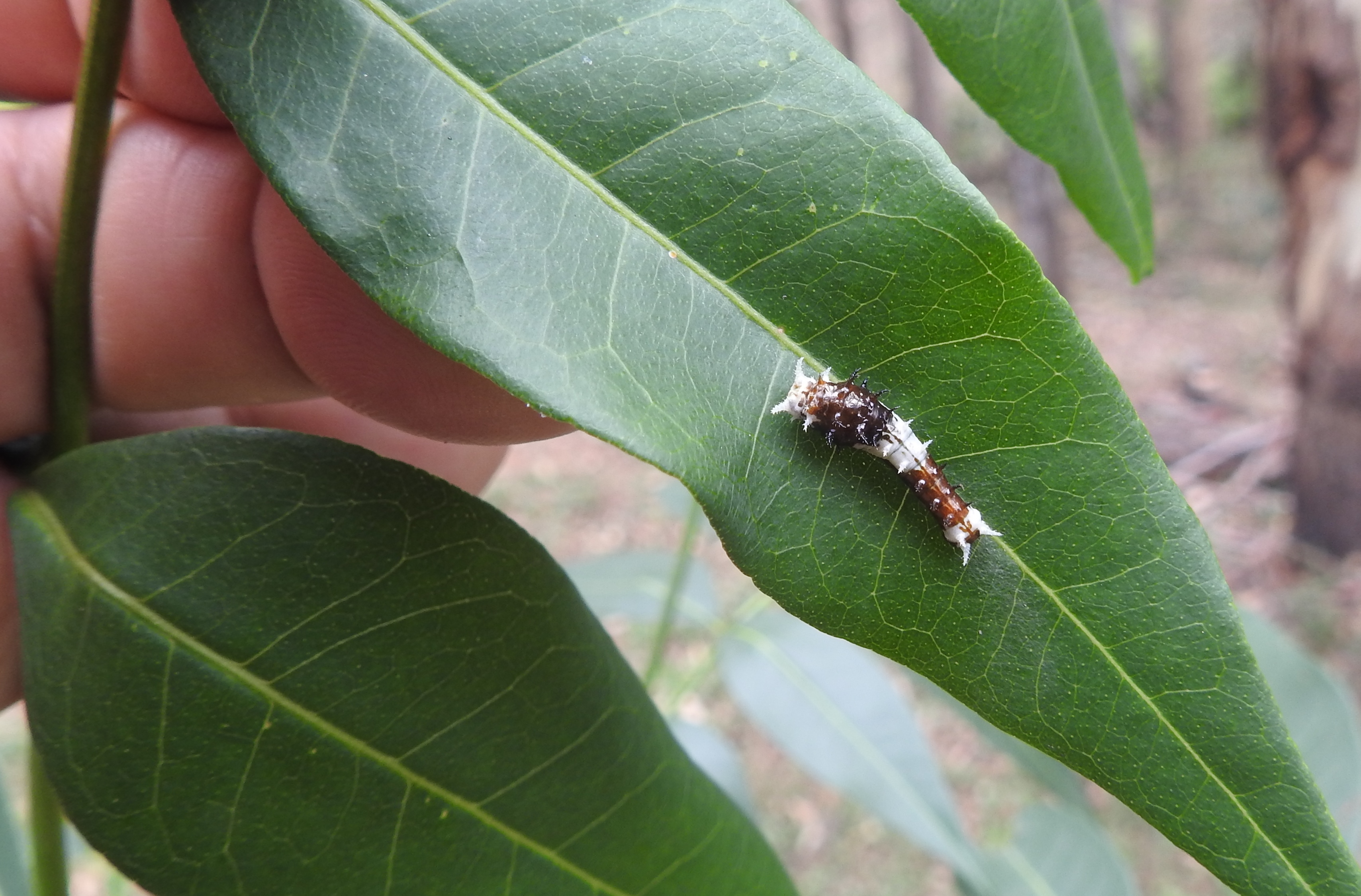
Orchard Swallowtail caterpillar (early instar) on Crow’s Ash

In bushland Orchard Swallowtail butterflies will lay their eggs on Crow’s Ash Flindersia australis which, like our backyard citrus trees, is a member of the Rutaceae family. The first and second stage instars look just like brown and white bird droppings.

Orchard Swallowtail - larva Ba - Dec08

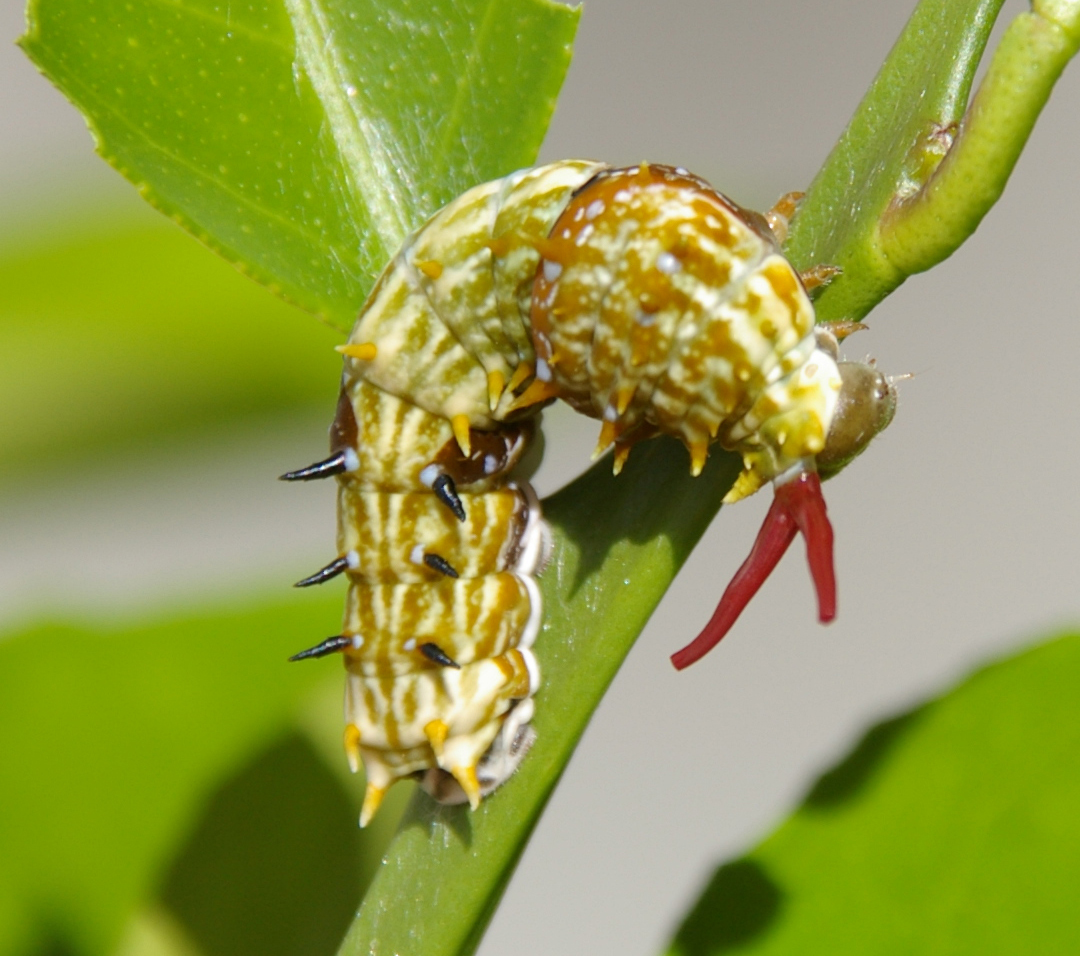
Greenish later instar with osmeterium extended

.

.

.

The caterpillars will grow to about 60mm and change to a greenish colour before they from a chrysalis. When disturbed Orchard Swallowtail caterpillars extend bright red osmeterium to frighten off attackers.

.

.

.

Orchard Swallowtail - chrysalis - 25 Dec 2015

Orchard Swallowtail chrysalis on Finger Lime

.

Orchard Swallowtail caterpillars will also feed on leaves of native Finger Limes Citrus australasica

Look for the silk threads suspending each chrysalis.

.

.

Orchard Swallowtail - Male - Apr10 crop

Male Orchard Swallowtail butterfly

You can welcome butterflies to your Pollinator Link garden by choosing the food plants required by their caterpillars and, importantly, avoid pesticides and instead invite insect eating birds to manage the caterpillars in your garden.

There are a number of good “eco-products” that have minimum impact on wildlife like Ladybirds and Bees. These products are only ingested by caterpillars that eat the leaves and sap-sucking insects like Common Gum Tree Shield Bug Poecilometis patruelis. You will be free of sap-suckers, however, it also means you will kill your butterfly caterpillars by starvation, carbon dioxide poisoning or dehydration.

If you have sap-sucking insects on your citrus consider simply hand picking them off – be sure to wear gloves to avoid getting the stink on your hands. Remember, chewed leaves mean more butterflies like the handsome male Orchard Swallowtail.


Posted in Bees, Bushcare, Pollinator Link | Tagged , , , , , , , | 3 Comments

Native bees love Red-flowering Gum

.

Re-posted from Fox Gully Bushcare 

By: Michael Fox

stingless-bee-hive-insulated-15-may-2015

Stingless Native Bee hive – insulated with polystyrene

A hive of Stingless Native Bees Tetragonula sp. are a fascinating and helpful addition to your Pollinator Link garden, particularly if you aregrowing Macadamia, Avacado, Strawberries, Rockmelon, Watermelon, Mango, Blueberries or Citrus (Kin Kin Native Bees).

Being stingless, although they do have strong jaws as you will find if they get into your armpit, the Tetragonula sp. are great for urban backyards. Kids can stand close and watch or even let them walk over their hand without risk of stings.

Design of Stingless Native Bee hives has evolved dramatically with designs now allowing for easy harvesting of the unique honey produced by these tiny bees.


stingless-native-bee-megachile-sp-pollen-27-dec-2015

Stingless Native Bee hive – insulated with polystyrene

This Stingless Native Bee already has a large ball of pollen on its legs and still collecting more. Watch the bee in the video take off with its pollen collection.Native bees are very good crop pollinators because they are very good at collecting pollen.

The Red-flowering Gum Corymbia ficifolia produces a spectacular display in O’Grady Street feeding ants and other insects, as well as being very popular with our Stingless Native Bees. Stop for a minute and look for the bees crawling over the flowers.

Posted in Bees, Pollinator Link, Wildlife Corridor | Tagged , , , | Leave a comment