Blue Banded Bee and Crane Fly up close

By: Michael Fox

Macro-photography allows us to see insects in a completely new way.

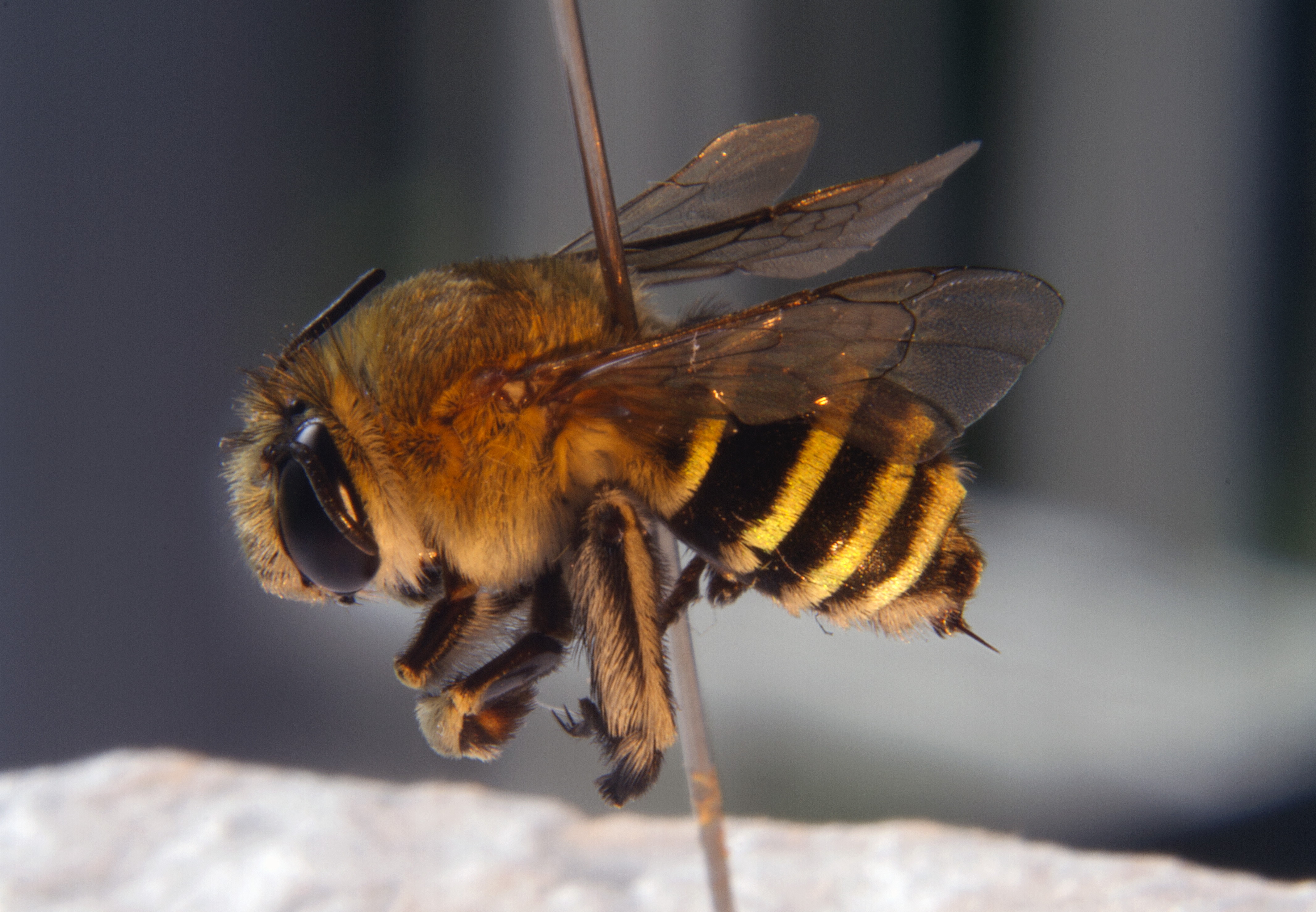
Blue Banded Bee - 20 Mar 13 - Alan Moore low res

Blue Banded Bee Amegilla cingulata – Alan Moore

Why a Blue Banded Bee?

Blue Banded Bee back - 20 Mar 13 - Alan Moore low res

Blue Banded Bee Amegilla cingulata – Alan Moore

Macro-photography shows the vivid blue bands that give  this special native bee its name.

Blue Banded Bee - 22 Mar 12 - Alan Moore

Blue Banded Bee showing sting – Alan Moore

Australia has over 1,500 native bees most of which are solitary bees not forming colony’s.

The Blue Banded Bee has particular value for agriculture and backyard vegetable growers. The bee can perform the buzz pollination required by tomatoes and eggplants, a service that Honey Bees cannot perform. Blue Banded Bees can disengage their wings then use the powerful wing muscles to vibrate the pollen from the tomato flower.

s

s

s

s

An earlier photo shows that the Blue Banded Bee sting is not barbed like the sting of the better known, European Honey Bee Apis mellifera.

s

s

Is that a giant mosquito?

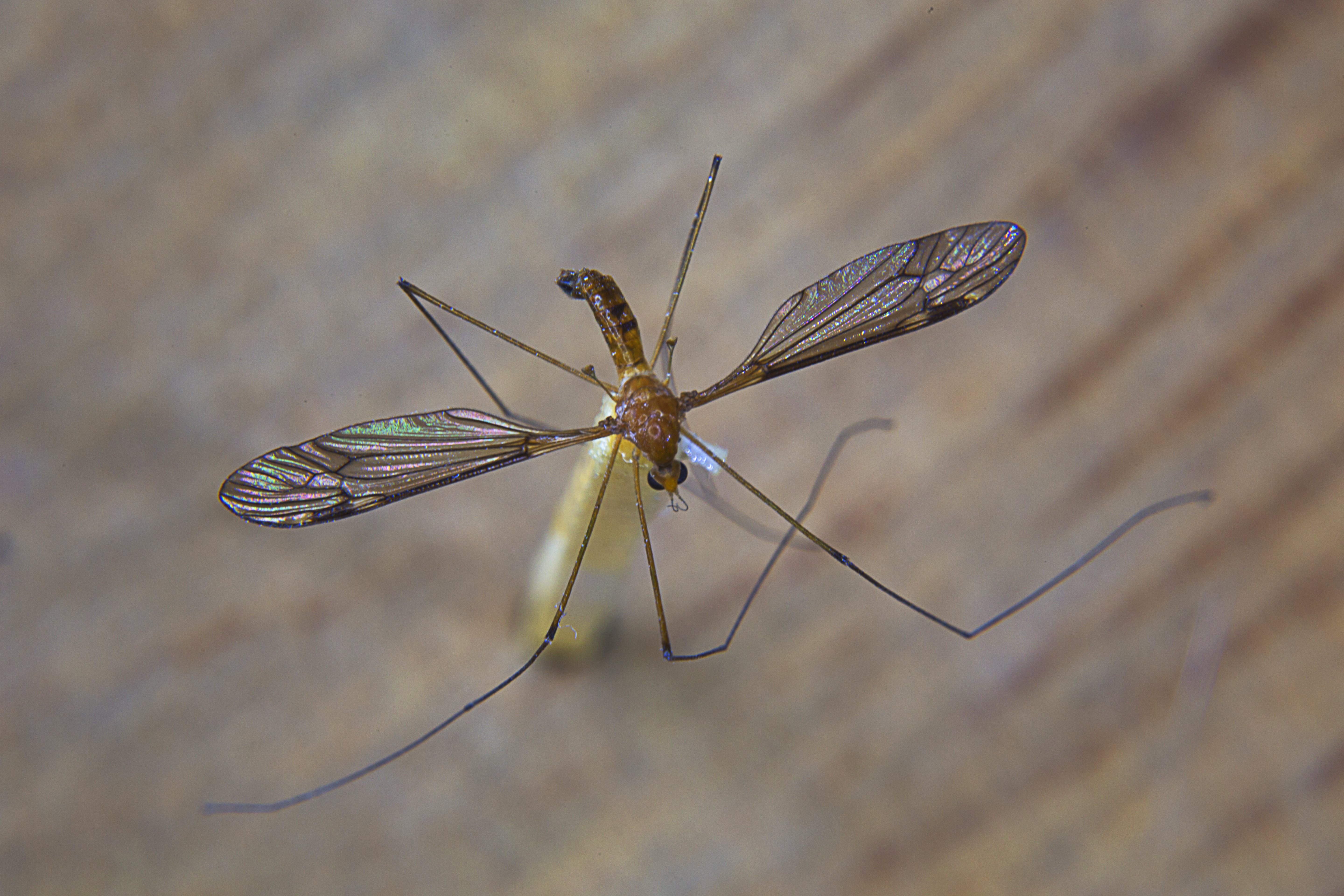
Crane Fly - 20 Mar 13 - Alan Moore low res

Orange Crane Fly Tipula sp.

Macro-photography helps us see that these are Crane Flies not mosquitoes. Adult Crane Flies do not eat and only live a few days to reproduce. It was not until we saw the photos that they have segmented antennae virtually invisible to the eye.

The adults do not eat but they may be considered a nuisance when they invade our homes. However Crane Fly larva work hard to keep water in a creek clean and improve soil quality on land by consuming vegetable matter. The adult Crane Flies are also valuable food for birds and mammals.

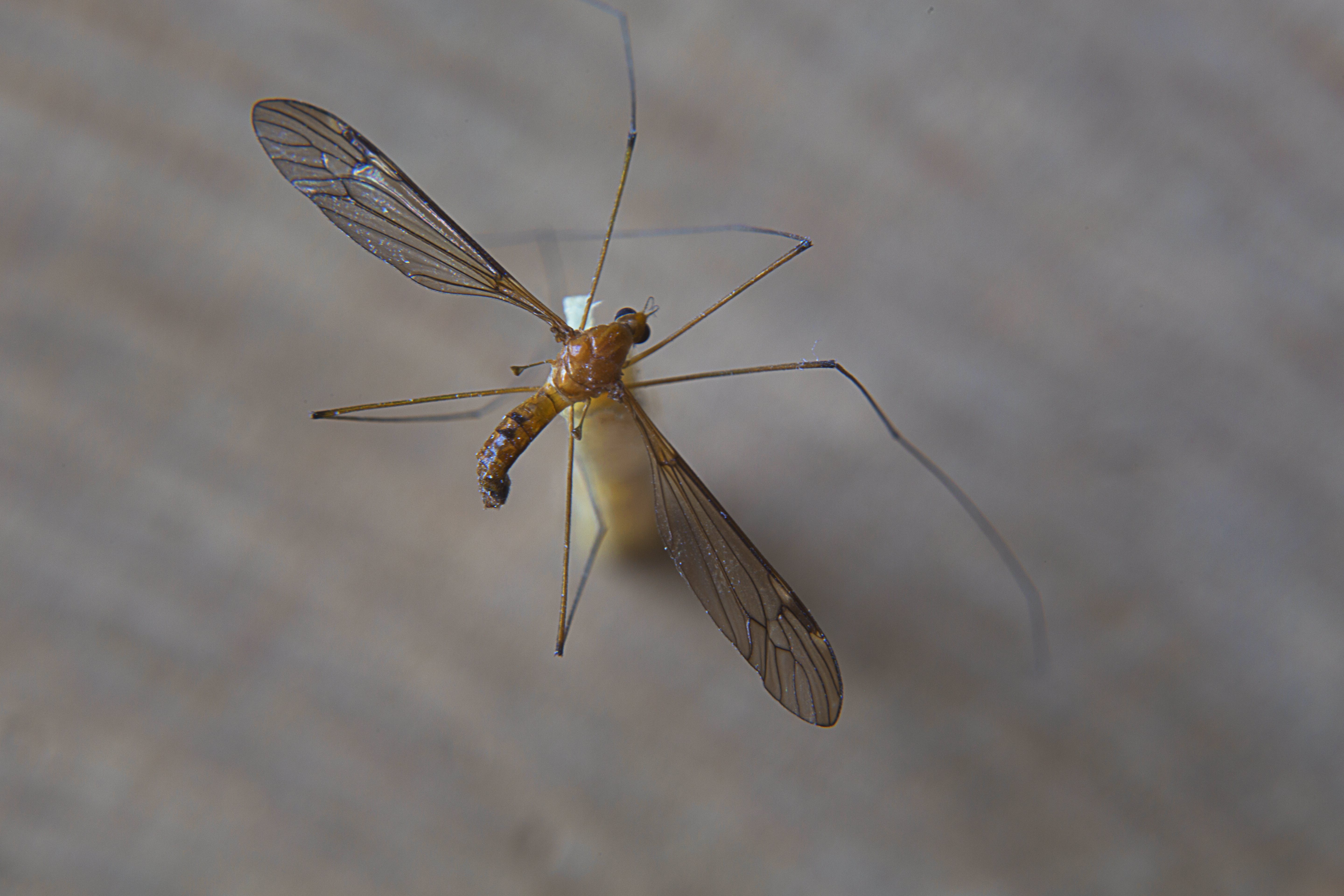
Crane Fly rear - 20 Mar 13 - Alan Moore low res

Orange Crane Fly showing halteres

An interesting characteristic of Crane Flies is that they have only one pair of wings. The second pair of wings has evolved in distinctive halteres, small knobbed structures that help maintain stability in flight.

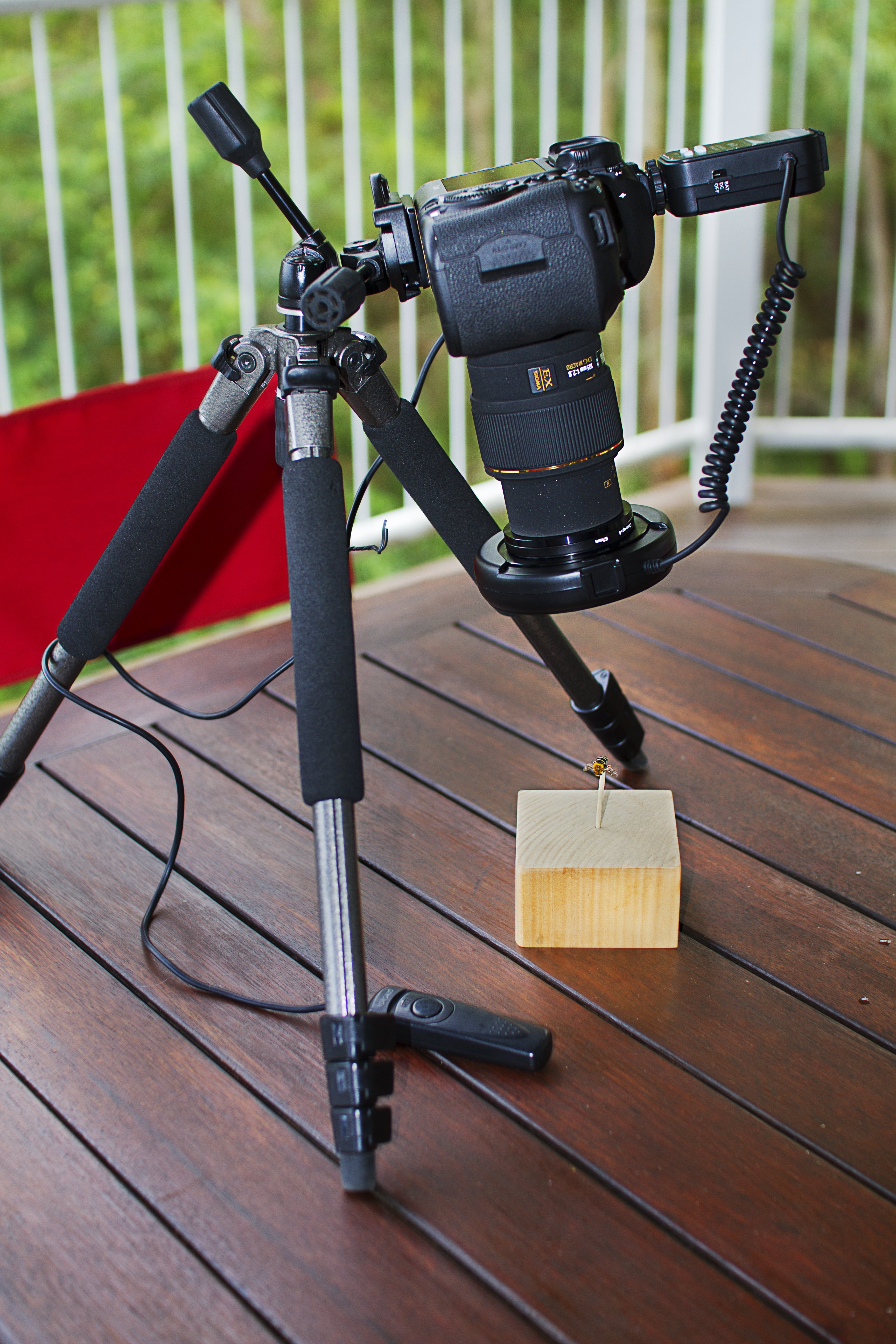
Mounting for photography b - 20 Mar 13 low res

Canon EOS 105mm Sigma ring flash

s

s

s

Thanks to Allan Moore for these up close photos.

Alan used a Canon EOS 5D with a 105mm Sigma macro lens. Lighting was provided by a combination of a ring flash – soft light, and a simple LED torch to enhance the contrast with white light.

Mounting for photography a - 20 Mar 13

Blue Banded Bee mounted for photography

s

s

s

s

s

s

The really clever trick was the way Alan mounted our specimens for photography. A simple timber block with a hole drilled to take a match. A dab of Araldite epoxy resin without the hardener allowed the insect to be picked up on the head of the match then carefully removed later.

Want to learn more about macro-photography? Join Alan at the Mt Gravatt Environment Group 2013 Photography Workshop to be held in September (date to be advised).

Posted in Mt Gravatt Conservation Reserve, Wildlife of Mt Gravatt Reserve | Tagged , , , , , , | Leave a comment

BCC Invasive Species & Wildlife Management

By: Michael Fox

I attended an interesting meeting last week with Victor Kaniuk, Principal Program Officer for BCC Invasive Species & Wildlife Management. Hosted by Wayne Cameron, B4C Catchment Manager, the meeting explored the potential alignment between the new Brisbane Community Biodiversity Strategy – Oct 2012, prepared by Brisbane Catchments Network (BCN), and the recently approved BCC Invasive Species Management Plan.(Draft copy online at time of writing)

It was certainly heartening to learn more about the strategic, research based, approach being developed by Victor’s team and actively supported by the management team represented by Cr Matthew Burke, Chair of Environment, Parks and Sustainability Committee.

Key points of interest for me were: Fox arriving 4.27am 18 June 12 close

The objective for Victor’s team is to move from a reactive short term focus to development of systematic research based sustainable solutions and partnerships with private land owners and habitat groups.

Research:

  • 5 year natural area monitoring project to fill gaps in knowledge base
    • What is the situation in Brisbane reserves, not Canberra or Toowoomba?
    • camera monitoring of fauna movement – native and pest
  • Nest box research to develop design and monitoring procedures guide
    • past experience is boxes often neglected – reflecting poorly but unfairly on Council
  • Tactical plan for Wipe Out Weeds program
    • increased investment committed – target areas to be evaluated
    • maximise long term benefit from investment
  • Assessment of appropriate solutions for pests like Common Myna
    • Brisbane experience very different to Canberra. What is the “real” situation in Brisbane?
    • partnership with private property owners
      • lend traps – property owners responsible for pre-baiting & disposal of trapped birds
    • most effective solution appears to be vegetation modification
      •  less attractive for Common Myna and more attractive for native species

 Working with Council – my take on how it works

It can be frustrating working with huge bureaucracies like Brisbane City Council. However, its very size means that Council can employ expert teams to focus on very specific areas and commit to long term complex initiatives like the Invasive Species Management Plan.

Having worked in the PMG>Telecom>Telstra for over thirty years and I now teach management at university. Based on my experience I find it is valuable to consider the size, complexity and basic interrelationships of the organisation. With that basic understanding we can do a lot to help our Council “bureaucrats” help us achieve our objectives.

Basic facts:

  • Annual budget – approx $1.9billion
  • Area covered – 1,367 sq km
  • Population – 1 million residents (twice the population of Tasmania)

Managing an organisation of this sizeCivic Cabnet - Aug 2012 and complexity within a rapidly changing environment is a challenge. The Council has the added complexity that members of its Board of Directors (Civic Cabinet) are voted in or out by the shareholders (Brisbane residents) every three years (heavily simplified). Large public company board members do not have this pressure.

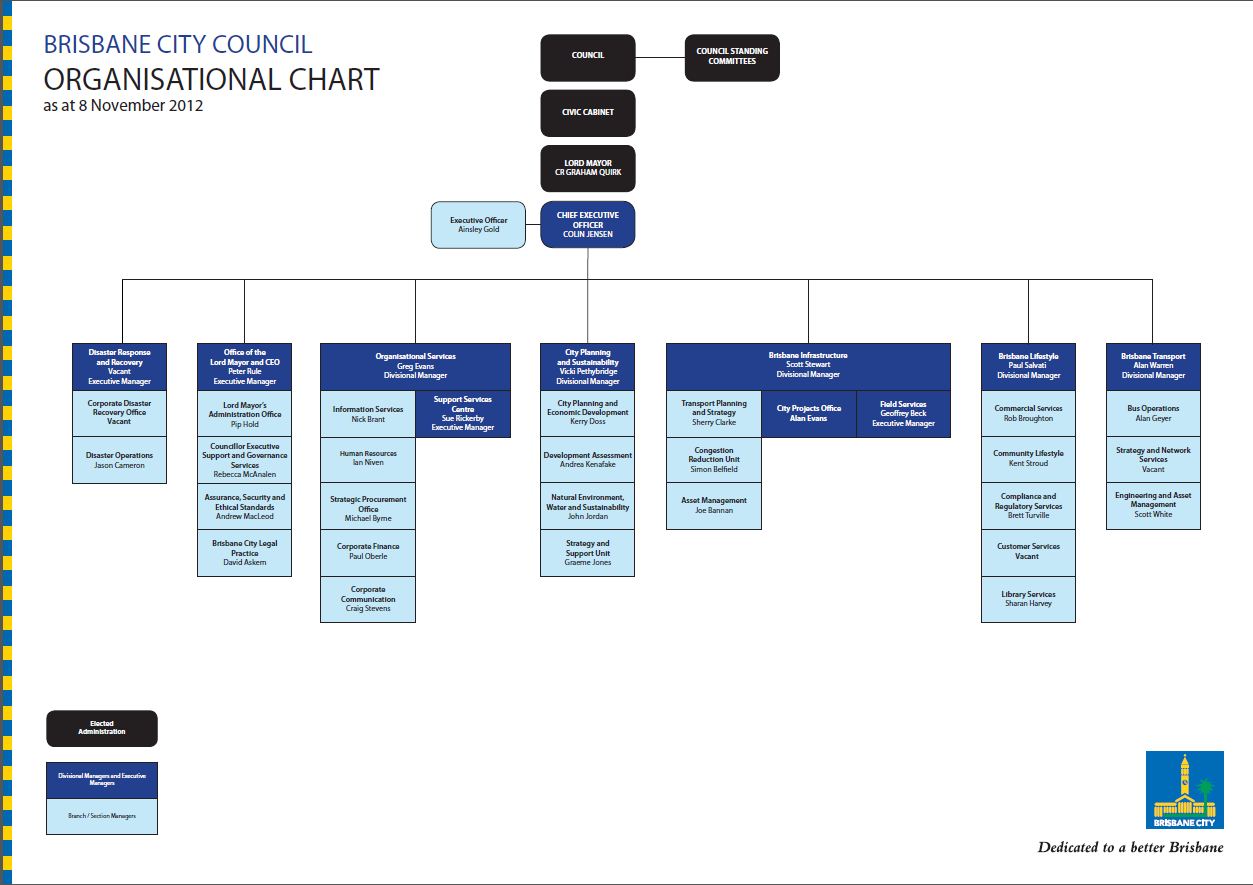
Civic Cabinet represent our interests, setting the BCC Org Chart - Nov 2012overall strategy for development of our city. Expert input to strategy development and implementation of strategy is provided by Divisional and Branch Managerment who report to Cr Matthew Bourke as Chair of Environment, Parks & Sustainability Committee.

Posted in Pollinator Link | Tagged , , , , , , , , | Leave a comment

Mt Gravatt students build Pollinator Link for wildlife

By: Sheamus O’Connor

An ideal strip of land screaming out for attention

An ideal strip of land screaming out for attention

“Give me a turn at planting!” One of the students from Mount Gravatt State High School protested down at Site 1 of the Mt Gravatt Environment Group Pollinator Link Project. Over the past two weeks, progress has been at full velocity with the amazing help of students, teachers and many other keen volunteers.  Between the bottom and top ovals of Mount Gravatt State High School, there is a superb strip of land once dedicated to the flora and fauna of the area.

Laurie Deacon, co-project manager, speaking to a local on a beautiful afternoon

Laurie Deacon, co-project manager, speaking to a local on a beautiful afternoon

Almost 30 years ago (from local sources), this area was planted up majorly with Grey Ironbarks Eucalyptus siderophloia. What may have been planted as part of the understory no longer exists. Around two years ago, a mass population of Guinea Grass Panicum maximum appeared and suffocated the landscape. With this infection came the poison. The entire area between the ovals was bombarded with chemicals, killing everything right to the ‘bone’. Now what remain are a few Ironbarks and Wattles. This project is a critical and vital link between Mount Gravatt Conservation Reserve and Norman Creek catchment via Glindemann Creek, Holland Park.

DSCN2019

A ‘retreat’ for our cold-blooded friend

It was only Wednesday last week that the massive pile of mulch appeared, quickly emitting heat in the pouring rain. However, the on-and-off rain did not deter the students and so mulch was laid down at the most perfect of timing. A reptilian ‘hideaway’ was constructed adjacent to a dug out water course using rocks, large logs, branches and anything else we could find scattered around the area.

Waiting for the opportunity of a tasty snack

Waiting for the opportunity of a tasty snack

The next stage; planting, quickly arrived. Firstly, Scented Top Grasses Capillipedium spicigerum were planted; at least 100 were keenly planted by the students. A small family of Pied Butcherbirds Cracticus nigrogularis greatly enjoyed our company, striking anything that moved in the moist mulch. A number of local residents were highly interested in all of the commotion, as a great sum of the local community uses the ovals regularly for recreational activities. In contrast, Site 1 of 4 Sites has been completed. This project is massive, but enormously exciting and awe inspiring at the same moment.

All we are hoping for now is a long season of rain!

Posted in Mt Gravatt Conservation Reserve, Mt Gravatt Environment Group, Pollinator Link, Wildlife Corridor | Tagged , , , , , , , , , | Leave a comment

Living Bridges – Reconciliation Ecology in Forests of India

By: Michael Fox

I am currently reading an excellent book on

Shillong, Meghalaya, India 1,600m

Shillong, Meghalaya, India 1,600m


Reconciliation Ecology by Michael Rosenzweig
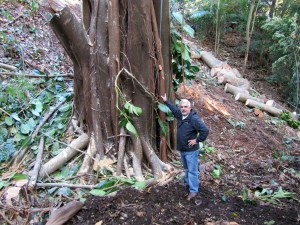
. So it was a wonderful gift when Brett Dugdale, Rover Street Bushcare, sent me a link to the video on the amazing living bridges of Meghalaya in the mountains of India. This rugged country with the capital, Shiliong, sitting about 1,600m above sea level … a bit like living on top of Mt Kosciuszko.

Pollinator Links are a form of reconciliation ecology – creating space for our wildlife in our human habitats.

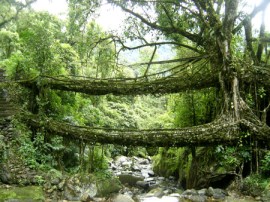
Living Bridge

Living Bridges in Cherrapunjee
http://www.cherrapunjee.com

If unsophisticated villagers in remote rainforest in India can figure out a way to work with nature to create win-win solutions then with all our research and university education we must be able to come up with some extraordinary creative win-win reconciliation solutions for our urban habitats. New York would have to be just about the complete opposite of Cherrapunjee but one of my inspirations for the Pollinator Link was the High Line. Another outstanding example of reconciliation ecology.

Visit Cherrapunjee.com A Dream Place for more information on Living Bridges and visiting this amazing area of the world.

Indian Rubber Tree - 15 Sept 11

Stump of Indian Rubber tree – Fox Gully

One touch of irony is that the Living Bridges use Indian Rubber trees Ficus elastica. Removing one of those trees from our Fox Gully wildlife corridor took five men working solidly for two days. Wonderful useful trees in their traditional habitat … invasive habitat destroying weeds in Brisbane.

Posted in Bushcare, Pollinator Link, Wildlife Corridor | Tagged , , , , , , , | 1 Comment

Solar pump keeps birds and frogs happy

By: Michael Fox

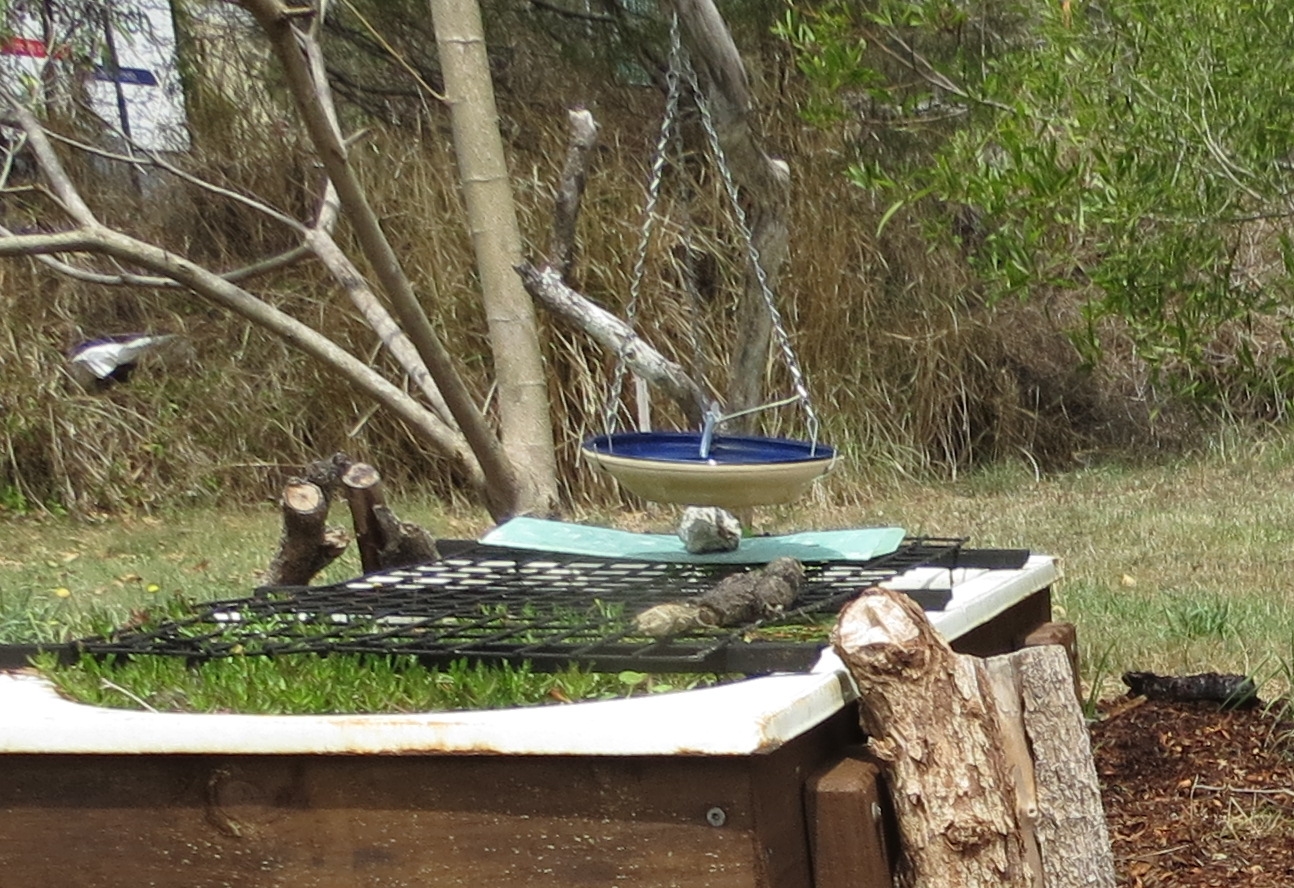
Water pumped to bird bath trickles into top pond

In our Queensland heat how do you keep a backyard birdbath full of water and free of mosquitoes?

Circulating water from a frog pond to the bird bath is one solution. We installed a Reefe Solar Pump today in the micro-habitat Pollinator Link garden at the B4C Sustainability Centre. Keeping a shallow birdbath full can be a challenge particularly when a couple of Rainbow Lorikeets jump in for a swim and splash water everywhere. d

Two different frog habitats

Two frog ponds provide different micro-habitats – High Pond for climbing frogs like Green Tree frogs and Low Pond for ground dweling frogs like the Striped Marsh frog. Water is pumped from the Low Pond to the bird bath where it overflows into the high pond to be returned to by pipe to the low pond. The water in the bird bath is constantly refreshed and a weekly top up of water in the low pond is all that is required.

Backup battery and controls protected from sun

The Reefe pump performs well lifting the waterabout 120cm with a steady flow into the bird bath. We have set the optional timer to run the pump 15 minutes on and 15 minutes off. With the solar panel and backup battery the water should be circulating 24 hours a day, perhaps a little less if we have very cloudy days.

The pump controls and backup battery are all well sealed in a waterproof case. However it is important to protect the case from direct sun. We mounted the case on top of besser-block Blue-banded Bee home under the old bathtub used for the high pond.

The Reefe solar pump was recommended by the Irrigation & Pump Shop in Capalaba. dOne

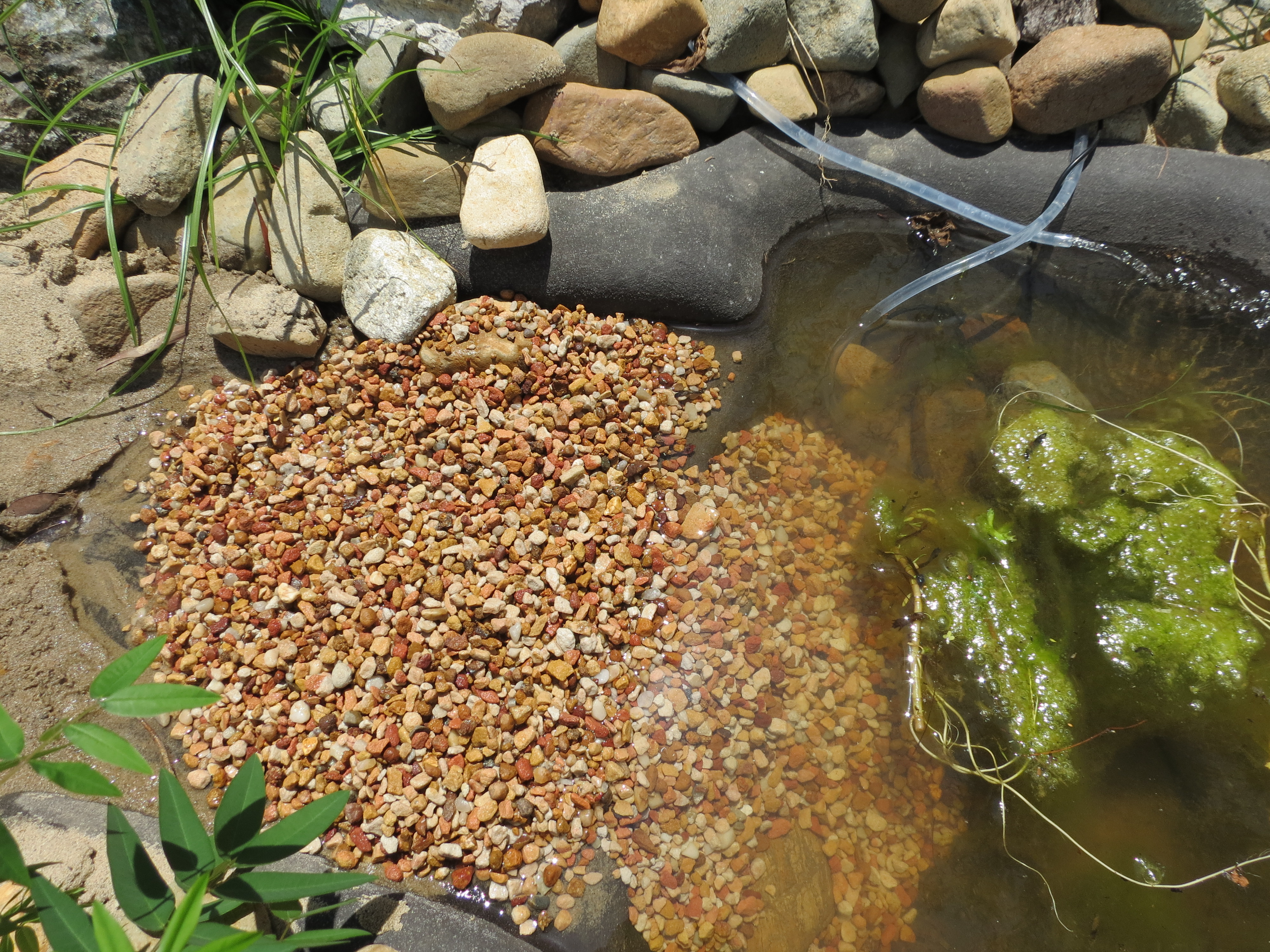
Decorative gravel provides a soak for butterflies & bees

d

One lesson learned – sand and pond pumps don’t mix. I wanted to create a soak for butterflies, bees and other insects. My first idea was a sand beach which was not good as the sand immediately jamed the pump impeller. Cleaning out the pump was quick and simple and replacing sand with decorative gravel seems to have solved the problem while still acting as a soak.

Posted in Pollinator Link | Tagged , , , , | Leave a comment

Micro-habitat Pollinator Link Garden B4C Sustainability Centre

By: Michael Fox

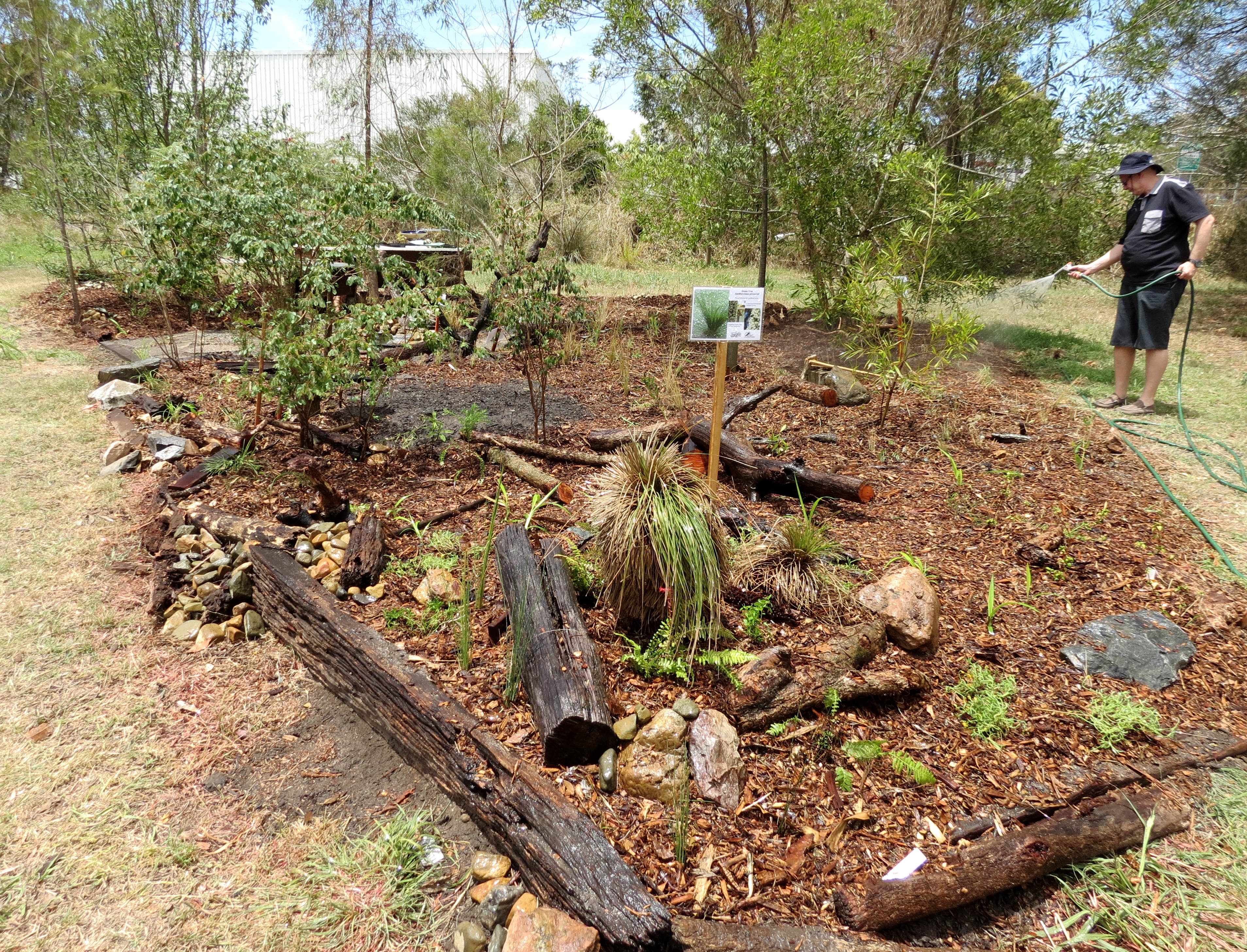
Planting finished – Mark does the final watering in

An enthusiastic team completed the micro-habitat Pollinator Link garden at the B4C Sustainability Centre – a little piece of bush that can be created in a suburban backyard.

The garden is a key link between Belmont Hills and Bulimba Creek, creating a wildlife corridor for birds, butterflies and bees. Today’s workshop started with my presentation about the Pollinator Link initiative: Pollinator Link – Belmont Hills – B4C – Bulimba Creek

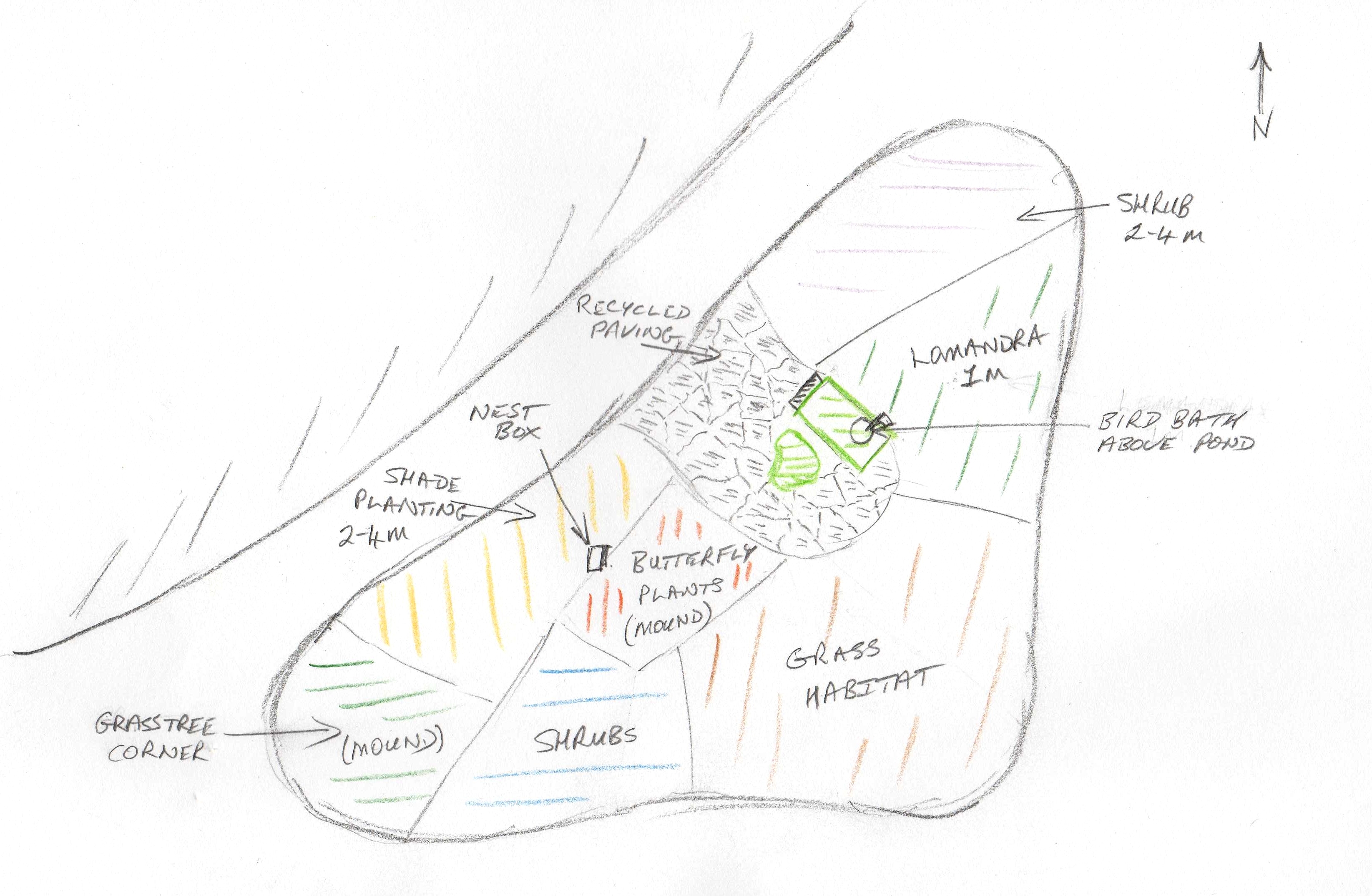
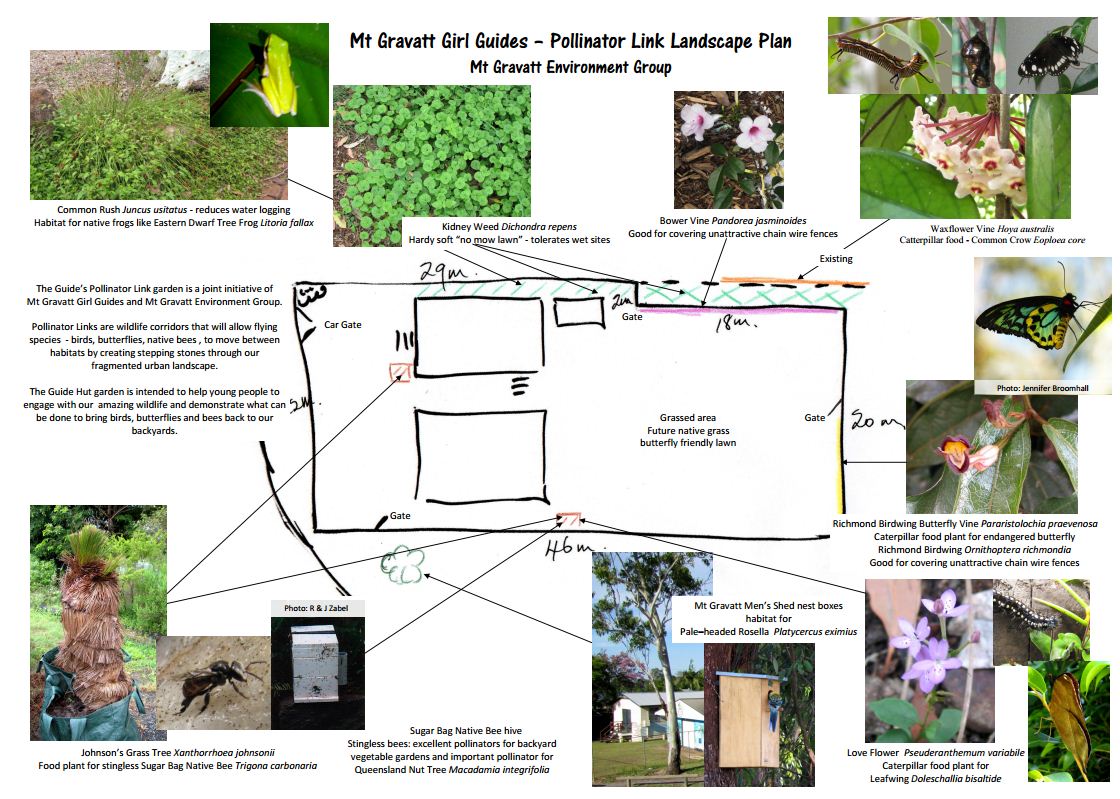
Landscape plan

The garden was landscaped to create a micro-habitat with a mixture of native grasses, herbs, shrubs and trees providing food, shelter and water for a range of pollinators as well as frogs and lizards. Just as we were finishing one of the locals arrived to inspect our handywork. Besides the Magpie two species of butterflies and a skink were already taking advantage of the water and shelter.

Grass Habitat
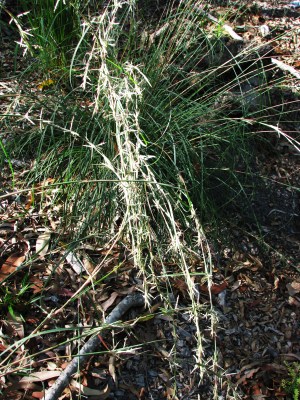
Barbed Wire Grass

The planting includes Kangaroo Grass Themeda triandra and the aptly named Barbed Wire Grass Cymbopogon refractus.

Evening Brown Melanitis leda

a
a
a
a
a
a
a
aa
a
a
a
a
a
a

Barbed Wire Grass is caterpillar food for the Evening Brown butterflies.

a
a
a
a
a


a
a
a
a

Evening Brow caterpillar

The Evening Brown caterpillar is quite unique with its black face and horns. I love coming across species I have never seen before.

a
a
a
a
a
a

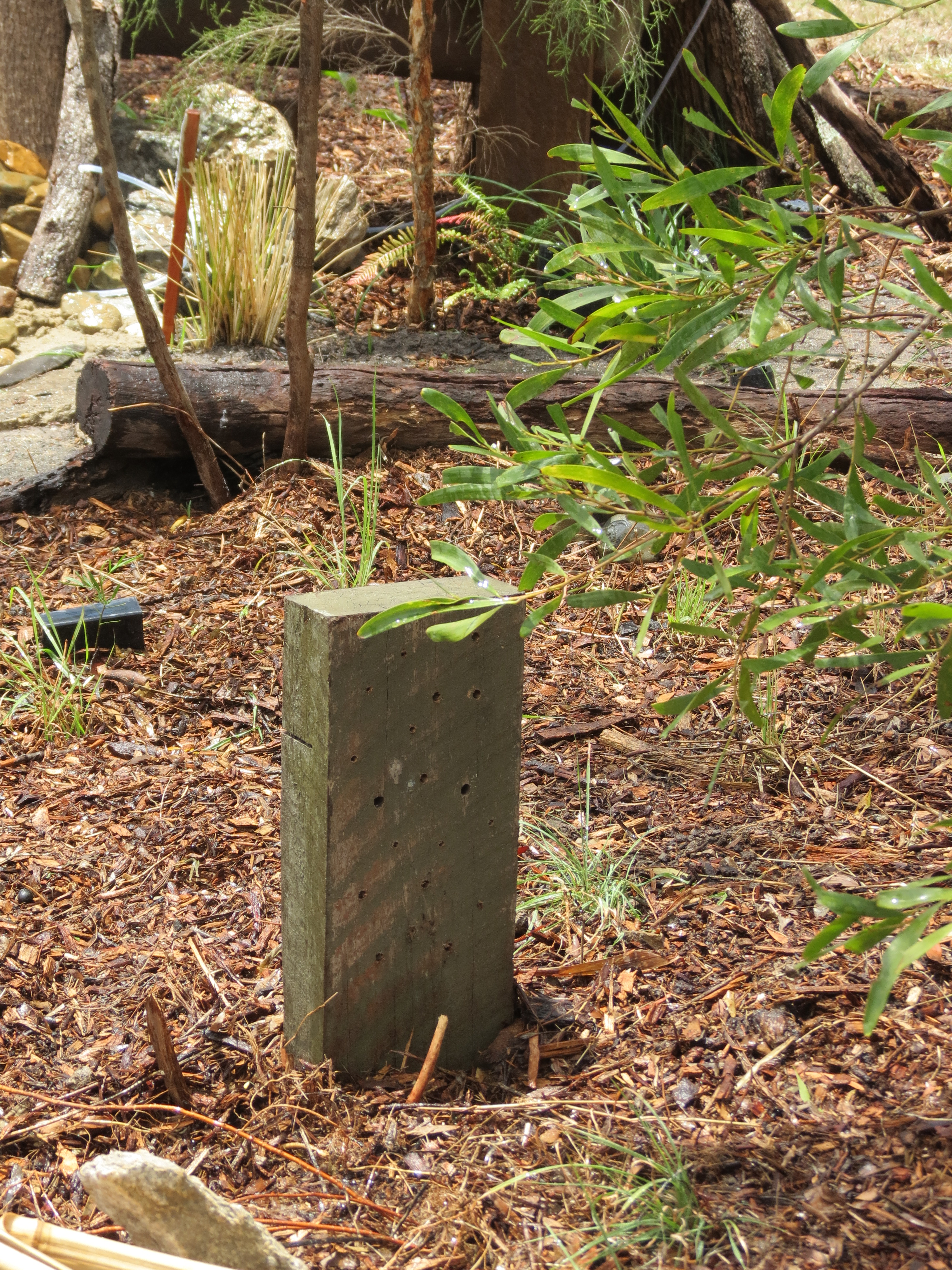
Breeding site for Leafcutter & Resin Bees

The clumping nature of grass provides safe habitat for lizards. Adding a backyard bee home will create breeding places for native Leafcutter and Resin bees. Australia has more than 1,500 native bee species but they are not commonly known. Only a small number of native bees like the Singless Sugar Bag bees, Trigona carbonaria, are social bees living in a hive. The vast majority of our native bees are solitary. The female Leafcutter bee cuts neat 20c sized pieces out of rose leaves. Rolling the cut leaf between her legs she flies off to find a suitable hole to make a cigar shaped nest to load with pollen before laying her eggs. Drilling a number of holes, ranging between 5 and 10mm diameter, in an off cut of landscaping sleeper created a bee home for native bees in the grass habitat.

Wood shavings for Pardalote nest box

Bird Breeding Nest-boxes

Many of our native birds, and species like Sugar and Squirrel Gliders, depend on tree hollows for nesting. Trees typically only start forming hollows once they are over 100 years old. Tree clearing for urban development means there is now a critical shortage of breeding hollows and we are not seeing some of the most special birds in our backyards.

Installing nest boxes designed to support particular will help restore the balance for smaller less aggressive species and bring more birds to our backyards.

Spotted Pardalote (female) – Photo: A Kittila

Pardalotes are a particularly cute little bird that normally burrow into earth banks to nest in a hollow. Aside from being cute these birds eat psyllids/lerps that attack eucalypts and lilly-pillies. The pardalote box has a short tunnel to simulate a tunnel into an earth bank.

Water – High Pond & Low Pond

Water is the most critical factor in building backyard habitat for wildlife … even butterflies and bees need water.


a

Frog ponds with bird bath in background

Recycling an old cast iron bathtub also creates an excellent resource for frogs and lizards.

Mounting the bath tub high above the ground makes it safe habitat for climbing frogs like the Eastern Drawf Tree Frog Litoria fallax.


a
a
a
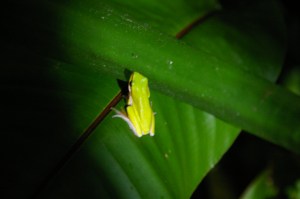
Eastern Drawf Tree Frog – Fox Gully Bushcare

Climbing frogs like the Eastern Drawf may travel well away from water sheltering from the sun under leaves. However, these frogs still need water for breeding and they can be crowded out by ground dwelling frogs like the Striped Marsh Frog Limnodynastes peronii. Providing a high pond recreates the balance that existed prior to urban development.

Striped Marsh Frog – Roly Chapman Reserve


a
a

The low pond provided habitat for ground dwelling frogs that cannot climb.


a
a
a
a
a
a
a
a

Bird bath overflows to High Pond

Bunnings have excellent hanging bird baths for only $13. These baths are ideal because they can be mounted out of reach of cats and they are just the right depth for birds like Rainbow Lorrikeets. Two Rainbows can fit in at the same time and still have room to splash water for metres around. A key issue with backyard birdbaths is changing the water regularly to stop mosquitoes breed. By hanging the bird bath over the High Pond and connecting a solar pump the water level will be automatically maintained for the birds and reduce risk of mosquito problems.

Arrow-leaf Violet – caterpillar food for Laced Fritillary

Food for Wildlife

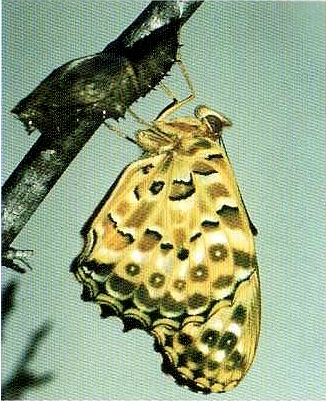
Attracting a wide range of butterflies species to our backyards requires planting a range of different plants because the caterpillars of species like the Australian Leafwing Doleschallia bisaltide and the endangered Laced Fritillary Argyreus hyperbius only feed on one plant species.

a

Laced Fritillary – source Create More Butterflies

The Laced Fritillary is so specific its caterpillars will only eat leaves of the Arrow-leafed Violet Viola betonicifolia even ignoring the more commonly planted Ivy-leaf Violet Viola banksii. Planting Arrow-leafed Violets will help protect these beautiful but highly endangered butterflies.

a
a
aa
a
a
a
a
a
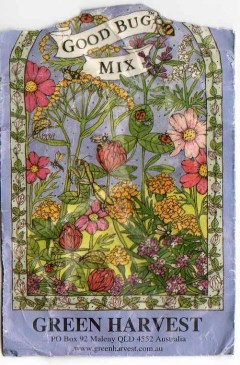
Good Bug Mix

Planting Green Harvest’s Good Bug Mix is an interesting experiment in providing food for a range of beneficial insects such as Hoverflies the larva of which eat aphids off roses.

Attract beneficial insects

Rubbish as Habitat

Recycled railway sleeper retaining wall

Landscaping for the micro-habitat garden used a lot of materials that we would normally take to the dump. Old railway sleepers that spent thirty years as a retaining wall are now perfect habitat for insects and lizards. Insects and lizards, as well as, protecting our garden plants, are food for insect eating birds.

a
a
a
a
a
a
a
a

Planting Kidney Weed around crazy paving

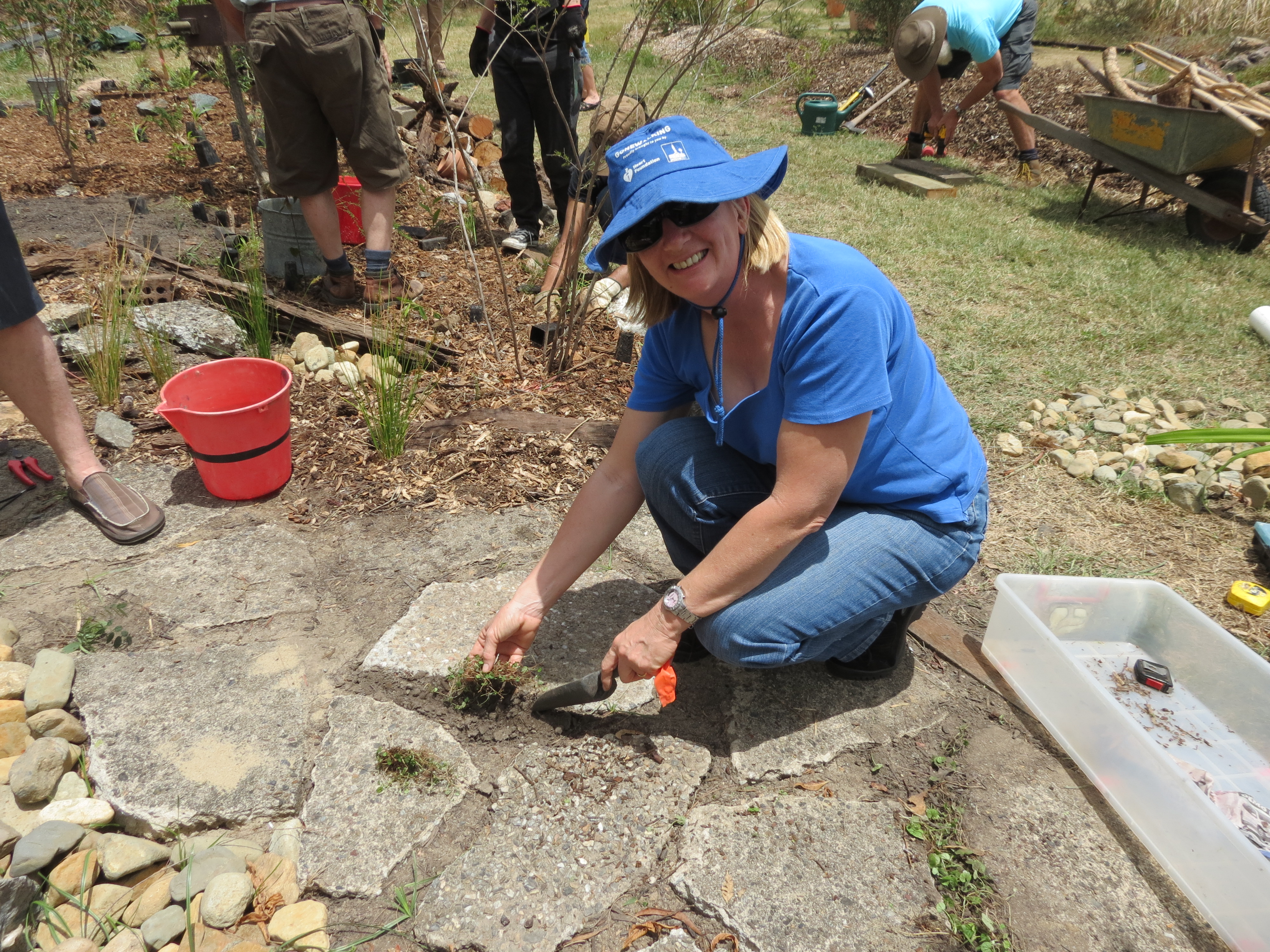
Old concrete was reused as crazy paving. Planting native Kidney Weed Dichondra repens will provide low growing very hardy ground cover that will spread and lock the paving in place.

Kidney Weed makes an excellent “no-mow” lawn for shady areas and will also handle full sun.

Posted in Pollinator Link, Wildlife Corridor | Tagged , , , , , , , , , , , , | 1 Comment

Micro-habitat Pollinator Link Workshop

By: Michael Fox

Micro-habitat Pollinator Link garden

I will be leading two Pollinator Link Workshops at the B4C (Bulimba Creek Catchment Coordinating Committee) Sustainability Centre, cnr. Wright Street & Old Cleveland Road, Carindale.

Workshop Dates: Wednesday 31 October and Saturday 3 November

Join me and B4C volunteers building a mico-habitat: a piece of bushland in fifty square metres. Much of the material to be used to build the habitat is the sort of stuff that you might normally take to the dump.

Green Tree Frog

An old cast-iron bathtub becomes a High Pond suited to frogs that can climb like Green Tree Frogs. Bamboo becomes a backyard bee home for native Leafcutter and Resin Bees while an old white ant eaten railway retain wall becomes lizard habitat as well as allowing garden areas to be mounded to create interest.

This garden will be part of the Pollinator Link between Belmont Hills and Bulimba Creek.

Posted in Pollinator Link, Wildlife Corridor | Tagged , , , | 3 Comments

Pollinator Link at Mt Gravatt Library

By: Michael Fox

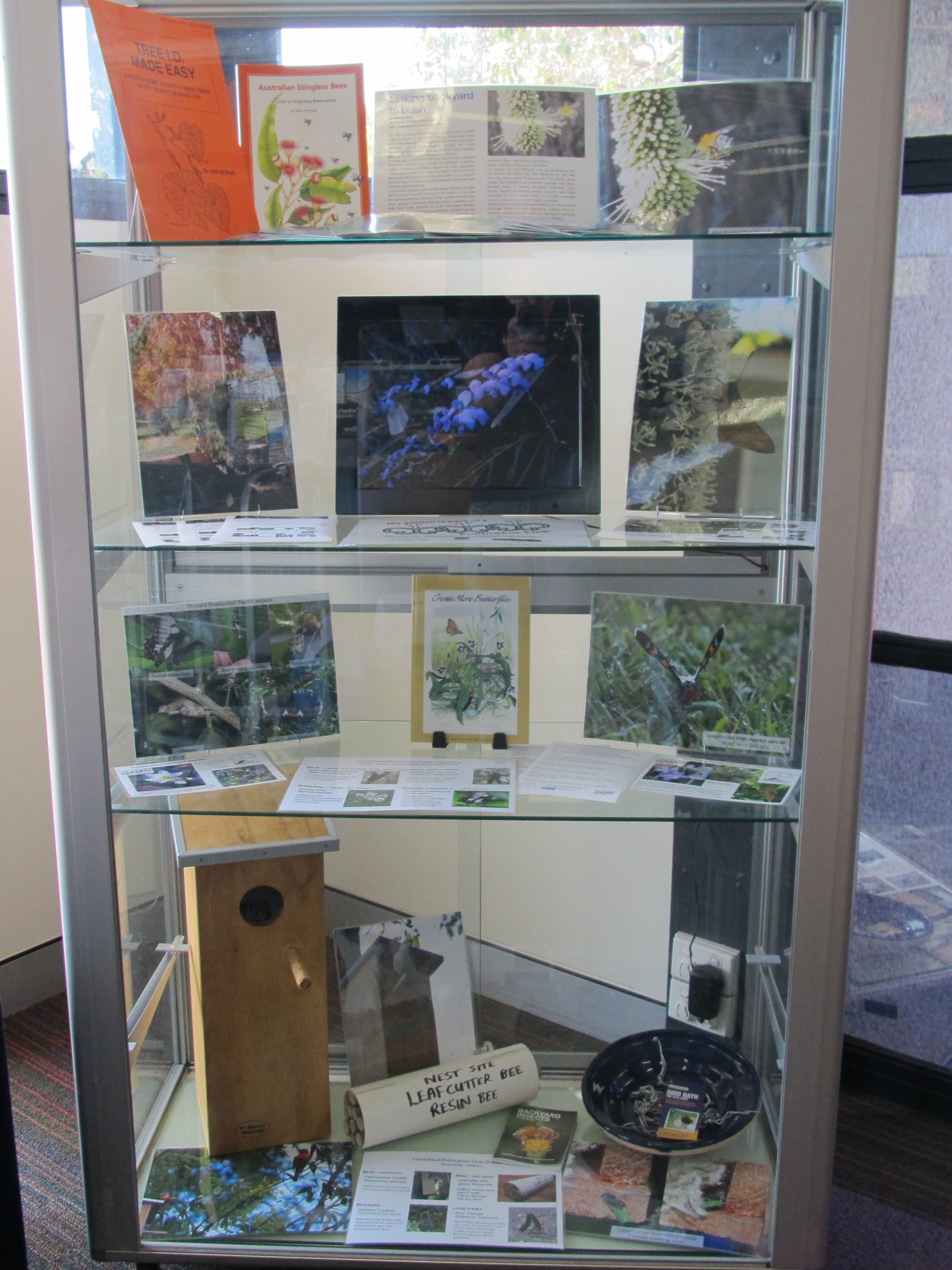
Mt Gravatt Library display

Pollinator Links: wildlife corridors for urban spaces, was launched in September at our local Mt Gravatt Library.

As part of the launch butterflies and birds was the theme for the regular Children’s storytime. Mt Gravatt Environment Group member and Freelance Cartoonist, Edd Cross, prepared a set of colouring sheets featuring local birds and butterflies. Download Edd’s sheets and colour in to lean about our local wildlife.

My presentation Pollinator Link – Mt Gravatt Library – 13 Sept 12 focused on building our first

Birds, butterflies & bees in our backyards

Pollinator Link between Mt Gravatt Conservation Reserve and Bulimba Creek.

Our urban areas are a matrix of roads, houses and fences that create barriers to movement of wildlife:

• Reduced diversity of birds in backyards – less Fairy Wrens and more Crows
• Less butterflies and bees in backyards
• Increased species loss in isolated patches of bushland – predation, fire, etc

Guide Hut Pollinator Link garden

The objective of Pollinator Links is to use our backyards to create wildlife corridors between remaining bushland areas.
Our first Pollinator Link garden is the Mt Gravatt Girl Guide Hut in the Showgrounds.
Posted in Pollinator Link, Showgrounds Precinct, Wildlife Corridor | Tagged , , , , , , , | Leave a comment

Pollinator Links launched at BCC Habitat Brisbane Citywide Meeting

Click to view presentation

By: Michael Fox

The Pollinator Link concept was well received at the BCC Habitat Brisbane Citywide Meeting this week. This was an important test of feasibility as the audience included experienced BCC Habitat Offices with university qualifications in environmental science, Robert “Bob the Beeman” Luttrel and bushcare members who know the

on-ground reality of restoring our urban bushland habitats.

Backyards, parks and even unit block balconies represent habitat opportunities for our native flora and fauna. Examples include Garden for Wildlife Alice Springs, The Wildlife Trusts in UK and the National Wildlife Federation Garden for Wildlife in USA.

The Pollinator Link concept takes this a step further to focus on linking patches of bushland habitat in our urban environment.

Pollinator Link – Mt Gravatt Conservation Reserve to Bulimba Creek

I developed the concept when I was struggling with the issue of creating a wildlife corridor linking Mt Gravatt Conservation Reserve with Bulimba Creek via Mt Gravatt Showgrounds. The on ground reality is that any effective link through the Showgrounds would hit a wall of houses and backyards. Being able to fly, our pollinators’ – birds, butterflies and bees plus moths, insects, flying foxes, micr0-bats, capacity to cross man-made barriers like roads and fences means they have potential to make an important contribution to ecological biodiversity. My inspiration for the Pollinator Link model came from the Pollinator Pathway in Seattle and the High Line in New York.

Patch-matrix-corridor mosaic – Wellers Hill

As I researched the concept and looked for examples of potential Pollinator Link locations I realised that in some areas like Wellers Hill where there are a number of isolated patches of bushland we could go beyond linking and actually consolidate habitat within urban spaces with a little a 10% of properties engaged. Pollinator Links have potential to create urban pollinator “patch-matrix-corridor mosaic”* habitat by interconnecting patches of bushland with wildlife friendly backyards. (* Habitat Fragmentation and Landscape Change Lindenmayer & Fischer (2006))

The Pollinator Link concept passed the feasibility test now we move to implementation stage:

How would you like to be involved?

  • Identify sites to be linked.
  • Join the 2013 Pollinator Link Week
Posted in Bushcare, Bushcare Articles, Mt Gravatt Conservation Reserve, Pollinator Link | Tagged , , , , , | Leave a comment

World Environment Day – Girl Guides Pollinator Link Garden

Landscape Plan

By Michael Fox

Sue Jones and I joined Mt Gravatt Girl Guides for World Environment Day last Tuesday night, to plant our first Pollinator Link garden. (Pollinator Link is a trademark of Mt Gravatt Environment Group)

Planting Team in action

Guide Leader, Lizi Dyrsdale, approached us at the 2 Millionth Tree planting in February with the idea of partnering in an environmental project. The project has become a real community effort with a grant from the Lord Mayor’s Suburban Initiative Fund supported by Cr
Watering Team

Krista Adams, raised gardens beds designed and constructed by Mt Gravatt Men’s Shed, Western Landscape Supplies providing a discount on garden soil and mature Grass Trees Xanthorrhoea johnsonii contributed by Bulimba Creek Catchment Coordinating Committee (B4C) (relocated from road development site with DERM approval).

c

c

Sue (left) and the team planting butterfly vines

On Tuesday night a team of Girl Guides, parents and friends planted, watered, dug out weeds and removed rubbish.

g

g

g

g

Sue Jones worked with one team planting butterfly vines – Running Postman Kennedia rubicunda – caterpillar food plant for Long-tailed Pea-blue, and Waxflower Vine Hoya australis – caterpillar food for Common Crow butterflies.

The Team … dirty gloves and all


lkj

lkjl

c

f

We finished the night with a proud and happy team.

k

k

d

Oval Woodland Cockroach

d

d

The local wildlife also appreciated our efforts. Our Australian bushland cockroaches are not the home invaders we commonly see. Species like this Oval  Woodland Cockroach live in leaf litter and do a valuable composting job.

b

Ringtail Possum

b

b

And a final inspection by this handsome Ringtail Possum.

c

Pollinator Link plants were sourced from B4C Native Plant Nursery at Carindale.

Posted in Pollinator Link, Showgrounds Precinct, Wildlife Corridor | Tagged , , , , , , , , , , , | 2 Comments