Blue Banded Bee visiting Mt Gravatt backyard

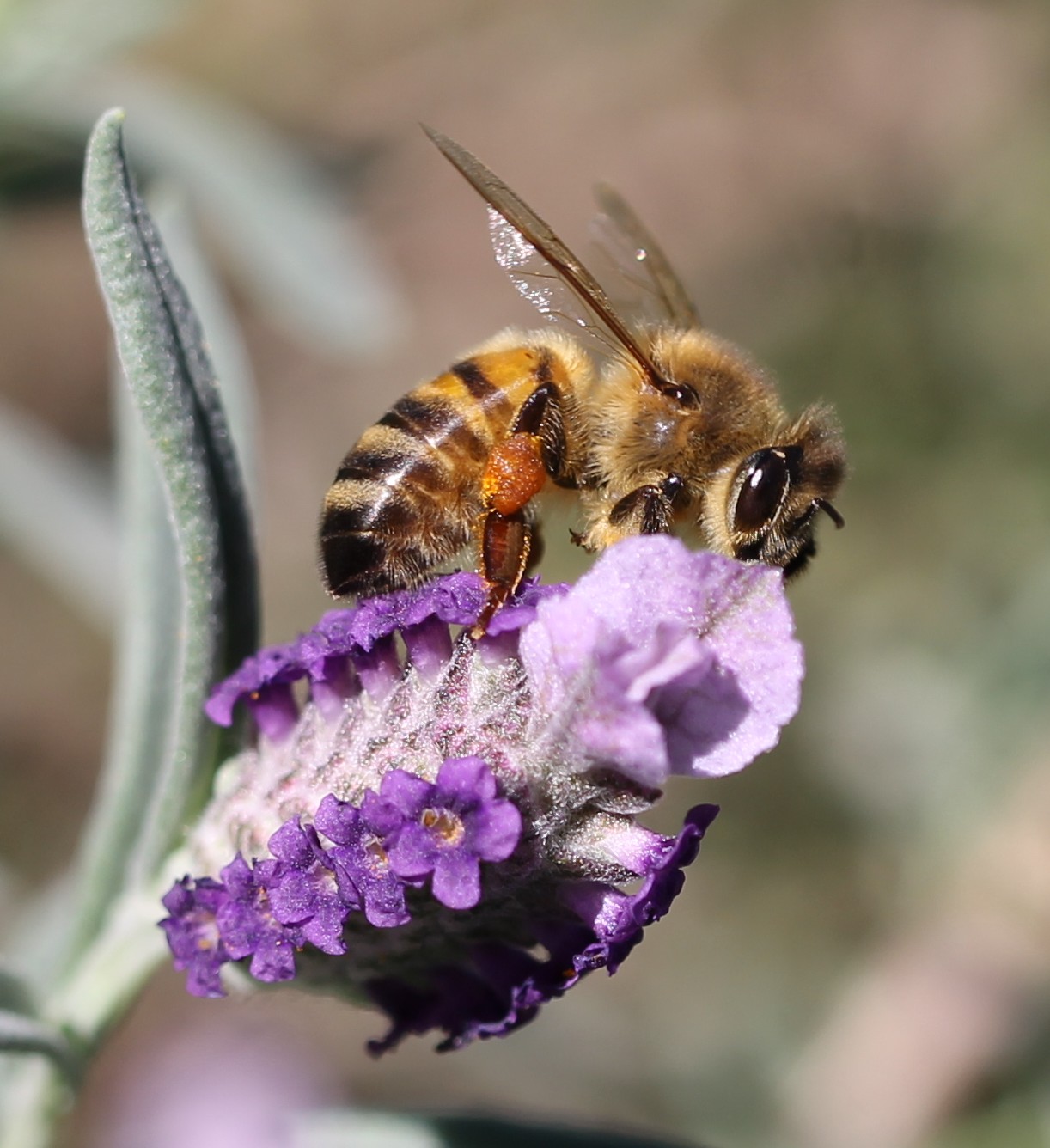
Blue Banded Bee - 20 Mar 13 - Alan Moore low res

Blue Banded Bee – Photo: Alan Moore

By: Michael Fox

Jenny sent this excellent video of a local Blue Banded Bee Amegilla cingulata visiting Blue Ginger Dichorisandra thyrsiflora growing in her Mt Gravatt backyard.

Jenny said “The shrub comes up out of the ground once a year and flowers and the bees do love it. I’m not sure if its native or imported but I know the bees are as I went to a talk you had in the Mt Gravatt Library about doing a green corridor from Mt Gravatt reserve so the bees could migrate. They seem to have migrated. They visit when flowers are blooming.”

I was able to identify the Blue Ginger flower using the useful Flower Pictures site. Blue Ginger is not an Australian native, it comes from Brazil. However, it is a tropical plant and seems to be happy in Jenny’s sub-tropical backyard.

Our local Blue Banded Bees certainly like this attractive Brazilian import, so it may be a valuable addition to Pollinator Link species and help create a wildlife corridors for our native birds, butterflies and bees.

Jenny contacted me with this video because as she said:  “I’m worried about the impact of the apartment corridor will have on the native animals and birds etc living in the Mt Gravatt Central area. Up to Grenfell Street is zoned as apartment and it will be a concrete jungle. At least my house is safe. I have no desire to sell knowing it will only be bulldozed for redevelopment.”

This transformation of our suburbs with more high rise unit building is definitely going to a challenge for our wildlife as well as existing residents.

Though our Pollinator Link initiative we aim to build wildlife corridors using backyard and at the same time highlight the importance for maintaining a balance between more buildings and roads, and the green space so important for both wildlife and the health of residents.

Posted in Pollinator Link | Tagged , | Leave a comment

Abbeville Community Garden part of Pollinator Link

Barbara and Krista - 15 Mar 2015

Barbara & Cr Krista Adams

By: Michael Fox

Visiting Abbeville Community Garden and meeting that community was a real pleasure, not to mention the amazing chilli chutney and cheese on offer.

Anissa - 15 Mar 2015

Anissa, garden member, with fresh Basil

Barbara tells me the event was organised to celebrate receiving grant from Brisbane City Council which will enable building the remaining eight garden beds and filling them with soil.

The garden community is an inspiring group ranging from young kids who love the raised beds where they can plant their seeds, young parents and retired people. The people I met certainly reflected the group’s mission on their Facebook:

OUR MISSION: To provide community driven food gardens, where children and community members of all ages can come together to learn, play, share and grow food – FOR LIFE !

Chilli - 22 Mar 2015

Fresh Chilli – makes great chutney

This special group is looking for new members to bring the new garden beds to life.

Abbeville Community Garden group offers two membership options:

  • Communal Beds – $15 per year
    • shared use gardens
  • Rental Gardens – $15 per quarter
    • sole use – produce from beds will  more than cover rental cost

      DSC06299

      Like Aubergines! Grow your own.

Membership fees cover the cost of public liability insurance.

My purpose in visiting the garden was to engage the community members in becoming part of a new Pollinator Link between Mt Gravatt Conservation Reserve and Bulimba Creek beside Mansfield State High School. Mt Gravatt Men’s Shed in the Showgrounds will be our first link in the wildlife corridor.

I prepared a flyer to show how Abbeville Community Garden can work with BCC parks, schools and backyards to create the wildlife corridor.


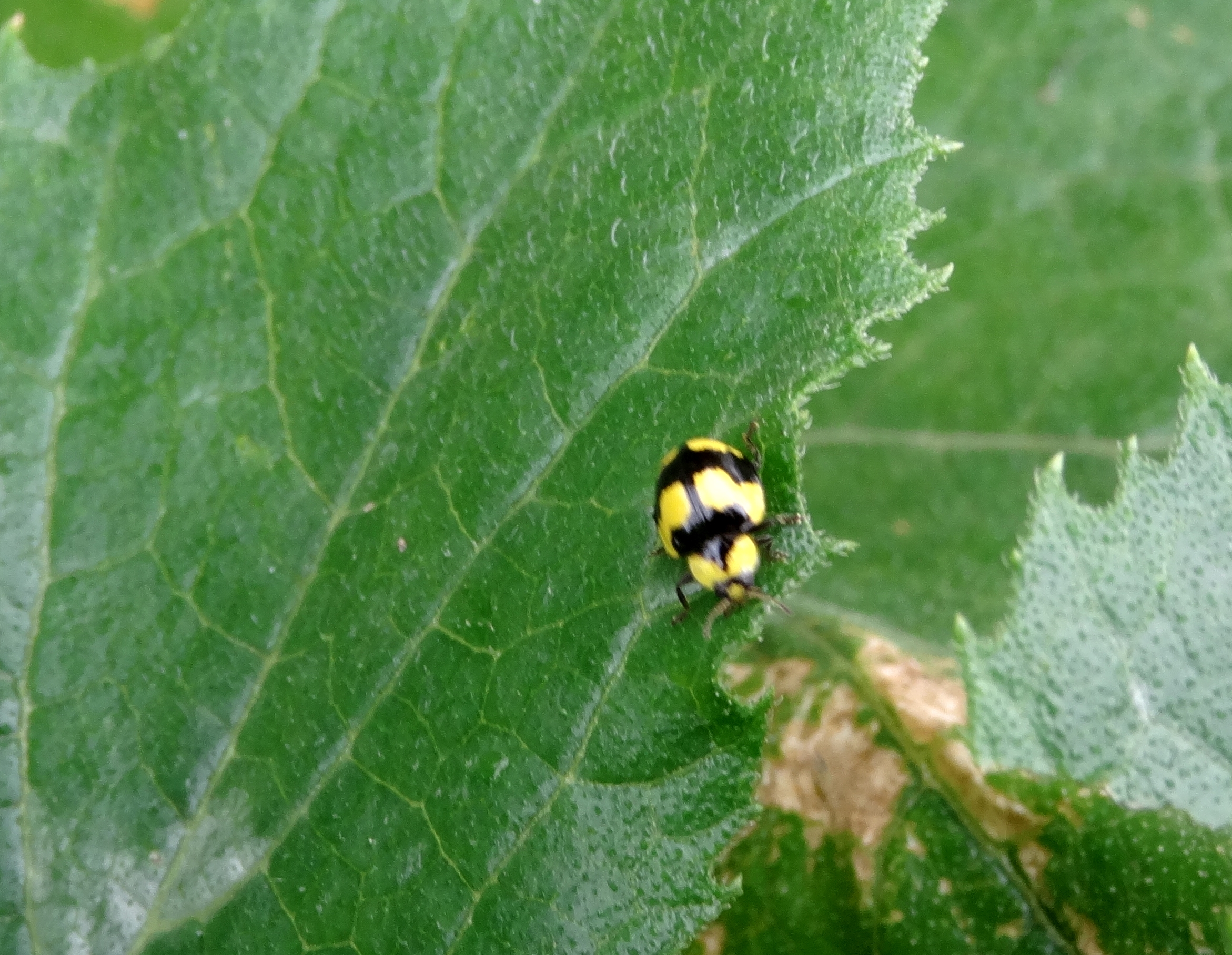
Fungus-eating Ladybird Beetle - Abbeville - 22 Mar 2015

Fungus-eating Ladybird Beetle – Illeis galbula

Pollinator Link gardens provide vital resources for transiting wildlife:

  • Food – nectar rich flowers, fruits, seeds and insects, spiders, lizards
  • Breeding – nest-boxes, bee blocks
  • Water – bird bath, frog pond, local creek

When I talk to people about their Pollinator Link garden I highlight the importance of attracting insects for insect eating birds. This is often counter intuitive – “I try to keep insects out of my vegetable garden!” However, Abbeville Community Garden is alive with valuable insects like the attractive yellow Fungus-eating Ladybird Beetle Illeis galbula which specialises in eating fungus and black mold on leaves of vegetables. (Reference: Brisbane Insects and Spiders)

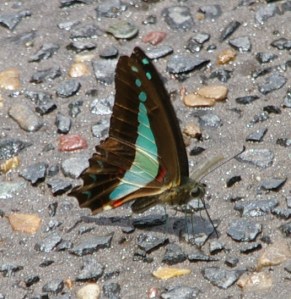
Blue Triangle - Abbeville - Susan Davies -

Blue Triangle butterfly

I also saw native pollinators including Blue Banded Amegilla cingulata and Teddy Bear Amegilla bombiformis bees. Both solitary bees these pollinators are very particularly valuable for vegetable gardens because they perform “buzz pollination” which is vital for plants like tomatoes, zucchini and cucumbers which require the flowers to be vibrated to shake out the pollen. Blue Banded and Teddy Bear bees are able to disengage their wings then use their wing muscles to shake the flowers.  European Honey Bees Apis mellifera cannot do buzz pollination.

And butterflies! New Garden member Susan emailed this photo of the beautiful Blue Triangle butterfly Graphium sarpedon. Forty-nine different butterflies species have been identified in Mt Gravatt Conservation Reserve. The aim of Pollinator Links is to invite these beautiful creatures back to our backyards and allow them to move between island bushland habitats with our city.

Posted in Bees, Mt Gravatt Conservation Reserve, Pollinator Link, Wildlife Corridor | Tagged , , , , , , , | 1 Comment

Living with a Brush-tail Possum

By Sandra Tuszynska

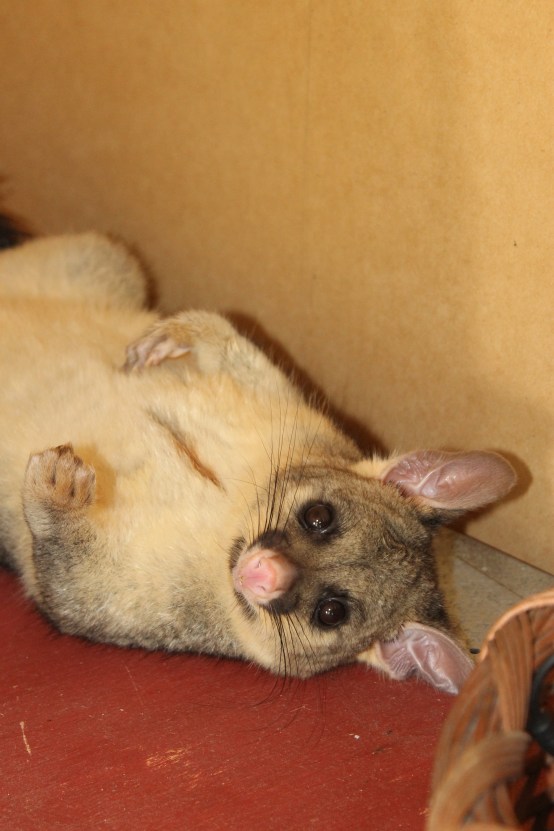
I have recently walked into the spare room, to find a brush-tail possum lying on her back, looking like a napping cat. The Latin name of this creature is Trichosurus vulpecula, meaning  “little fox” and in Greek meaning “furry tailed”.

CIMG2185Resident Brush-tail possum, sleeping on a desk, in a spare room, just like a domesticated cat.

Normally she sleeps in the roof, as the building is unfinished, so there is a large gap between the roof and the inbuilt shipping container, which it covers. On this hot day though, the possum decided to try out the desk in the spare room, which she could easily walk into as it has only a piece of screen hanging over the entrance.

I thought she was dead or injured to have ended up lying on her back like that, but she was breathing. Obviously tired and not too eager to move despite the disruption, she continued to lie there as I took several photos of her very cute face.

Brush-tail Possum, looking gorgeous.

Brush-tail possum, looking gorgeous.

When I checked up on her later, she was on her side and I felt certain that there was nothing wrong with her, she was simply sleeping there that day. I thought that maybe the fact that it was really hot, has made her choose to come down from the roof, and try the breezy room instead, but other days have been hotter and she was presumably in the roof.

I found out that possums like to sleep in dark, hidden places, not in the open like that, all exposed and in broad day light. I kind of gathered that, and this is why I thought it abnormal. Nonetheless, I have found this very adorable, it felt like more like having a pet cat snoozing on the desk, as I imagine they often do.

Posted in Uncategorized | Tagged , , , , | 1 Comment

The Hawkmoth Vision

by Sandra Tuszynska

Moths are often overlooked as pollinators, as many are only active by night and perhaps we often don’t find them as attractive as butterflies. However, moths belong to the same order as butterflies called Lepidoptera and are equally important as pollinators of plants.

Macroglossum stellatarum (photo by Dragisa Savic http://www.naturefg.com/pages/an-insecta-lepidoptera.htm)

Many moth species take over the night shift in pollinating plants. Nocturnal hawkmoths are highly sensitive to the scent of flowers and learn flower odours rapidly. Besides olfactory (scent) senses, like bees, moths also use colour vision to identify and discern suitable flowers to forage for nectar (Kelber et al., 2003). However, while bees and butterflies are colourblind by night, just as we are, nocturnal moths can discriminate between flowers at starlight intensities (Kelber et al., 2003).

Diurnal hawkmoths (active during the day) and nocturnal hawkmoths, of the family Sphingidae, see colours and have excellent vision, which they use to hover in front of flowers. The diurnal hummingbird hawkmoth, Macroglossum stellatarum, strikingly resembles the flight, sound and appearance of a hummingbird. It uses its very long tongue (probosis), to reach deep inside some of the elongated flowers hiding their nectar.

Macroglossum stellatarum, Hummingbird Hawkmoth (image by Jean Haxaire, http://tpittaway.tripod.com/sphinx/m_ste.htm)

Diurnal hawkmoths visit a variety of differently coloured, shaped and sized flowers. In contrast, their nocturnal cousins prefer white, cream and brightly yellow flowers, which produce strong intensity (achromatic) contrast to the surrounding darkness (Balkenius and Kelber, 2004). Nocturnal hawkmoths are thus sensitive to the intensity or brightness of flowers, rather than their actual colour (chromatic) properties.

Hawkmoths like other insects possess compound eyes (image from http://it.wikipedia.org/wiki/Macroglossum)

Moths possess trichromatic or tipple colour-sensitive vision with an ultraviolet, blue and green-sensitive receptor types. Both diurnal and nocturnal moths can learn to memorise colours rapidly.

Learning to Discriminate Colours

Like bees moths can learn to discriminate colours based on the reward given to them. Animals can be trained to associate one colour with a food reward and another colour with no reward. When relative intensities of light are changed and the animal chooses the stimulus of the learned wavelength, the animal uses colour to identify it’s reward. If the animal change its choice behaviour based on intensity-related cue, the animal possesses achromatic (brightness) and not colour based vision.

In 1914, von Frisch studied colour vision in the honeybee. Animals are trained to associate a reward with a specific colour, but instead of one single unrewarding stimulus, many shades of grey are used. If the trained animal can distinguish the colour from all the shades of grey, then it is most likely to use coulour (chromatic) vision.

Deilephila elpenor, a nocturnal hawkmoth (image by Yoann Peloaud, http://www.european-lepidopteres.fr/Deilephila-elpenor.html)


It was shown that both nocturnal and diurnal hawkmoth species can learn to associate colours of flowers, which are not typical colours they associate with food. For example M. stellatarum have an innate preference for blue and yellow, however they rapidly learn to accept green as a reward flower (Kelber et al., 2003).

The moths migrate from the Mediterranean to central and northern Europe in summer and must rapidly learn to find new food sources along the long journey. In fact, the hummingbird moth (M. stellatarum), can be trained to a new pair of colours every day, for several days in a row (Kelber et al., 2003). These moths have exceptional colour vision. They choose the correct colour, even if one of the colours is made ten times brighter or a hundred times dimmer than the other, under different wavelengths of light (Kelber et al., 2003).

White-lined Sphinx moth, Hyles lineata, feeds at night and in day light (image from http://www.birderslounge.com/2010/11/winner-challenge-for-charity-november-2010/20080405-dsc_0367/)

Strictly diurnal moths will stop visiting flowers under dim conditions and resume feeding as soon as light is available. Hyles lineata, White-lined Sphinx moth is active during the night and the day, so it continues feeding in very dim conditions. These amazing creatures possess day and night colour vision, adapted to an incredibly wide range of light intensities, which still baffles scientists (Kelber et al., 2003).

White-striped Sphinx moth, Hyles lineata (Image by Doug Long, http://fineartamerica.com/featured/-hummingbird-moth-print-doug-long.html)

Colour Constancy

Dawn and dusk are the two times of the day when the colour of light changes considerably. Colour constancy is the ability to recognise a specific colour regardless of the illumination, which may change the shade or intensity of a colour. While the spectra reflected from an object reaching our eyes differ under the sun, compared to the same object being in the shade, our brain recognises the colour as the same (Balkenius and Kelber, 2004). Constancy is especially important to hawkmoths as many species are active at dawn and dusk, when the spectrum of illumination changes the most. Their colour-constant visual system, allows moths to find and recognise rewarding flowers, despite of the diurnal changes in colour of the illuminating light.

Galium Sphinx moth, Hyles gallii (image by Daniel Morel, http://www.lepinet.fr/especes/nation/lep/?e=p&id=38050)

Moths are also able to learn illumination. Balkenius and Kelber (2004) found that when the illumination is changed from the illumination used during training, the moths are initially disoriented. They explore the flowers more to identify the correct or reward producing flower colour. However, within a few days the moths adjust to the different illumination and are back on track visiting the rewarding flowers.

Another test showed that moths can learn to discriminate between illumination (Balkenius and Kelber, 2004). They were not rewarded when yellow illumination was used and rewarded when white illumination was used. The moths learnt to only forage during white illumination and did not bother to forage under yellow illumination, as this would not result in a food reward (Balkenius and Kelber, 2004). This intelligence possibly becomes handy for pollinating insects to learn exactly when flowers produce the highest quality nectar, which changes throughout the day.

Large Elephant hawkmoth, Deilephila elpenor, (image by Jean Haxaire, http://tpittaway.tripod.com/china/d_elp.htm)


Kelber et al. (2003) tested constancy in D. elpenor and M. Stellatarum hawkomoths trained to green and turquoise stimuli, under white and yellow illumination. Under yellow illumination, turquoise is perceived as green under white illumination, by the blue and green photoreceptors. Moths trained to associate a food reward with green colour under white illumination, could easily distinguish it from the turquoise colour, under both white and yellow illumination (Kelber et al., 2003). The moths thus show colour constancy, as they did not confuse these two colours, always choosing the rewarding colour despite the confusing illumination. For nocturnal insects, the contrast produced by white or yellow flowers against the dark vegetation is vital.

Night Vision

The achromatic aspect of colour is its intensity or brightness. While bees use achromatic vision for pattern recognition and motion vision, their colour vision is not sensitive to achromatic properties such as brightness.

The diurnal hawkmoth M. stellatarum is sensitive to achromatic cues. At very dim light intensities, it is unable to see colour as only the moth’s green receptor is sensitive. In dim conditions M. stellatarum, naturally prefers flowers that are brighter, producing high achromatic contrast (Kelber et al., 2003).

Galium Sphinx moth, Hyles gallii (image by Siegfried Tutlewski, http://www.naturspaziergang.de/Nachtfalter/An_gro/Hyles_gallii.htm)

These moths prefer dark blue compared with light blue colours, when presented on a light grey background. They will also use contrast within the one flower, for example they choose dark blue flowers with a white centre, instead of a black centre, and light blue flower with a black instead of white centre (Kelber et al., 2003).

In contrast the nocturnal Deilephila elpenor, does not discriminate between different shades of blue or yellow. It is postulated that it uses achromatic cues only when chromatic cues are absent (Kelber et al., 2003). In fact, the moths ignore white stimuli on a light grey background, but are highly attracted to the same stimulus on a black background, which produced a highly achromatic (bright) contrast. However, even in dim starlight, nocturnal hawkmoths use chromatic (colour) cues rather than achromatic (brightness) cues in recognising rewarding flowers (Kelber et al., 2003).

Elephant Hawk-moth, Deilephila elpenor (http://www.hlasek.com/deilephila_elpenor_a552.html)


Besides recognising flowers by colour, brightness and scent, hawkmoths also possess excellent memory of innate and learnt flower attributes. They hibernate for up to 5 months during the European winter but wake up remembering which flowers provide them with sweet nectar.

Refereneces

Kelber A., Balkenius A. and Warrant E. J. (2003). Colour Vision in Diurnal and Nocturnal Hawkmoths. Integr. Comp. Biol., 43:571-579.

Balkenius A. and Kelber A. (2004) Colour constancy in diurnal and nocturnal hawkmoths. The Journal of Experimental Biology, 207: 3307-3316.

Posted in Uncategorized | Tagged , , , , , , , , , , , , , , , | Leave a comment

The Exhilarating Encounter with a Hummingbird Moth

by Sandra Tuszynska

Latest update on Hawk Moths in Australia.
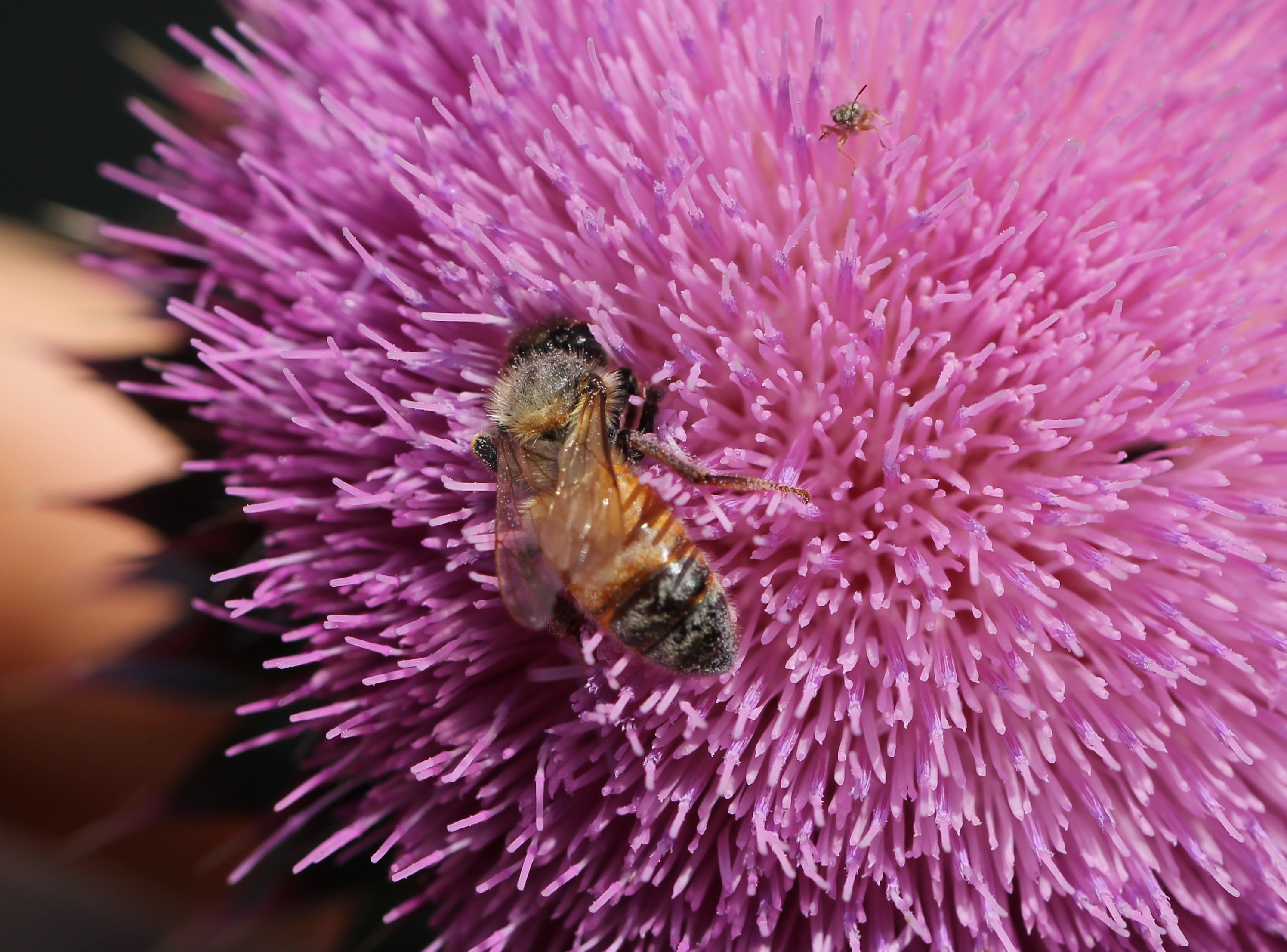
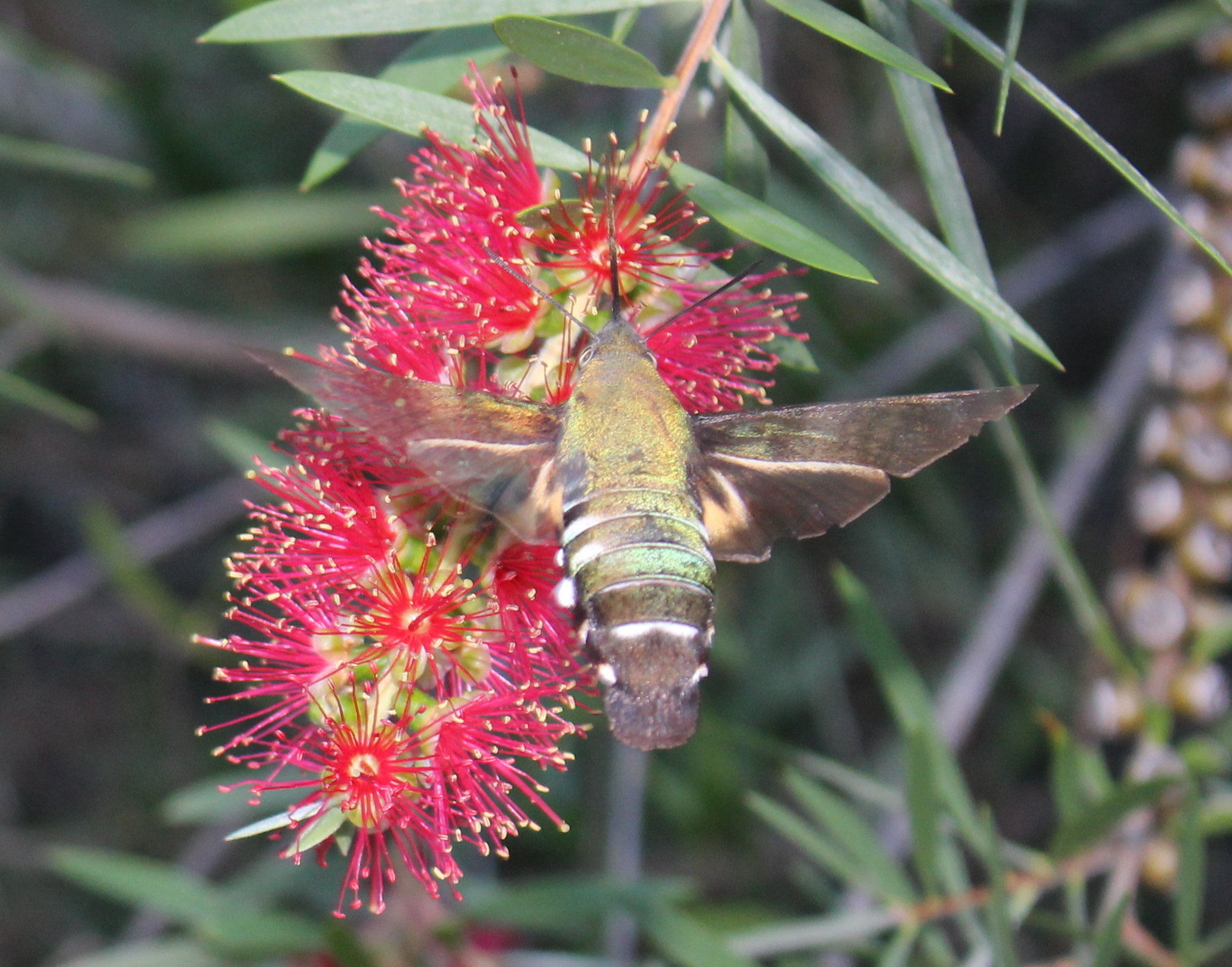
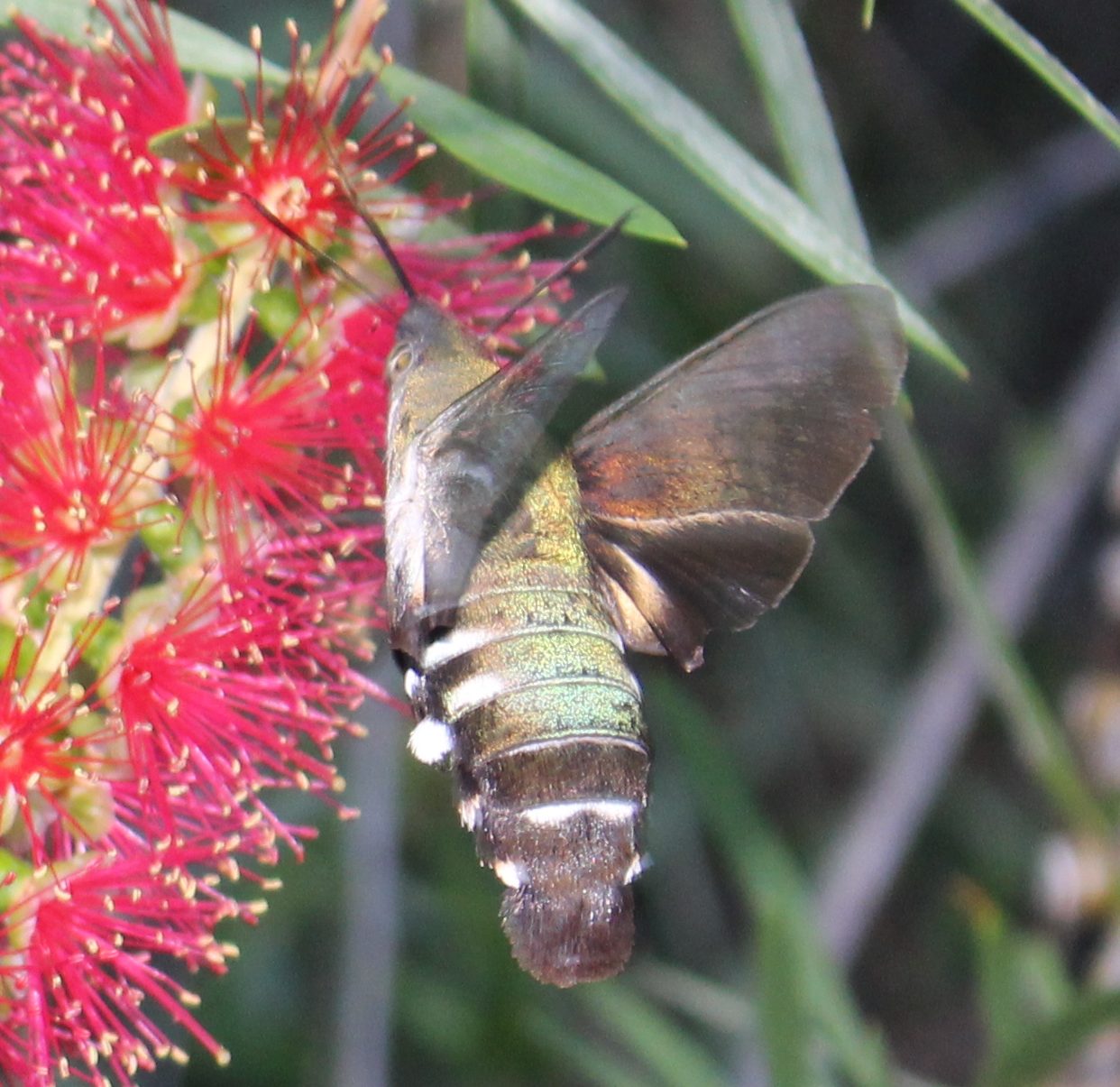
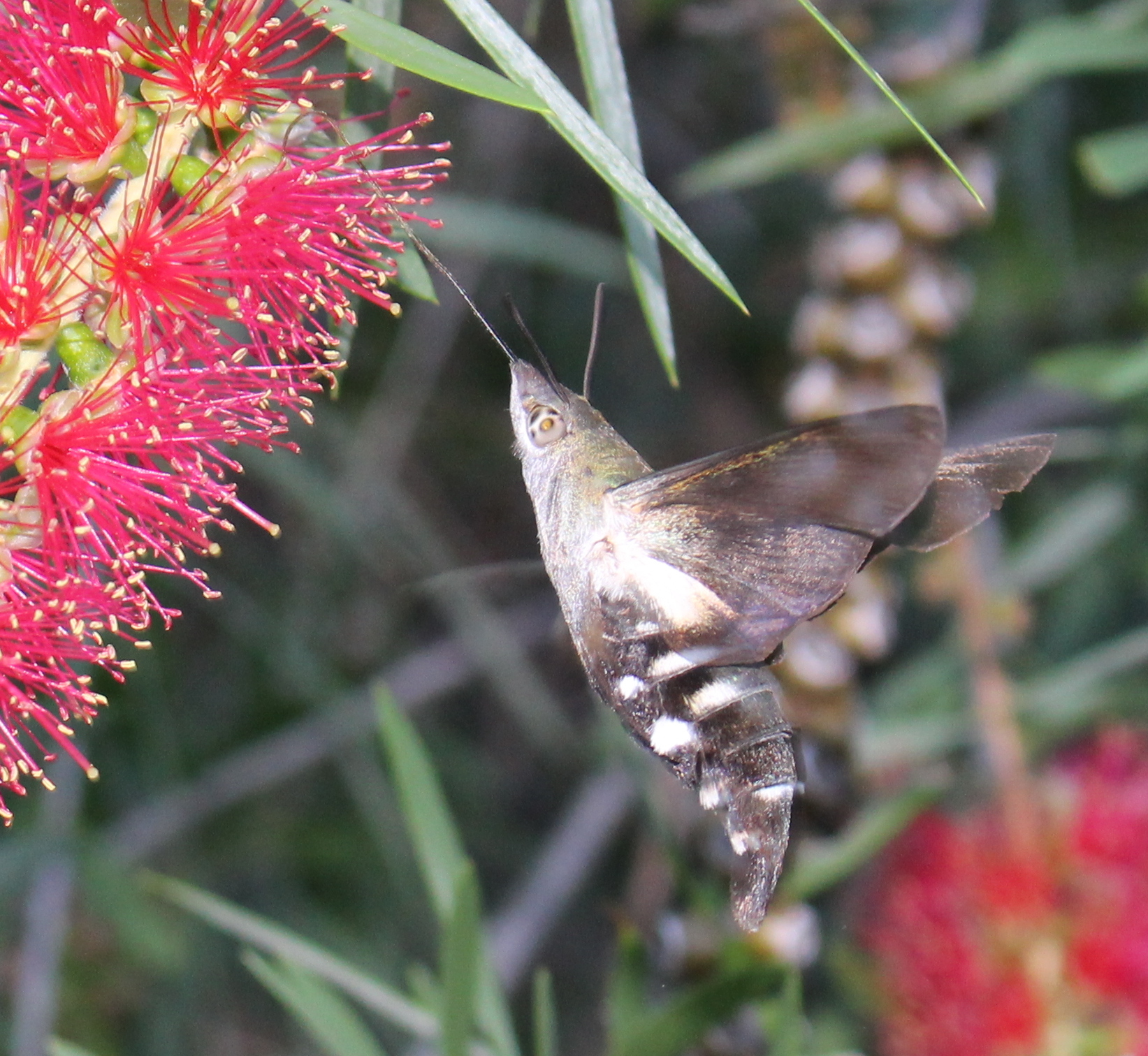
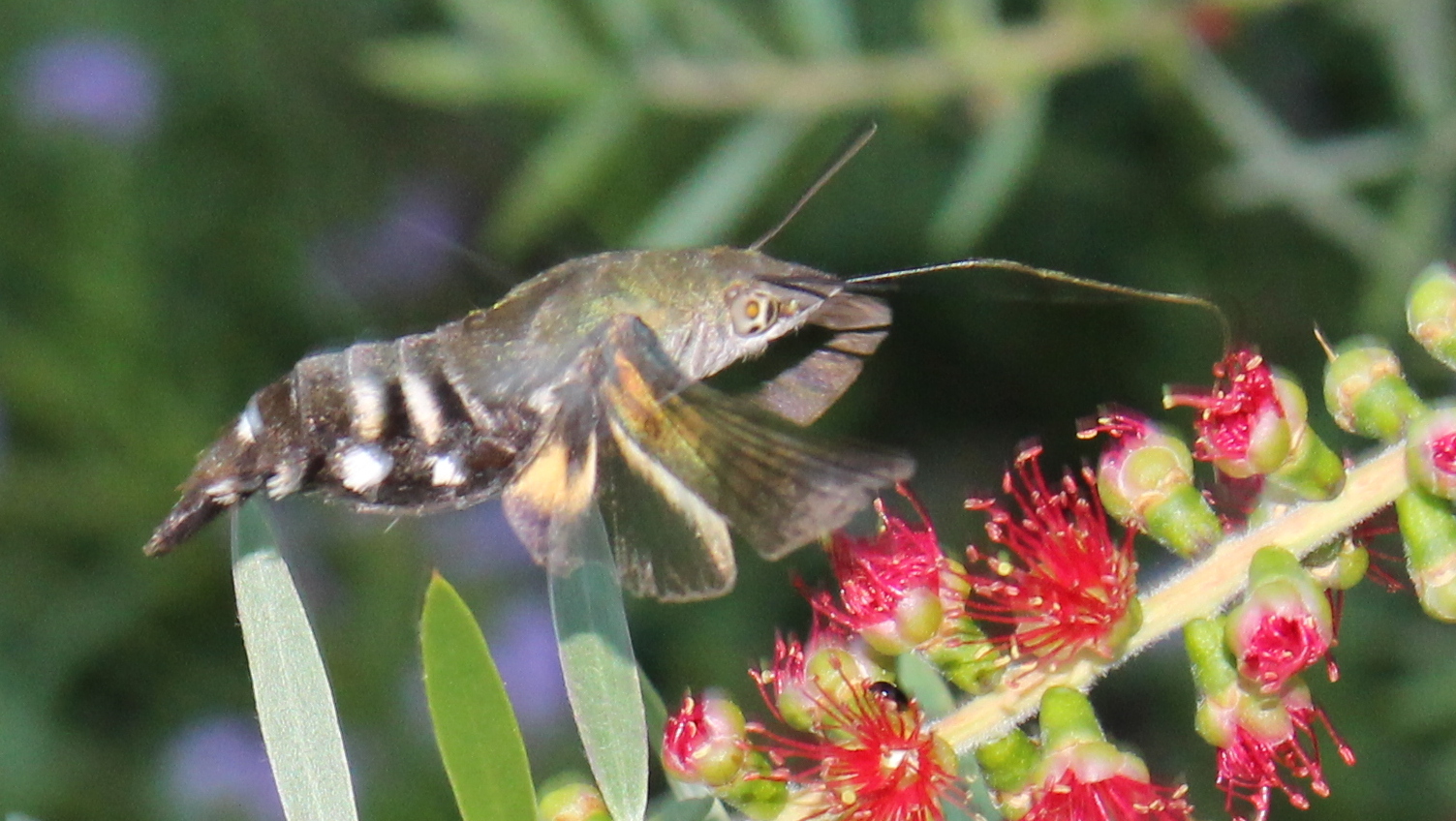
About two weeks ago I have experienced something out of my ordinary. I was talking to a friend in her garden at around 6 pm, and as we stood by a red bottle brush (Callistemon), we heard a very loud buzzing sound. The larger than normal pollinator hovered with it’s extremely rapidly beating wings near the flowers. It was just like a tiny hummingbird! We were so intrigued, we almost got fooled, but I knew that unfortunately, we do not have hummingbirds in Australia.

Hummingbird Hawkmoth, <em>Macroglossum micacea</em>, Wilkesdale, SE QLD, Australia

Hummingbird Hawkmoth, Macroglossum micacea, Wilkesdale, SE QLD, Australia

I started craving for my camera. Soon my friend brought out her brand new Cannon hoping to maybe get a shot of this fascinating little creature, so we could get a closer look. As we have suspected this fantastic, hovering beauty was a hawkmoth. I was determined to get a closer pic and was very glad when my friend handed me her camera. I followed the very adamant creature trying to capture it’s beauty on camera. It was fast and I just stood there mesmerised by its disposition.

Macroglossum sp. Wilkedale, AustraliaAfter some time it seemed to have become accustomed to my prying presence and began to ignore me, completing it’s seemingly one pointed mission, as I ecstatically snapped away. I could have stayed there for ever, I did not want this experience to ever end. After a while though, it was time for me to leave this impressive experience behind. As I walked away, I hoped that at least some of the photos would turn out, so I can identify the creature and perhaps share its beauty with others.

IMG_1236-Macroglossum sp. Wilkedale, AustraliaI asked my friend if I could borrow her SD card to copy the images onto my computer. I could not believe the treasure I have acquired. I felt so much joy, just like an excited child who has just received a brand new toy, or better yet a brand new puppy!

IMG_1238-Macroglossum sp. Wilkedale, AustraliaSome days later I sat down to get a closer look at the images and choose a few good ones to share. I also started doing some research to identify this hummingbird-like hawkmoth. This turned out to be a long winded venture. I first looked up Google Pictures to see if any other person has posted a photo of this creature. I found a few similar moths but from China and Europe. The genus I began to suspect the moth must be from is Macroglossum, but I could not find photos of any similar species in Australia. This lead me to find an incredible photographer, SINOBUG form Toowoomba, who has moved to China to photograph insects. Another fantastic resource I encountered is the Australian Wildlife Photography group on Flickr, where people post some of the most amazing images of Australian Wildlife.

IMG_1242-Macroglossum sp. Wilkedale, AustraliaI emailed Helen Schwencke, a butterfly expert and author of Create More ButterfliesEarthling Enterprises. Helen suggested that it might be a Bee Hawk moth, Cephonodes spp., but after some comparison of the features between the moths I was in doubt. I’ve checked the Australian Museum site and images, and Ous-Lep a site dedicated to Australian Lepidoptera, the moth and butterfly order, but I could not see what I was looking for. It is not easy to compare a photo of a live specimen with a drawing or photos of dead specimen.

Macroglossum micacea, Wilkesdale, SE QLD, AustraliaI’ve decided to ask What’s that Bug. This incredible site is run by passionate volunteers in the U.S., who identify insects from photos that people upload. To my surprise, I received a massage from them in less than a day and here is what Daniel wrote:

Dear Sandra,

We believe we have identified your diurnal Hawkmoth as Macroglossum micacea based on images posted to Butterfly House where it states:  “The adult moths of this species have dark brown forewings sometimes with indistinct paler bands across them. They have even darker brown hind wings with two yellow areas by the inner margin. The moths have a wingspan of about 5 cms.”  Little other information is provided and the site does not indicate the species flies during the day.  The Sphingidae Taxonomic Inventory shows Queensland as the only part of Australia where sightings have been reported.  Since they are in the same genus, the similarity to Macroglossum stellatarum is understandable.  It is also pictured on the Papua Insects Foundation.  Most online images are of mounted specimens, and we are thrilled to be able to post your excellent action photos of this lovely diurnal Hawkmoth.

IMG_1253-Macroglossum sp. Wilkedale, AustraliaI was so grateful and absolutely delighted by this response. I notified Helen who suggested to Ask an Entomologist to confirm the moth’s ID. So I emailed Dr. Kathy Ebert to illuminate me further on this humming query. I have not heard back yet but I am patiently waiting. In the meantime I have started to do some research on hummingbird and other hawkhmoths.

IMG_1255-Macroglossum sp. Wilkedale, AustraliaI have downloaded some fascinating science articles on moth vision. Here is a preview of what’s to come in the next post:

Hummingbird moths are actually diurnal species, meaning that they forage during the day. Besides using olfactory or scent senses, they have cololour or chromatic vision to identify their food source. Additionally they also use achromatic cues such as intensity of contrast or brightness to identify their preferred nectar sources. Like us and bees, they also use colour constancy, the ability to recognise a specific colour regardless of the illumination, which may change the shade or intensity of a colour. However, unlike us and bees, who are colourblind at night, nocturnal moths are able to discriminate flowers at starlight intensity. Moths, like us, bees and other animals learn to distinguish colours and can be trained to do so, if given a sweet reward.

IMG_1258-Macroglossum sp. Wilkedale, AustraliaSo until next post, I hope you get to enjoy the incredible natural beauty that we still have around us.

Posted in Uncategorized | Tagged , , , , , | 85 Comments

The Treasure in the Jungle of Weeds

By Sandra Tuszynska

The “peanut country”, in south-west QLD has been tremendously dry in the past few years, despite the devastating floods, we’ve had in 2013. However, this summer is very different, in that it has been raining on and off, in a much gentler way.

The paddy-melon took over, providing great cover for the normally exposed sandy granite soil.

The paddy-melon took over, providing great cover for the normally exposed sandy granite soil. The flowers attract pollinators and 2 years ago, just one plant produced 30 large melons!

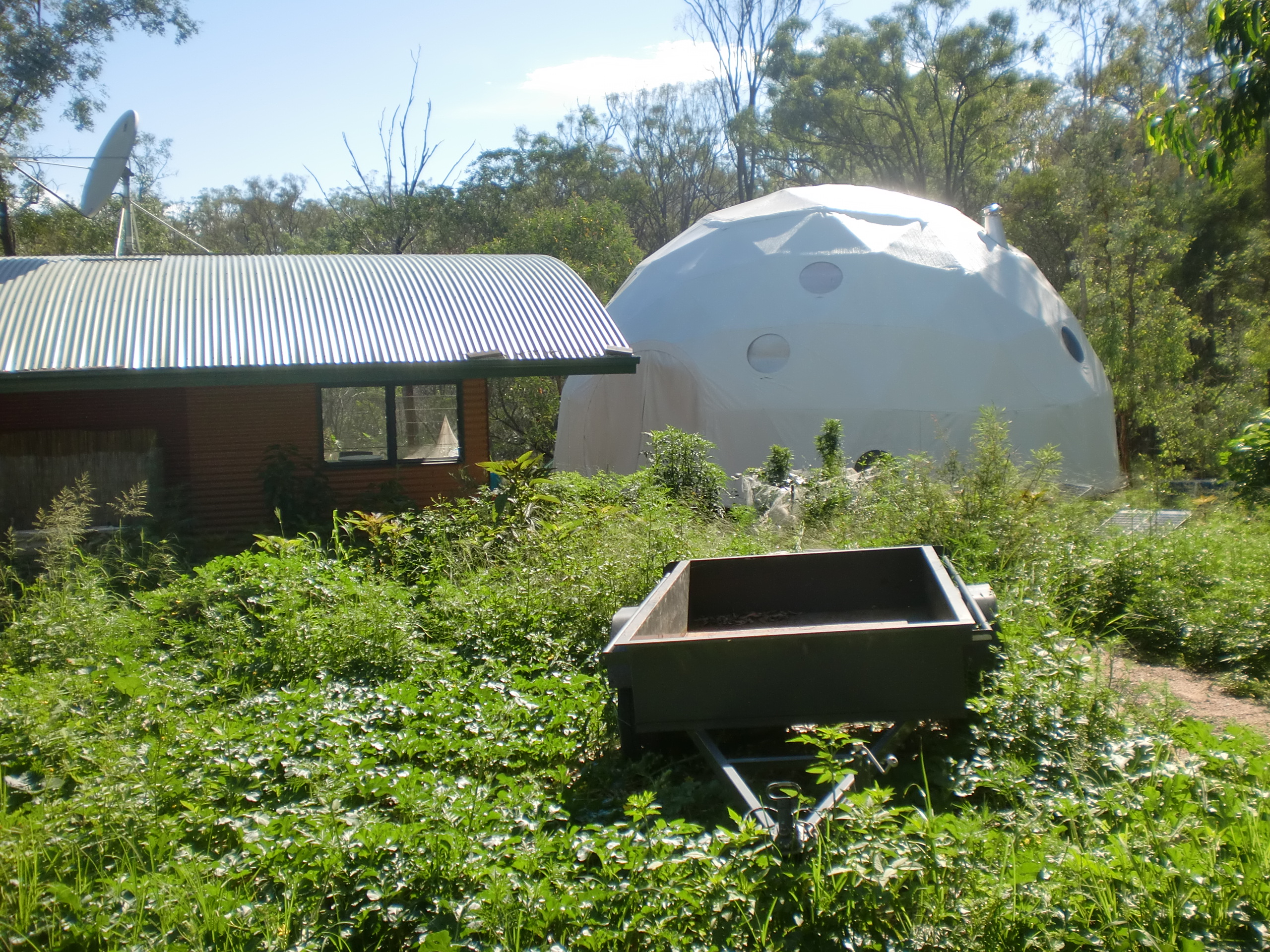
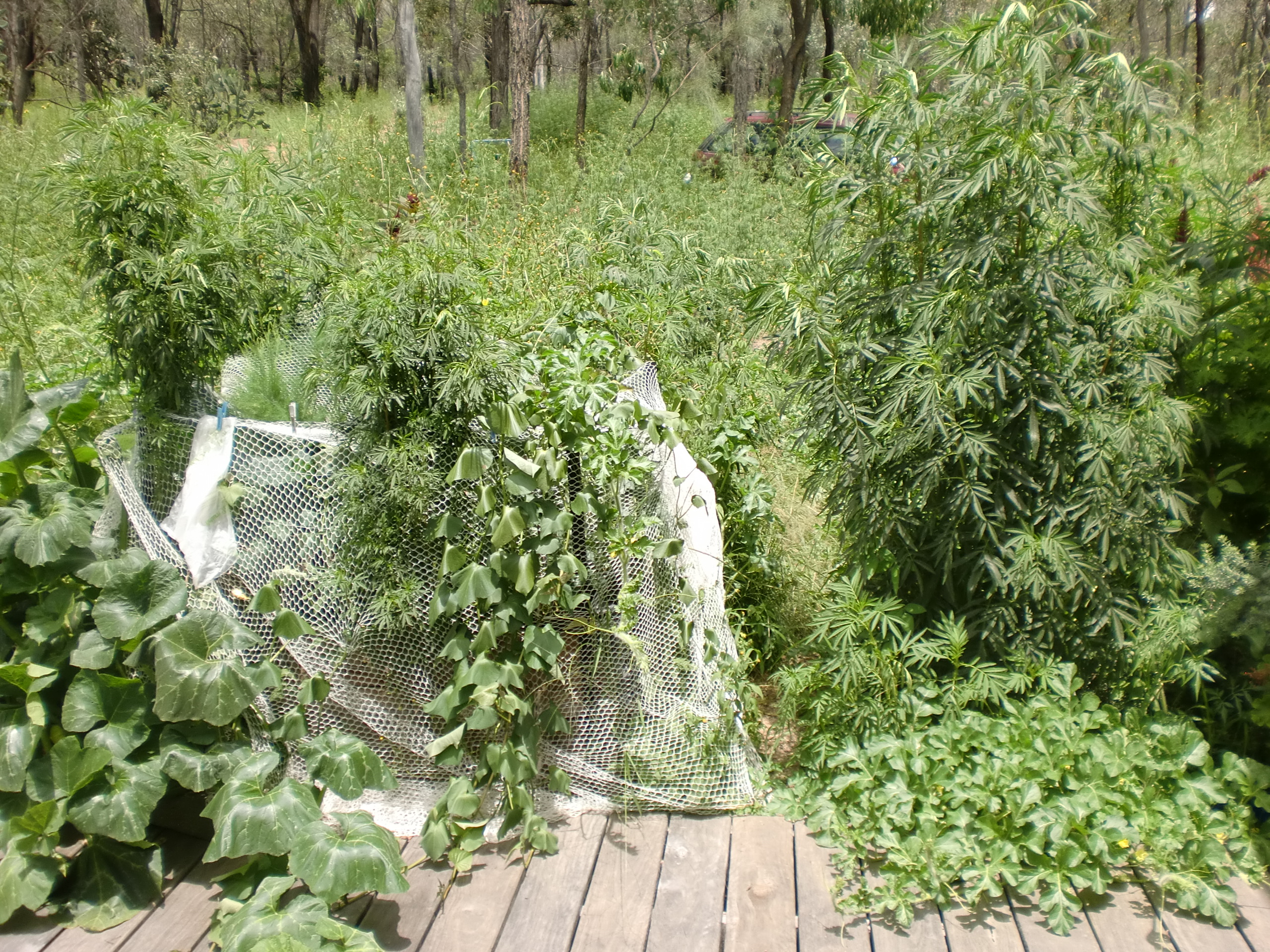
So after being at the Woodford Folk Festival over the new year period, I came back to a jungle. In fact it was difficult to get through to the house as the pathway was overgrown.

The pathway to my place is between the net covering the wiking bed garden on the left and the tall weeds on the right.

The pathway to my place is between the net covering the wicking bed garden on the left and the tall weeds on the right.

A few days ago, I’ve decided to make the most of this abundant plant life and take my camera into the weed jungle that the rain has created in the past few weeks. The once dry and plant-depleted landscape had been transformed into this incredible abundance of plants. They have taken over everything including the driveway, pathways, the deck and my solar panels. I am just amazed at what the rain can do and the abundance of seeds that wait for the go ahead to grow, in the seemingly harsh and unproductive granite sand.

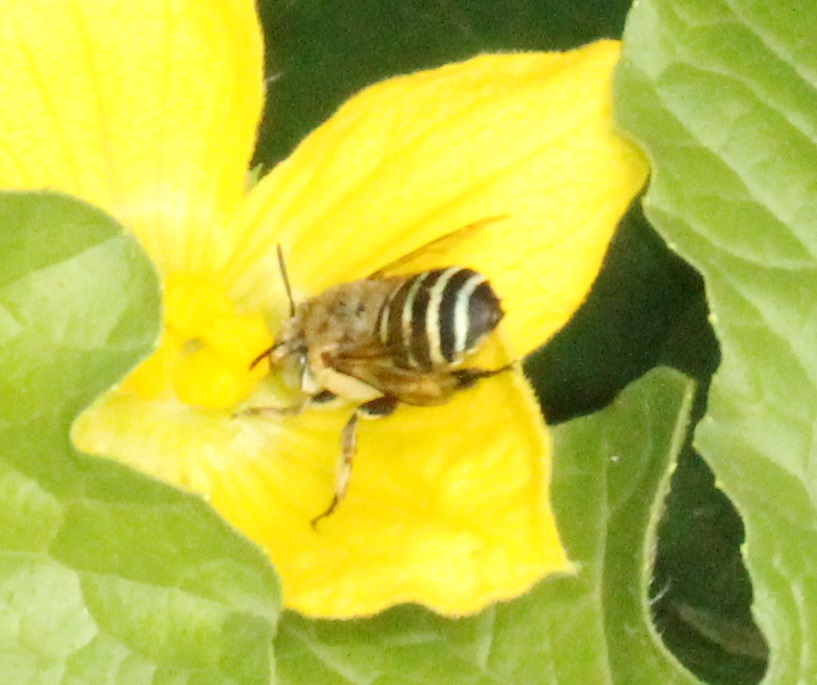
The Blue-banded bee. It's the Australian version of a bumble bee, as it buzz pollinates flowers. This photo does not do it justice but I will one day get a better pic.

The Blue-banded bee. It’s the Australian version of a bumble bee, as it buzz pollinates flowers. This photo does not do it justice but I will one day get a better pic.

When I say plants, most people would correct me and say “they are not plants, these are weeds, and you need to get rid of them!” However I see “weeds” as nature’s soil recovery system. I have heard, and there seems to be more and more evidence for this now, that weeds grow where there is depletion of particular soil nutrients, in order to restore those nutrients. Not only can plants take up nutrients from the depths of the soil and thus bring them up to the topsoil as they grow, they are also alchemists. Plants can transform ions from one to another for example iron into magnesium, by changing the position of electrons in the orbits of atoms. From my years of studies, I believe that nature is perfectly designed to self correct and no matter what we do to it, there is always a remedy to correct our mistake. However we do not understand this process yet and so we fight against what is actually something beneficial.

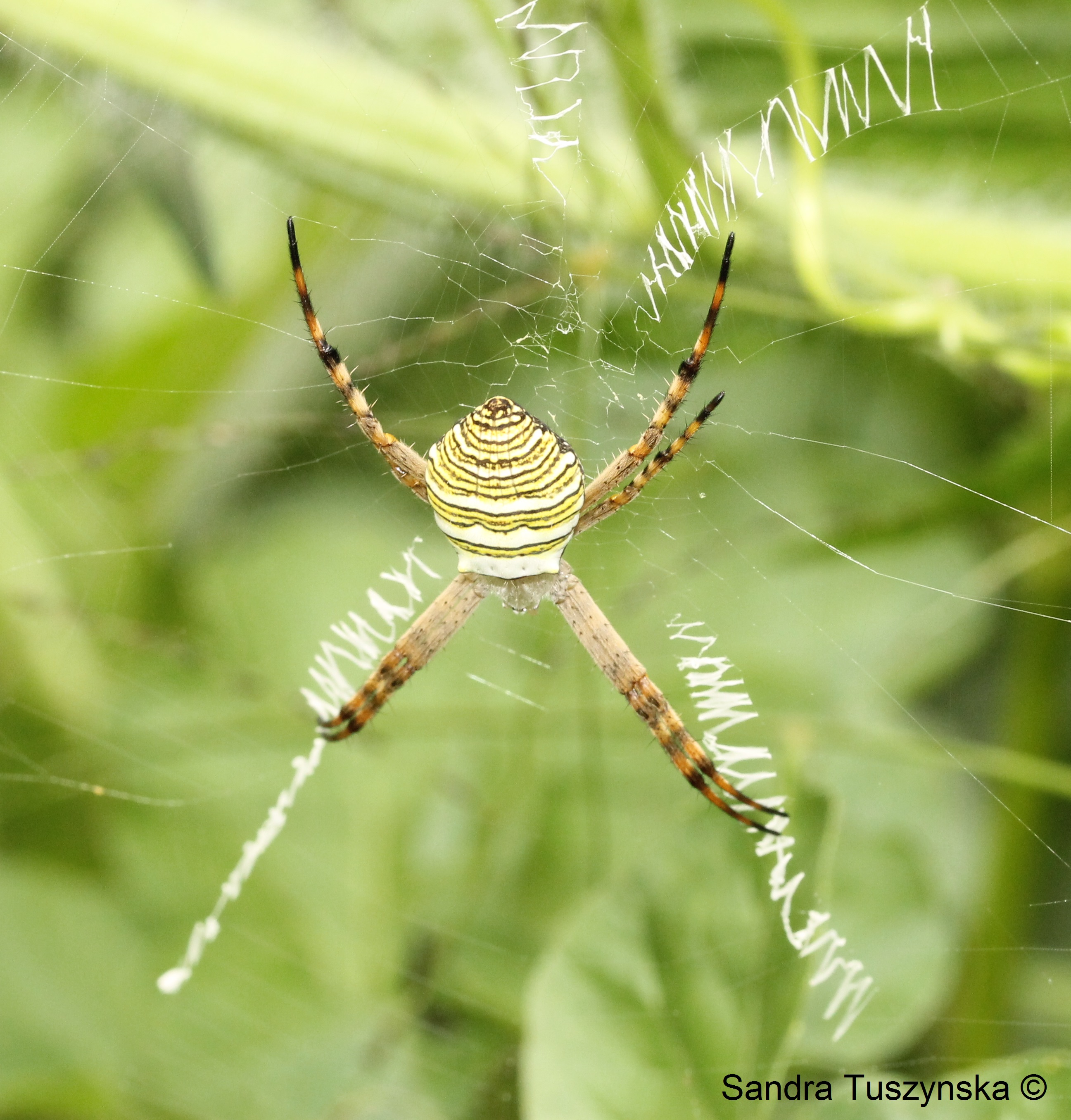
This Southern Cross spider is just one of the new residents here. I suppose it thrives on all the insects that are now available to feed on?

This Banded-orb weaving spider is just one of the new residents here. I suppose it thrives on all the insects that are now available to feed on?

Pollinating and other insects will agree with me I’m sure. I have never seen so many butterflies in my life! There are at least three different bee species visiting, including the blue banded bee (which I am in love with), because of the welcomed “weed invasion” which I am experiencing right now.

So I went out there lured by site of a honeybee and the buzzing sounds of the free concert put on by the orchestra of insects; to explore the visual pleasures of this rare phenomenon. Initially I went out there to take a photo of a bee on a cobbler’s peg but one hour and 322 photos later, I photographed at least 30 different insect species. Not to mention the different species of butterflies, which I have not recorded because they are so difficult to photograph. Now to me, this is biodiversity! Everywhere I turned, there was a creature of some kind. I felt like a kid in a lolly shop, who could not wait to add another lolly to her collection.

A weevil beetle.

A weevil beetle.

The moment I decided to finish my escapade, to get and drink and get out of the sun, bees were foraging on cobble’s pegs closer and closer to me for better and better shots. It is very difficult to take photos of bees as they move very quickly from flower to flower. I learnt that they do not visit the same flower twice, so they must know which they have already visited. I was trying to guess which flower they would visit next, hoping to have my camera ready and focused on a particular flower, to take a good pic when the bee has landed, but this was not very fruitful. I could literally be there all day, among the never ending action. I was dreaming of sitting by a patch of flowers and waiting to see what insects will come, rather than chasing them as they fly from flower to flower; but this requires patience, which I have very little of.

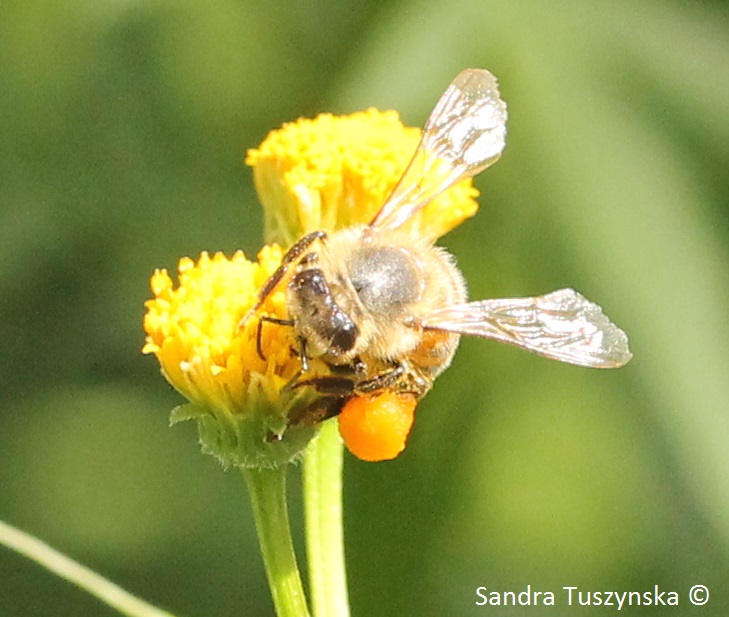
Honeybee loaded with nectar, on a cobbler's peg flower.

Honeybee loaded with nectar, on a cobbler’s peg flower.

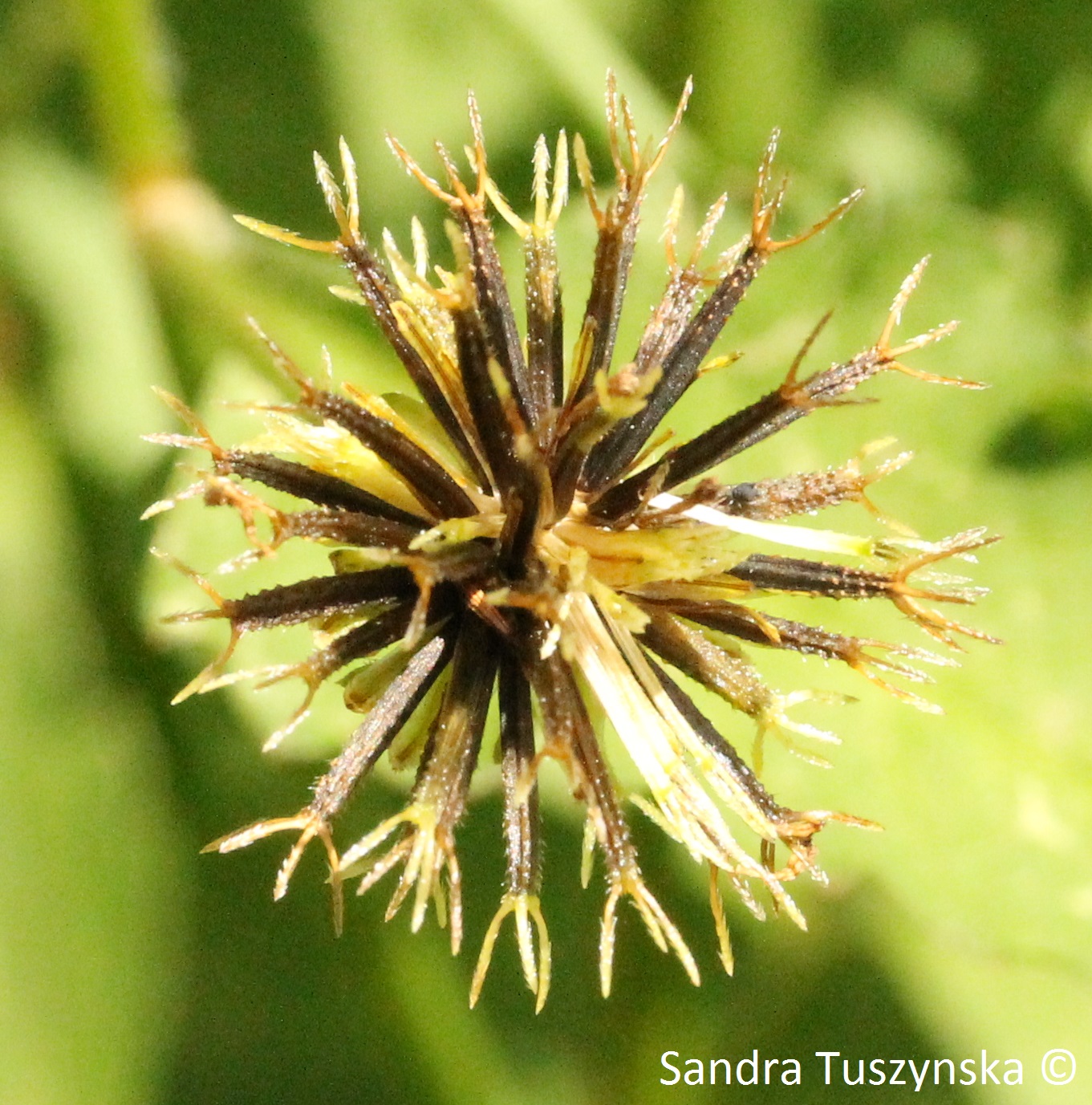
I have also noticed that bees seemed to prefer yellow flowers, compared to red and blue. They love cobbler’s pegs, which is actually the most annoying weed because of the pegs that stick to clothes and take forever to take out. Yet, what an incredible transport mechanism that these plants have, to get themselves from one place to another!

Cobbler's Peg has tiny hooks at the end of its seeds, as a transport mechanism.

Cobbler’s Peg has tiny hooks at the end of its seeds, as a transport mechanism.

There is actually colour now in the normally drab landscape because of the “weed” flowers. They are not only feeding pollinating insects but give me immense pleasure to look at and photograph. Perhaps the best thing about all this is that I did not put any effort in planting any one of those plants, they just grew. Mind you they include pumpkin, paddy-melon, amaranth, which may not be seen as weeds.

A "weed" flower, adding colour to to the environment. Butterflies especially live red flowers, as do I.

A “weed” flower, adding colour to to the environment. Butterflies especially live red flowers, as do I.

I cannot help but see all the collection of “weeds” as a gift rather than a burden, especially because I know that this is regeneration and rehabilitation of the land, that is taking place without any of my effort. Not to mention the abundance of insect life that is getting fed and is flourishing, in turn feeding the birds, the lizards, the frogs and other creatures that I can only dream about. So I will continue to photograph, learn about and write about insects and how incredibly amazing and beautiful they are, the inherent intelligence within them and their importance to our own survival.

IMG_2353_caterpillar-becoming-a-chrisalis

Dainty Swallowtail (Papilio anactus) caterpillar on a stake of a mandarin tree. It is about to become a chrysalis and has attached itself with silk threads. Almost all the leaves were eaten from the tree, but for a good cause. The well pruned tree is now growing new leaves.


Posted in Bees, Pollinator Link, Uncategorized | Tagged , , , , , , , , , , | 1 Comment

THE INGENUITY OF THE BEE DANCE

By Sandra Tuszynska

Bees have different roles in the hive and one of those roles is that of a scout. Scouts search for new sources of food. Once a scout bee locates a source of food that is economically and nutritionally suitable to her colony’s requirements, she comes back to the hive with the good news. She must now let her sisters know that she has found the best food source that there is on offer. However, how does the scout bee inform her sisters of the exact location of this newly found food source and convince them that they should go and check it out?

Bees have an ingenuous communication system which is expressed through an intricately choreographed dance routine. In 1973 Karl von Frisch, received the Nobel Prize for interpreting this highly sophisticated, navigational dance-language of bees. The “waggle dance” otherwise known as the recruitment dance, is an immaculately precise communication system involving movement, geometry, sound and smell. The dancer is nothing less than a mathematical genius that can portray the distance, direction and other essential information about the food source, through her superb choreography.

Honey Bee

THE GEOMETRY OF THE WAGGLE DANCE

There are in fact at least three types of dances that bees engage depending on the distance of the food source from the hive. If the location is within 50 metres, the domestic honeybee, Apis mellifera, performs “the round” dance (Tarpy, NCSU). The round dance explains the distance but it is still unclear whether it explains the direction of the food source Dyer, 2002). If the food source is within 50-150 metres, the bee dances the sickle dance, which is a transitional dance between the round and the waggle dances (Tarpy, NCSU). However, if the food source is further than 150 metres from the hive, the bee performs the “waggle dance” (ApisUK, 1014). There are other types of dances used for communication of information not related to sourcing food, but activities such as migration and swarming.

The waggle or recruitment dance is a form of communication system that requires highly sophisticated spacial-information processing. The scout bee must first measure the distance from the hive to the food source and its direction in relation to the sun (Dyer, 2002). If the sun and the food source are in the same direction, the bee dances directly upwards on the honey comb dance floor of its hive, in a vertical straight line called the “waggle run”. If the food source is at a particular angle away from the sun, the bee will dance at that particular angle from the vertical line to demonstrate the angle of the food source in relation to the sun (ApisUK, 2014).

IMG_2416_Bee-on-cobblers-peg

Bees use the solar compass or gravity for spacial orientation. If the sun happens to be behind a cloud, bees use a patch of a blue sky and the polarised light that it reflects as a directional cue. But what happens on a cloudy day? It turns out that bees recognise land marks and can create a path to food by reference to land marks, and even learn and memorise the position of the sun relative to land marks (Dyer, 2002). Bees can work out the sun’s position from the direction of a land mark based on their circadian rhythm, in order to get to a food source on a cloudy day.

Bees actually learn the pattern of solar movement relative to the season and latitude at which they live, within a few days of becoming foragers (Dyer, 2002). Even though young bees have not been able to observe a full day’s sun movement, these incredible creatures possess an inbuilt template of the general patterns in which the sun moves (Dyer, 2002). All bees are born knowing the directions of the sun rise, sun set and how it crosses over during midday. This template is continually updated as they learn more about sun movements, while on the job.

The bee waggles from side to side, while her wings produce a buzzing sound as she performs the waggle run. At the end of the waggle run, the dancer will either turn left or right circling back to the beginning of the run. She will repeat the waggle run and then return in the opposite direction. When the dance is mapped out, it is in the shape of a coffee bean or a squashed figure eight. The geometric shape of the dance changes with changes in the distance to the food source (Frank, 1997). The shorter the distance of the food source to the hive, the shorter the waggle line. At a certain distance the two round shapes split off from one another becoming two separate or divergent waggle runs. When the food source is closer than 50 metres from the hive, the dance becomes a “round dance” taking on a completely different geometric shape (Frank, 1997).

IMG_8023

TRANSLATING THE DANCE

Vision

The duration of the dance, divulges the distance a bee needs to travel to the food source, the longer the dance the longer the distance. This relationship is almost linear, for example if the waggle run lasts 2.5 seconds, the food source is located about 2 625 meters away (Tarpy, NCSU). But how can a bee measure the distance without a speedometer? Their compound (multifaceted) eyes possess motion capture mechanism; providing a conglomeration of images of their world. To measure distance bees use “optic flow” – the movement-induced streaming of visual texture across a visual field (Dyer, 2002).

In other words, their compound eyes are sensitive to the “flickering effect” of complex moving objects and the richer the imagery, the greater the distance they perceive (ApisUK, 2014). This means that a bee will perceive a shorter distance if it flies over a calm lake, which provides a weak optic flow, compared to flying over the same lake while roughened up by the wind, providing a stronger optic flow (Dyer, 2002). Bees therefore translate optic flow information, through the duration of their dance into flight distance to the food source.

Tempo

The waggle dance has a set of specific parameters that the bee uses to communicate the distance related information needed by her mates. The tempo of the dance is fast if the food is near and decreases with flight distance (Dyer, 2002). The tempo is the time it takes a dancer to complete a particular number of dance circuits. A circuit includes the waggling run and the return run before the next circuit begins. While the dance gets slower, the duration of the the dance circuit increases with distance.

The number of waggling runs a scout bee performs indicates the overall value of the resource, including its profitability and how it meets specific colony requirements. Another way to communicate the value of the food source seems to be reflected by the overall excitement of the dancer, the more vigorous the dance, the greater the value of the food resource (Dyer, 2002).

IMG_5770_2

Sound

Other parameters also increase with flight distance, including run duration, number of waggles from side to side and the duration of the sound bursts the bee produces while dancing (Dyer, 2002). The buzzing sound bursts are of low audio frequency of 250 to 300 hertz or cycles per second, and are delivered at a rate of about 30 sound bursts per second, lasting around 20 milliseconds each (Tarpy, NCSU). The duration of sound bursts is correlated with distance of the flight. Sound seems to only play an important role in communicating distance while in the dark confines of the hive. However in open-nesting bee species, visual cues such as posture and movement play a key role, while the dancers are silent (Dyer, 2002).

It is important to remember that the dance occurs in complete darkness of the hive in many bee species. So how do the spectator bees pick up all this information from the performing scout? Bees recognise the cues of the dancer through the sound waves produced by her wings, which the spectating bees detect through their antennae (Dyer, 2002). The vibration of the honey comb is also detected by sensory receptor cells, along with tactile cues through physical contact between the dancer and the spectators (Dyer, 2002) .

Mathematical skills

Bees are excellent mathematicians as they can compensate for taking different routes to a particular food site using a process called path integration to derive parameters for the most direct flight (Dyer, 2002). The dancing bee must incorporate the path integration information into her dance. On the receiving end, recruited bees will need to translate the the information received through the dance into the actual flight and the sensory information provided by the environment outside the nest (Dyer, 2002). They must take into account that the sun has changed its position since the scout has left in search for the food source, as well as environmental factors such as the wind and topography, which result in variation in perceived flight distance (Dyer, 2002).

Scent and smell

The scout bee also picks up molecules from the environment such as the scent of the flowers that she has visited, which her forager mates recognise and use as a source of information in finding the correct food source (Dyer, 2002). Odour cues work best if the food source is relatively close to home. Bees also release pheromones, chemical messengers similar to hormones, which are used to communicate with one another (Dyer, 2002). Each pheromone or scent that the bee produces communicates a different message. Perhaps the chemical signal could be translated into something like this – “Do you remember, those great mango flowers down by the river, 3km from home? Thy are in flower again!” These chemical signals are released during the recruit dance, greatly contributing to the reliability of the information.

IMG_5694_1

Even though we have seemingly come a long way since Von Frisch first began to investigate the dance language of bees in the 1960s, all that we know so far is still not sufficient to explain how a tiny bee can do what it does. Karl von Frisch himself described the honey bees and their dance language as a “magic well” of information and said that “the more you draw from it the more there is to draw” (Dyer, 2002). We simply do not understand the depths of intelligence encoded in these magnificent creatures as they continue to baffle scientists. What else is there to discover about the bees, one of the most studies and yet most secretive species?

REFERENCES

ApisUK Beekeeping Science and news (2014). Honeybee Communication. Retrieved from http://apisuk.com/Bees/2013/09/research-%E2%80%93-mysterious-%E2%80%9Cquantum%E2%80%9D-dance-of-the-bees/

Dyer F.D. (2002). The Biology of the Dance Language. Annu. Rev. Entomol. 47:917–49

Frank A., 1997 (November). Quantum Honeybees. How could bees of little brain come up with anything as complex as a dance language? Discover – Science for the Curious. Retrieved from http://discovermagazine.com/1997/nov/quantumhoneybees1263

Tarpy D. R., (n.d.) The Honey Bee Dance Language. New Carolina State University. North Carolina Cooperative Extension Service.

Posted in Bees | Tagged , , , , , , , , , | 3 Comments

Griffith mates advertised it. I love nature and the environment

Team briefing - 14 Oct 2014 - Larissa Roberts

“Ok team, this is the plan.”

By: Laurie Deacon & Larissa Roberts

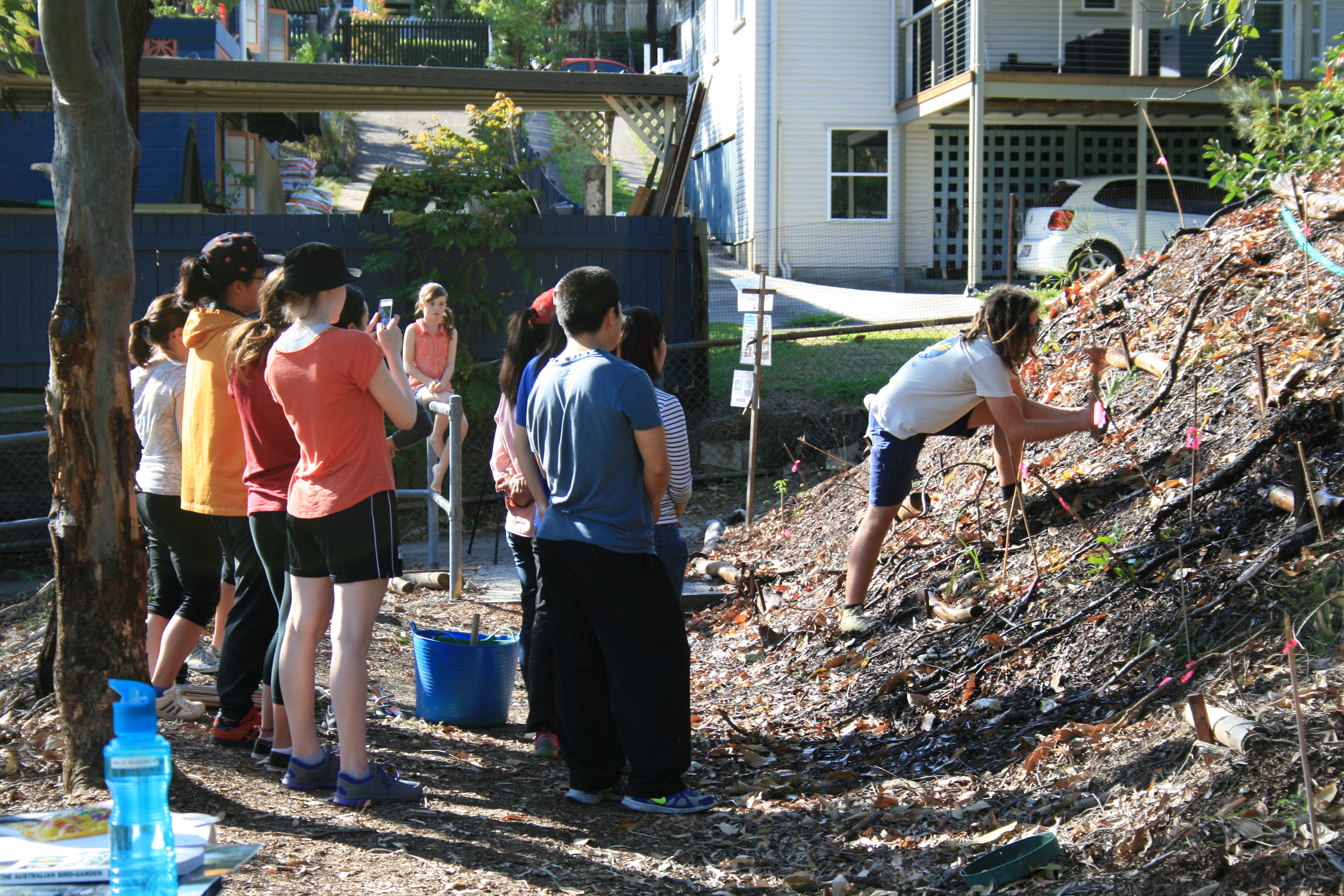
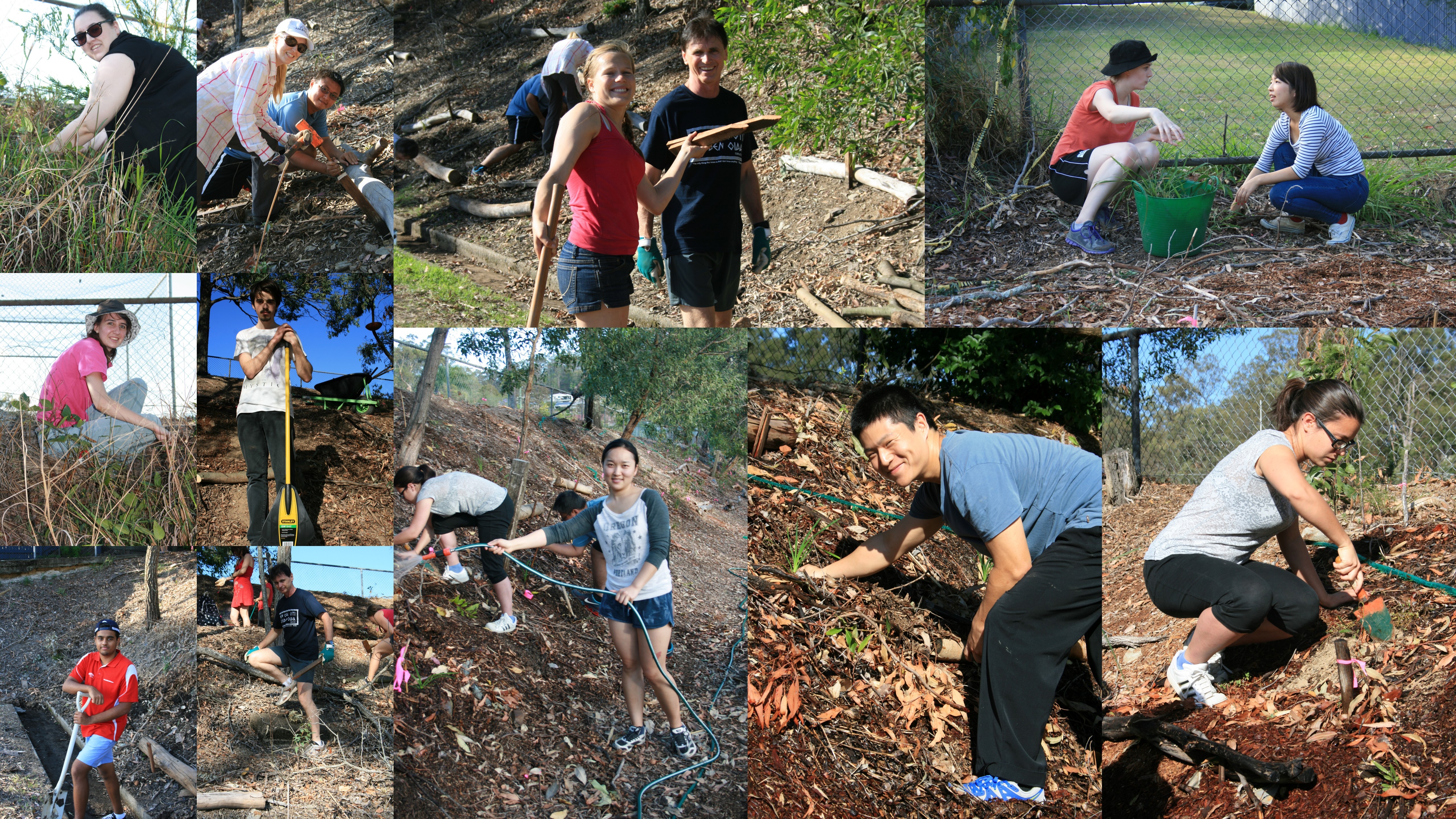
A team of 27 Griffith Mates students and community members! “Ok team, this is the plan. We have thirty plants to go in, logs and mulch to stabilise the banks reducing erosion.”

Sheamus shows how to plant on a slope

Sheamus shows how it is done.

.

.

First Sheamus shows how to plant the Lomandras, Wombat Berry and Scrambling Lilly generously donated by SOWN (Save Our Waterways Now).

.

Then the team gets down to action.

PLG 14 Oct 2014Our photographer Larissa also interviewed participants as part of her university project about activism.

2014-10-12 16.22.58Phoebe: What made you come along today? “I’m part of the Griffith Honours College and we were looking at some way we could get involved with the local community and one of the girls from Griffith said Griffith University had a partnership with the bushcare people and we could come along and help out so I organised a group of people to come out and help.”

John: “I saw this activity on Facebook and I want to take care of the environment.”

Lily: “I have been part of bush care my whole time at uni. I really enjoy nature and planting and agriculture even though I study accounting. It’s a different area but I made some friends and that’s a big motivation for me, enjoying and helping nature. I found out about it through Facebook.”

Camilla: “I’m one of the Griffith Mates leaders. I help out Sienna when I can with bush care. I’ve been doing this for over a year and a bit. I study the environment so my main motivation is to facilitate people to interact with the environment”.

2014-10-12 15.40.42Michelle: “ I came along because at uni I’m studying Ecology and Conservation Biology and I figured it would be good to get involved with local groups who are making an effort to do those sorts of things. It was interesting hearing that this used to be bare rocks covered in weeds and now the soil’s been established and plants are now growing here. I found out about it through Griffith Mates”.

Jo: “I came along with my daughters who know Laurie through Scouts and who now have started their own butterfly conservation club at school so they’ve come in to learn more about the plants. I heard about it through Laurie”.

2014-10-12 16.07.18Anna: “Griffith mates advertised it. I love nature and the environment and this is the perfect way to help out the community and do something good.”

Carmen: “Social activity, community activity, doing something good for the environment. I actually found out about it through Laurie because Laurie and I used to work together.”2014-10-12 15.51.13

Ok, enough talk, let’s get some serious work done.

.

.

2014-10-12 15.52.45.

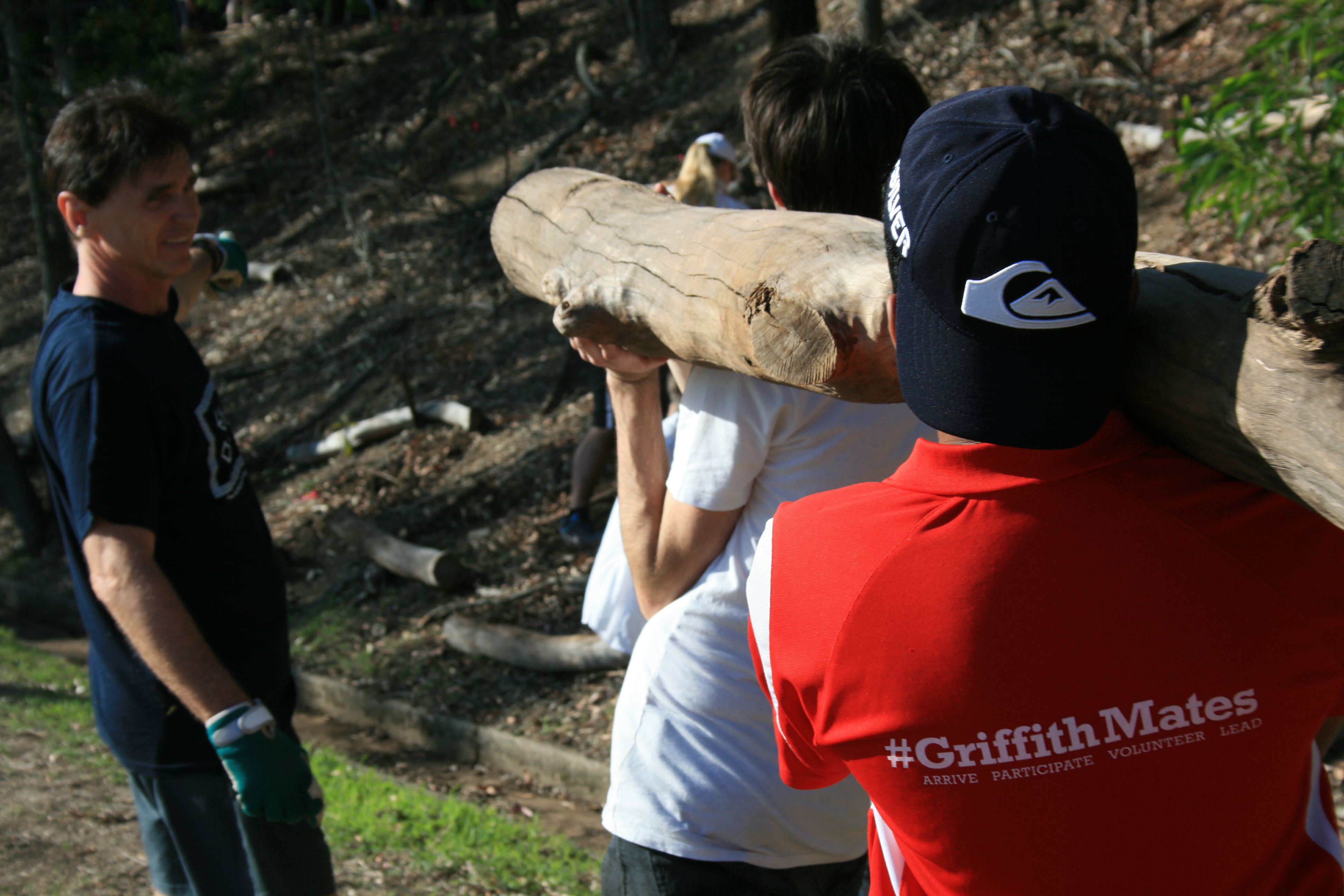
Logs placed on the slope are held in-place with timber pegs. Banging pegs into this hard ground need someone wielding a sledge hammer.

.

.

.

.

2014-10-12 15.43.00.

.

Logs are in-place so now mulch can be poured down from the top.

.

.

.

.

2014-10-12 15.47.57All this hard work deserves a reward. Home baked cakes , cheese & crackers & chocolates.

Len also shared his amazing knowledge of our native bees …

.

2014-10-12 15.43.46

.

… while Laurie’s rescue dogs made firm friends.

.

We are all so fortunate to have this site & this project  build for & with our local community .  Thanks  again  MGSHS and thank you to all our hard workers. 

.

Thank you team

Posted in Bushcare, Mt Gravatt Environment Group, Pollinator Link, Wildlife Corridor | Tagged , , | Leave a comment

Create a butterfly Puddling Station

Blue Triangle - Dec08

Blue Triangle butterfly drinking

By: Michael Fox

The weather is warming up, the butterflies are waking up and looking for mates.

Butterflies, like all animals, need water. At breeding time, male Blue Triangle butterflies – Graphium sarpedon, and other swallowtail butterflies will be looking for mineral laden water.

So it was good to find ways to attract butterflies to our gardens and strengthen their breeding. Melvin Dell, curator of Niagara Parks Butterfly Conservatory suggests a simple way to create a Puddling Station for your backyard.

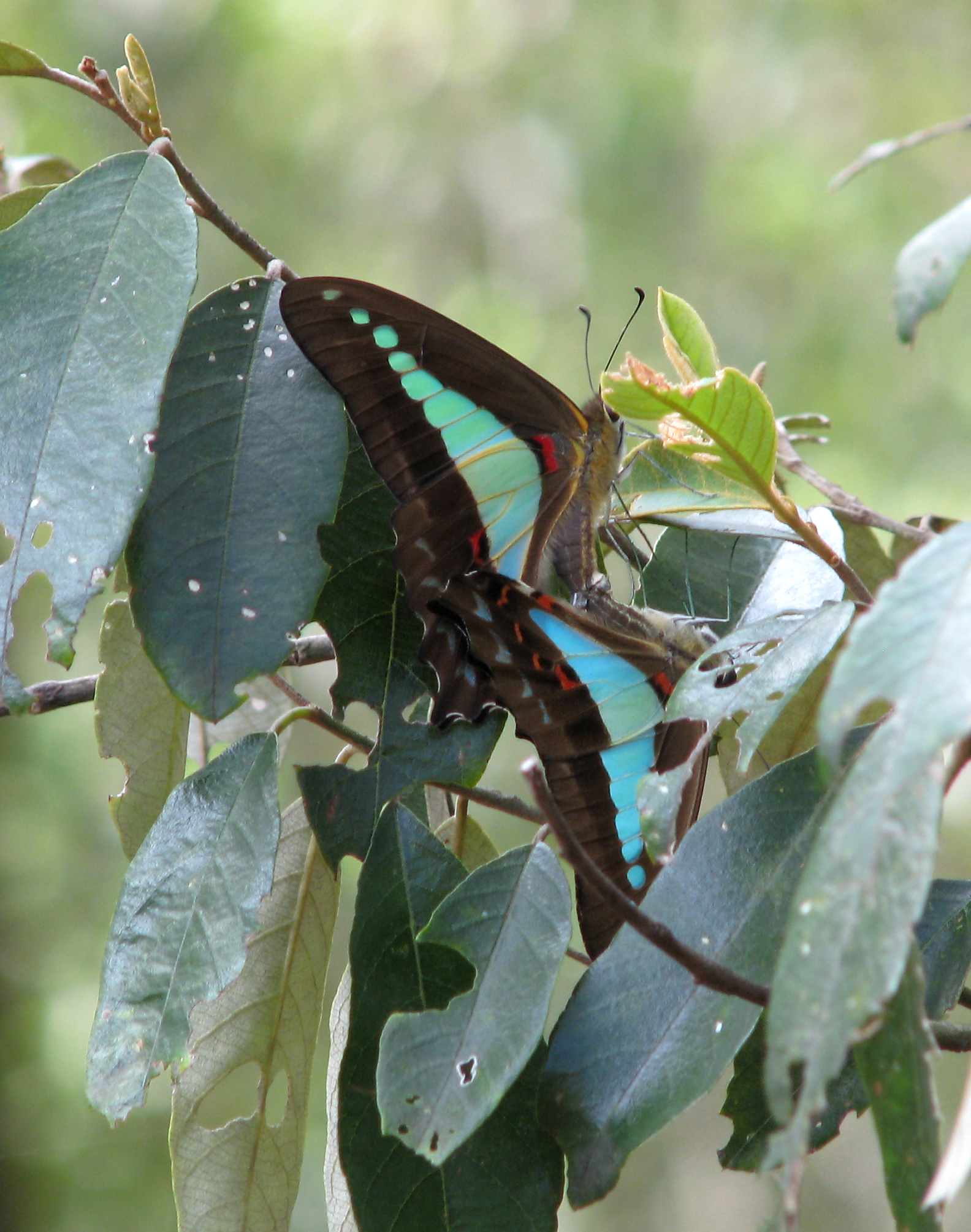
Blue Triangle - mating - Dec09

Blue Triangle mating behaviour

“Butterflies require water sources, which they usually obtain from dew and rain. Also, male butterflies are often seen puddling. Large groups of male butterflies will gather around a mud puddle, damp sand or gravel on the ground and appear to drink water. What they are actually doing is taking in mineral-rich moisture to replenish their sodium levels, which are depleted during the mating ritual.

Melvin Dell, curator of Niagara Parks Butterfly Conservatory, suggests that puddling stations can be set up in established butterfly gardens. Simply fill a large outdoor plant saucer with sand and sink it to ground level in a sunny area. Sprinkle an organic 7-7-7 houseplant fertilizer on top of the sand and then dampen the mixture with water until the fertilizer dissolves and the sand is wet. Keep the sand moist and reapply the fertilizer every two or three weeks. Male butterflies, especially swallowtails, will favour these stations and are a delight to watch.” Butterfly gardens – The Spectator (23 May 2002) Audrey Van Troost

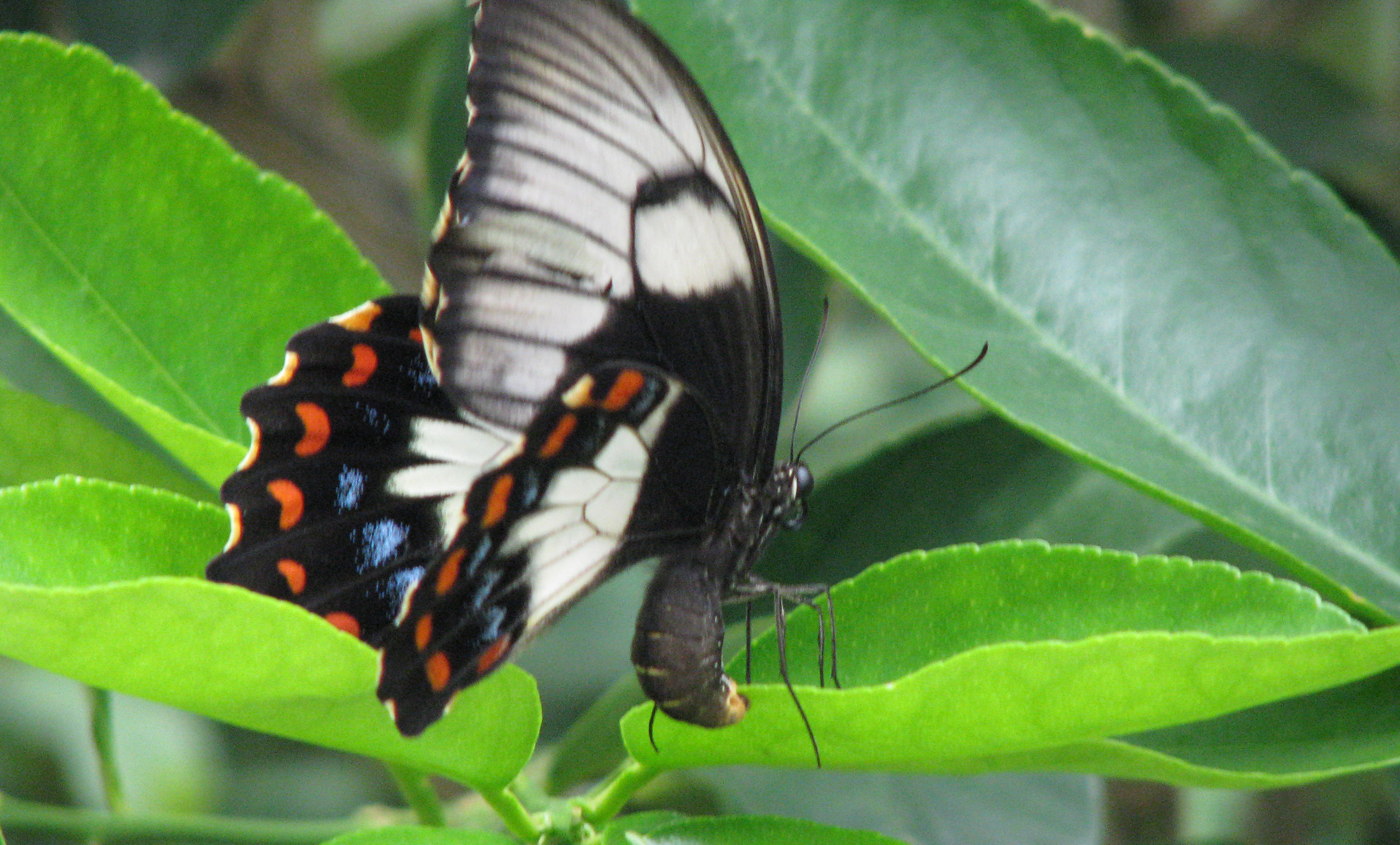
Orchard Swallowtail - Nov 08

Orchard Swallowtail – female laying eggs on citrus

Keeping the sand moist in Queensland heat will be a challenge. So I plan to experiment with a self-watering system using an empty drink bottle.

Posted in Uncategorized | Tagged , , | 3 Comments

Bush experience for city family

A seedling nursery … a great way to create butterfly plants for backyards.

Mt Gravatt Environment Group's avatarMount Gravatt Environment Group

Geocaching family - Southern Star - Sept 2014Southern Star – 24 September 2014

By: Michael Fox

Marshal Kloske and I met the Wood at Mt Gravatt Summit the morning they were there to meet the Southern Star photographer and we were there to photograph butterfly mating displays as part of our research for the new interpretative track signs.

IMG_7474 Noisy Miner chicks calling for food

Marshal showed the family the large new sign with maps and information about local history and environment. Like most people the family were surprised to learn about the local “glow-in-the-dark” mushrooms and they were very interesting our research and restoration work.

Nest watching Nest watching team in action

Heather, Eloise and Lincoln then joined Liz, Marshal and I on Wednesday afternoon for our regular Fox Gully Bushcare. Knowing we would be joined by young children, I planned a special afternoon of activities including checking the nest-boxes and making a portable plant nursery to propagate…

View original post 254 more words

Posted in Uncategorized | Leave a comment