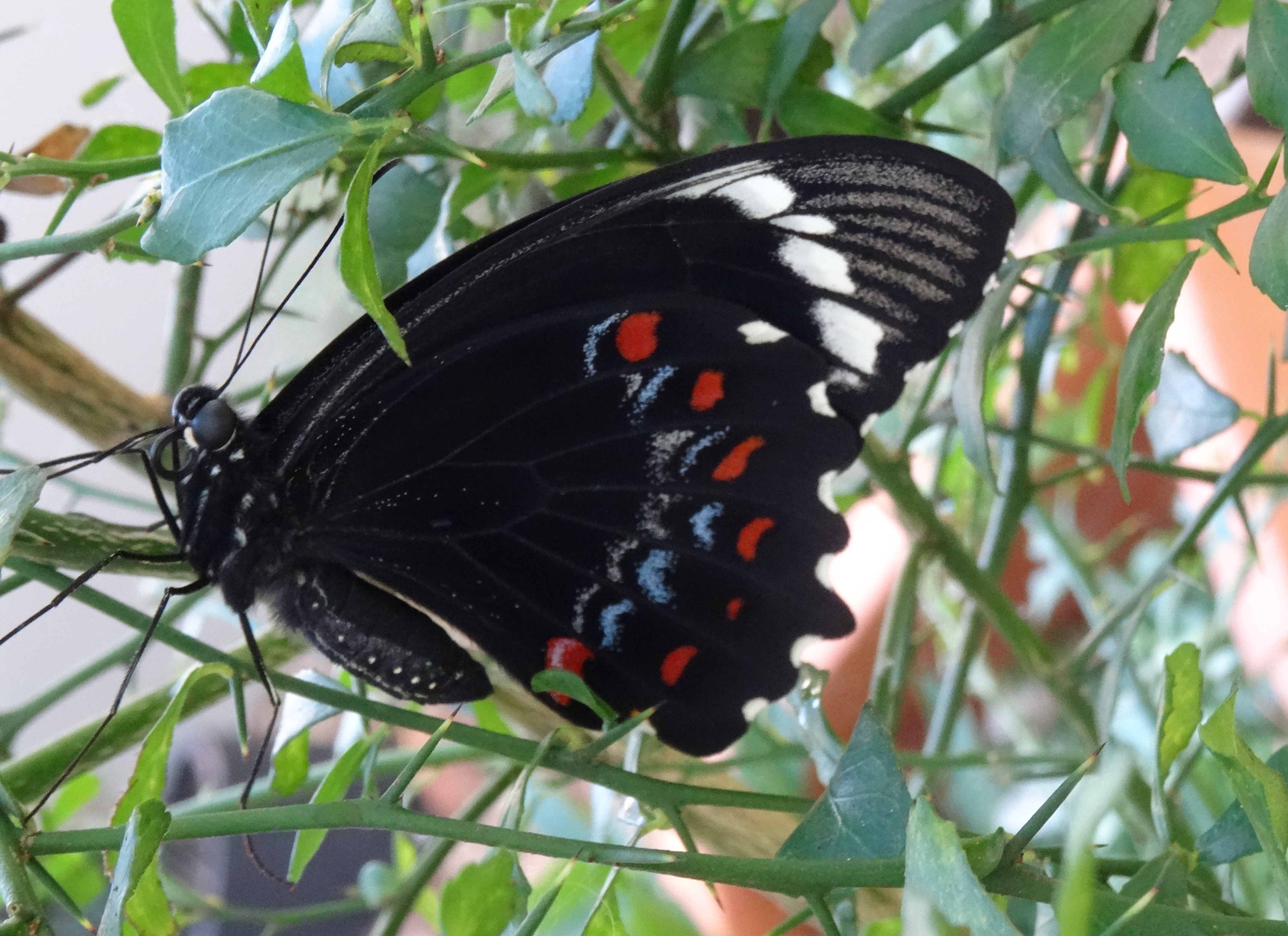
Female Orchard Swallowtail butterfly just emerged
By: Michael Fox
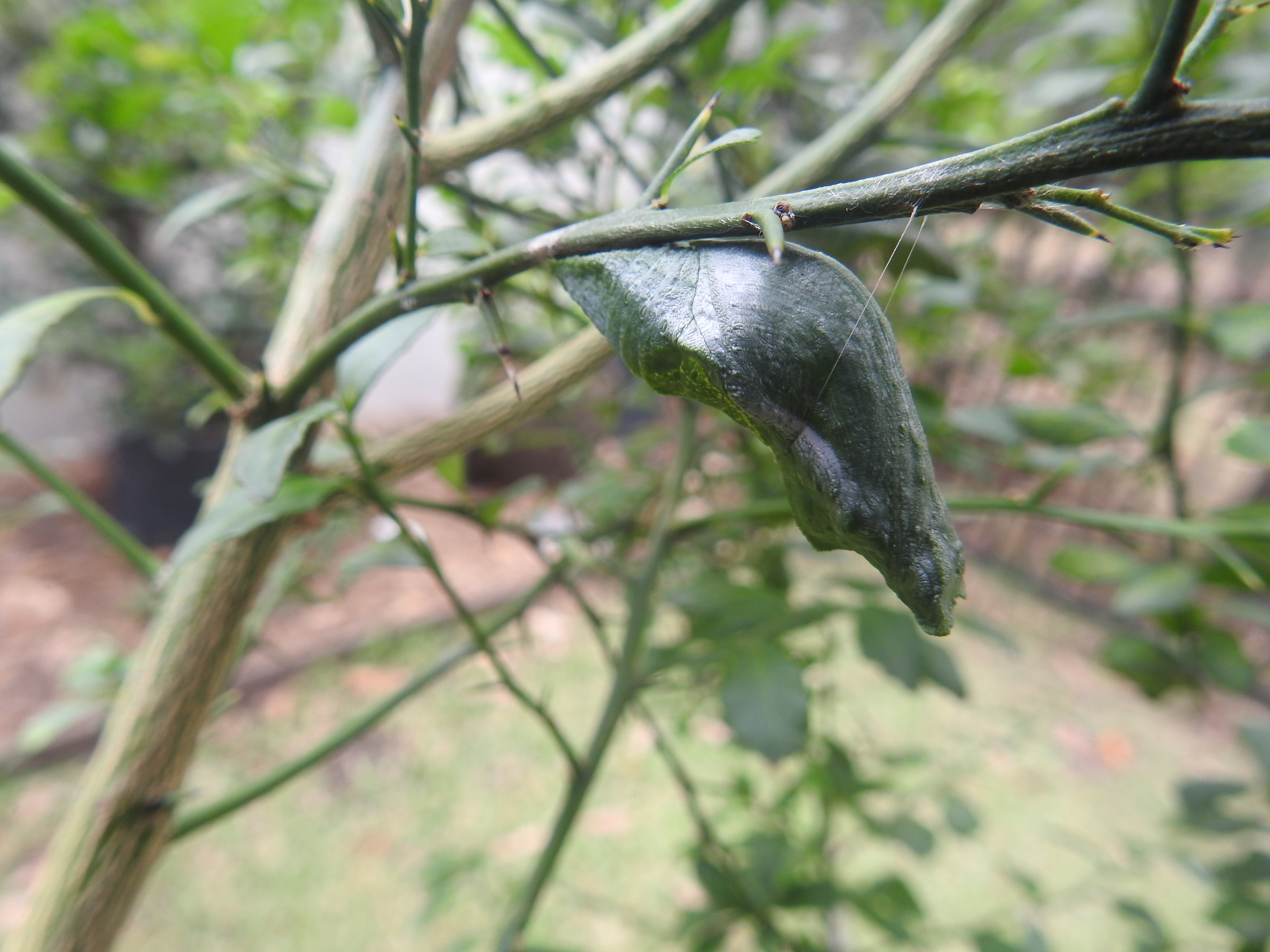
Orchard Swallowtail chrysalis on Finger Lime
Yesterday she was hidden in a chrysalis transforming ready to emerge this morning as beautiful new butterfly.
Female Orchard Swallowtail butterfly just emerged
By: Michael Fox
Orchard Swallowtail chrysalis on Finger Lime
Yesterday she was hidden in a chrysalis transforming ready to emerge this morning as beautiful new butterfly.
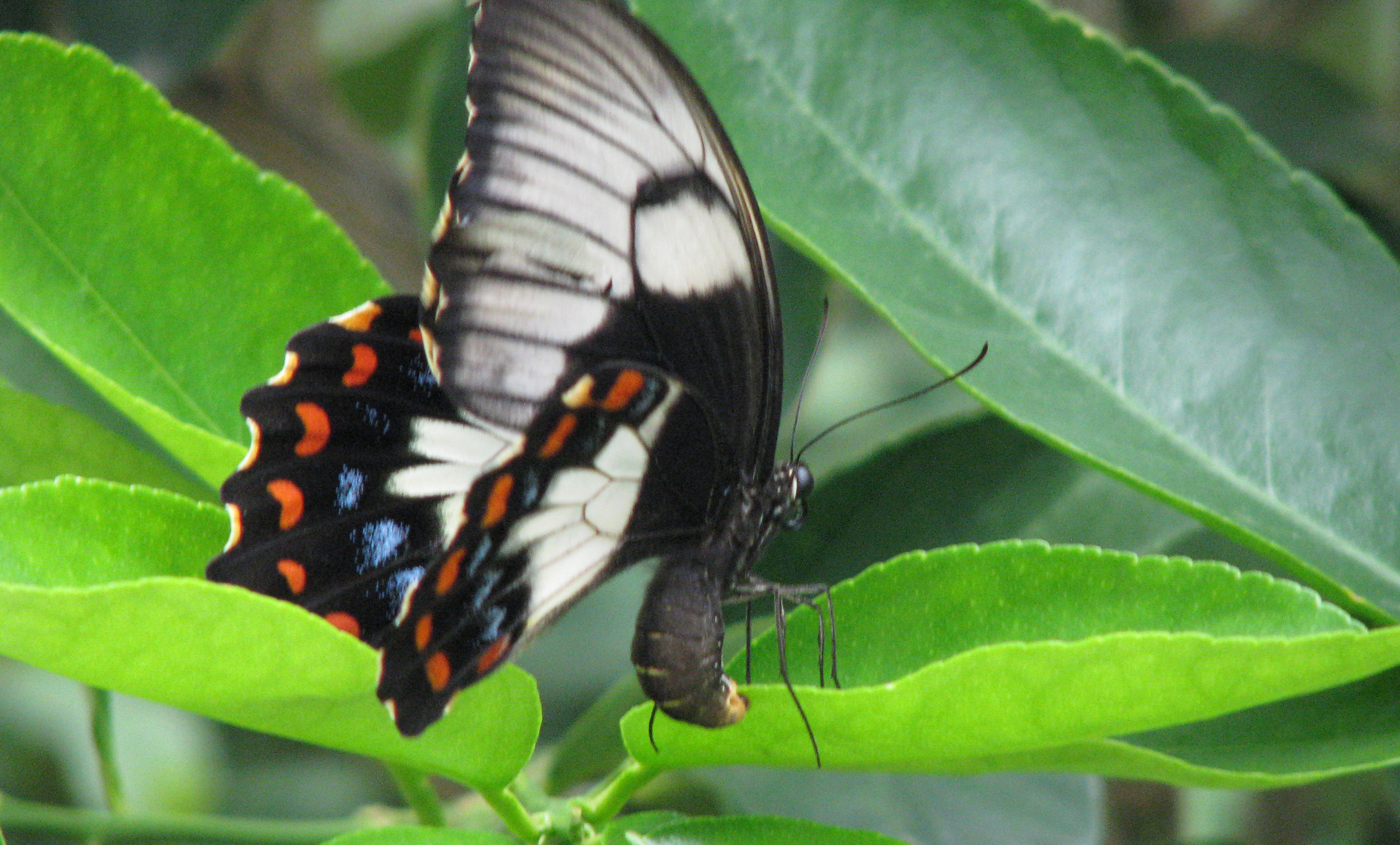
Female Orchard Swallowtail laying eggs on orange tree
By: Michael Fox
How often have you heard someone say, “We don’t see butterflies in the garden these days.”?
Female Orchard Swallowtail Papilio aegeus are laying eggs at the moment so you might find some interesting caterpillars feeding on leaves of your citrus trees.
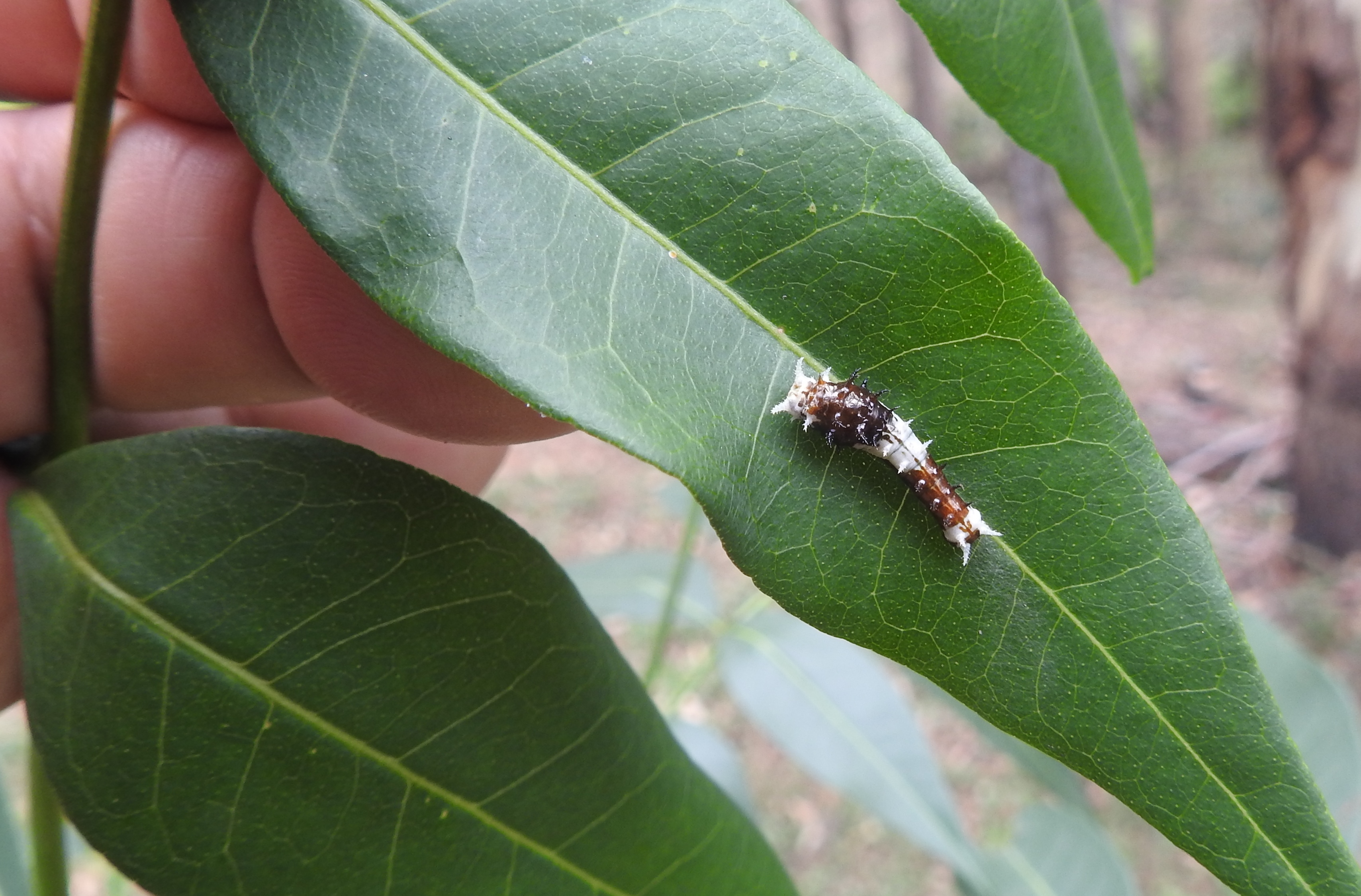
Orchard Swallowtail caterpillar (early instar) on Crow’s Ash
In bushland Orchard Swallowtail butterflies will lay their eggs on Crow’s Ash Flindersia australis which, like our backyard citrus trees, is a member of the Rutaceae family. The first and second stage instars look just like brown and white bird droppings.
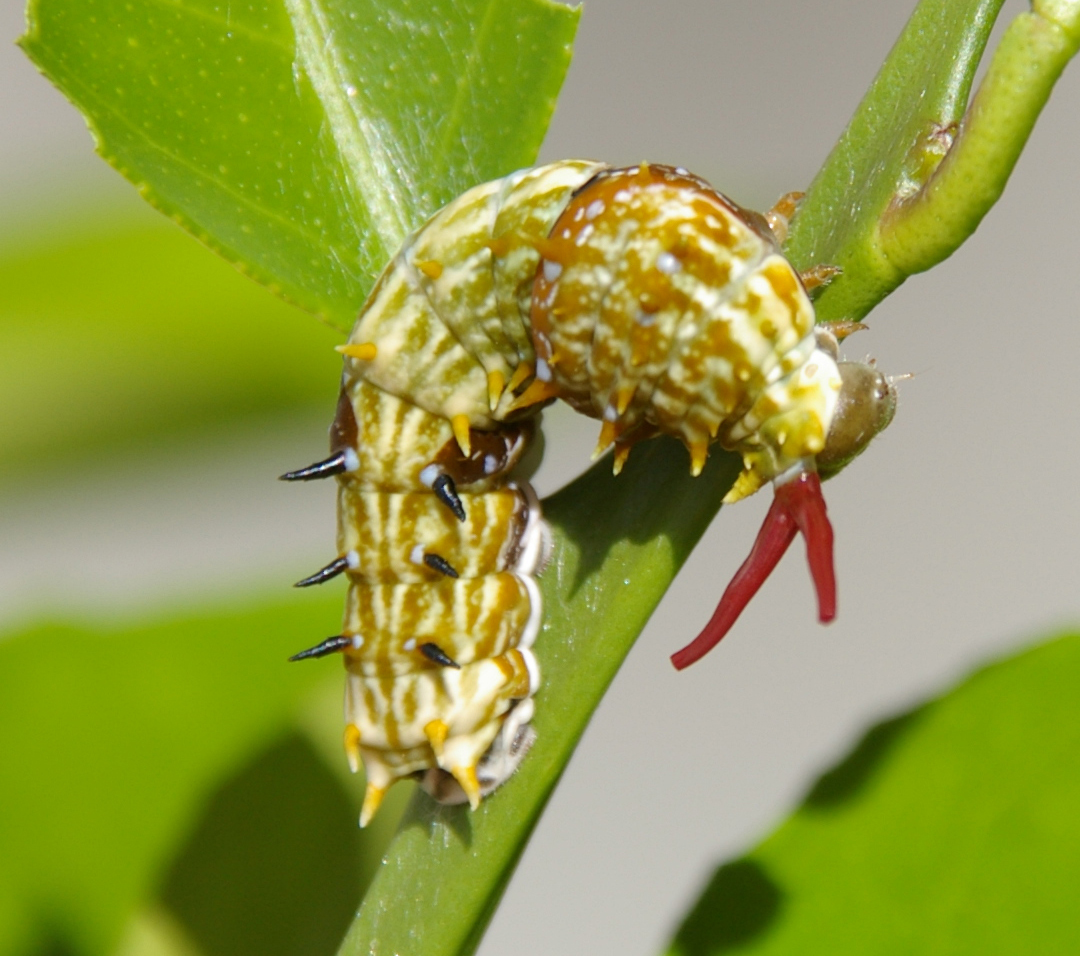
Greenish later instar with osmeterium extended
.
.
.
The caterpillars will grow to about 60mm and change to a greenish colour before they from a chrysalis. When disturbed Orchard Swallowtail caterpillars extend bright red osmeterium to frighten off attackers.
.
.
.
Orchard Swallowtail chrysalis on Finger Lime
.
Orchard Swallowtail caterpillars will also feed on leaves of native Finger Limes Citrus australasica.
Look for the silk threads suspending each chrysalis.
.
.

Male Orchard Swallowtail butterfly
You can welcome butterflies to your Pollinator Link garden by choosing the food plants required by their caterpillars and, importantly, avoid pesticides and instead invite insect eating birds to manage the caterpillars in your garden.
There are a number of good “eco-products” that have minimum impact on wildlife like Ladybirds and Bees. These products are only ingested by caterpillars that eat the leaves and sap-sucking insects like Common Gum Tree Shield Bug Poecilometis patruelis. You will be free of sap-suckers, however, it also means you will kill your butterfly caterpillars by starvation, carbon dioxide poisoning or dehydration.
If you have sap-sucking insects on your citrus consider simply hand picking them off – be sure to wear gloves to avoid getting the stink on your hands. Remember, chewed leaves mean more butterflies like the handsome male Orchard Swallowtail.
.
Re-posted from Fox Gully Bushcare
By: Michael Fox
Stingless Native Bee hive – insulated with polystyrene
A hive of Stingless Native Bees Tetragonula sp. are a fascinating and helpful addition to your Pollinator Link garden, particularly if you aregrowing Macadamia, Avacado, Strawberries, Rockmelon, Watermelon, Mango, Blueberries or Citrus (Kin Kin Native Bees).
Being stingless, although they do have strong jaws as you will find if they get into your armpit, the Tetragonula sp. are great for urban backyards. Kids can stand close and watch or even let them walk over their hand without risk of stings.
Design of Stingless Native Bee hives has evolved dramatically with designs now allowing for easy harvesting of the unique honey produced by these tiny bees.

Stingless Native Bee hive – insulated with polystyrene
This Stingless Native Bee already has a large ball of pollen on its legs and still collecting more. Watch the bee in the video take off with its pollen collection.Native bees are very good crop pollinators because they are very good at collecting pollen.
The Red-flowering Gum Corymbia ficifolia produces a spectacular display in O’Grady Street feeding ants and other insects, as well as being very popular with our Stingless Native Bees. Stop for a minute and look for the bees crawling over the flowers.

Today I saw an auction sign that said, “Superb semi in tree lined street.” The street is an avenue of mature Brush Box in & it is very lovely. The trees were used by the real estate agency as a selling point at the main point of contact, the sign outside the house. Even though potential buyers may not be able to inspect the property until it is open, they can look around the street & this may be enough for them to decide whether to return or not.
I’ve been saying for a while that a good street tree increases the value of your property so it makes economic sense to keep that street tree out front & look after any new street tree the Council has planted.
If a tree is vandalized on your street or even removed, this will have a direct negative impact on the value of your property. How much? It may be 30% of what your property is worth, that’s how much.
While writing this I found a 2010 article published in the Sydney Morning Herald titled, ‘Why a tree-lined nature strip can add 30 per cent to your property value.’ I’ve said this kind of thing before & watched people’s disbelief. Not possible! But it is. It is also 2012 & as with anything, property prices are always rising so the value added by street trees would have also risen. It certainly wouldn’t have gone backwards.
Ask any real estate agent & they will confirm that most people will pay more for a house that is in a nice street, that is, a street that has good street trees. 30% more is an extra $25,000 for a property worth $750,000.
Some points from this article –
Summer is here so if you have been lucky enough to have Council plant a new street tree outside your property, giving it a drink a couple of times a week over the hotter months & once a week over the cooler months for 2-3 years will pay you back in many more ways than just financially.

By: Laurie Deacon

Neighbourhood Christmas Celebration
I hope and pray that you all make time for peace and real joy with your dear family and friends this Holy Season. That the message that comes from the birth of Jesus Christ may give you hope and faith that your spirit will be refreshed and loved a new every day.
Our final Pollinator Link garden event was productive and happy with 17 community folks contributing 54.5 hours. Weeding of course, as well as, an education session with map reading and discussion about plant tissue cultures shared by an Iranian Profession whose research was conducted in hot houses in Iran.
What a great example of our Pollinator Link vision:
Bringing bush to backyards
Connecting people with wildlife
Connecting people with people
By Sandra Tuszynska
I have been encouraged to create posts related to the encounters with the wild animals that I share the land and more often than not, my home with.
To be honest, I could probably produce a post a day featuring the most amazing creatures that I am constantly surrounded with. Despite the hardship of living as I do in the often harsh conditions of the South Burnett, I feel quite blessed to be living this close to nature. If it was not for the wild residents that surround me, I am not sure that living here would be worth it. Luckily through, there are numerous encounters that make it all worth while for nature lover such as myself.
This morning I was blessed with one such encounter, featured below
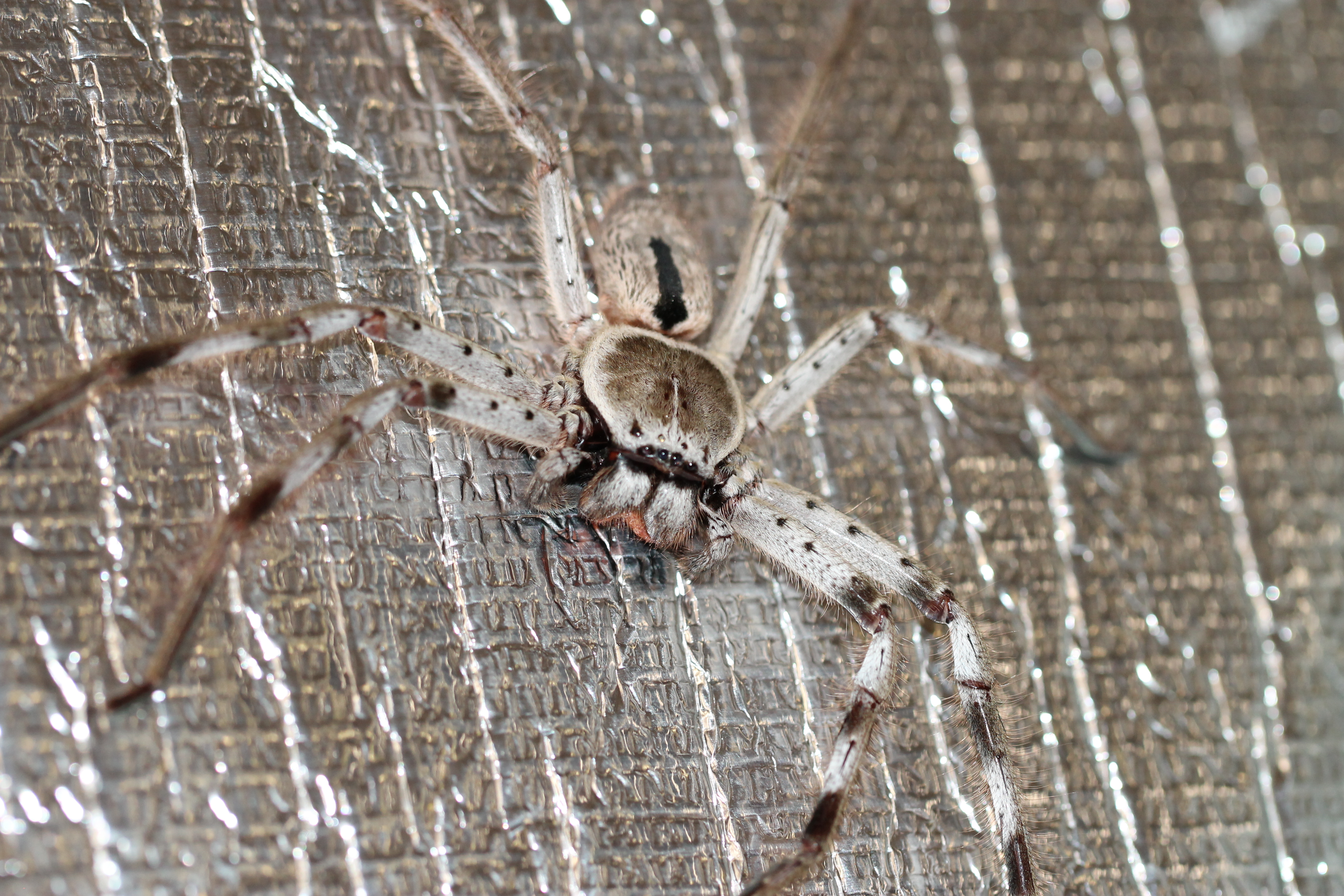
Huntsmen spider, Holconia insignis, family Sparassidae
I have seen this beauty before in the evening and had to use a zoom lens to get a pic of her. This time she was very close and even though she is a nocturnal creature, she was on the dome wall within a hand reach.
She is probably one of the largest spiders I have seen in Australia. I estimate her size to be at least 10 cm across.
Huntsmen spiders do not build webs, but definitely use them for mobility. I had one abseil down from a ceiling down to the floor, it was very amusing.
This little lady, and I assume she is a lady as male spiders of most families get devoured during mating, hunts the myriad of insects in the dome. So we have a mutually beneficial relationship and knowing the importance of these creatures, I am more than happy to share my home with her. Plus I find her to be extremely attractive and photogenic, don’t you? Well, just look at those 8 sparkling eyes staring right into the lens, they make my heart melt….
By: Laurie Deacon
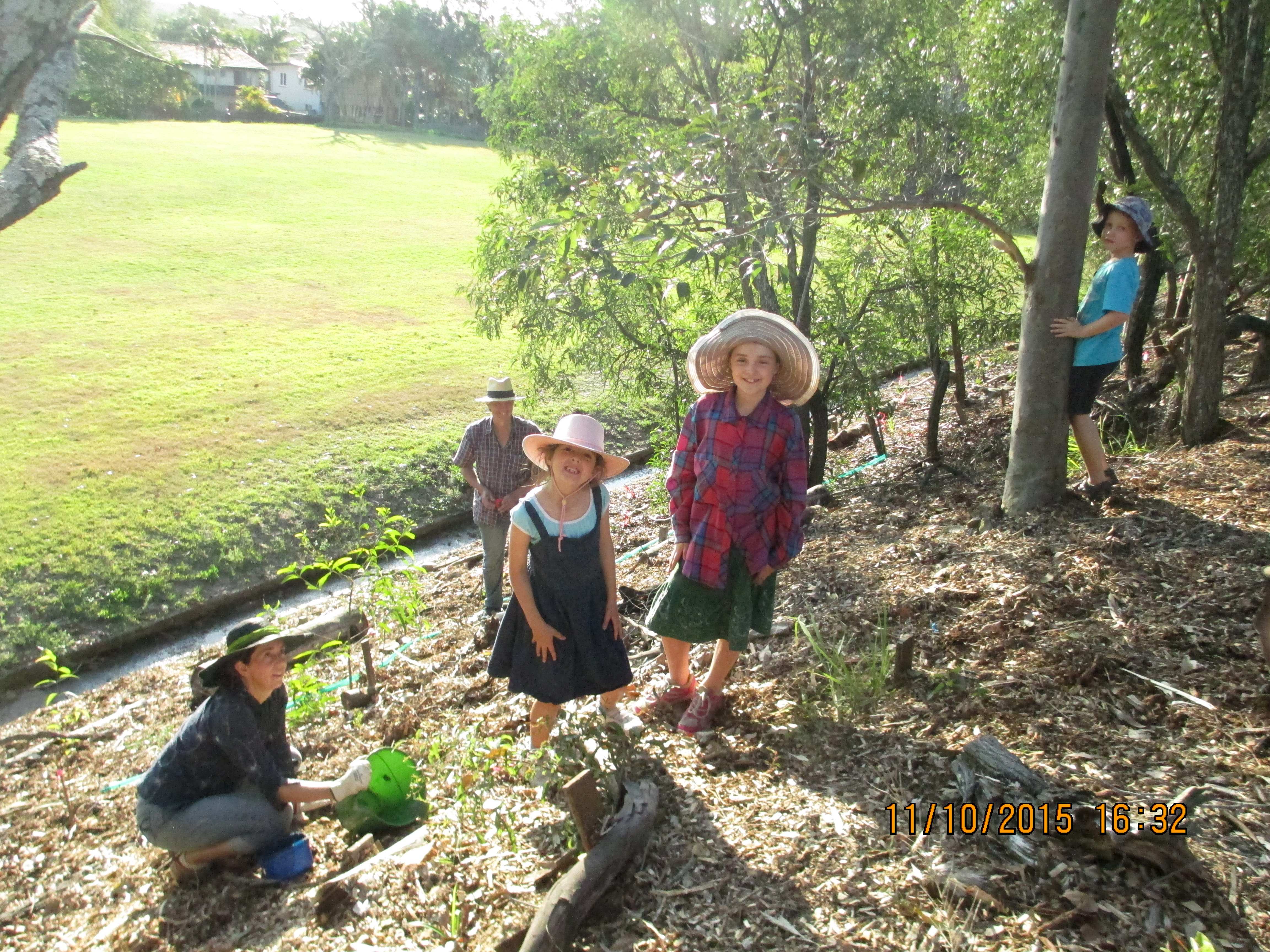 Eighteen local community folks come out yesterday for Fun in the Sun! Community Spirit was high. We had quite a few onlookers as well cheering us on.
Griffith Uni students joined in as a break from their many assessments. Ms Jinal and Mr Parkil Shah came as usual. Jinal is doing her PhD on City’s health and Re-vegetation. They are such an inspiration to us … hope for the future.
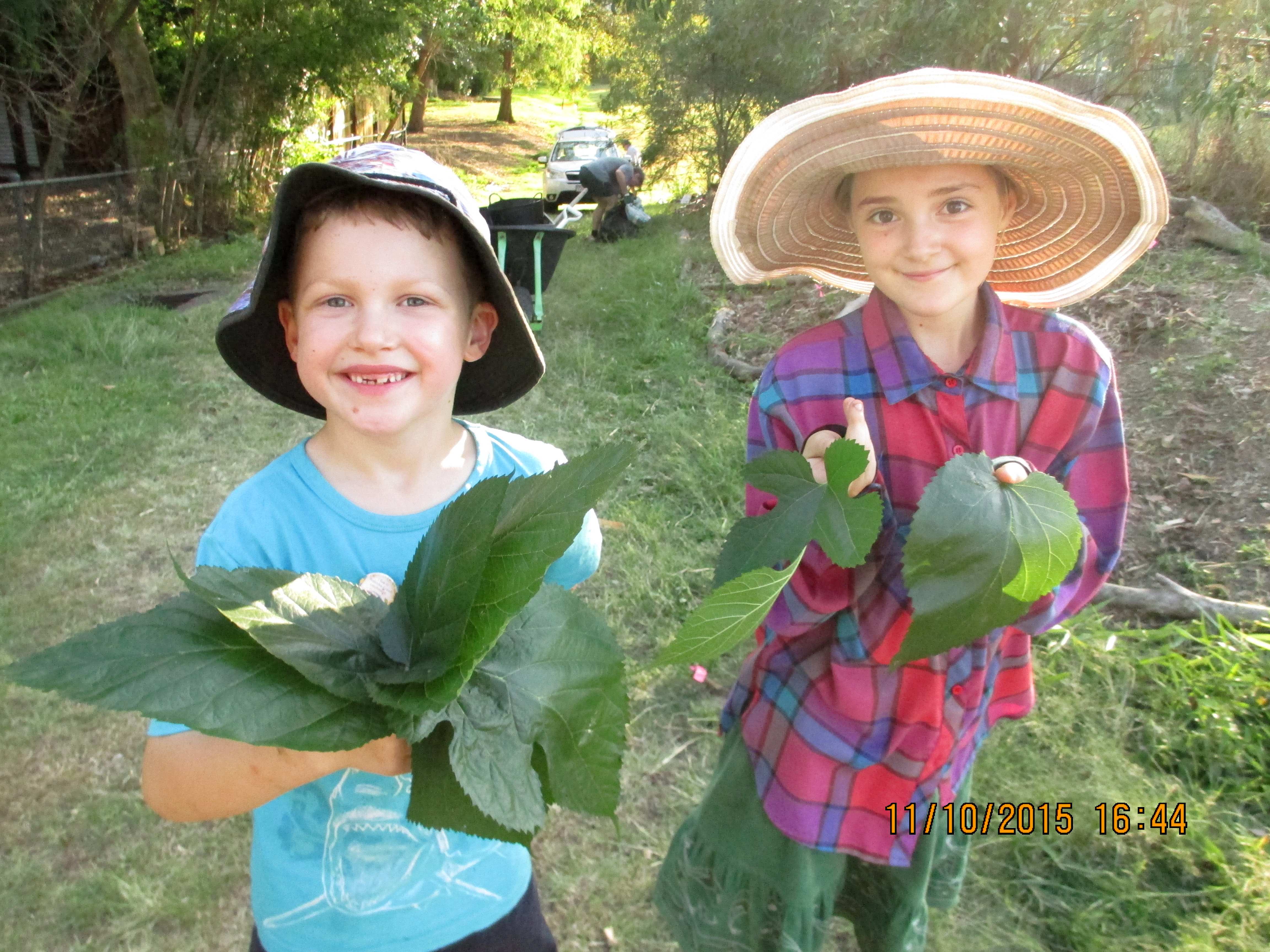 We had new children come from around the streets as well. Age range from 7 to 13 years. “We saw your sign up in Andrew’s coffee shop so we asked Mum if we could come. And you have afternoon tea as well!! We can bring mulberries from our Grandad’s tree next time we come. He planted it our street a long time ago.”
One of the children said in a conversation that their sibling usually found it difficult to make. Today they made friends at the Pollinator Link Garden! It made my day as this is a big reason why Mount Gravatt Environment Group gets out and about in the community.
Stats :
Jobs done:
Weeding Cobblers Pegs, planted 50 native plants, mulching, staking and tagging plants, watering, community engagement – caring and sharing and working together for a healthy vibrant community.
 Wildlife:
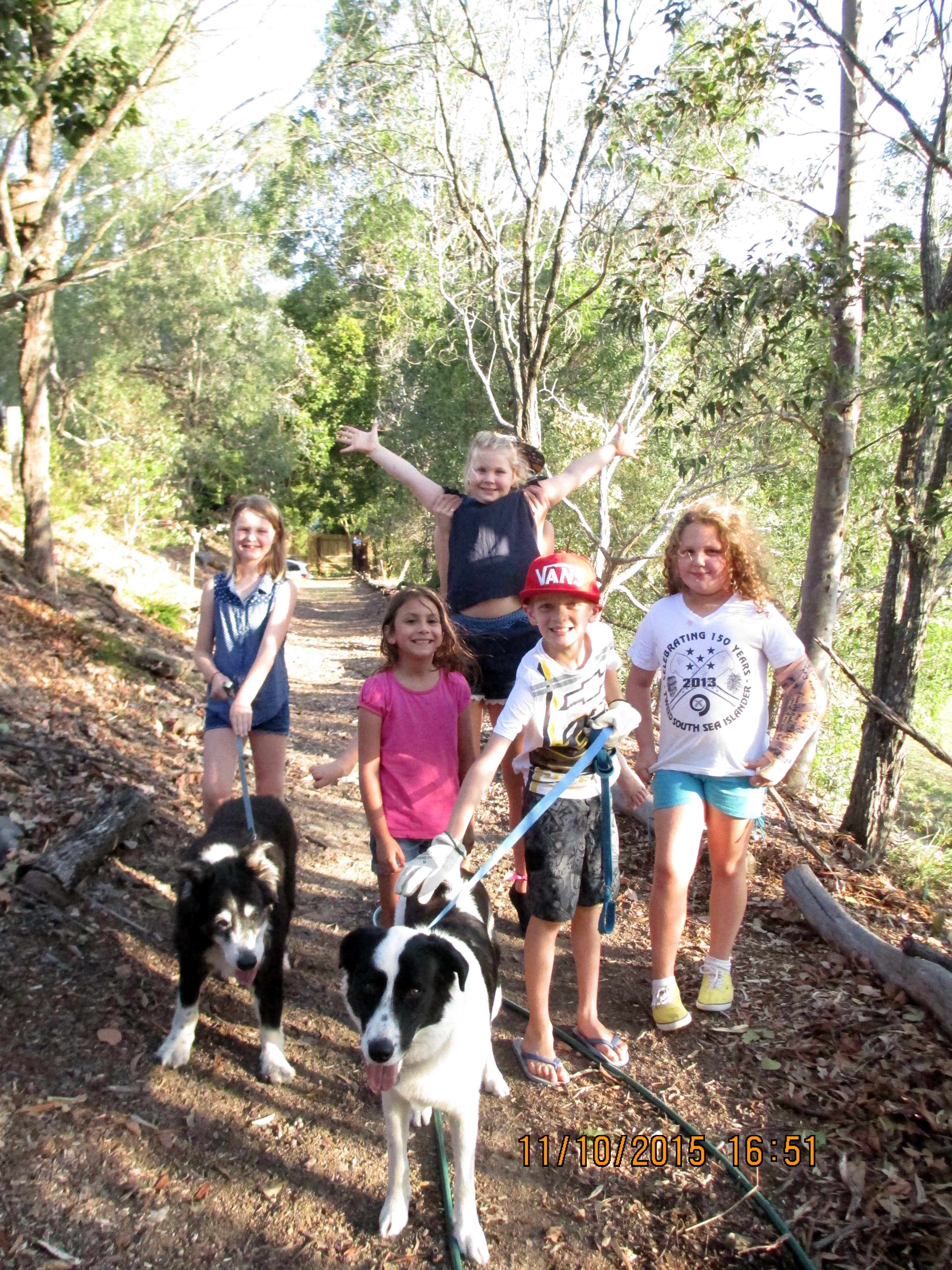
Kookaburras, Rainbow Lorikeets and Noisy Miners. I have been seeing Frogmouths every few months now at evening around 8pm. I also have reports we are missing our Pheasant Coucal bird , now that the long grass is being cut around the outside of bottom oval. I have not seen him for about three years now. We hope we can get him back with re-vegetation for him to walk under.
Afternoon tea: Lots of fresh strawberries, banana cake and peppermint tea!
Happy Mental Health Month to all in our greater community!!!

Concrete and city buildings: a Pollinator Link?
By: Michael Fox
Cities can surprise us. Who would expect to find a two kilometer long park of wildflowers two stories above New York streets? The High Line creates a wildlife corridor through high rise city buildings linking people with people and people with birds, butterflies and bees.
.
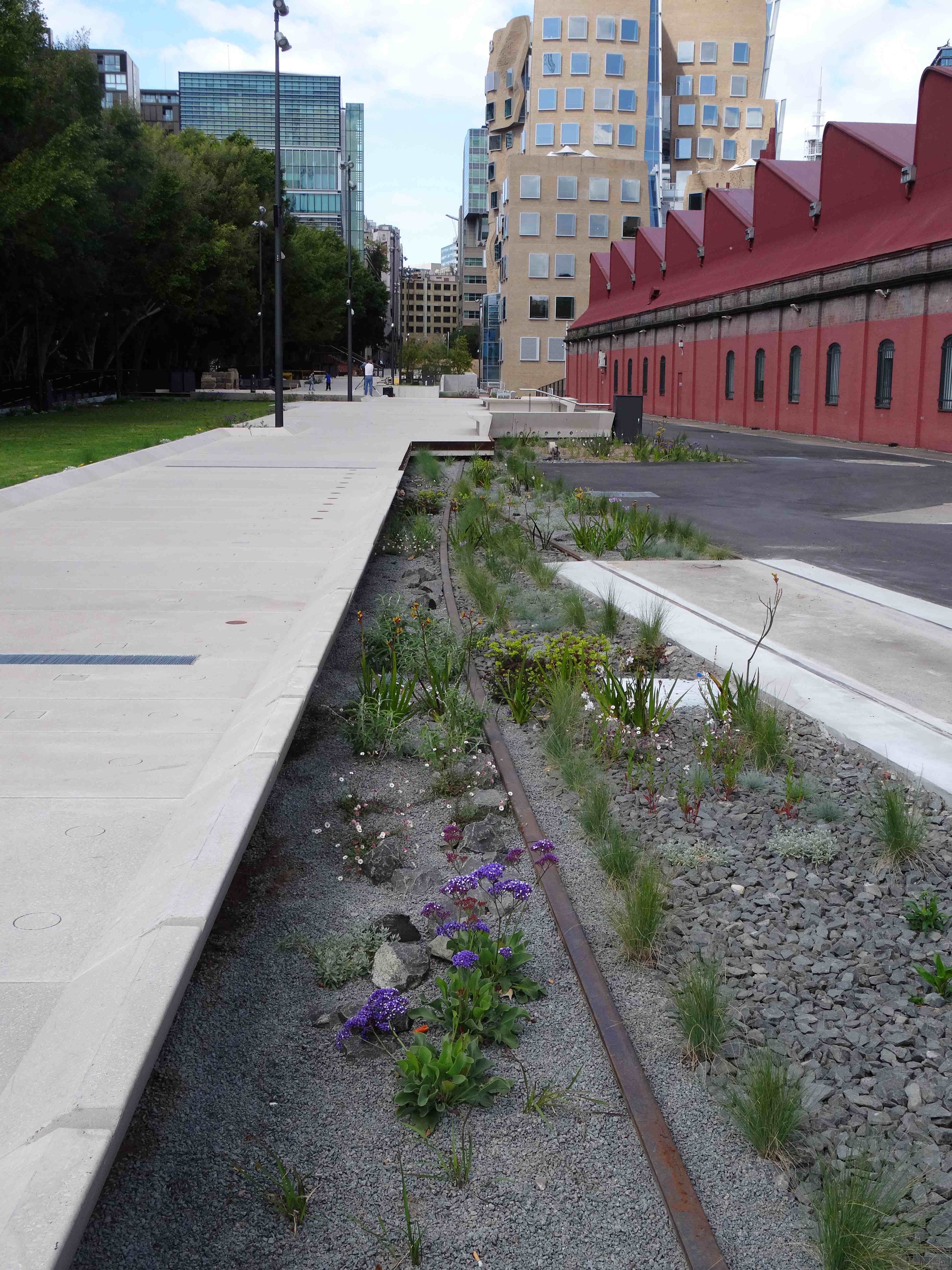
Concrete, bitumen and corrugated iron
Sydney also has surprises for us. The Goods Line is creating a Pollinator Link through a matrix of high rise buildings, old corrugated iron warehouses and city roads.
The project started in December 2011 when the Sydney Harbour Foreshore Authority appointed the Principal Consultant, ASPECT Studios to develop a design:
“… that captures and interprets the original heritage corridor, state significant rail underbridge and signal box. The objective is to create a great new public space for pop-up events, invigorating and bringing new activity into the precinct.” Sydney Harbour Foreshore Authority
.
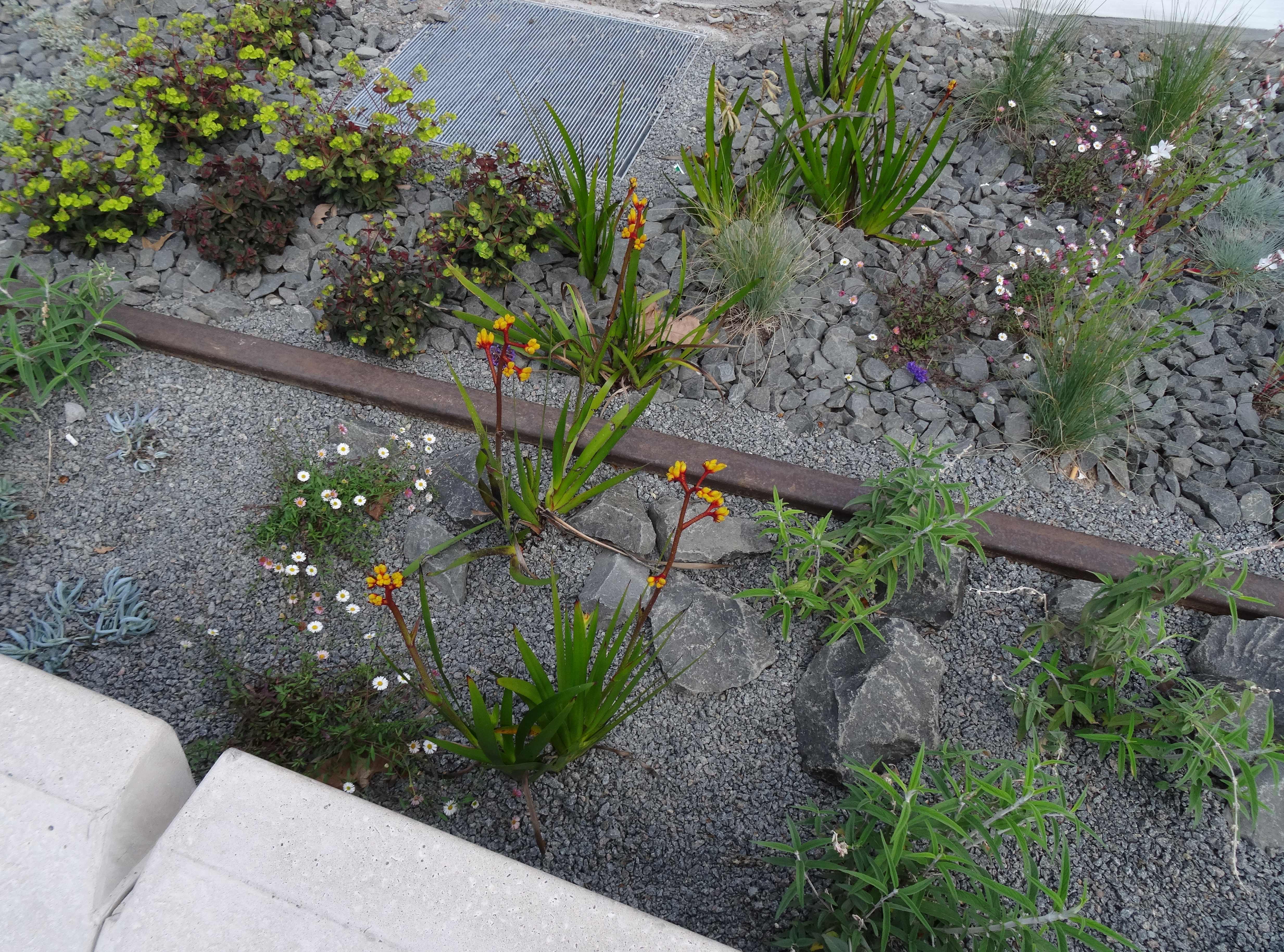
Wildflower meadow among concrete and steel
August 2015: The Goods Link north opens.
Beautiful wildflowers are now growing where in a hostile city environment of concrete and steel. At this time it does not look much. However, like the High Line it takes years for the vision to really come alive, the plants grow and birds, butterflies and bees move into the new habitat.
.
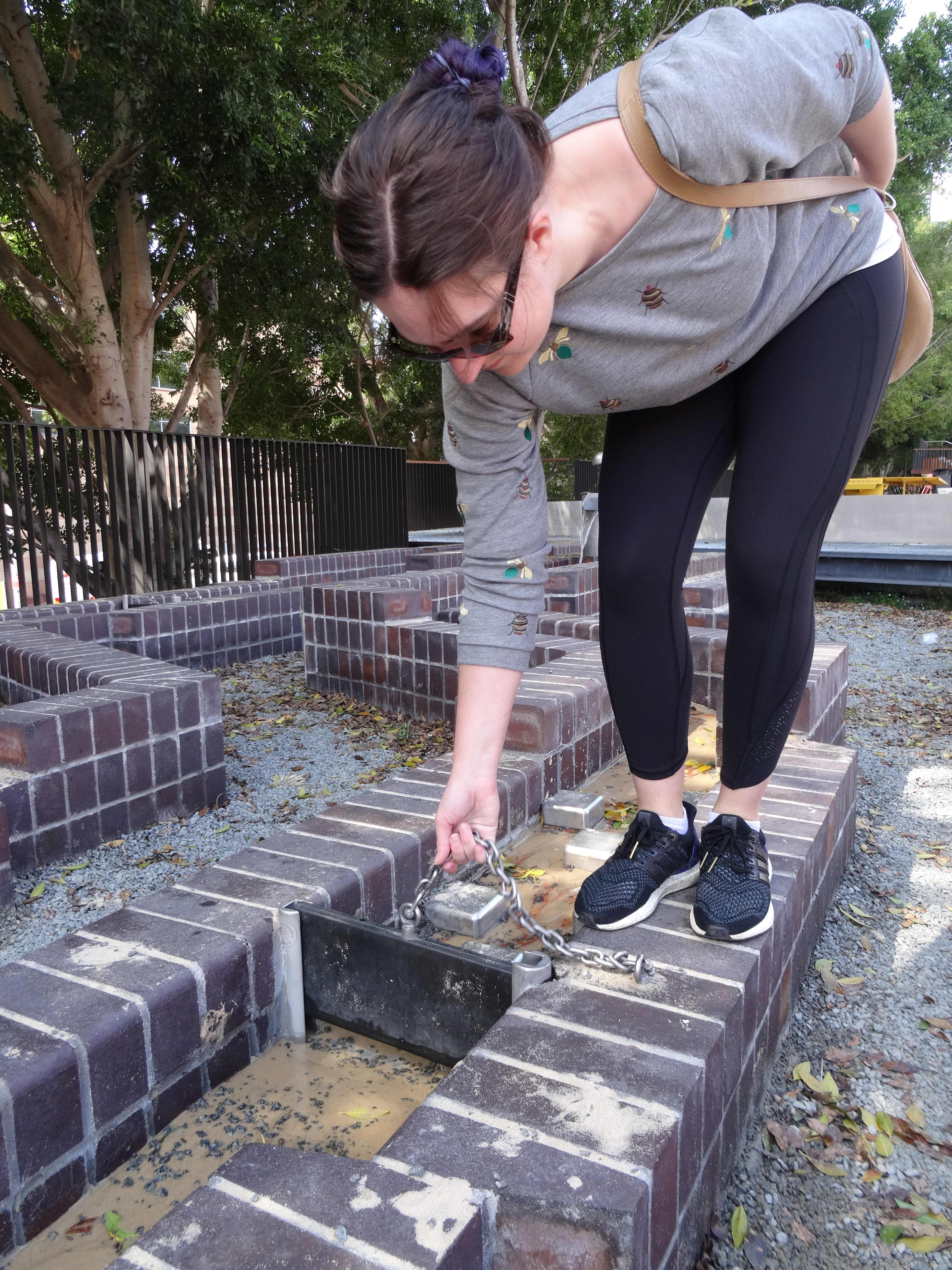
Adults can play here!
.
It will be some years before the habitat attracts local pollinators. People can play here right now!
I tried out the mini canal system with my daughter. Adults can have fun activating the water from mushroom fountains then blocking the flow with mini-canal locks.
.
.
.
.
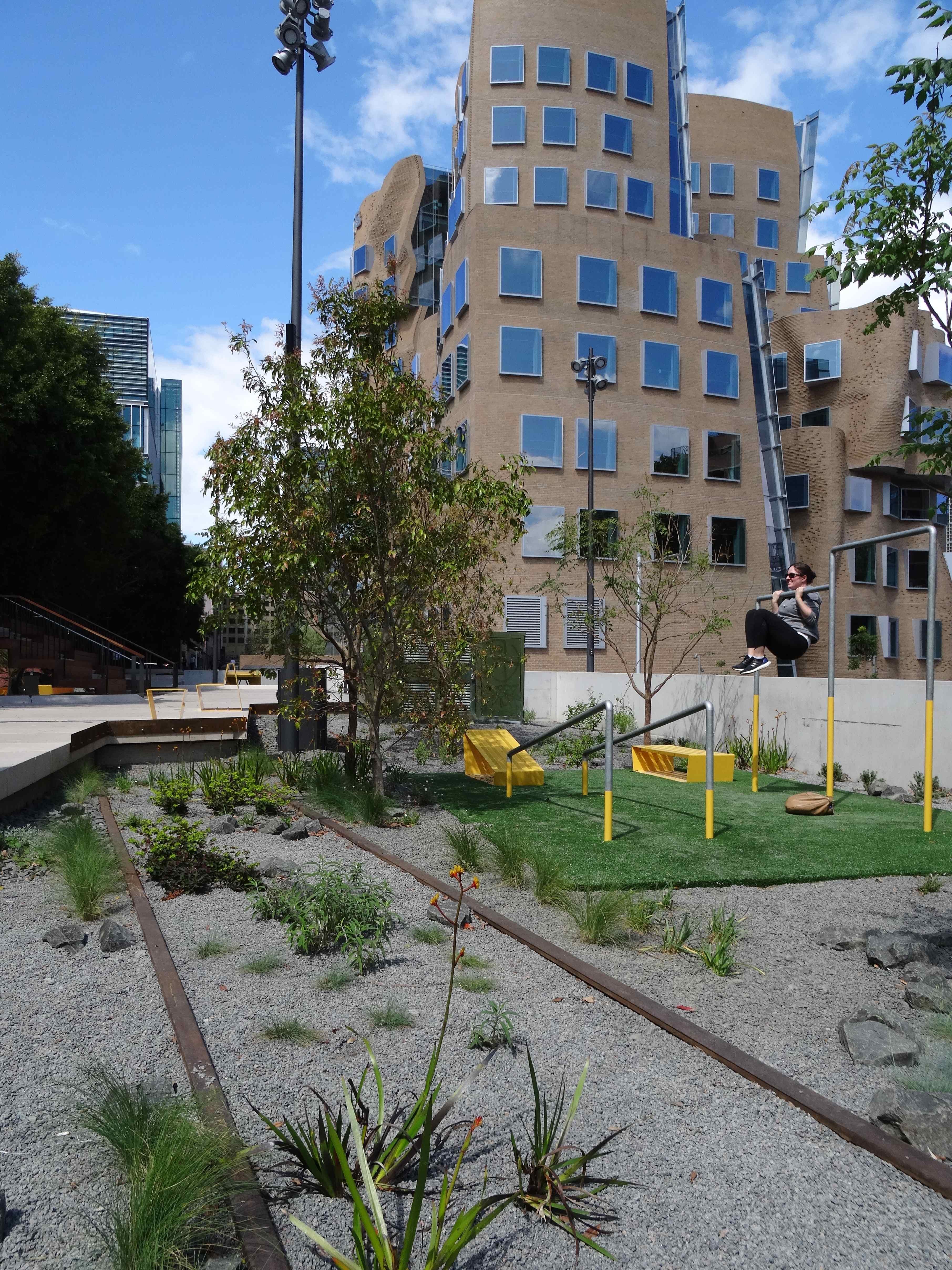
Don’t want to play? Try the gym.
.
Don’t want to play hydrologic engineer?
Try out the outdoor gym equipment.
The Goods Line passes through the University of Technology Sydney (UTS) campus. The Chau Chak Wing building provides and interesting architectural background to this space.
.
.
.
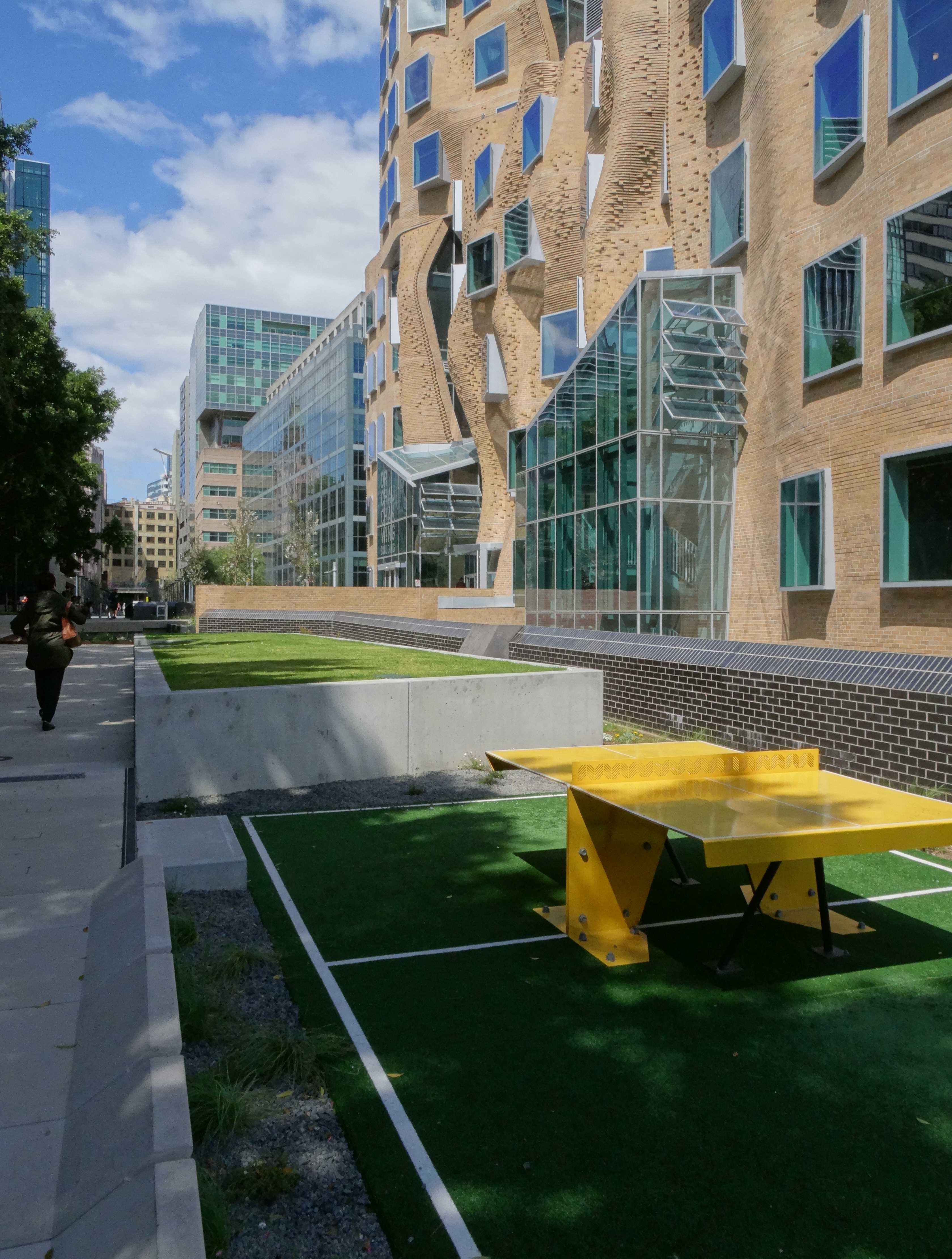
Ping-pong anyone?
.
Or perhaps invite some friends to a game of ping-pong.
.
.
.
.
.
.
.
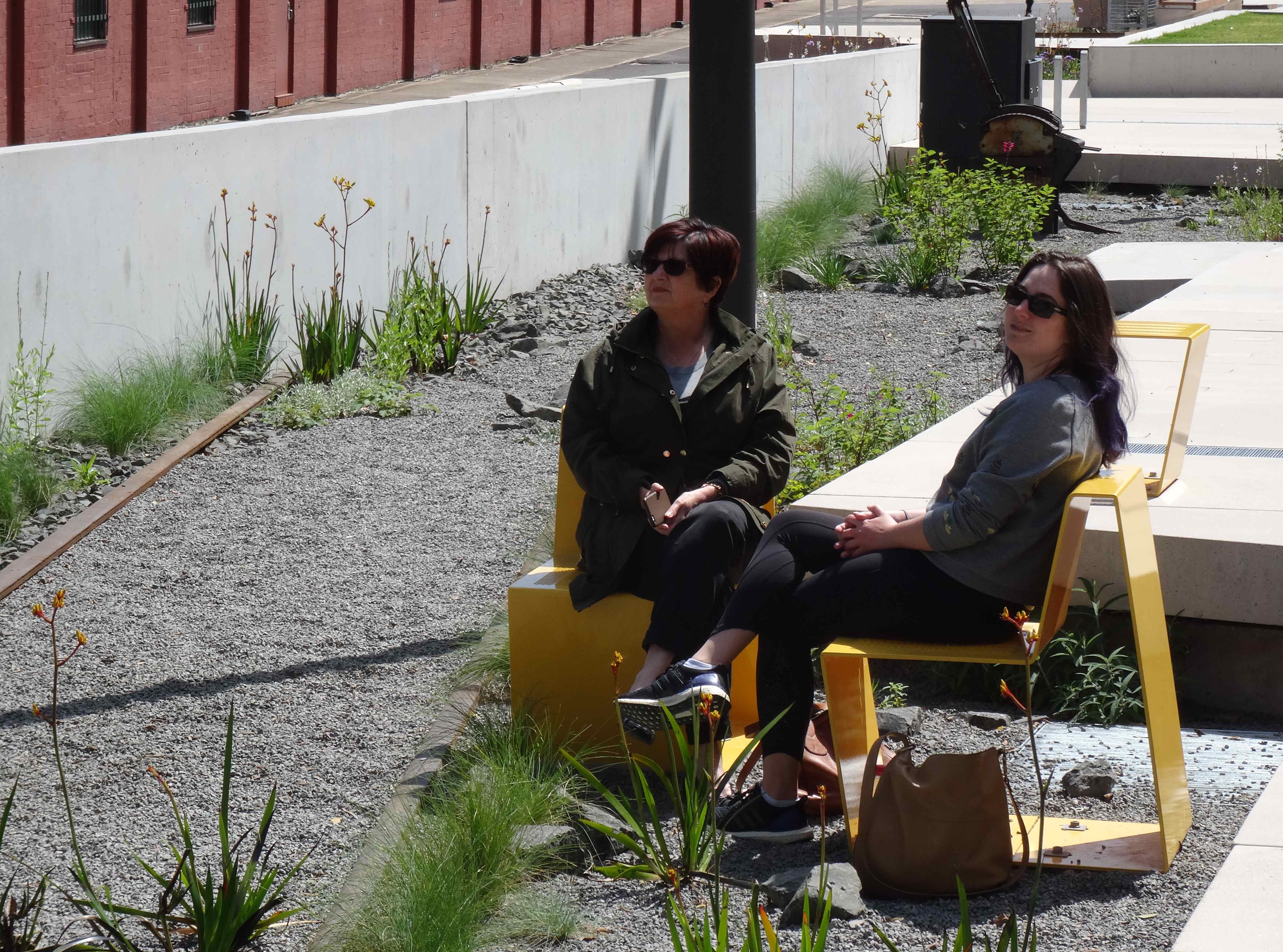
A seat in Sydney sun
.
Or take a seat and soak-up the sun.
.
.
.
.
.
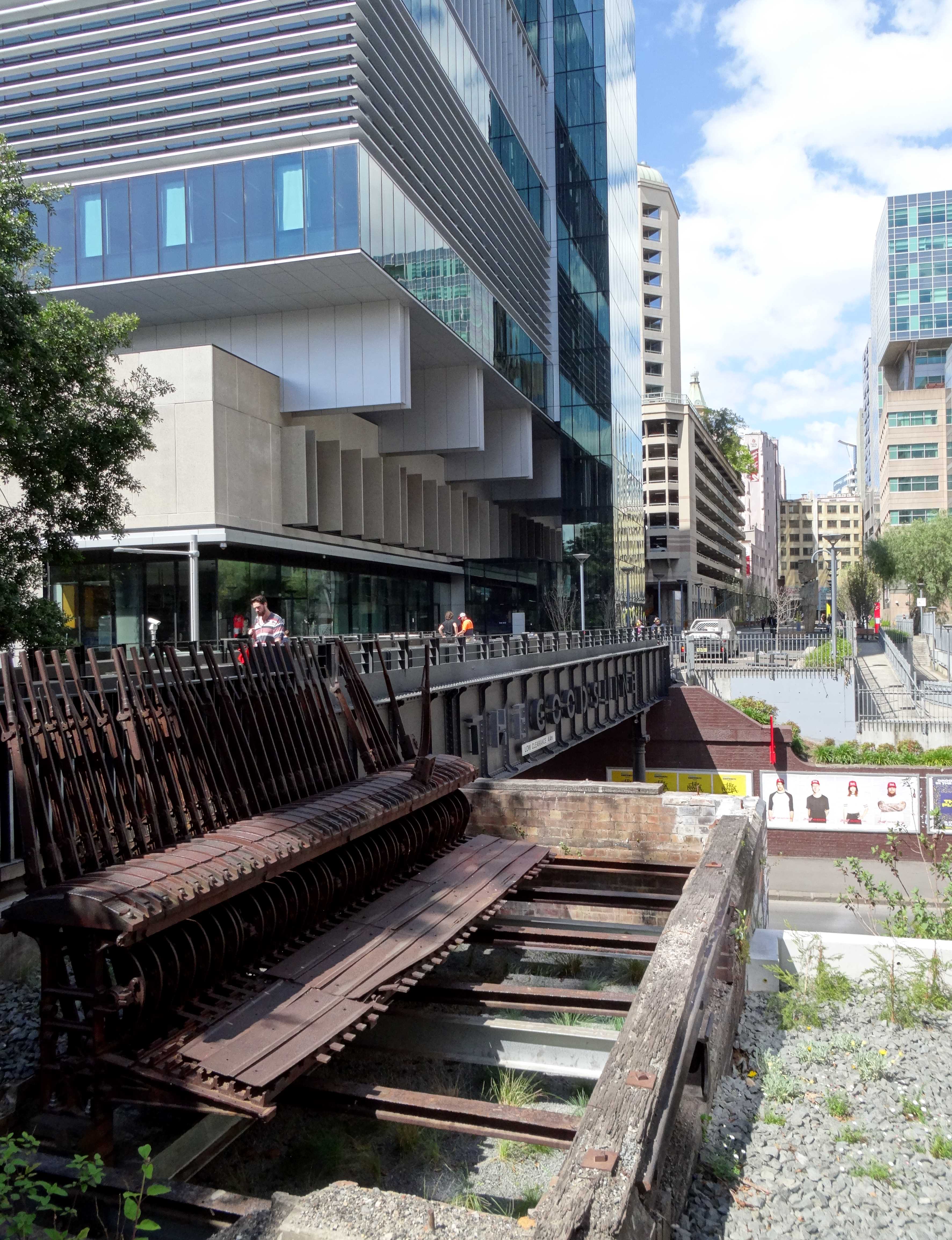
Goods Line signal levers
.
The Goods Line also preserves some of the history of this part of Sydney.
The original levers from the Ultimo Street Signal Box are an interesting part of the fabric of this special place.
.
.
.
.
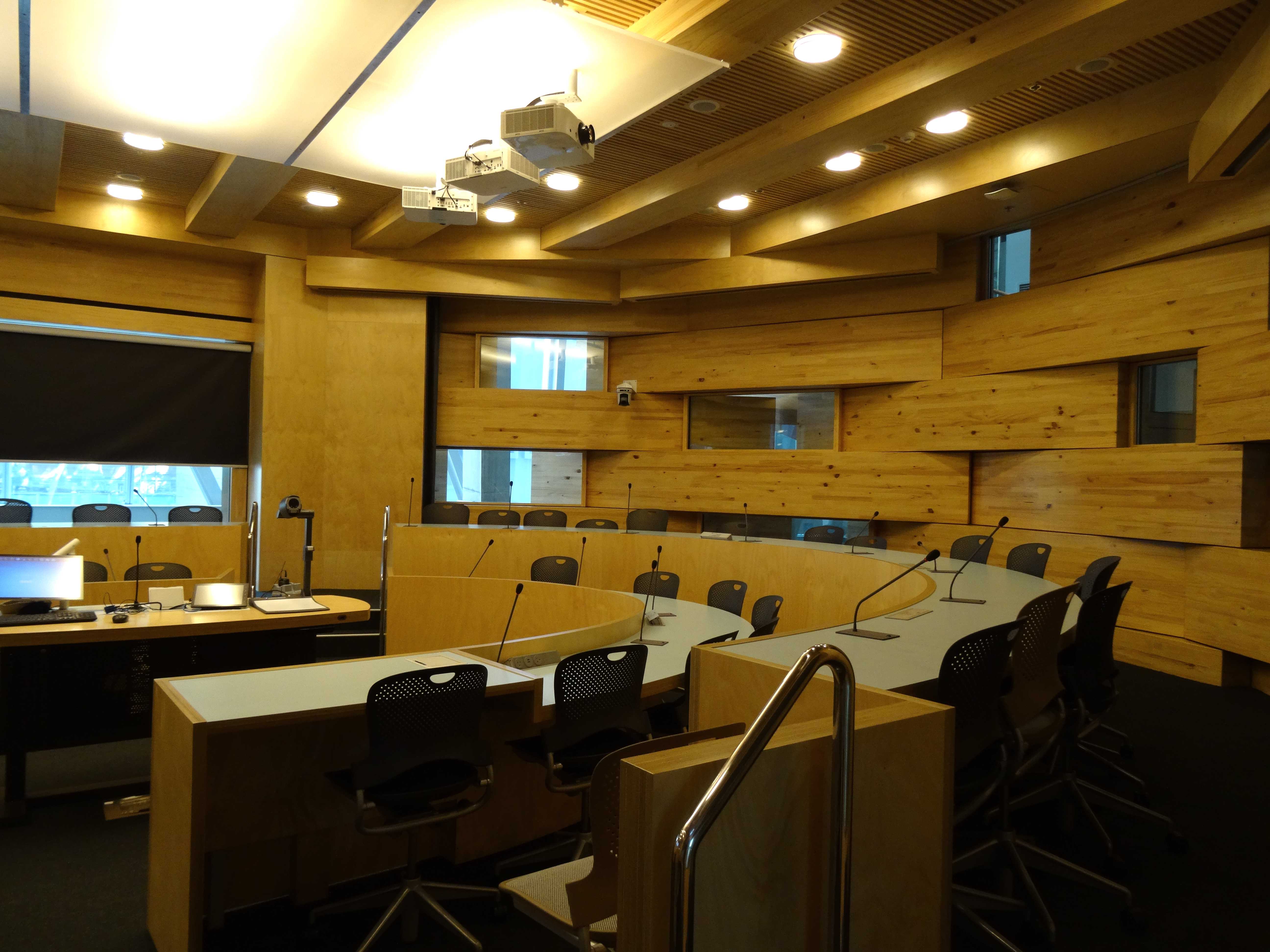
UTS Business School lecture room
.
Being part of a university campus creates unique opportunities for different segments of the community to mix.
Studying in the stunning architecture of UTS Business School must be an amazing experience but it is still inside.
.
.
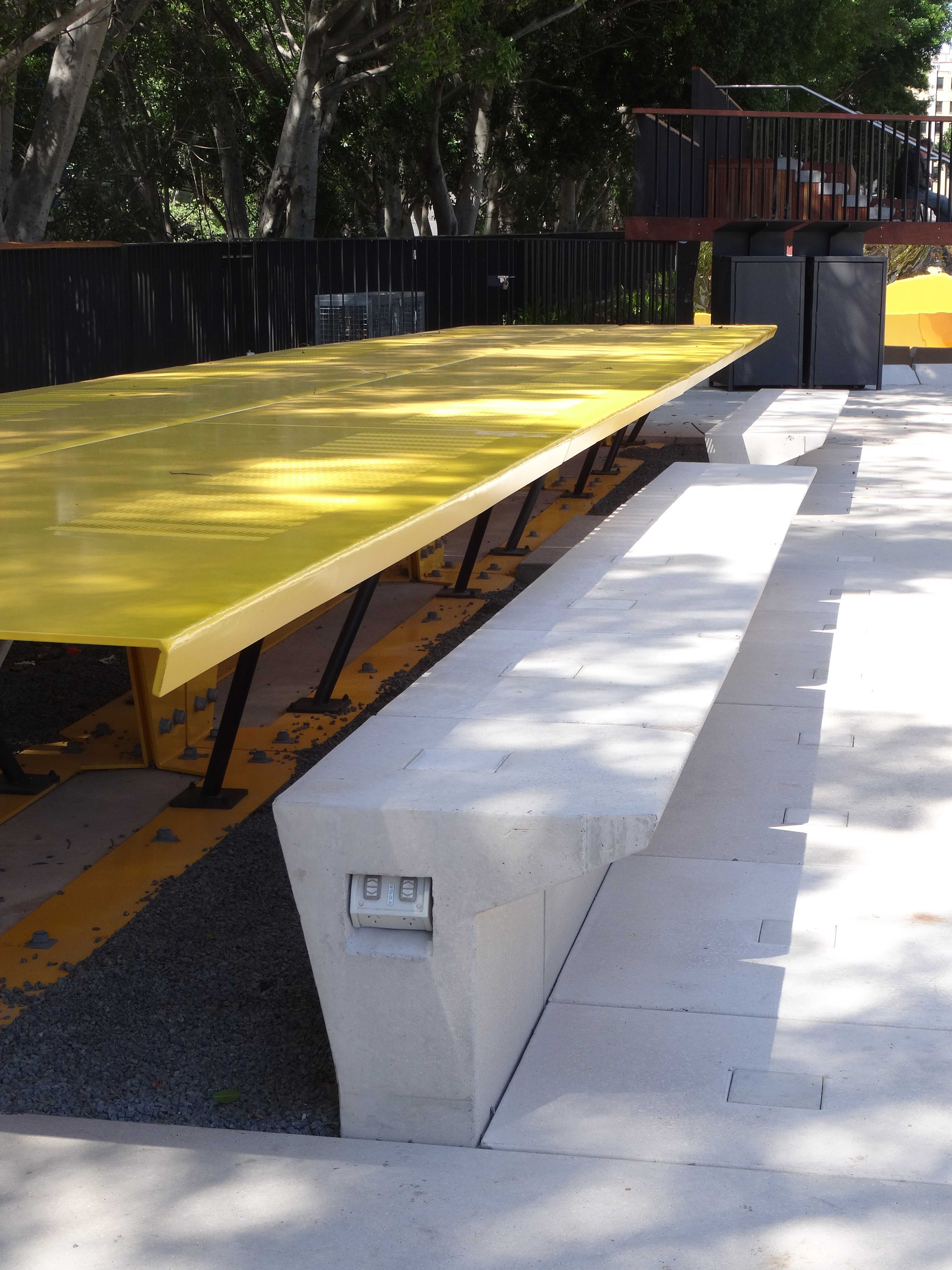
Take your laptop and study outside
.
Need a break outside?
Grab your laptop, pick up a coffee on the way to a specialised study table under the trees, plug in your laptop and enjoy study time in a vibrant community space.
The Goods Line is a special Sydney surprise worthy of a visit.
Even the Rangers seem to love their work with the public visiting The Goods Line. The Rangers I talked to were friendly and welcoming.
By: Michael Fox
Our second Pollinator Link article in Living in the Shires magazine looks at that great friend of our weekend backyard barbecue events, Micro-bats.
I met the magazine editor, Susan Prior, this week and discussed her article, Nancy on Nolan, which left me wishing we had visited MONA when we were in Tasmania last month. David Gowdie, Harcourts Graceville, sponsors this excellent community magazine. See David’s article – Spring Time = Growth Time on page 3.

Need a book to read?
Susan herself is interesting. After I left the Harcourts office I stopped to photograph this curious footpath bookcase. The sign reads Mighty Fine Book Swap. Another generous community initiative of Susan’s. The Shires are looking like a good community to live in.
Learn more about microbats:
Bat Conservation & Rescue QLD Inc.
Microbats of Brisbane’s Inner West (2015)
A report for the Cubberla-Witton Catchments Network Inc. & Brisbane City Council
Monika and Martin P. Rhodes
Fauna Surveys on the Wing
by Sandra Tuszynska
I have recently had the pleasure of being a part of a workshop that involved creating homes for solitary native bees, at the Woodford Planting Festival. It was really inspiring to see people come together to create homes for our precious pollinators. After Helen Schwencke’s introduction, Chris Fuller lead the two workshops. Chris is a consultant for Macadamia growers with regards to bee pollination and has a website called nativebees.com.au.
The workshop was full of interesting facts about different solitary bees such as the Blue Banded bees and Teddybear bees, as well the Carpenter bees and many other species. It is quite amazing to think that Australia has over 1500 species of bees and counting.

Blue Banded Bees roosting . Image retrieved from http://www.ipernity.com/doc/395171/36460158
Unlike social bees, solitary bees do not create hives, instead they lay their eggs in all kinds of nooks and crannies. For example the Blue Banded bees lay their eggs in river banks or any other exposed, sandstone or clay containing soil. The female bees dig out a hole that they then extend into a maze of tunnels. Although they are solitary the females might build nests in close proximity to one another. They lay their eggs in the tunnels and seal off the entrance and then leave the site. The young hatch in the warmer months.

Blue-banded Bee, Amegilla cingulata. Image retrieved from https://www.flickr.com/photos/burtonandy/4345272601
DIY Bee Wall
If you would like to attract these beautiful creatures to your garden, you can provide some nesting sites for them.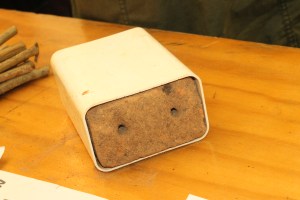 Most people use a 20cm rectangular down-pipe to create mud bricks with starter holes for the bees to nest in. The image below is of a ready made brick composed of 3 parts sand to 1 part natural clay.

Create the space and they will come
I wanted to create some of these for some friends, so I hunted down some clay on their property and found 3 different types. Some of the red clay seemed to have a mix of sand in it, so I used it to make a brick. The other heavier clay I mixed in the 3 part sand:1part clay. There was no rectangular pipe available, so I used a 15cm round down-pipe. I created a few starter holes, however the bees might choose to create their own from scratch. During the Bee Wall workshop, the starter holes were maybe 2cm deep, but some people create holes10cm deep. The bees may also prefer to create their own from scratch.
A few more of these will need to be created to entice the bees to nest there as they prefer to nest in close proximity to others of their species. 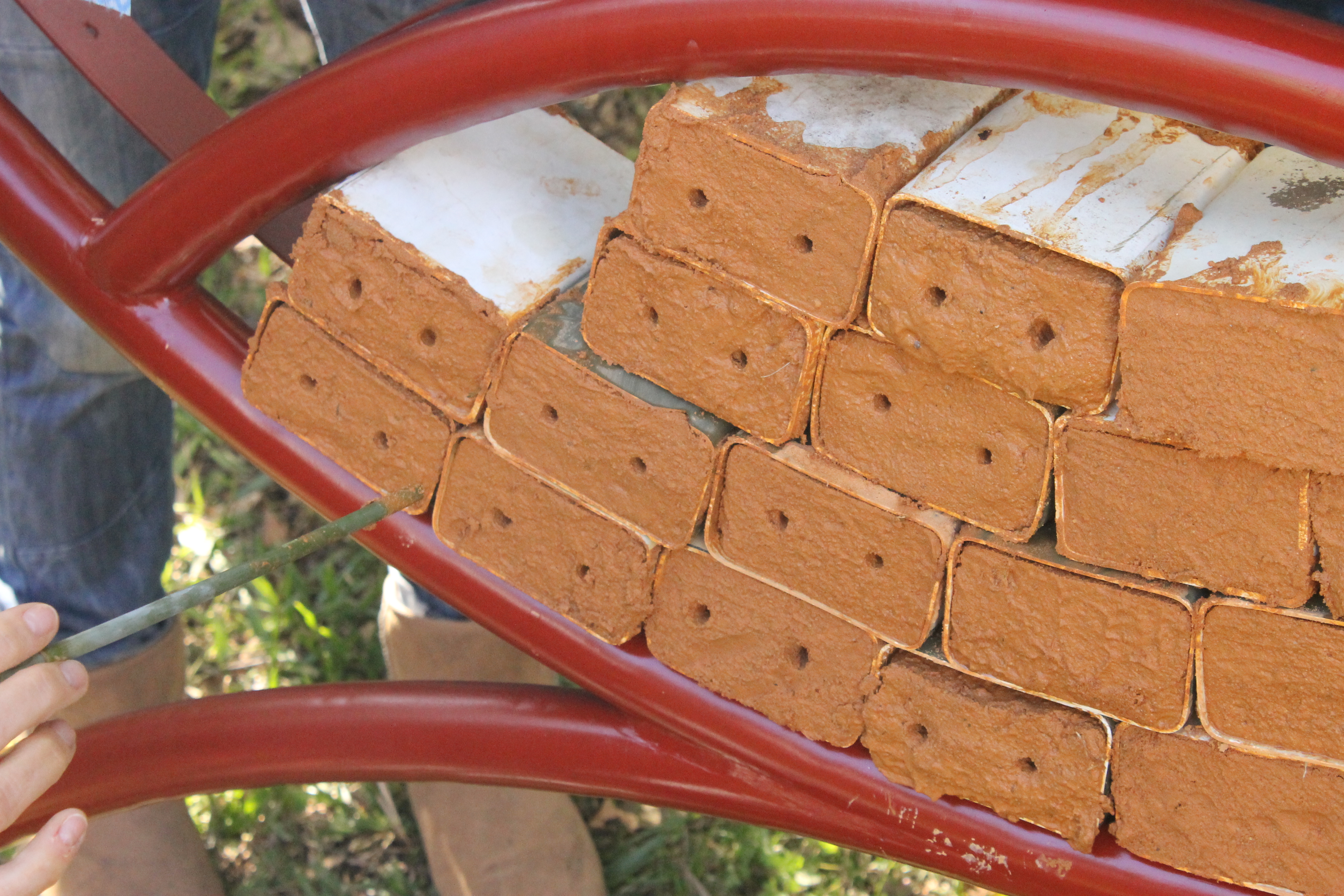 It is also a good idea to provide the bees with a thin vine or grass to roost on overnight.
They need to be raised off the ground and facing north for the morning sun. Protecting the wall with some native plants from all the other sides would create a safe haven for the bees. For a detailed description on how to create mud blocks and other useful tips please see Planting and Creating Habitat to Attract Bees and Bee Walls Habitat and Nesting Blocks by Valley Bees, as well as How to Make Nest Blocks for Blue Banded Bees by aussiebee.com.au.
Wood Blocks for Carpenter Bees
This is a matter of drilling some different sized holes into some wood blocks. The sizes should vary to accommodate for bee diversity:
3 mm hole 70 mm deep (few)
5 mm hole 120 mm deep (most commonly used)
6.5 mm hole 150 mm deep (most commonly used)
9.5 mm hole 150 mm deep (few)
13 mm hole 150 mm deep (few)


These can then be lined with paper straws for easy cleaning once the bees hatch out.
Paper Straw Homes for Resin Bees
The simplest home to create for resin bees, is by stuffing an empty can with some paper straws, tubes or hole liners.

Bamboo Pipes
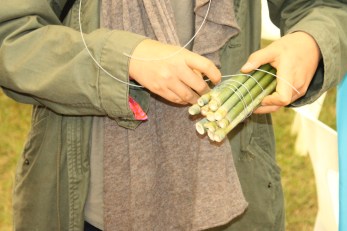
Some bees love to nest in pre-made hollows, so bamboo sticks are a fabulous material for these. Cut about 10-15cm pieces and make sure they are sealed on one end by cutting before or after the node, or block one end with some clay.

Bundle the pieces with some wire and voila!
Lantana Bundles for Reed Bees

Exoneura Lantana Reed Bee. Retrieved from https://www.flickr.com/photos/zosterops/2831852143/
As much as Lantana is hated by many for its invasiveness, Australian animals are fast adapting it as a source of shelter including Exoneura, a native reed bee.
Females burrow into the soft pith of old stems to lay their eggs. In fact these bees are semi-social, so a number of bees can occupy a hollow of a step and will feed their young with honey and pollen.
One of the bees guards the entrance with its tiny back side which can be black or red. To create a Lantana bundle for these little beauties, just cut some 10-15cm mature canes and wind some wire around the bundle.
The Wall
Now it is time to create the wall adding to it the different homes you have created for the bees. Be creative with this as anything goes!

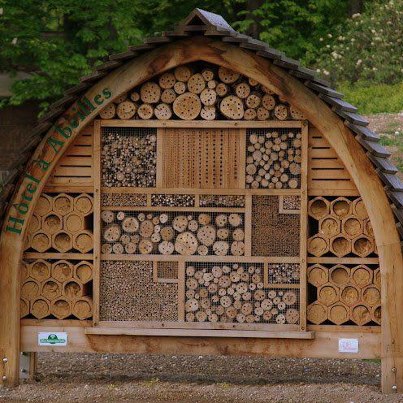
Image retrieved from http://www.rootsimple.com/2012/12/picture-sundays-a-native-bee-hotel/

Image retrieved from http://pollinator.info/blog/?cat=4







 Pollinator Link