The site is prepped!

justinschreiweis's avatarMGESS Pollinator Link

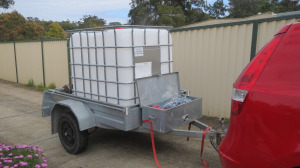
IMG_0001 IBC tank, ready to go.

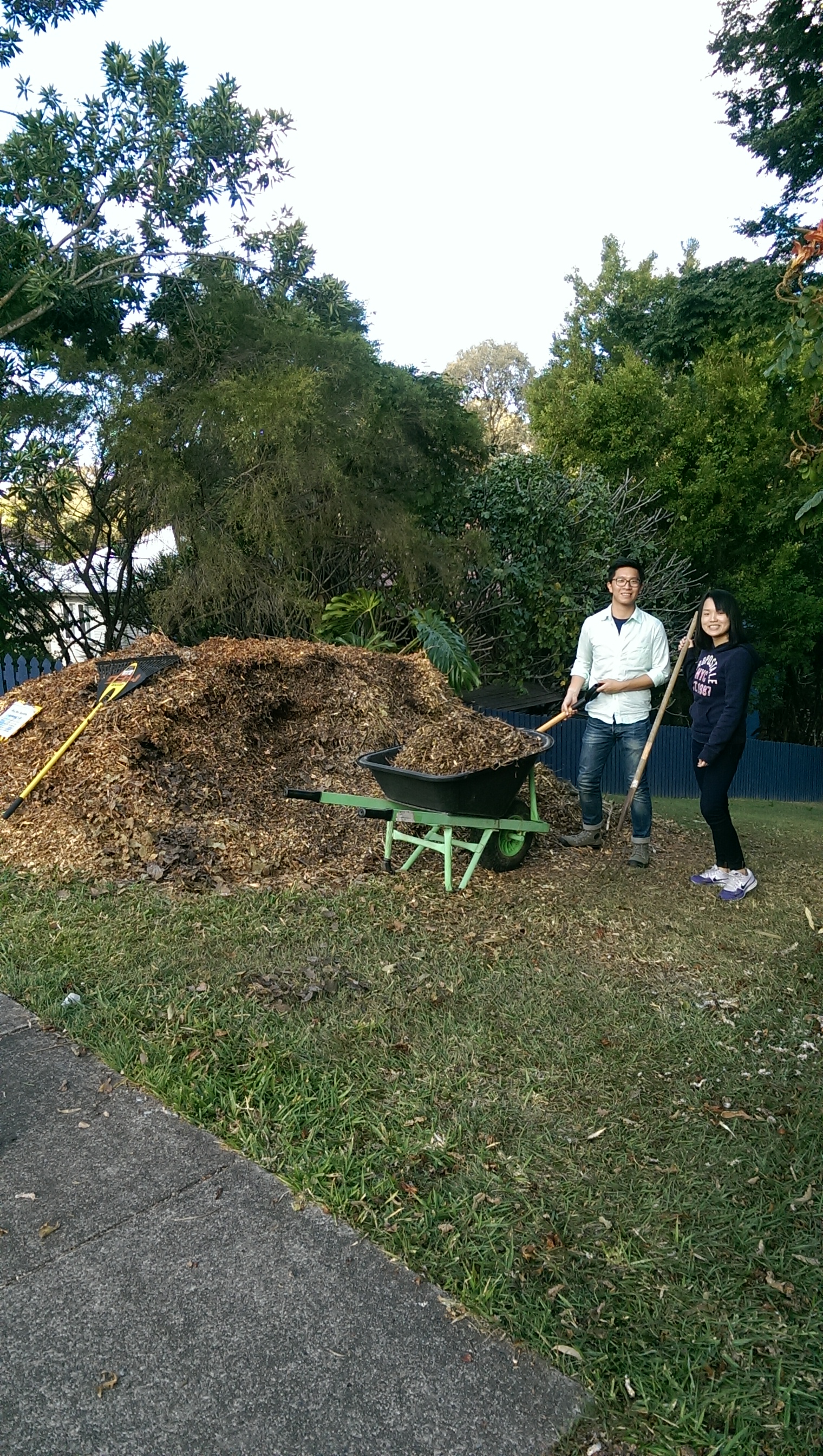
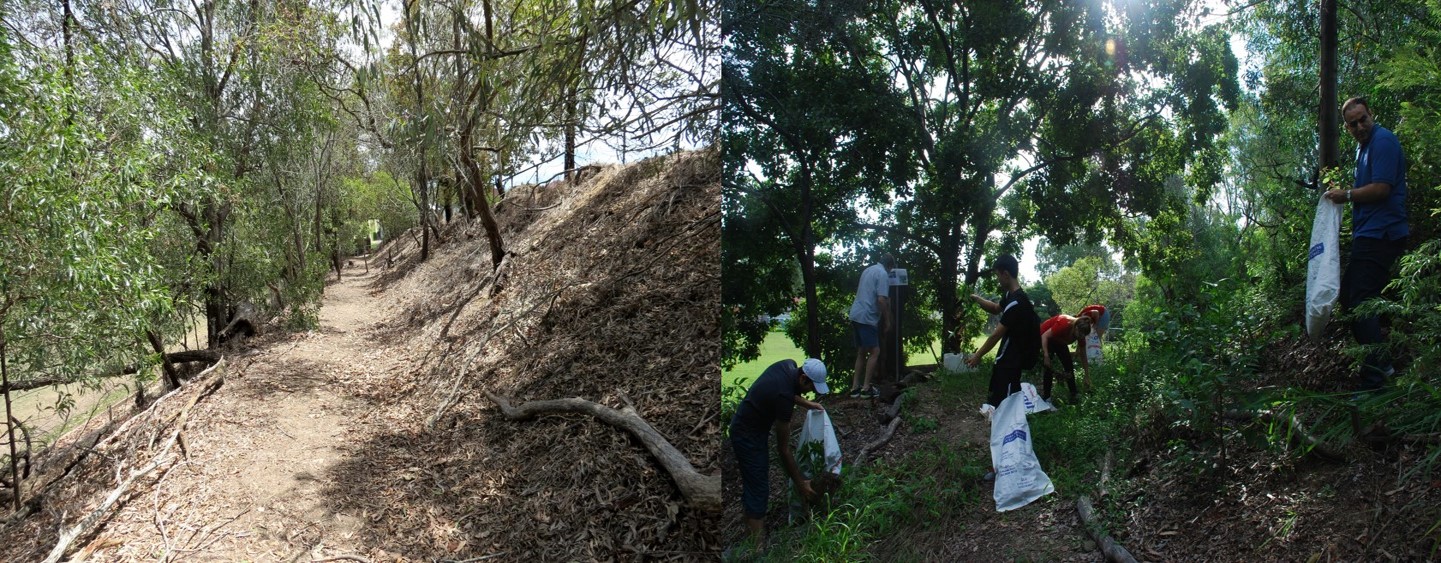
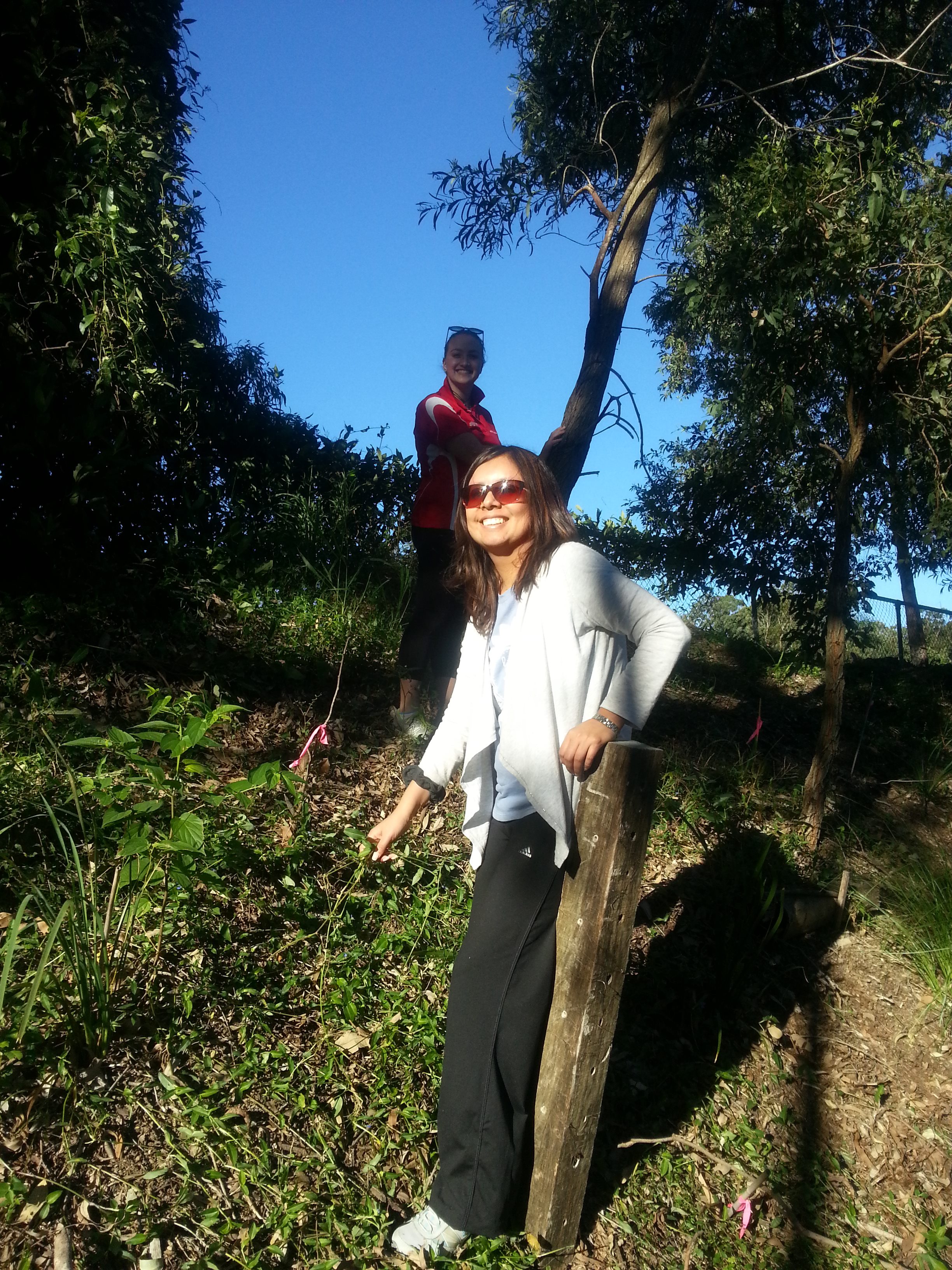
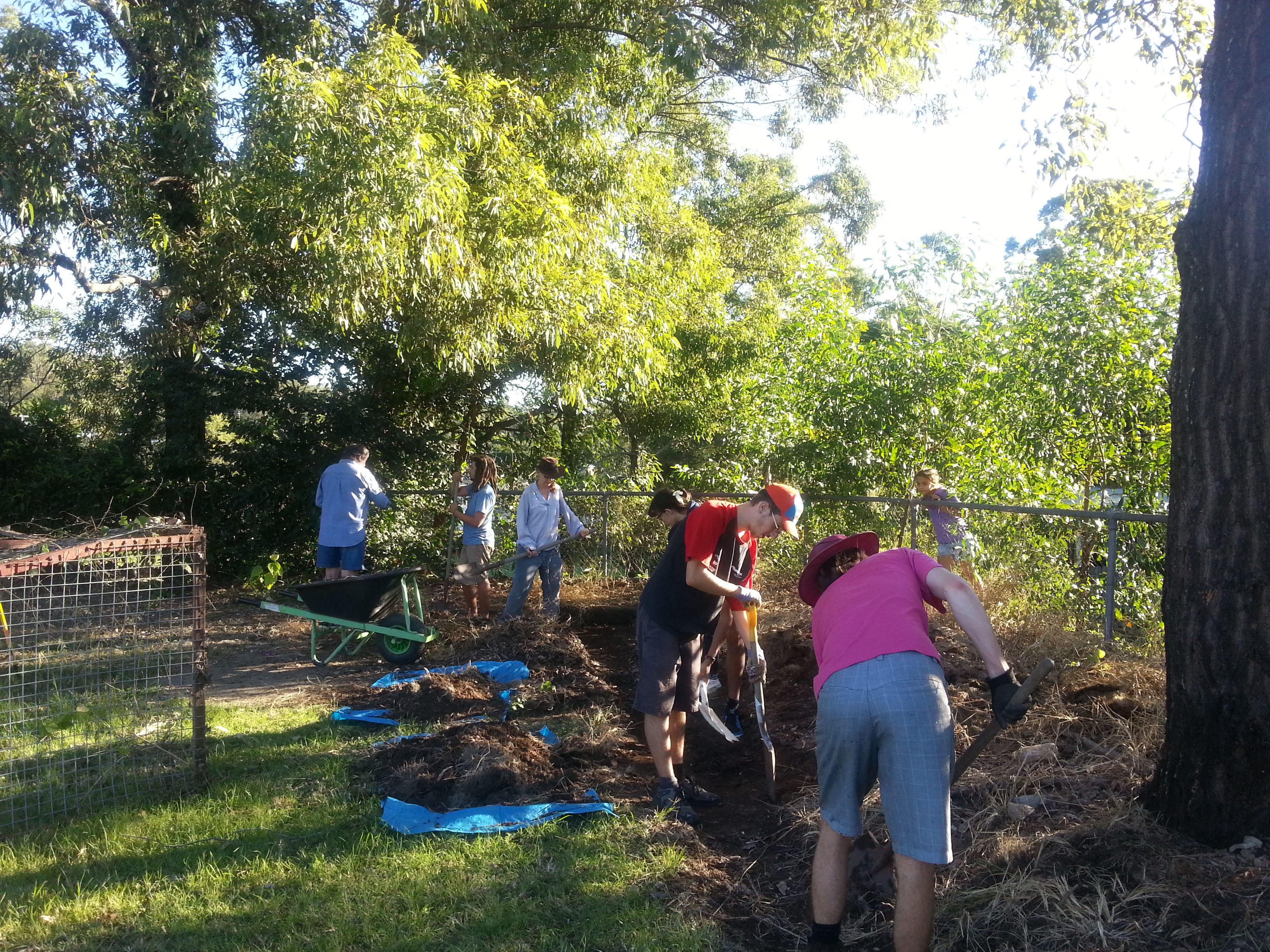
Job done! Grevillea Oval Embankment is raring to go. The holes are drilled and pre-watered, the rest will hopefully be fun for all. The soil was good digging so here is hoping we have some very happy plants by tomorrow afternoon.

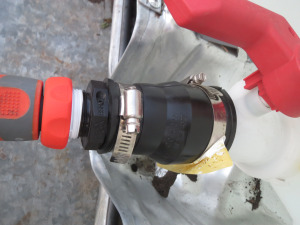
A recycled IBC, ready for all of our watering needs, well, almost. After prepping the site I had to zip across to Bunnings to figure out how on earth I was going to put a standard garden hose onto an IBC butterfly valve. There are a couple of ways you can do it when you have the time, but sometimes you have to “bodgie” things up hey?! Nothing a bit of rubber tubing can’t fix- one rubber 50x40mm reducer, one threaded 1-1/4 BSP fitting, one 12mm hose adapter and some thread tape. $18

From a 50mm IBC butterfly valve to a 12mm hose adapter. From a 50mm IBC butterfly valve to a 12mm hose adapter.

View original post 139 more words

Posted in Uncategorized | Leave a comment

Bee Open Day

By Sandra Tuszynska

On the 12th of September, Valley Bees are hosting a Bee Community Open day at the Marry Valley Collage in Imbil. The motto is: Bee Inspired and Bee Informed with a myriad of presentations on honeybees and native bees that will be on offer.

In fact, there will be 39 speakers, discussing topics such as bee habitat, bee honey, bee boxes, bee intelligence, creatures other than bees, microbats, pollination and so much more.

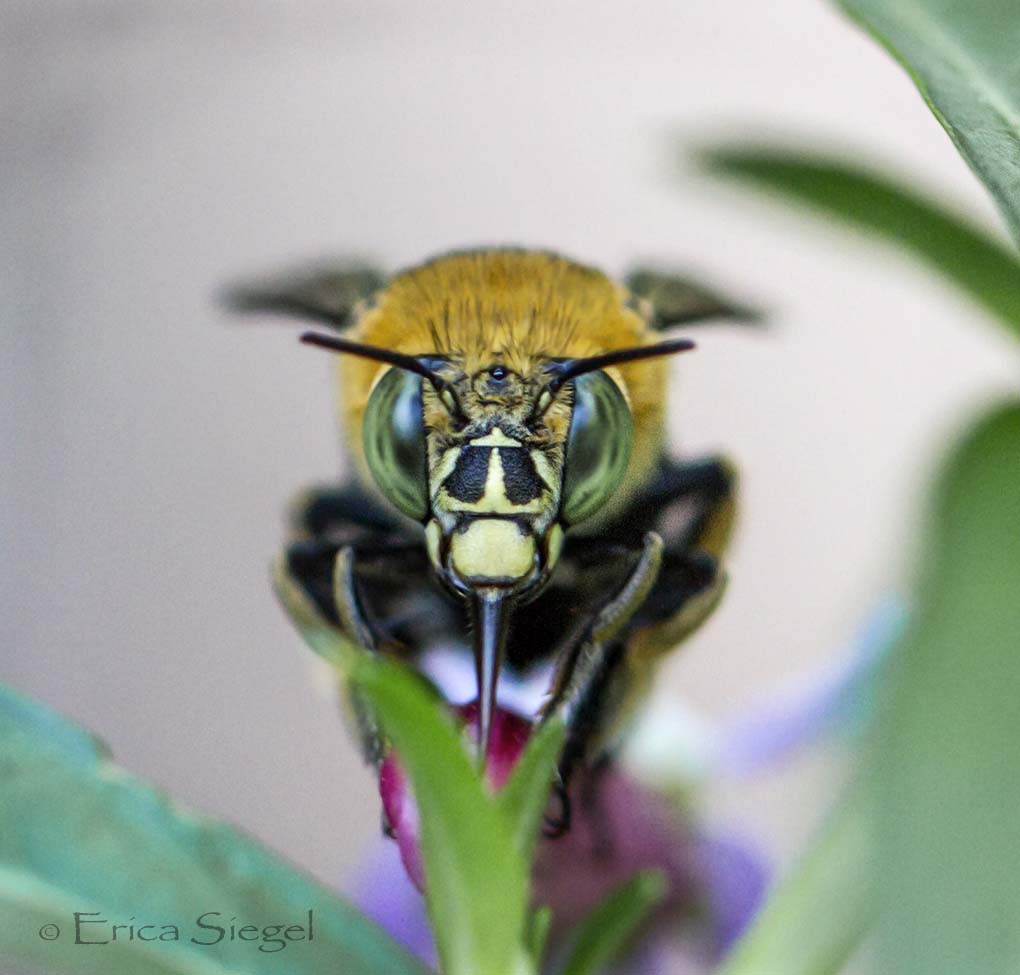
Blue Banded Bee love purple flowers. Image retrieved from http://theplanthunter.com.au/uncategorized/bee-hotel/

Blue Banded Bee love purple flowers. Image retrieved from http://theplanthunter.com.au/uncategorized/bee-hotel/

The day will be structured around speakers giving 10 minute presentations twice, so you don’t miss out on anything. There will be plenty of hands on activities for children and adults, honey tasting, local produce and home made damper. Please see the flyer here http://mrccc.org.au/wp-content/uploads/2014/09/VALLEY-BEES-OPEN-DAY-12-Sept-2015.pdf

Additionally for a detailed program description of presentations, speakers, activities and map with directions, please read http://mrccc.org.au/wp-content/uploads/2015/08/Bee-Open-Day-Schedule-2015.pdf

Hope to see you there…..

Posted in Uncategorized | Tagged , , , , , , , , | Leave a comment

Building wildlife and community link … inspiring

image10

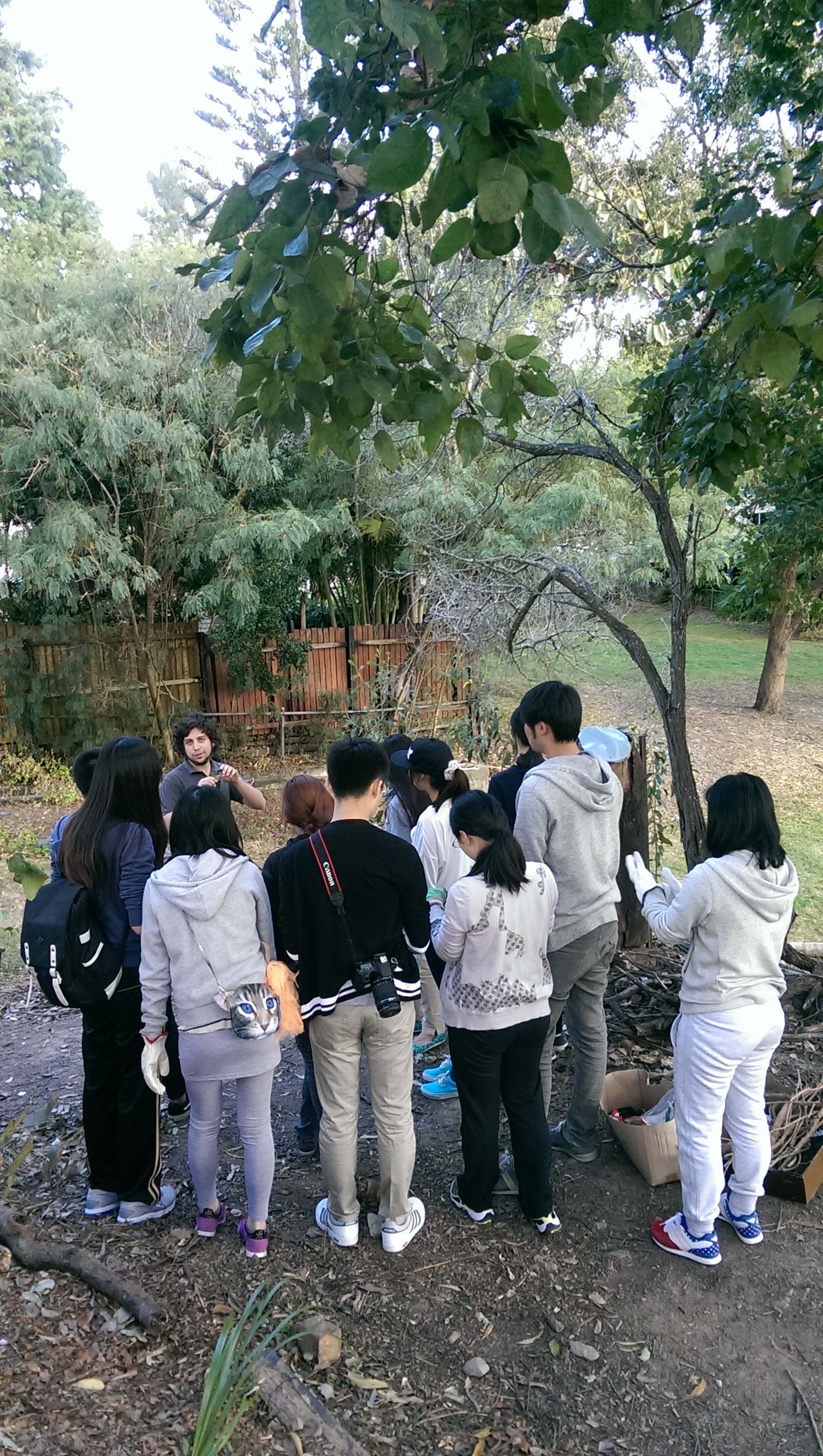
Sheamus briefing the team

By: Larissa Roberts

A beautiful day and high volunteer attendance made the Pollinator Link gardening on Sunday 9 August very special.

After a briefing by Sheamus O’Connor,  Co-Project Manager & Ecology Adviser, the team started work …

.

.
.
.
.

.

image5

Planting the future

.

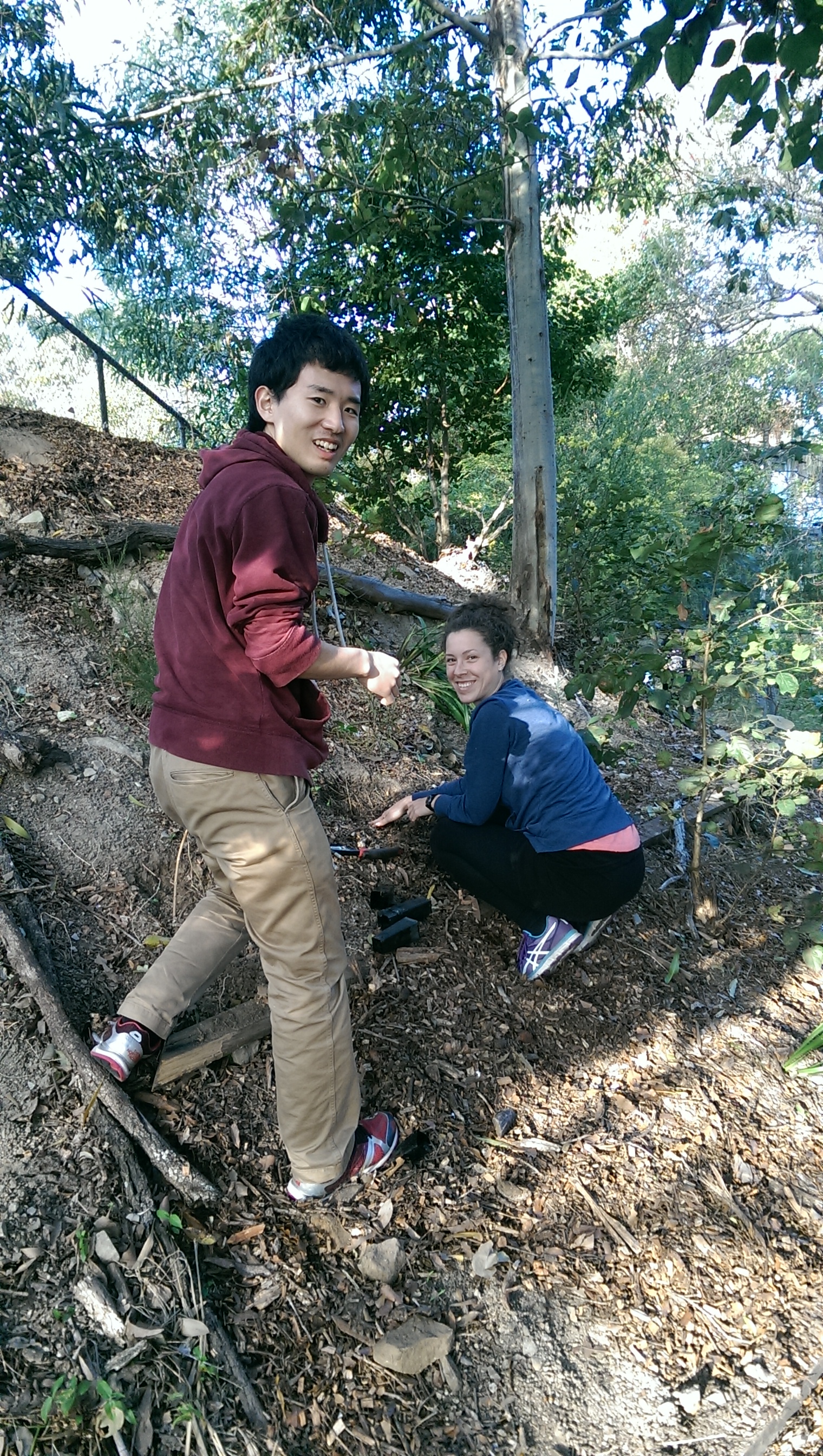
… planting 70 native plants including Lilly Pillies, Lomandras and Native Raspberries.

.

.

.

.

.

.

image6

Hard work can be fun

.

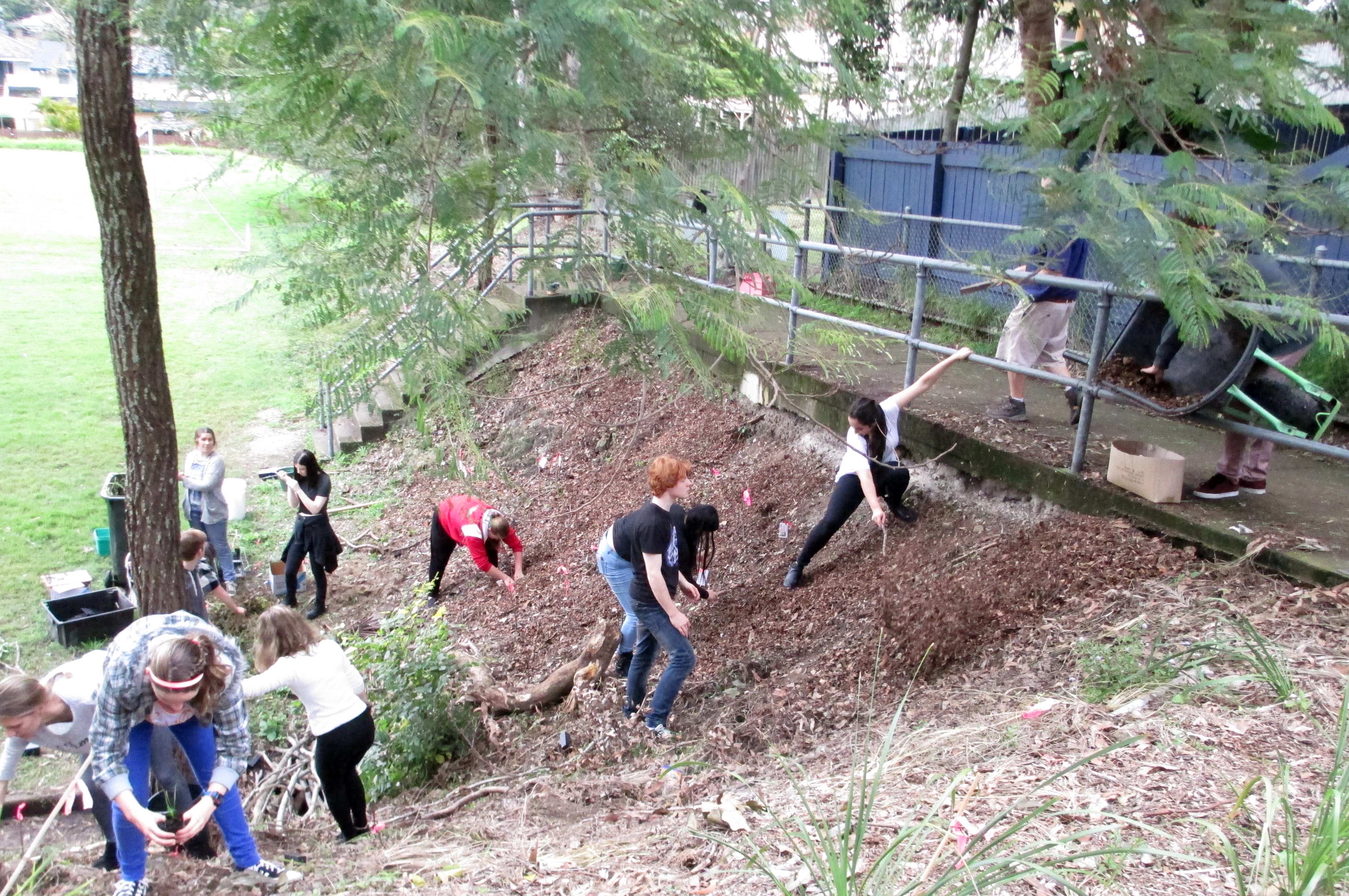
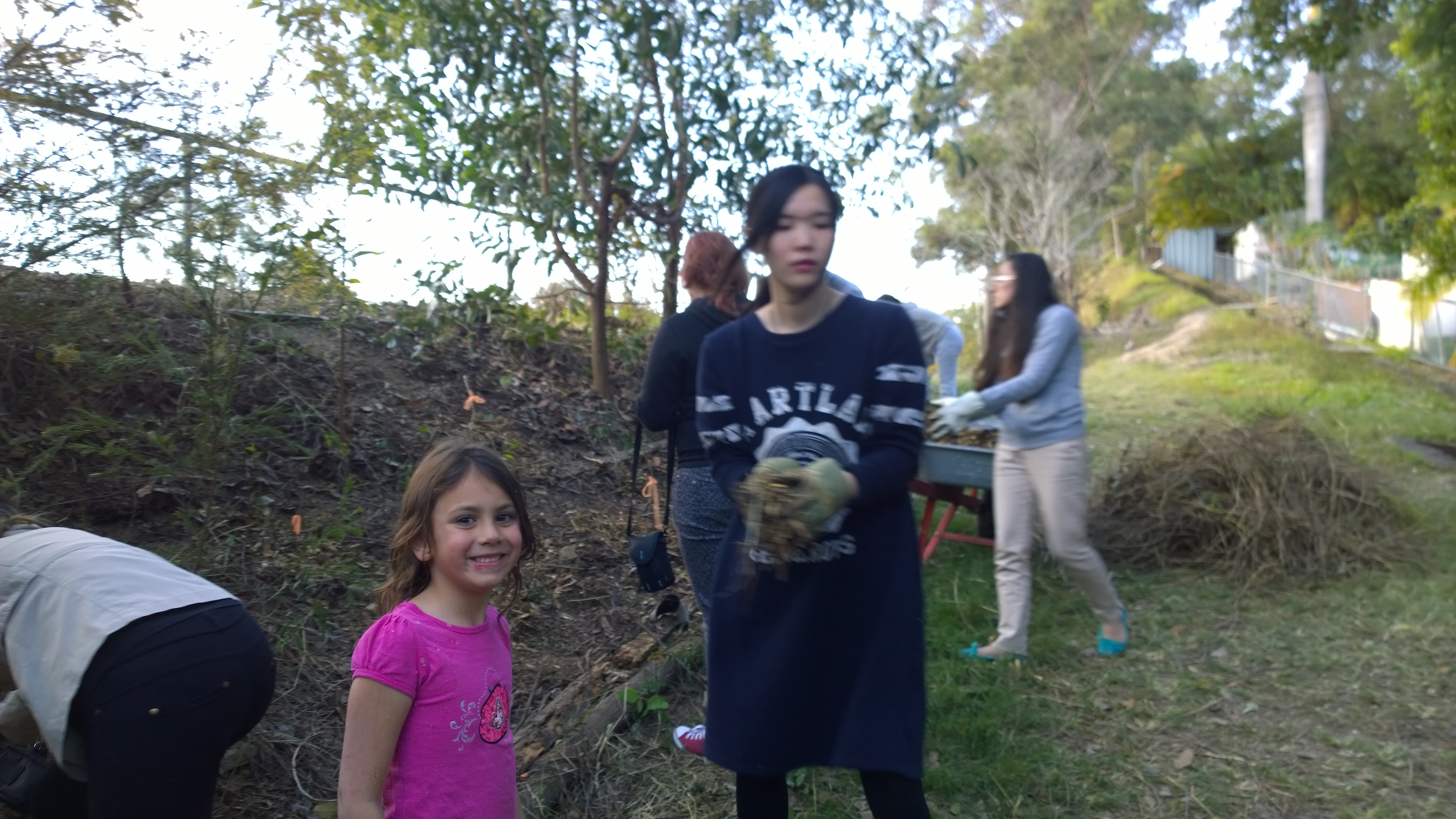
Site maintenance was also attended to with volunteers making significant headway with mulching, pulling out dead grass, weeding and watering.

.

.

.

.

.
.

image3

Griffith Mates volunteers

.

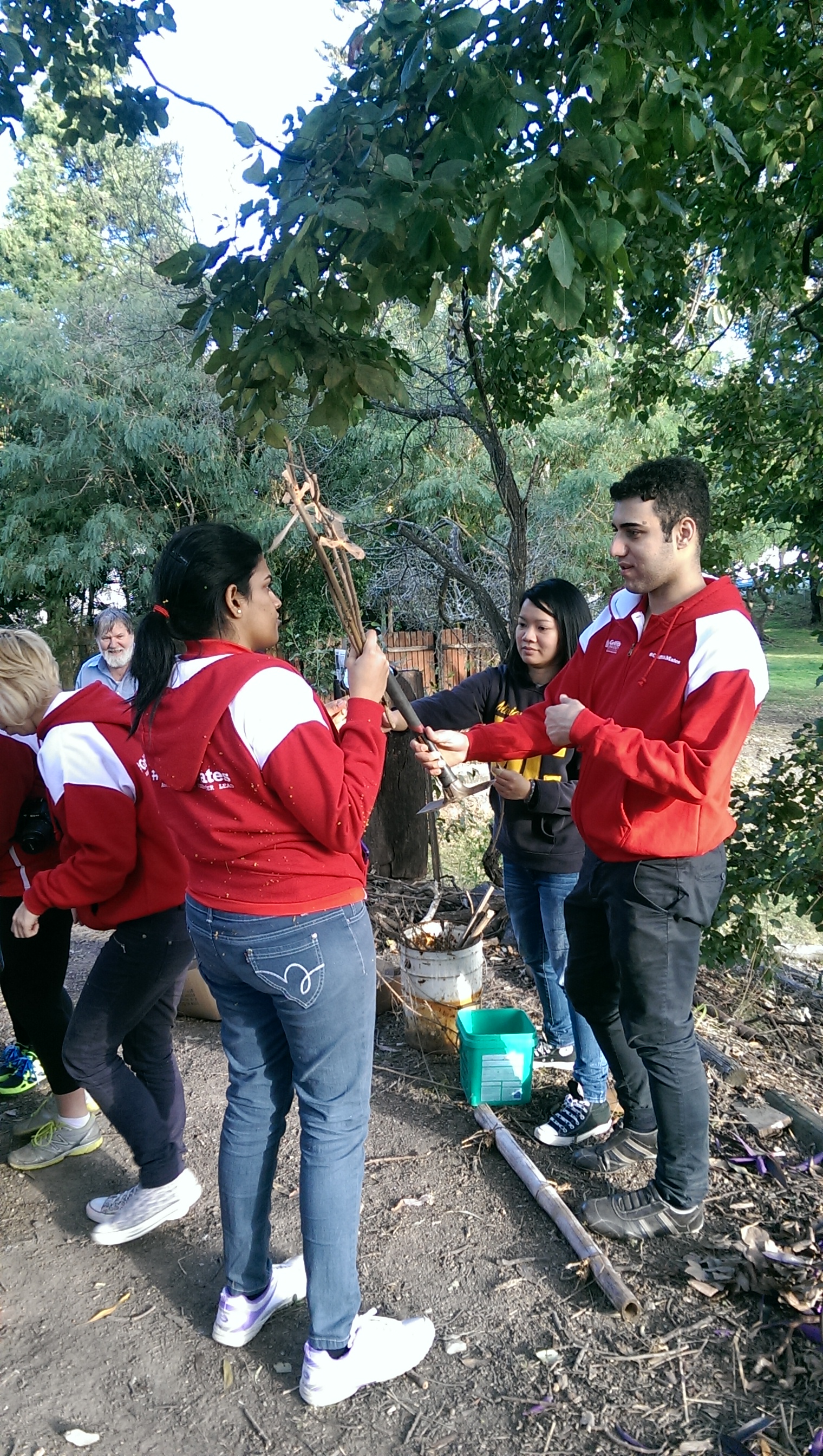
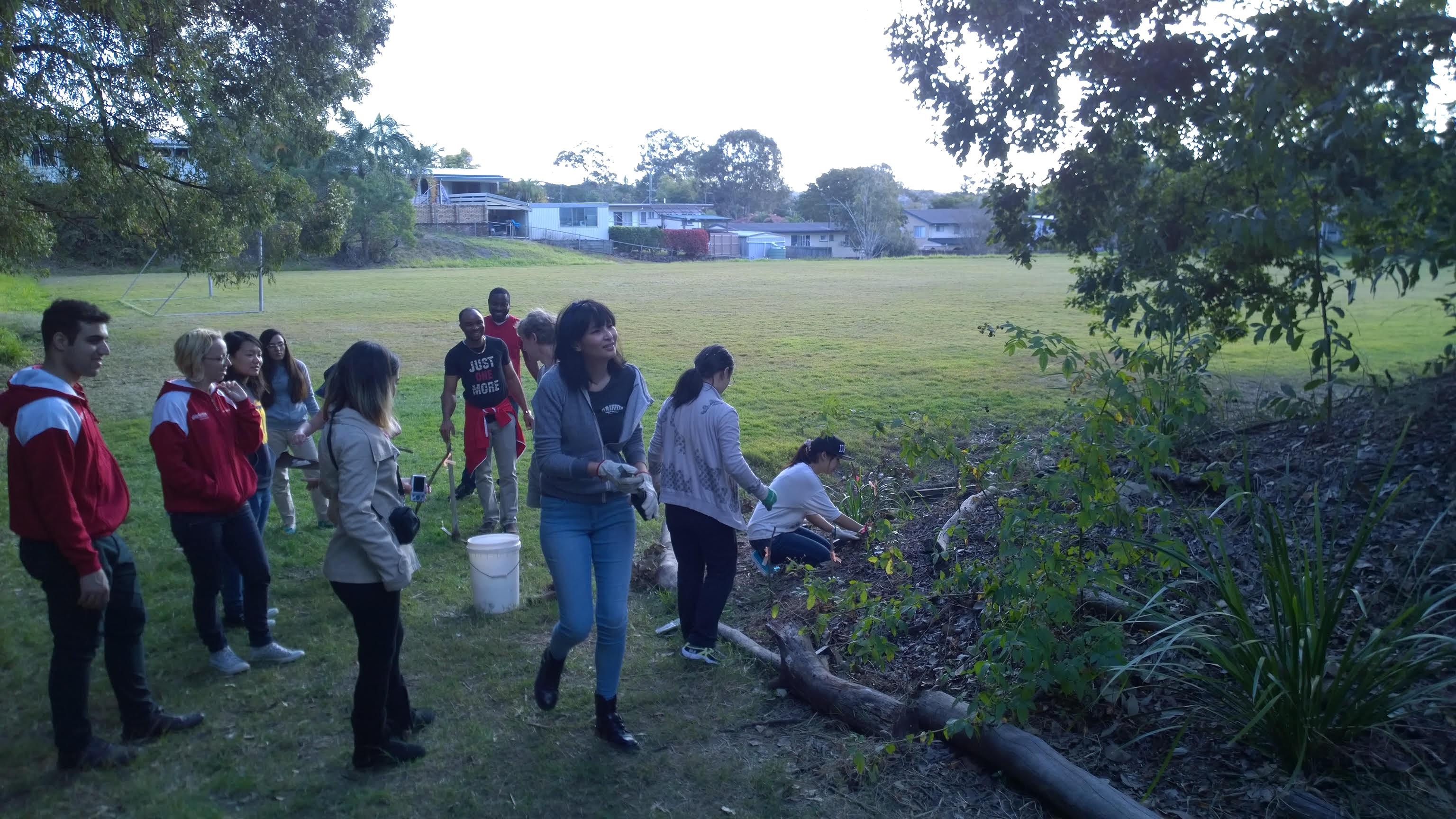
Volunteer numbers were bolstered by the addition of 30 Griffith Mates volunteers in addition to the regular volunteers.

.

.

.

.
.
.
.

image2

I want to do this at my school.

.

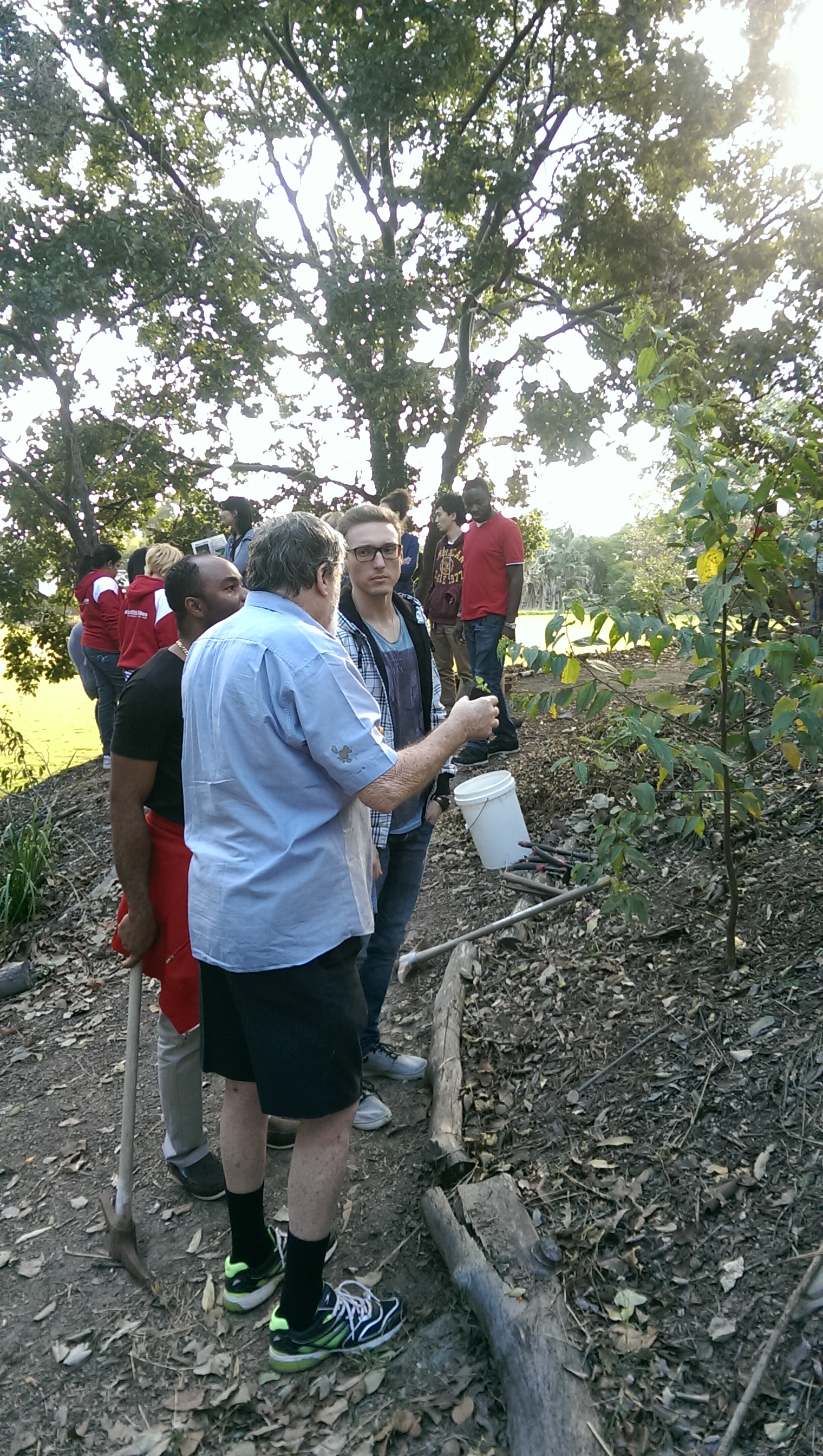
Speaking with the volunteers was an inspiration as I discovered motivations ranging from parents wanting to take Pollinator Link project to Mount Gravatt East State School, wanting to contribute to the local community, protect the environment and network. The Griffith Mates attendees provided a very multicultural flavour to the day with volunteers hailing from Hong Kong, Sri Lanka, Nigeria, Germany and Iran.

.

.

.

image8

Bee Guru Len on his favorite topic

.

.

Pollinator Link’s bee expert, Len, was heartened to discover that wasps have made a home for themselves inside the recycled hardwood fence post Bee Hotels. An encouraging sign that the link is serving as a link for these pollinators.

Posted in Pollinator Link | Tagged , | Leave a comment

Grannies Ginger Nut Biscuits, Citizen Science and bees – 2015 National Tree Day Mt Gravatt SHS

By: Laurie Deacon

Briefing

Laurie briefing National Tree Day team

6am: I am up baking Grannies Ginger Nut Biscuits. It’s exciting. It’s going to be a big day.

Mulching

Hard at work spreading mulch

9am: I join Mt Gravatt State High School teacher Andrew Walsh, long time champion of environmental sustainability, and my co-coordinator for the 2015 National Tree Day event. Briefing Mt Gravatt High School students ready to start planting and mulching. Students had a chance to come down from the class rooms, throughout the day and their breaks, & participate in learning & planting.

11am: Joe Kelly Member, for Greenslopes and Cr Krista Adams, Councillor for Wishart planted a Red Cedar Toona ciliata and a Tulipwood Harpullia pendula in honour of the past history of the Mount Gravatt Conservation Reserve which up till July 1893 was designated as a railway timber reserve.

Celebrity Worm

Inspiring to see people so excited about native animals.

Citizen Science Activities on the day:

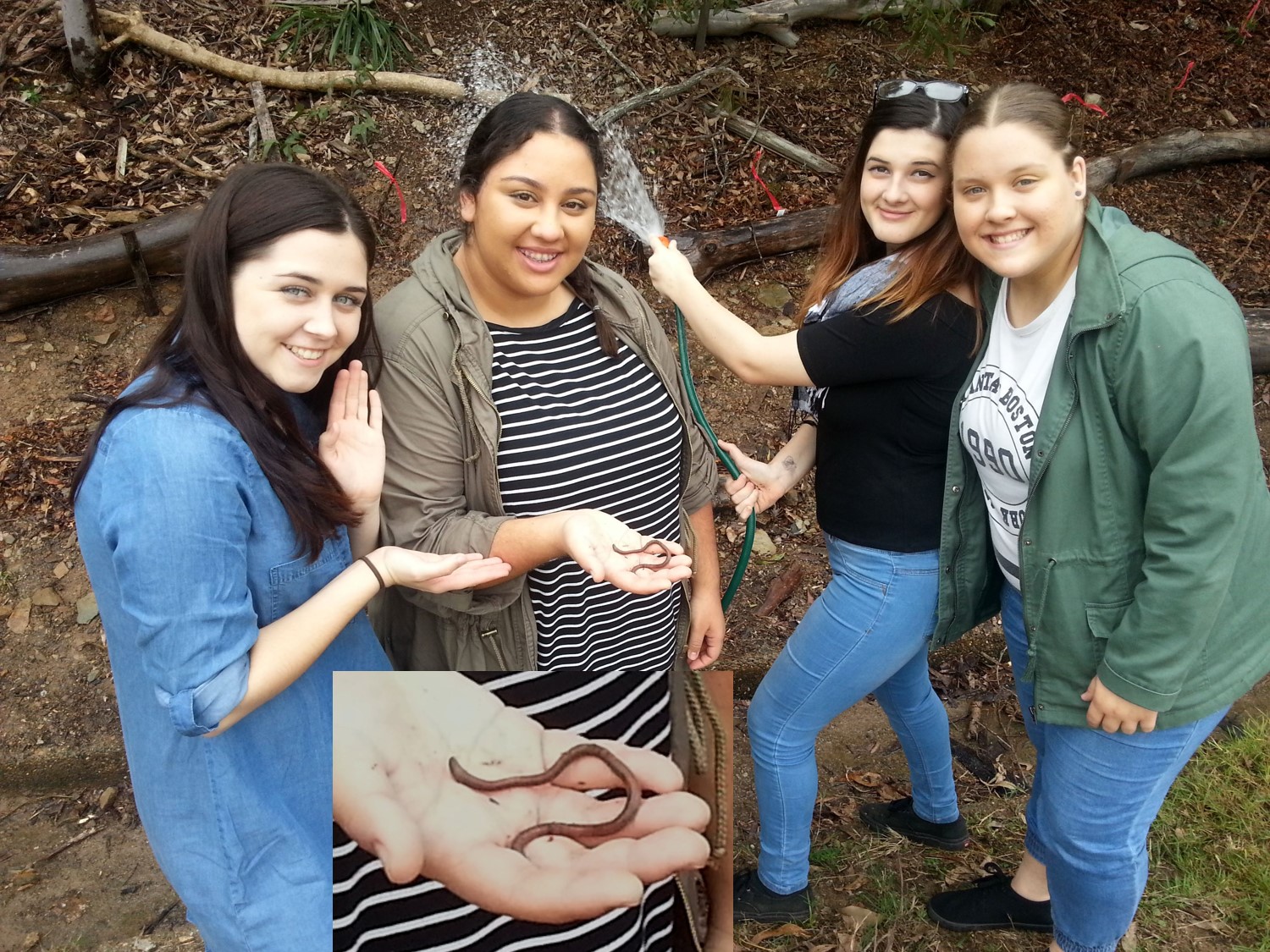
  • Celebrity Worm: even though many exciting people came to the event the real star was the earth worm. These grade 12 Geography students wanted photos with the amazing earth worm they had never really meet before!!
  • 250 Butterfly/Bird/Bee attracting plants were planted: All students from grade 10 to 12 planted, built retaining walls mulched and watered.
  • Science & Sociology & Threatened Species Summit: Our event shows we are doing good at Mt Gravatt SHS working to reverse the trend of losing native birds (even Kookaburras) in our local areas!
  • Installing signs for Butterfly, Bird Bee Corridor (Pollinator Link): We progressed getting permanent signs for the Pollinator Link installed in the green corridor. They have been made up and painted. Now the lettering will be painted on by the students.
  • Citizen Science: We had tables of science information, bee displays set up and ran a few lessons on tree planting, butterfly’s that depend on the trees and a Butterflies Quiz eg. Fact or Fiction: “Butterflies taste with their feet. Taste receptors on a butterfly’s feet help it find its host plant and locate food. A female butterfly lands on different plants, drumming the leaves with her feet to make the plant release its juices.”
  • Food: Home baked goodies and pizza made be an ex-student of the High School!

Special thanks to:
Mr Richard Usher, Principal Mt Gravatt SHS
Ms Sam Jeffs, Business Manager Mt Gravatt SHS
Sienna Harris, Griffith Mates
Ryan Jones, Newcastle University
Sheamus O’Connor, Mt Gravatt Environment Group – Pollinator Link Garden Co-Project Manager & Ecology Adviser
Len Kann, Mt Gravatt Environment Group – Native Bee Adviser/Educator

Posted in Bees, Mt Gravatt Conservation Reserve, Mt Gravatt Environment Group, Pollinator Link, Wildlife Corridor | Tagged , , , , , , , , | Leave a comment

Hard work, laughter and fun building Pollinator Link

MGSHS3 9 August 2015

Mt Gravatt SHS Pollinator Link team

By: Laurie Deacon

Thanks for your care and inspiration in local area folks, especially to Griffith Mates leaders Sienna, Amir, Imeshika and Kimmim … and our really local man Sheamus!!

Indeed a great day was had at our local Mt Gravatt State High School on Sunday with Mount Gravatt Environment Group members, local community members and the Griffith Mates team!

  • 56 hours of landscaping and re-vegetation was done in total.

    Creating bush habitat in school yard

    Creating bush habitat in school yard

  • 37 volunteers came for two hours of hard work, laughter and fun!
    • 28 Griffith Mates students; and
    • rest from local Mount Gravatt community.
  • 50 plants planted.
  • Our mulch pile got smaller and our plants happier.

    MGSHS2 9 August 2015

    Pollinator Links bring community together

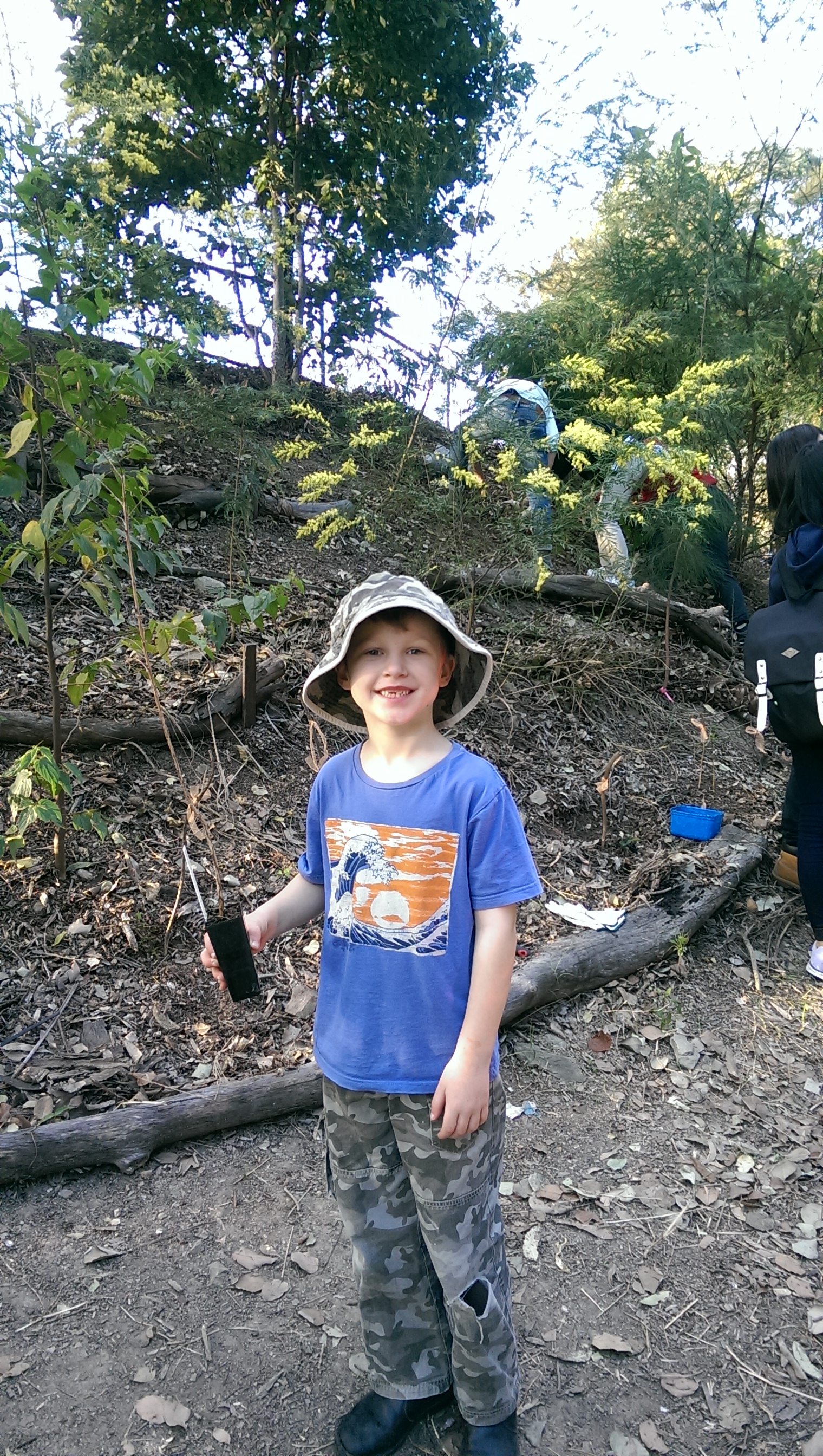
  • More children came to join in the fun and the work.
  • And a local father inspired by us, is planning a Pollinator Link garden for his local school – Mount Gravatt East Primary! Another link for wildlife and community.

We care for and cherish our local high school and the Mount Gravatt forests around us, that sustain us 🙂

Yours in Healthy Habitat & Community for all Time.

Posted in Mt Gravatt Environment Group, Pollinator Link, Wildlife Corridor | Tagged , , , , | 2 Comments

Living (Pollinator Links) in The Shires

By: Michael FoxCover and article

The Pollinator Link vision is spreading to the western suburbs with publication of my article about native Blue Banded Bees.

Living in The Shires is a quality production with interesting stories/trivia about the local history like the iconic Graceville Uniting Church – designed and constructed by Walter Taylor as well as the bridge, and the story behind the name for Ananas Espresso.

Living in The Shires is a generous gift to the community from Harcourts Graceville.

Posted in Uncategorized | Leave a comment

Pollinator Link at Biodiversity Seminar Series

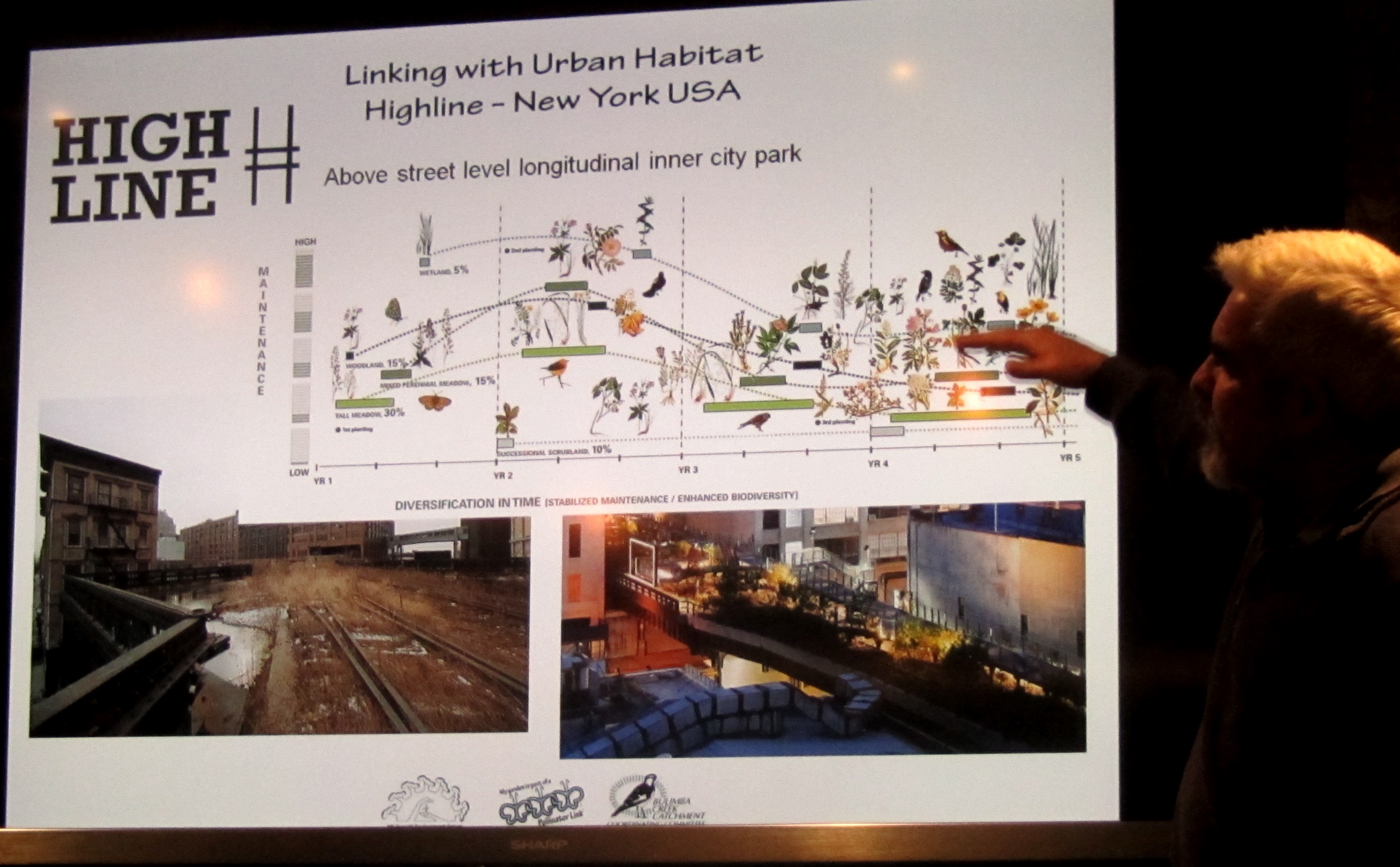
High Line

High Line New York – inspiration for Brisbane

By: Michael Fox

I joined two other speakers at the Brisbane Biodiversity Seminar Series to share our vision of urban wildlife corridors – Pollinator Links.

Download PDF copy of presentation

Urban matrix

Linking Mt Gravatt with Bulimba Creek

My presentation shared the need for and complexity of creating wildlife corridors through the urban matrix.

Matrix of roads, houses and fences creates barriers to movement of wildlife:

  • Reduced diversity of birds in backyards – less Fairy Wrens and more Crows, rat and cats
  • Less butterflies and bees in backyards
  • Increased species loss in isolated patches of bushland – predation, fire, etc

    Before and after Mt Gravatt SHS

    Mt Gravatt SHS – December 2012 to March 2015

Inspiration from overseas, Maleny and Alice Springs. If a wildlife corridor can be built two stories above the streets and among the skyscrapers of New York we must be able to do something in Brisbane.

I also explored how the Pollinator Link garden at Mt Gravatt State High School is linking people, school, business and community with habitat.

The Brisbane Biodiversity Seminar Series delivers a range of interesting events like Gliders in urban space and Camphor Laurel – a useful weed?

My fellow presenters for the June Seminar were:

Catherine Madden, Land for Wildlife, Conservation Community Partnerships Program, Brisbane City Council enjoys working with private land holders to help achieve their conservation outcomes.

Catherine shared program updates and achievements of how Council has built partnerships with private landholders to create more Land for Wildlife!

Mik Petter, Bulimba Creek Catchment Coordinating Committee

In 2005 the Bulimba Creek Catchment Coordinating Committee, of which Mik was the founding chair, won the prestigious Australian National River Prize, the first urban group to do so.

Since that time B4C has gone from strength to strength forming community partnerships with all levels of government and industry to help facilitate the rehabilitation of Bulimba Creek Catchment, winning many accolades along the way.

Today they are a thriving community organisation, with their own Sustainability Centre and a bush restoration contracting arm.  Mik is going to tell us about that journey.


.

.

.

.

.

.

.

.


Posted in Bushcare, Mt Gravatt Conservation Reserve, Pollinator Link, Wildlife Corridor | Tagged , , | 1 Comment

Tomatoes need the Blue Banded Bee Buzz

By Sandra Tuszynska

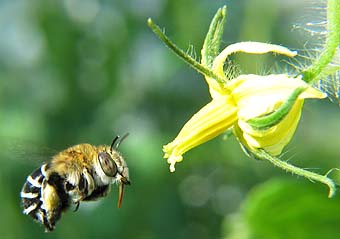
 Blue Banded Bee on its way to pollinate a tomato flower. Image retrieved from http://www.aussiebee.com.au/beesinyourarea.html


A Blue Banded Bee on its way to pollinate a tomato flower. Image retrieved from http://www.aussiebee.com.au/beesinyourarea.html

Australia has over 1500 identified native bee species. Only about 16 of these are social bees, living in extended family systems. The rest are solitary or semi-social bees and they are essential pollinators of native plants as well as food crops.

In Australia, hydroponic tomatoes are grown in greenhouses, reducing pesticide and water use, while producing better quality and tastier tomatoes, worth $90 million per year. However, tomato pollen is contained within capsules that need to be vibrated in order to release the pollen. The greenhouse tomato industry thus uses electrically vibrating wands to release tomato pollen, costing $16 000 per hectare per year.

blue-banded-bee

A Blue Banded Bees approaching an overnight roosting site. Image by Fish Fidler/Flickr. Retrieved from http://www.australiangeographic.com.au/

Unlike Honey bees, which are ineffective in tomato pollination, European bumblebees vibrate their strong muscles to dislodge pollen, by shaking or buzzing flowers during pollination. For this reason, the agricultural industry wants to introduce European bumblebees to Australia. However, there is strong opposition to the introduction of European bumblebees, as this raises environmental and quarantine concerns. In Tasmania bumblebees compete for limited resources with at least two species of native bees, displacing them from their habitat.

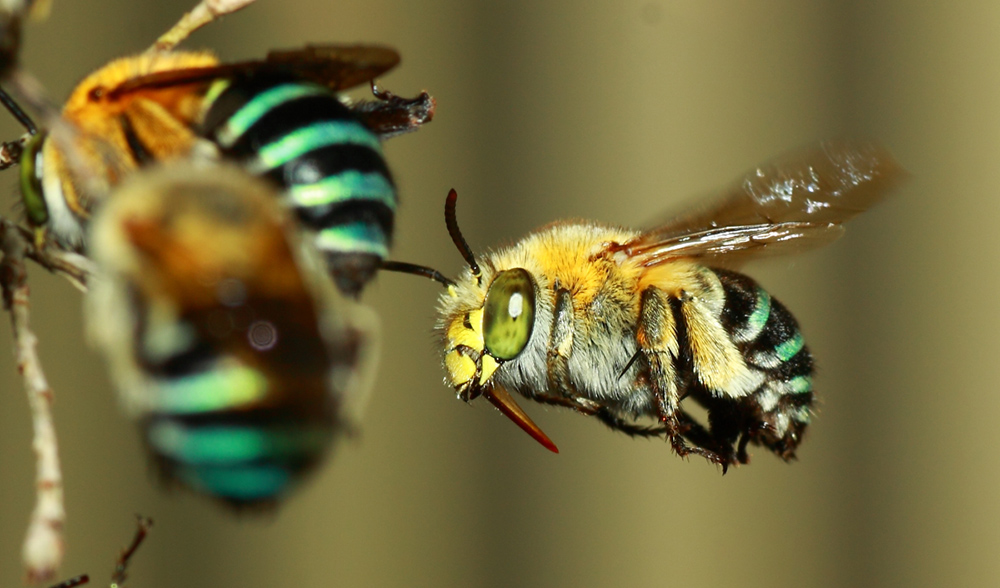
A blue banded bee  in flight, extending her long multi-part tongue towards a Buddleia flower at Redland City, Queensland. Image retrieved from http://www.aussiebee.com.au/blue-banded-bee-siegel-jul2013.html

A blue banded bee in flight, extending its long multi-part tongue towards a Buddleia flower at Redland City, Queensland. Image retrieved from http://www.aussiebee.com.au/blue-banded-bee-siegel-jul2013.html

Fortunately the Australian Blue Banded Bees are also buzz pollinators and these blue beauties have been shown to outperform the current buzzing technology used in tomato pollination. Adelaide University Research has shown that a single buzz from a Blue Banded Bee produces 11% heavier tomatoes, compared with those vibrated by a single buzz from an electric vibration wand. Bee buzzed tomatoes also contain significantly more seeds. Tomato flowers subjected to unlimited buzzes by a Blue Banded Bee were shown to produce 24% heavier tomatoes, than those buzzed by the electric wand. Blue Banded Bee pollinated tomato plants on average produced 20-24% greater yield, than conventionally used electric wand pollination.

Blue Banded Bee love purple flowers. Image retrieved from http://theplanthunter.com.au/uncategorized/bee-hotel/

Blue Banded Bees love purple flowers. Image  by Jane Wilson retrieved from http://theplanthunter.com.au/uncategorized/bee-hotel/

It is beneficial to supply a variety of flowers that attract Blue Banded Bees, if you want the best yield from your tomatoes and other produce. They especially love blue and purple flowers. You can grow the following plants near your tomatoes, capsicums, eggplants and kiwi fruit:


Abelia

Basil (perrential and/or sweet)

Blue-bell creeper

Duranta

Grevillea (Spider-flower)

Flax lily

Hibbertia

Lavender

Lemon Balm

Mona Lavender

Mountain devil or Honey flower

Myrtle

Passion Fruit

Rosemary

Salvia

Scarlet sage

Senna

Verbena

References

Australian Native Blue Baned Bees http://bluebandedbees.com/flowers.htm

Dollin, A. (2006). Blue banded bee pollination trials at Adelaide Uni. Aussie Bee Online, 10, 1-2.

Posted in Uncategorized | Tagged , , , , | 5 Comments

Feasting on juicy Large Fruited (native) Raspberries

Large Fruited Raspberry

Bush food feast – Large Fruited Raspberry

By: Laurie Deacon

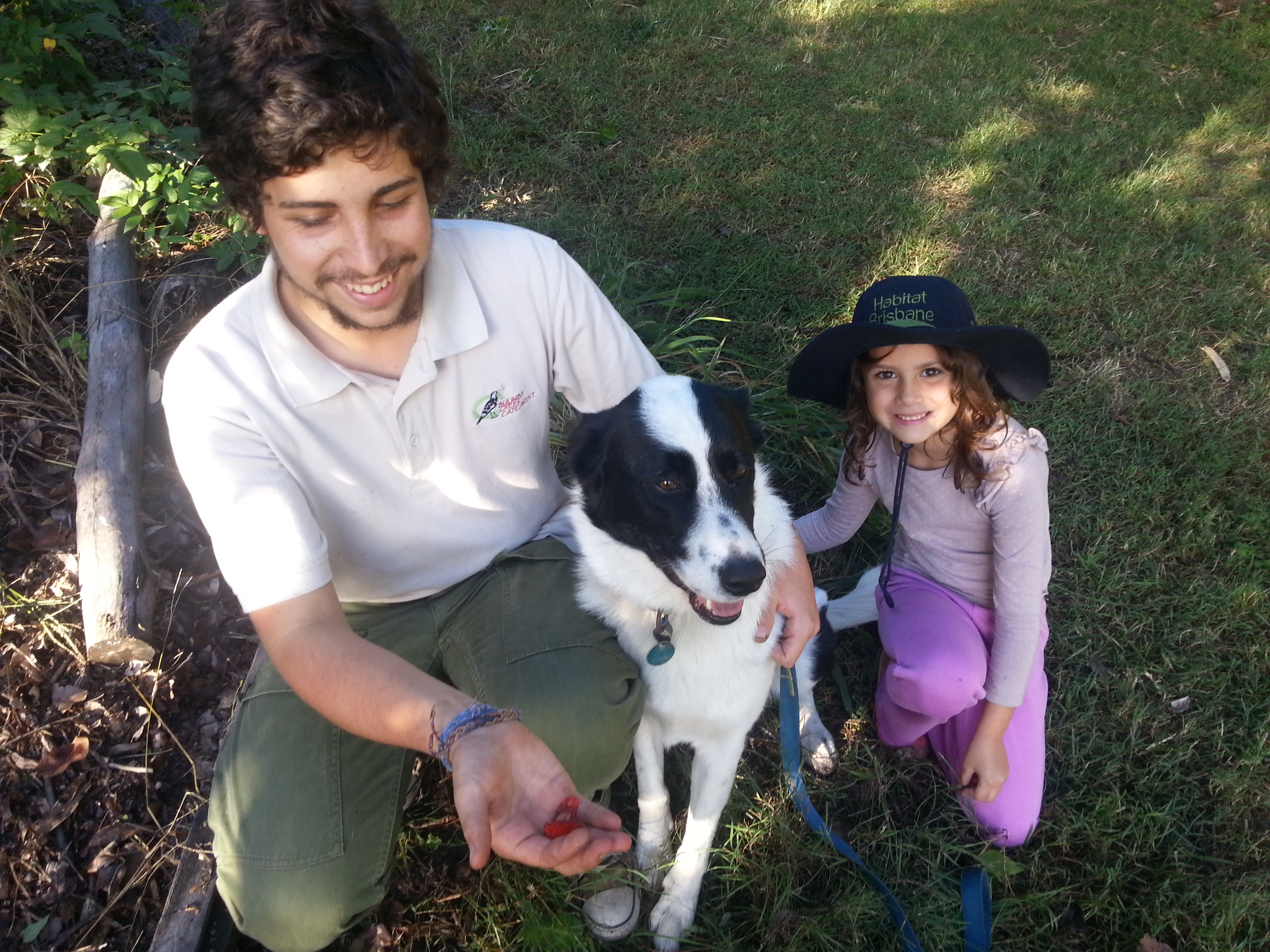
The Pollinator Link garden is also a bushfood garden allowing us to harvest a feast of Large Fruited Raspberry Rubus probus. The native raspberry plants came from the B4C Nursery. Great fruit larger than what you will buy at Woolworths but for a home garden plant in a large pot to keep from suckering.

.

.

Butcher Bird

Butcher Bird bushfood – worms, yum

.

.

More community building and succession planning. Admiring the work of Mr Walsh’s Year 10 students who are budding engineers and hydrologist!!! Planting twenty new butterfly attracting creepers and grasses on bottom bank to hold the soil from being washed into school drains and then rivers. Check out the pink tapes.

.

.

.

Butcher Bird bushfood - worms, yum

Butcher Bird bushfood – worms, yum

.

Digging out and cleaning the drains of rich worm laden sediments and putting them back on the slopes for our plants!!

Well some worms and ants became Butcher Bird bushfood while we tucked into home made honey, apple and almond syrup cake and steaming ginger teas.

Children in the street are now remembering names of plants and birds and bringing their own binoculars to learn about their local birds!!

Posted in Pollinator Link | Tagged , , | Leave a comment

Worm News – Mother’s Day – clearing drains and saving worms

Happy workers

Beautiful day. Let’s get to it!

By: Laurie Deacon

We had sixteen workers on Mother’s Day! Pretty good for Mother Earth being Mothered!

The team ranged in age from 70 years old to 7 years old! And did they work! 43 hours done in one Sunday arvo (2-5.30pm) … a week’s work done by volunteers!!

Worm News: We are getting down and dirty with the worms.

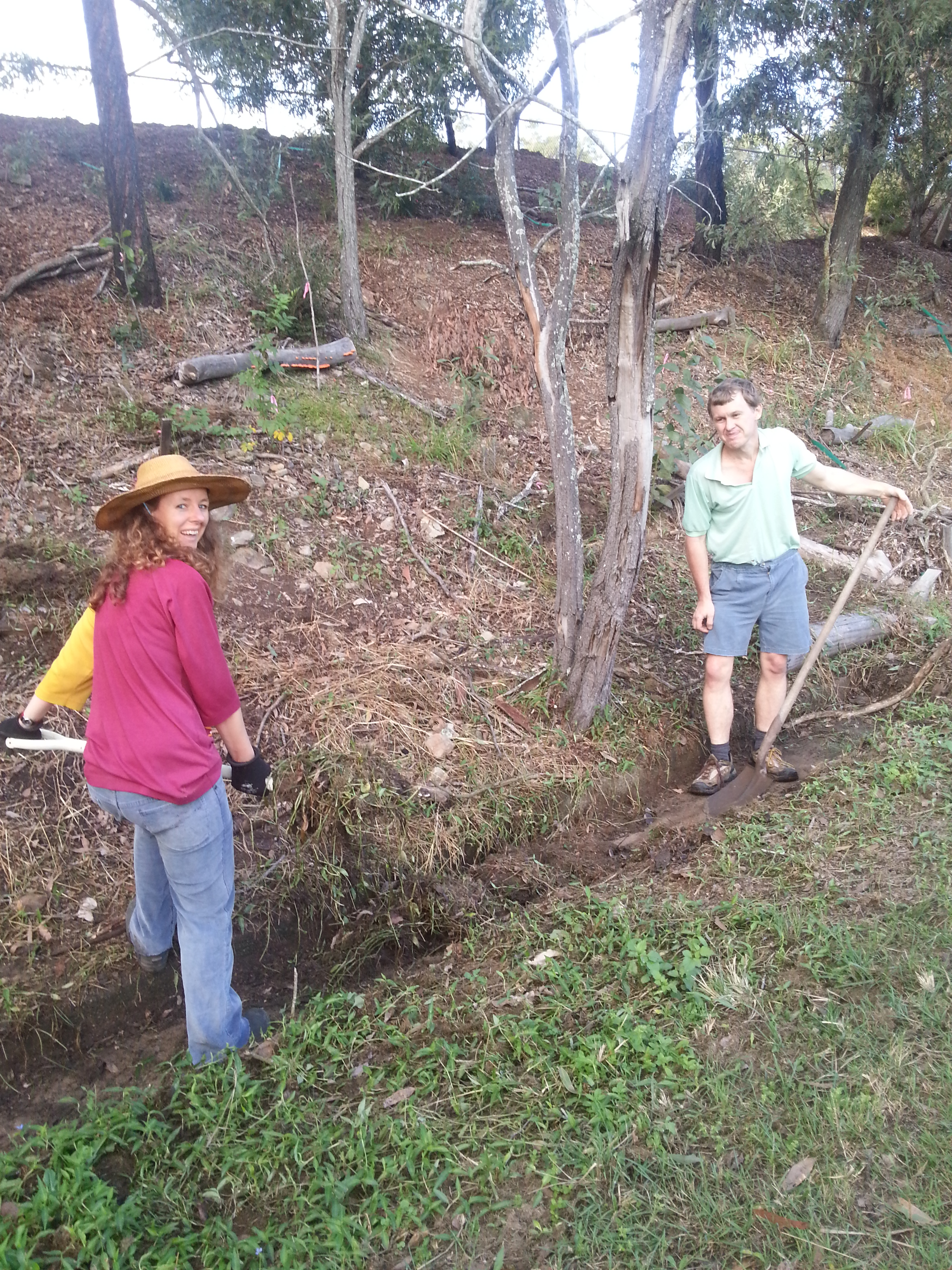
Len our Plumber mate in  Mount Gravatt Environment Group lead the merry band of folks  in the “drainage clear out”.

Clearing the drains

Clearing the drains

We dug out drains and gutters and rebuilt retaining walls after the  heavy down pour  on Friday 1st May flooded the SEQ.

We cleared three storm water drains of 20 wheelbarrows worth of  top  soil washed off the Pollinator Link garden site and the school ovals. This  soil was on it ways to the Ekibin then Norman Creek.

.

.

Is that  a worm

Is that a worm?

The solid was rich  full of worms … so the students called up and down the storm water pipes  yelling “This is the  Worms News. Calling all worms, we are going to save you.”

We weeded banks and planted Living Mulch plants while the strong local lads and Griffith University  students enjoyed carrying massive logs and swinging sledge hammers to build walls.

.

.

Finished with homemade honey and apply syrup cake, choc chip biscuits and steaming cups of tea … and happy tired folks and dogs.

Time for a break - 10 May 2015

You earned a break team

Posted in Pollinator Link | Tagged , , , | Leave a comment