Exploring Australia’s Native Plants Qld to WA

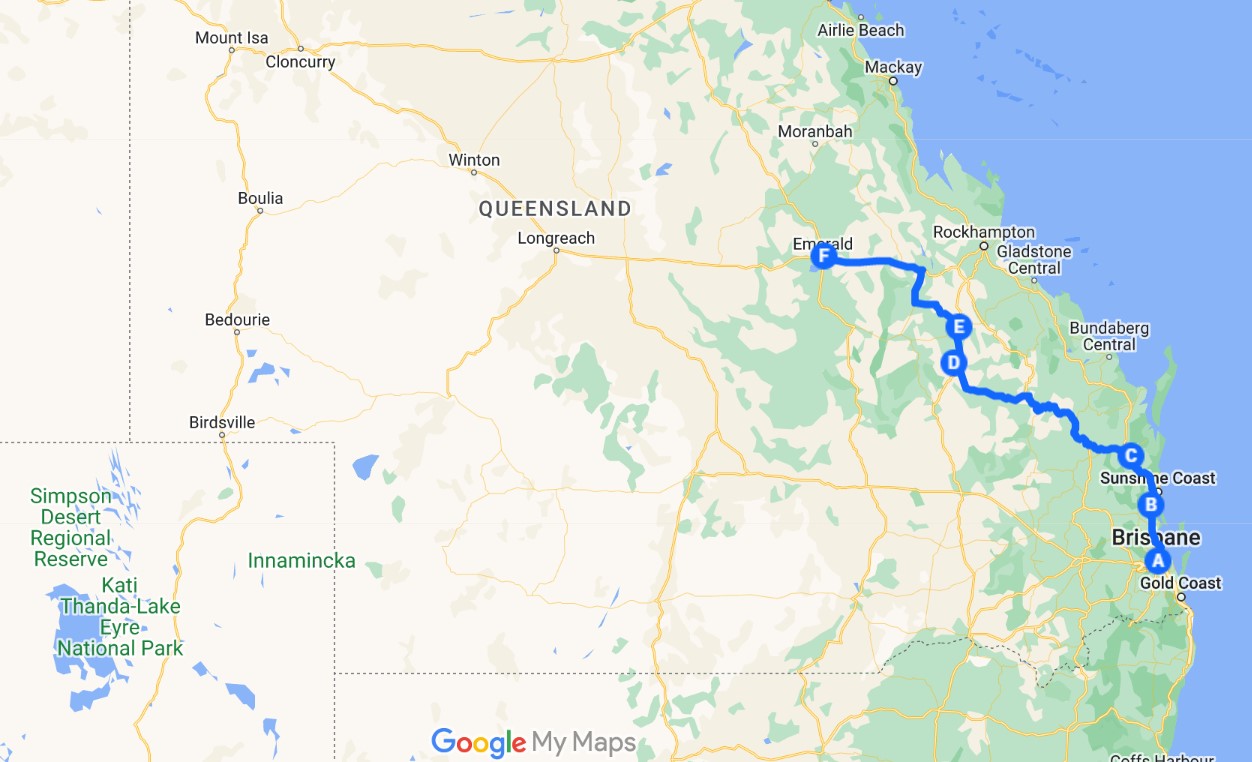
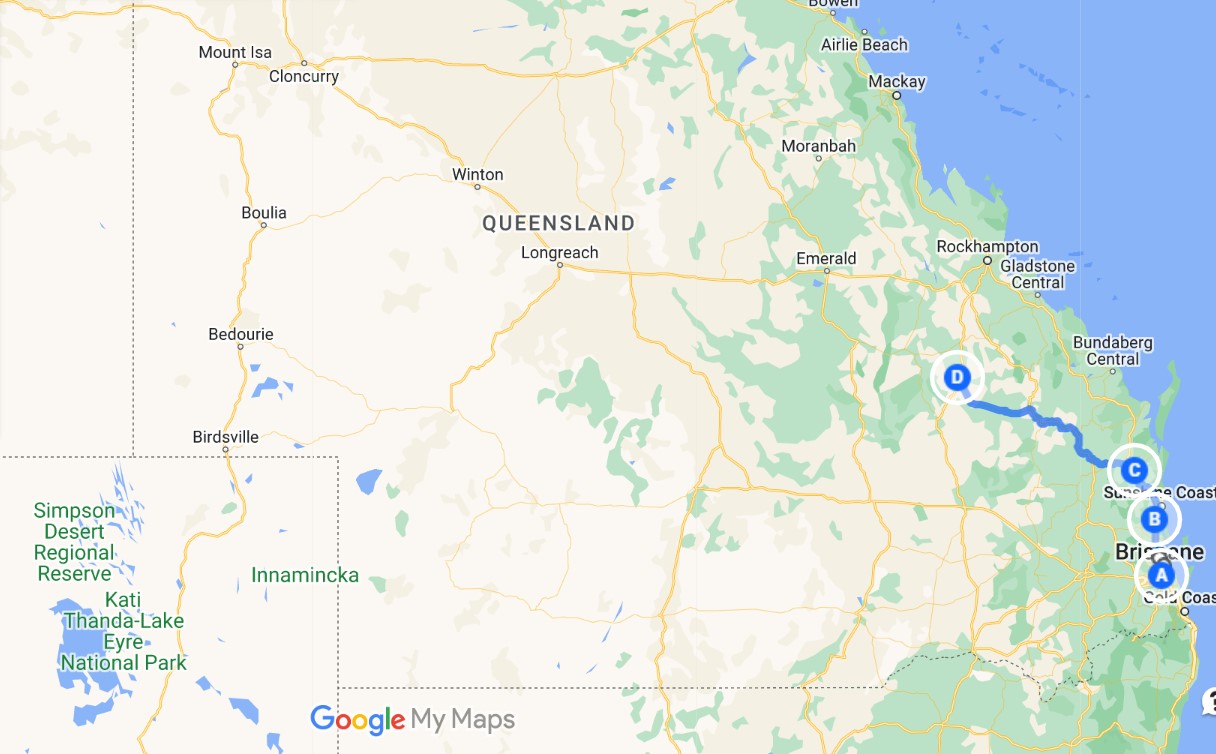
Click to expand map

Michael Fox

Day 2 19 Aug 2022: Theodore to Emerald 950km
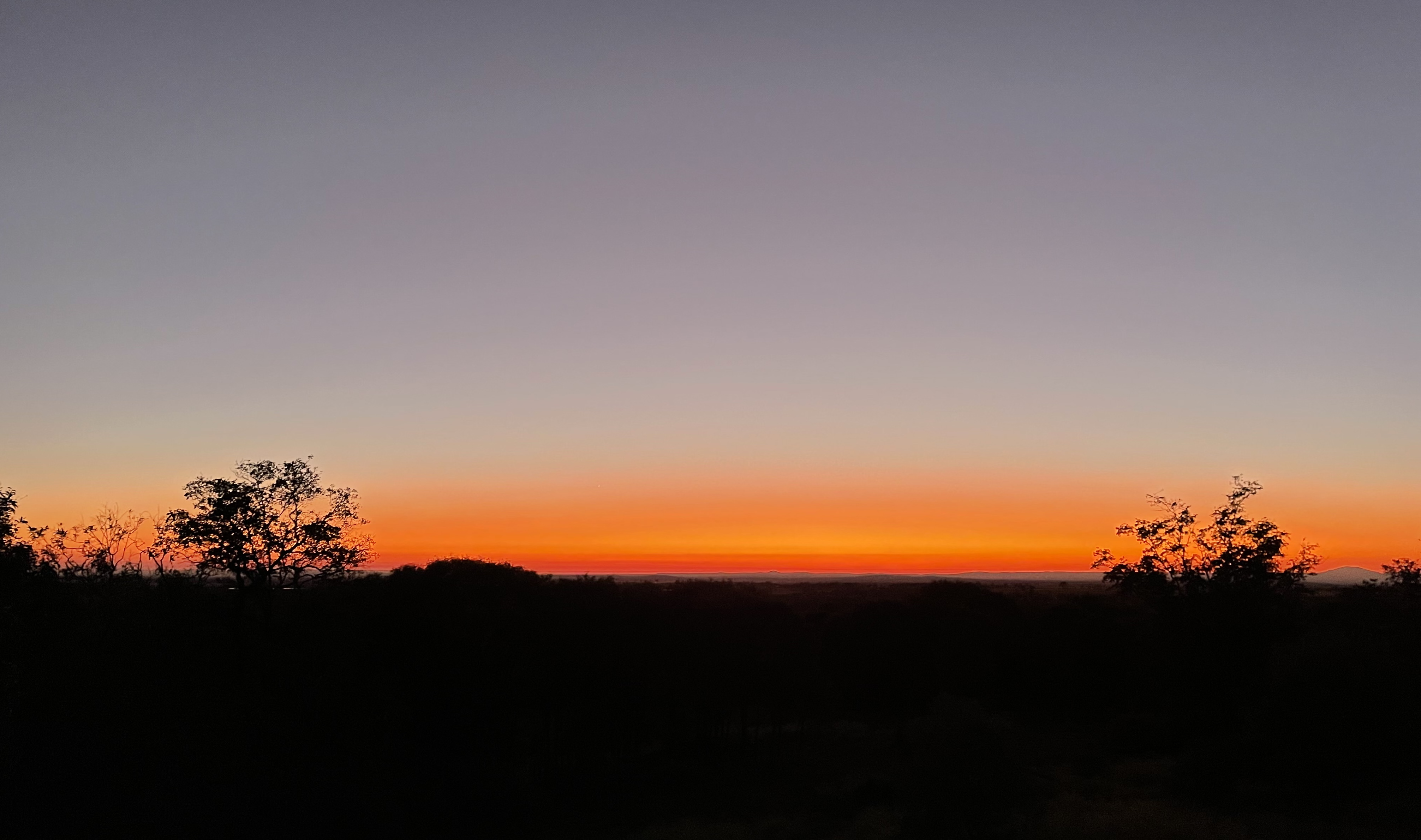
Sunrise at Theodore

We stayed the night with a generous and interesting friend of Ann’s who grew up in Theodore.

Ann (yes, another Ann … very confusing) was the driving force behind the bird hide and interpretative signs along the peaceful river walk along the bank of Castle Creek heading down to the junction with the Dawson River.

Loaded coal train

Waking to an amazing sunrise, we say goodbye to our hostess Ann (yes, another Ann) we headed for Emerald via the curiously named Banana, Dingo and Blackwater.

… coal and cotton country with mine signs scattered along the highway.
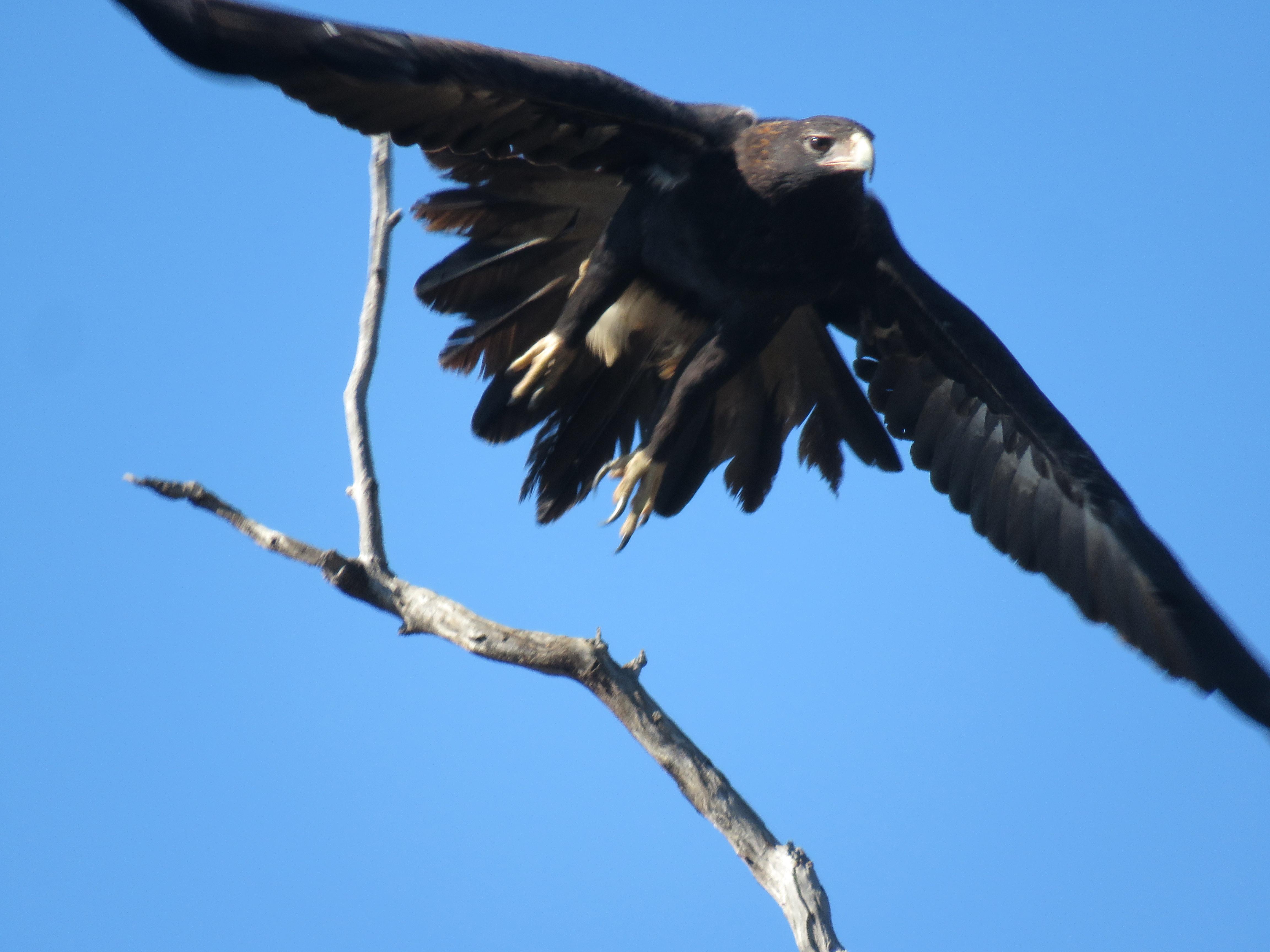
Wedge-tailed Eagle Aquila audax
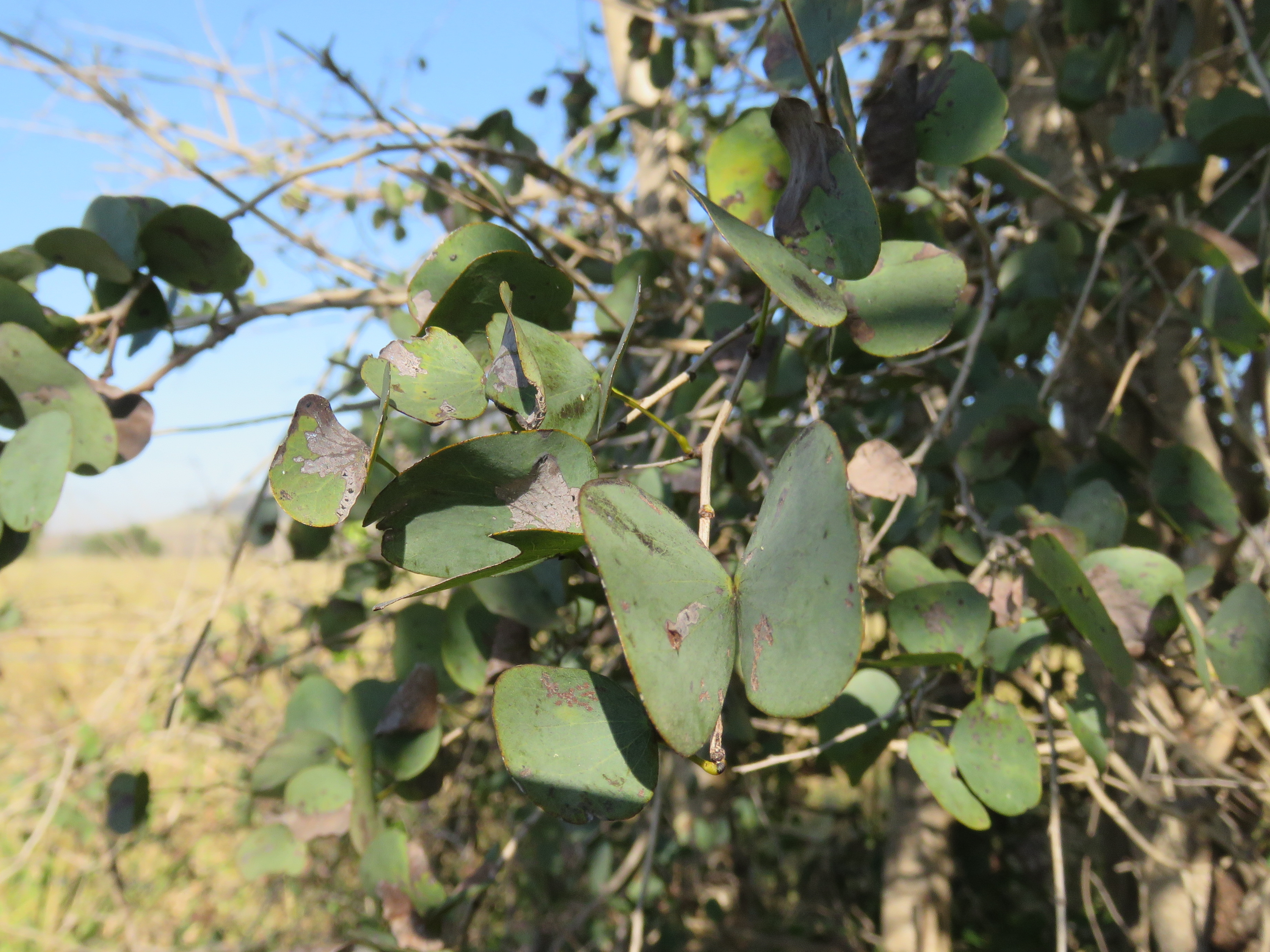
Hooker’s bauhinia Bauhinia hookeri

We passed three full coal trains heading east and two empty trains heading out. The coal trains are electric with two engines at the front and a third about halfway.
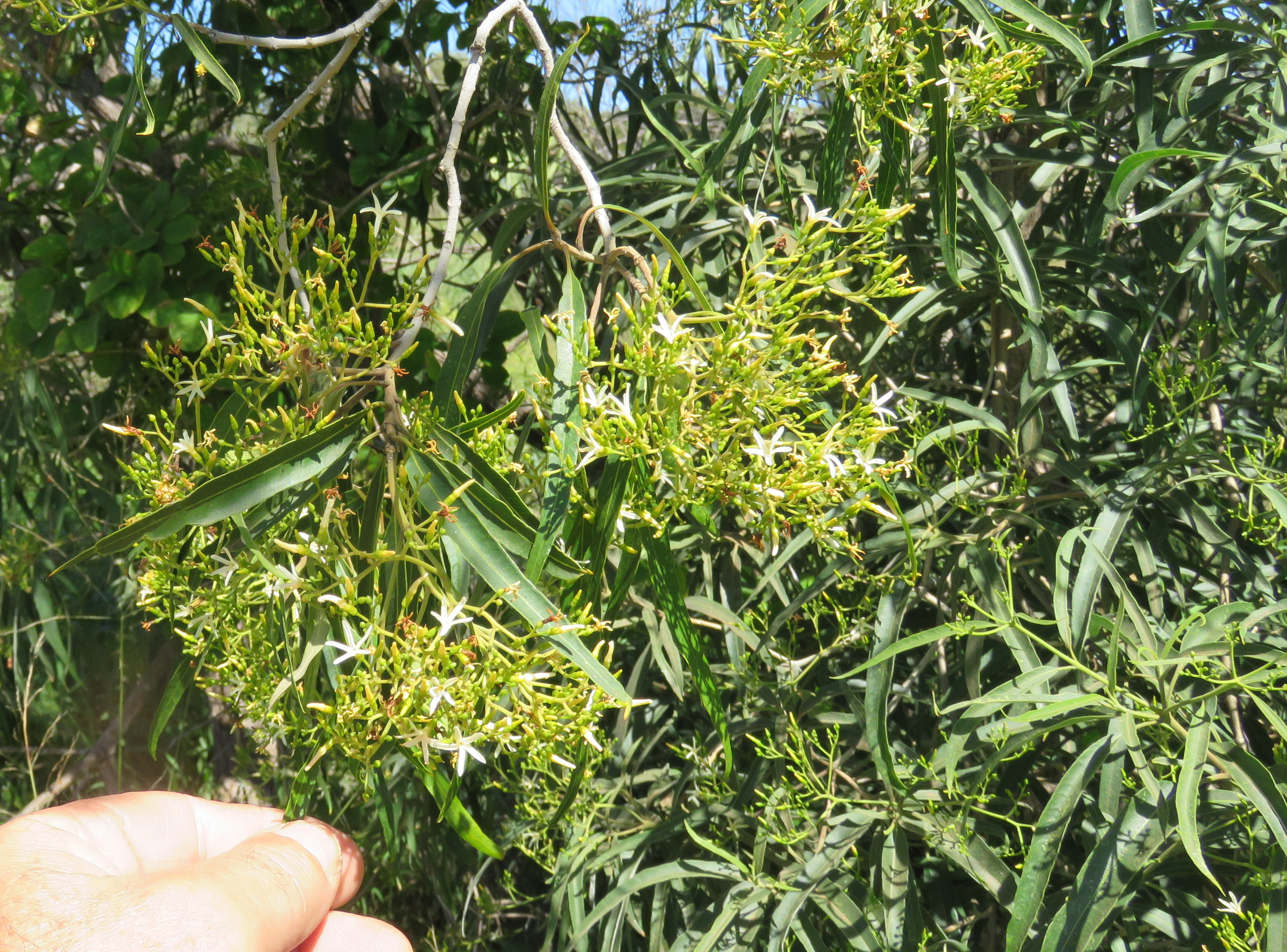
Bitterbark Alstonia Consticta

.

.

Just out of Theodore we passed a Wedge-tailed Eagle Aquila audax sitting on a tree beside the road. This magnificent bird posed nicely for photos before taking flight.

.

.

Of course where I pulled over to photograph the eagle Ann found interesting plants including a Hooker’s bauhinia Bauhinia hookeri. The same “butterfly” leaf form as the common exotic Orchid Tree but actually one of two native Bauhinias both of which have smaller leaves than the exotic.
Minions of Central Queensland

The Hooker’s bauhinia was not in flower, however, it has an attractive white flower with bright red (male) stamens.

.

.

Bitterbark Alstonia Consticta was in flower beside the road. Definitely not a plant for a city garden as the flowers have an unattractive pungent smell that attracts.

.

.

.

.

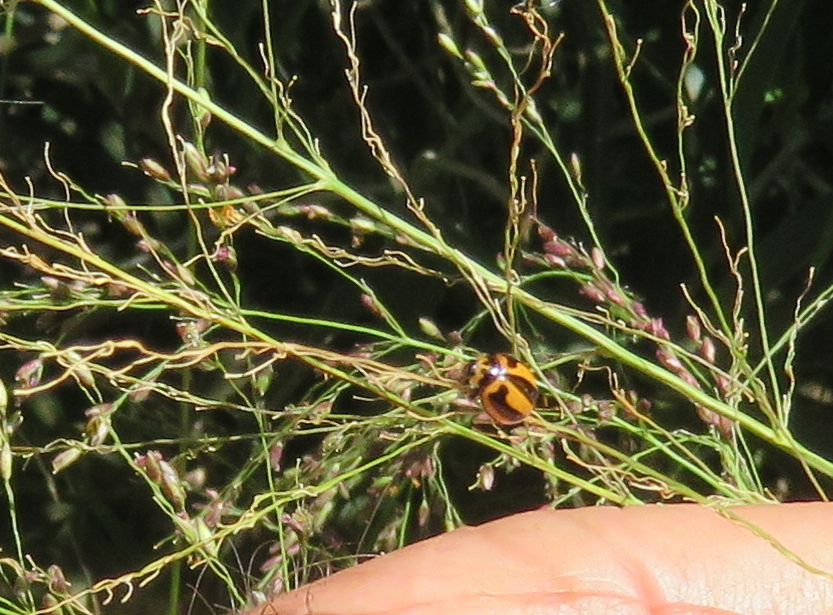
I found a Striped Ladybird Beetle Micraspis frenata among the weeds under the Bitterbark. These Lady Beetles are found in Brisbane, usually on tall grasses.

.

.

.

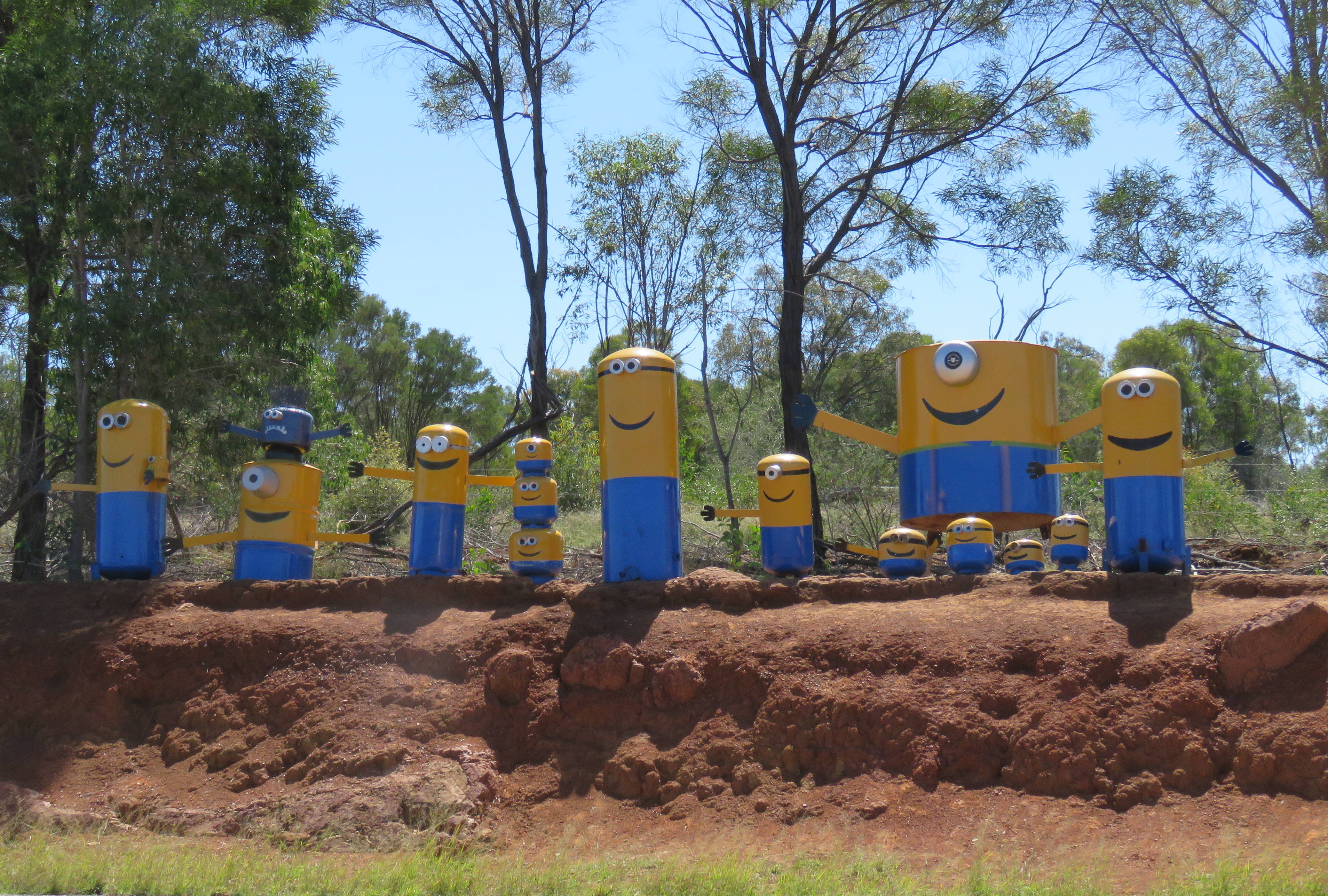
A bit of fun along the way was finding an invasion of Minions of Central Queensland.
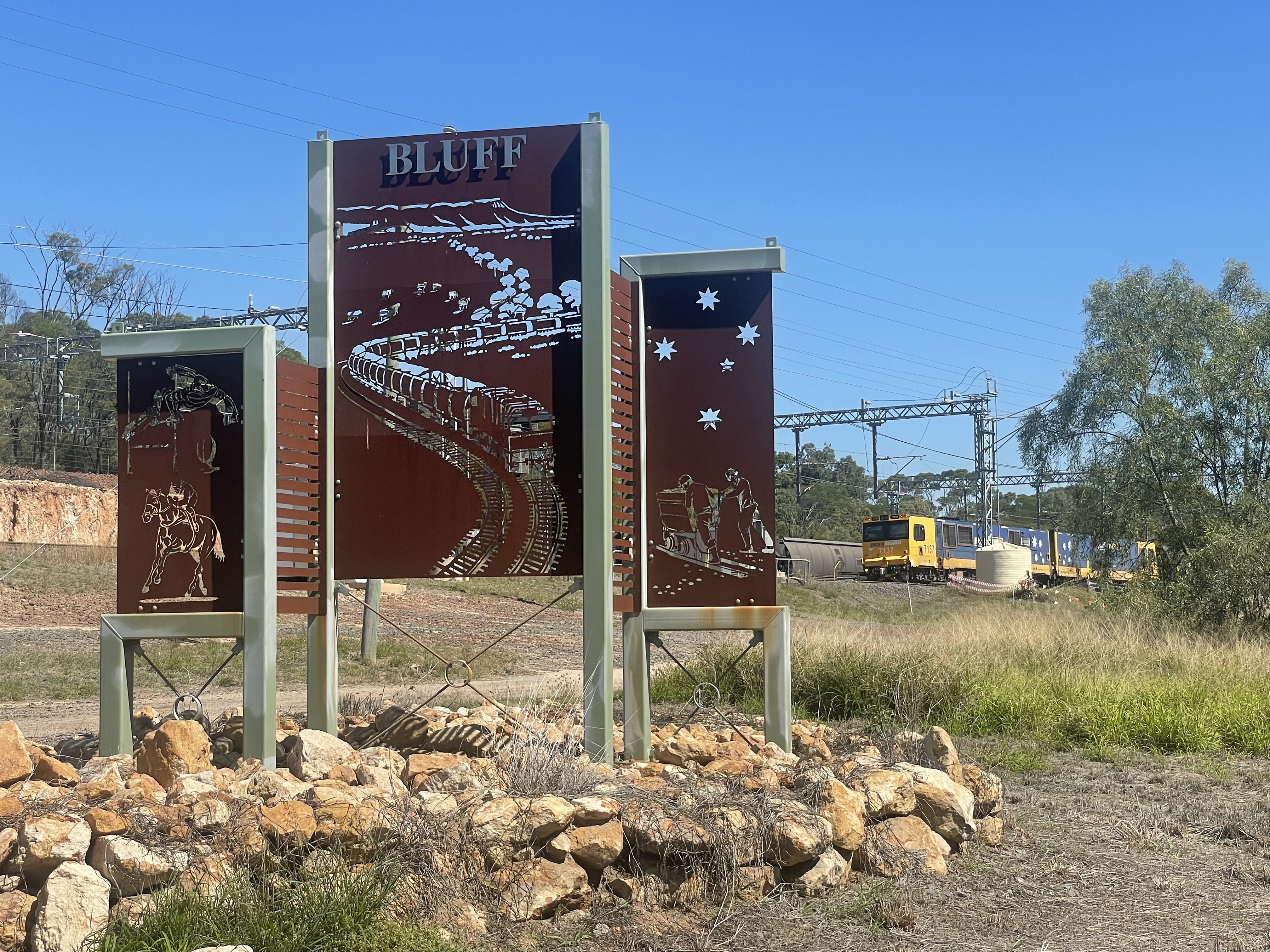
Bluff town sign with coal train in background

.

.

.

.

The Bluff community is obviously proud of their mining and railway.
Posted in Exploring Australia native plants | Tagged , , , , , , | Leave a comment

Exploring Australia’s Native Plants Qld to WA

By: Michael Fox

Click to expand map

Day 1 18 Aug 2022: Home to Theodore 600km

I’m off on my grand adventure to circumnavigate Australia and exploring our unique flora and fauna going through Qld, NT, WA, SA, Vic, NSW and Canberra.

The first leg of the trip to Northern Territory, I will be travelling with Field Botanist, Ann Moran.

.

.

Morning tea at picnic area beside the Burnet River at Gayndah.

.

.

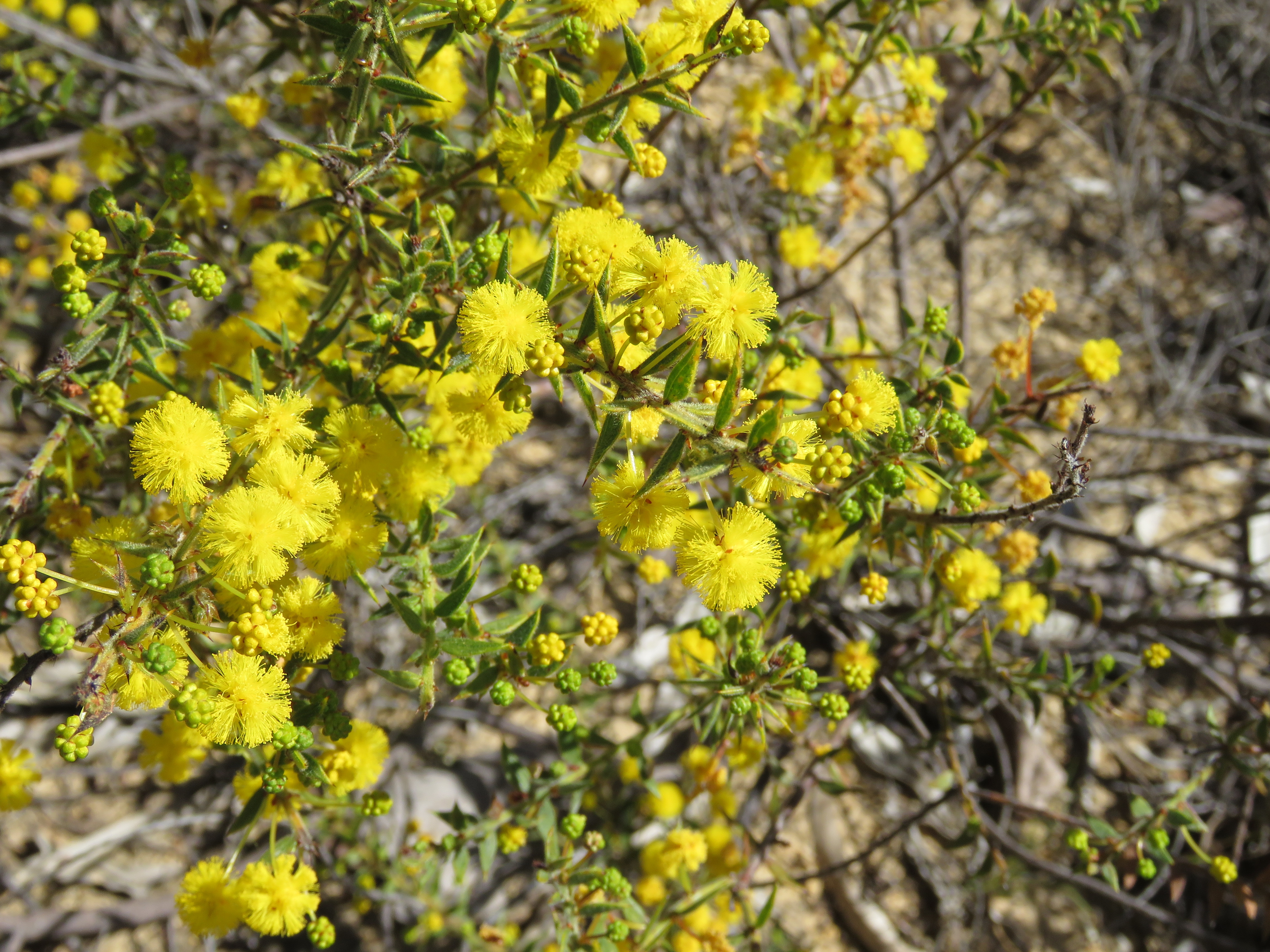
Brilliant yellow wattles were spread along the sides the highway.

I was particularly impressed by the beautiful Acacia ambygonia Fan Wattle which also occurs in South East Queensland and large parts of NSW.

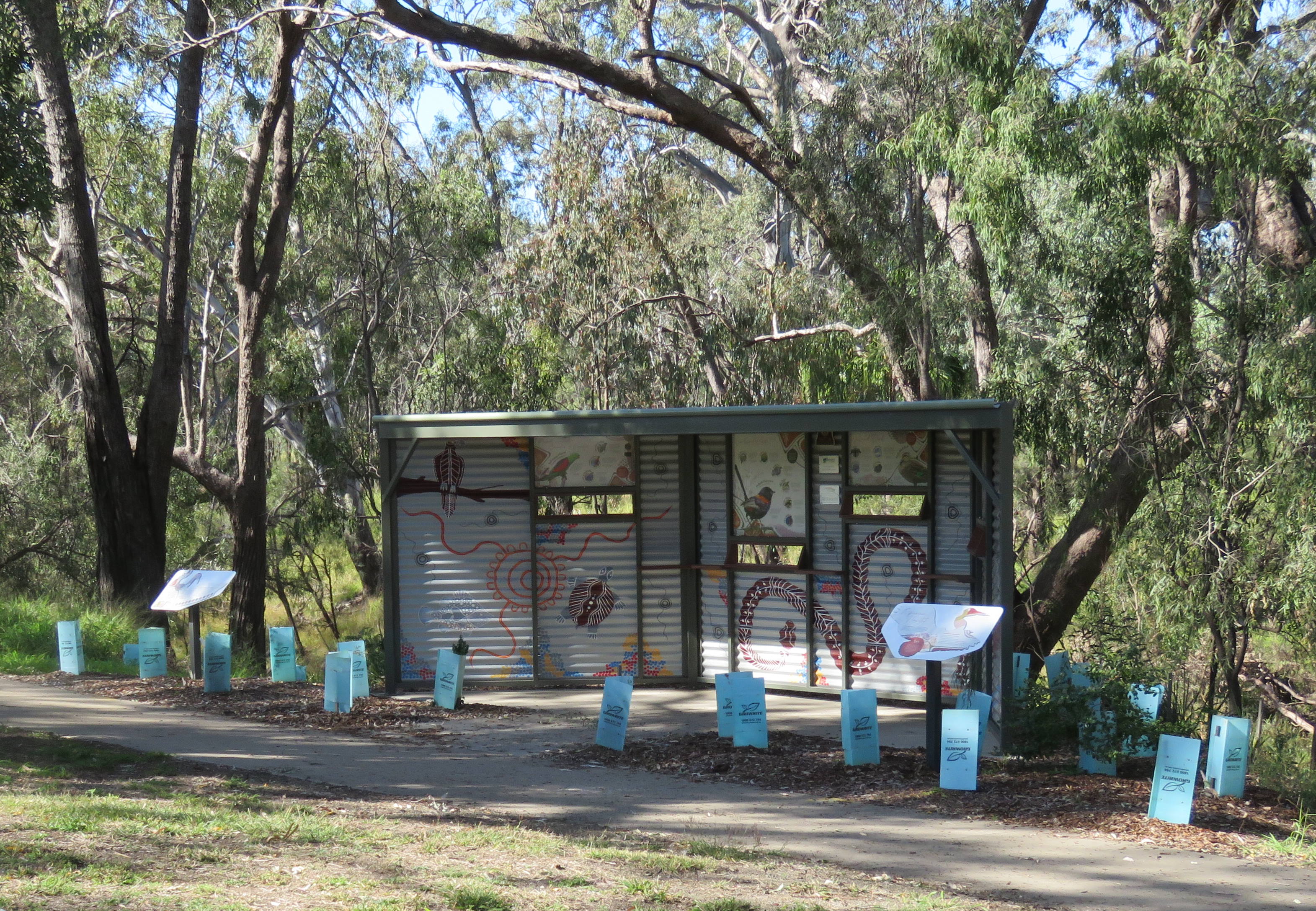
Bird hide overlooking Castle Creek

A shrub growing 10cm to 1m height with 1m spread, Acacia ambygonia is ideal for city gardens and should be available many nurseries.

.

.

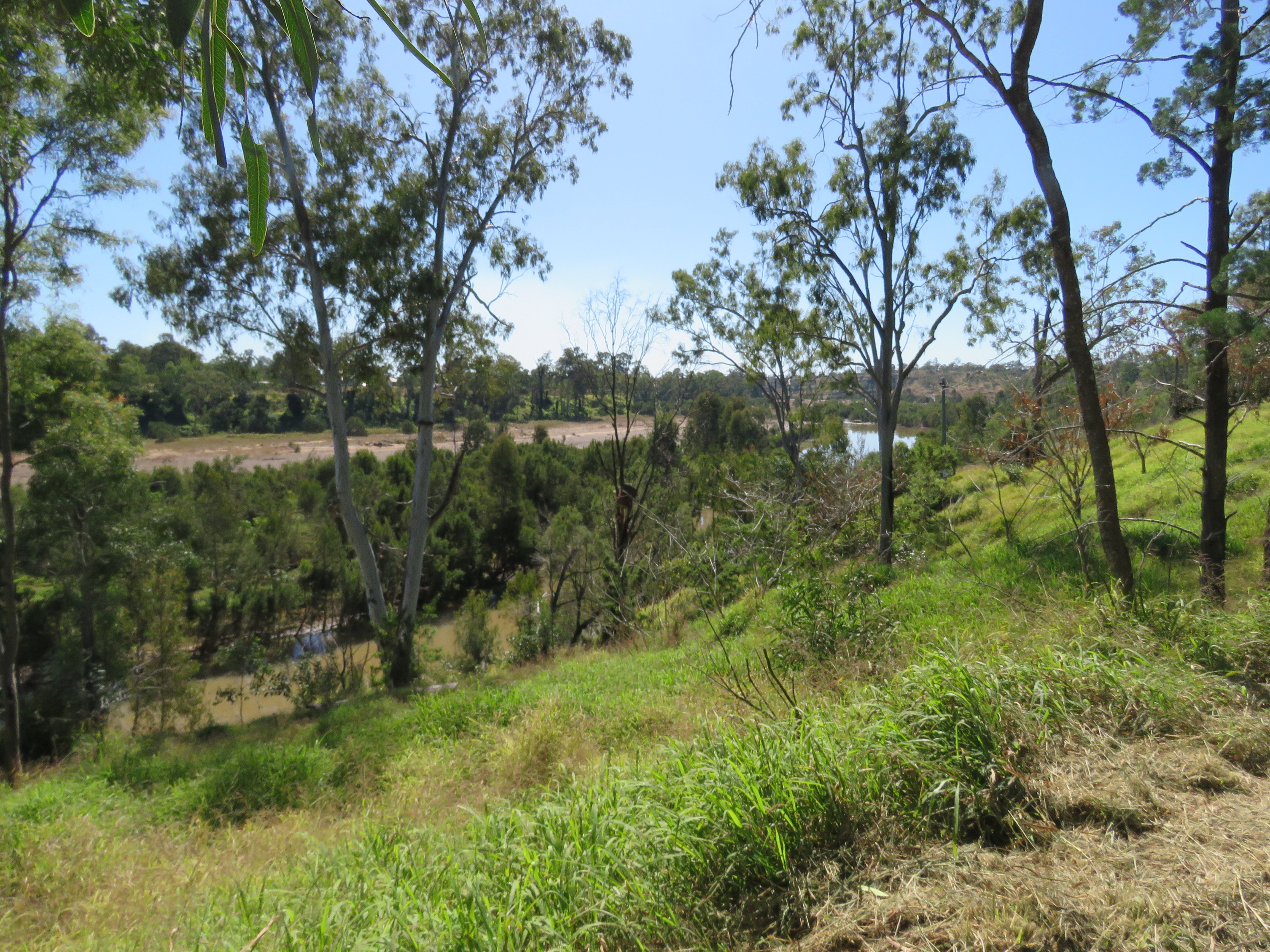
Click to see view of creek

At Theodore we explored the new interpretative signs and bird hide installed this year Castle Creek.

Our local host, Ann Hobson, was instrumental in researching information, sourcing funds and arranging installation.

Local indigenous artists worked on artwork and design.

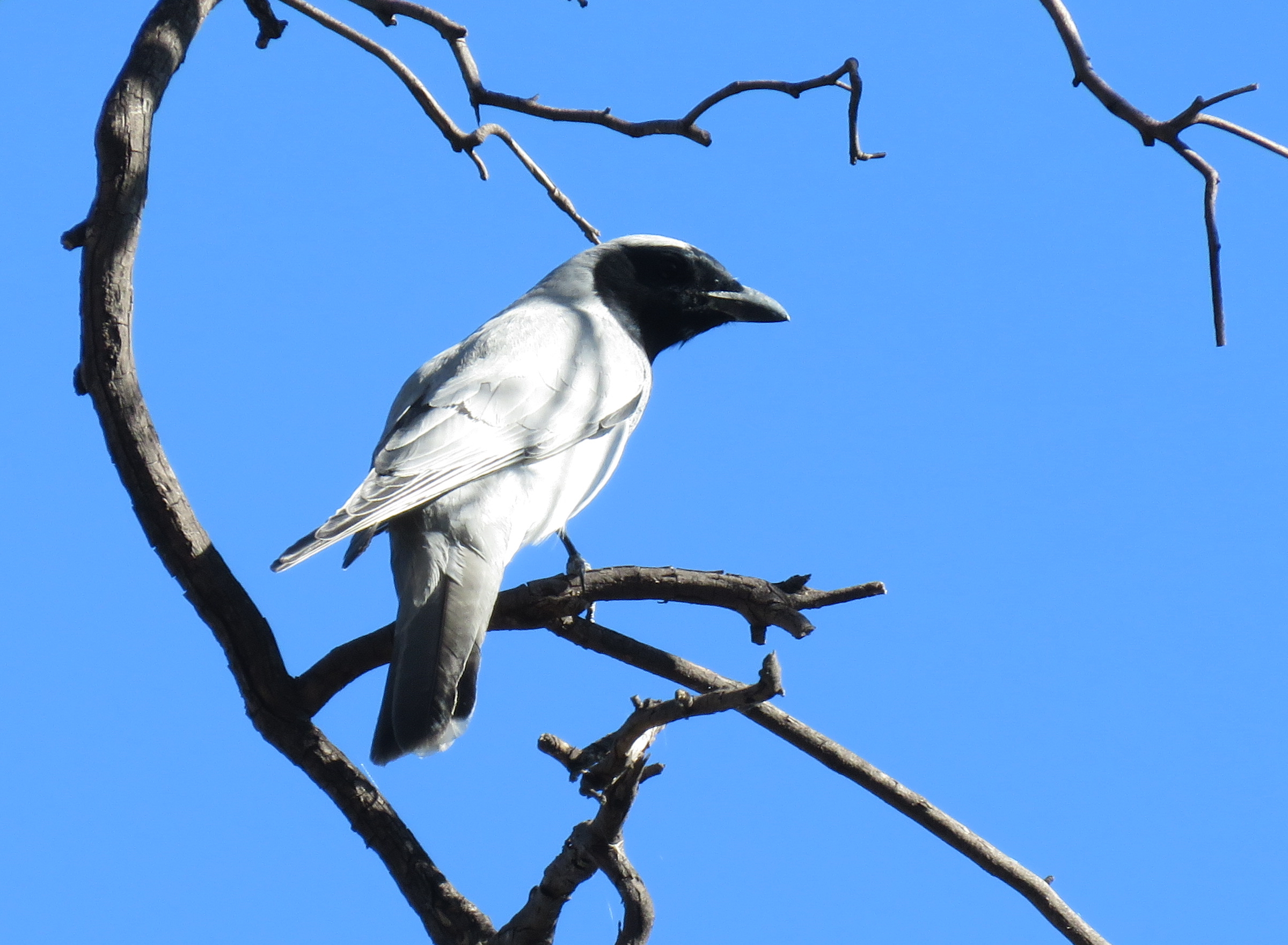
Coracina novaehollandiae Black-faced Cuckoo-shrike

Interperative signs in bird hide and along the walk provide details of local wildlife: birds, Kreffts Terrapin (freshwater turtle), Australian Water Dragon and Platypus.

.

.

.

.

I photographed a Coracina novaehollandiae Black-faced Cuckoo-shrike in a dead tree beside the path.

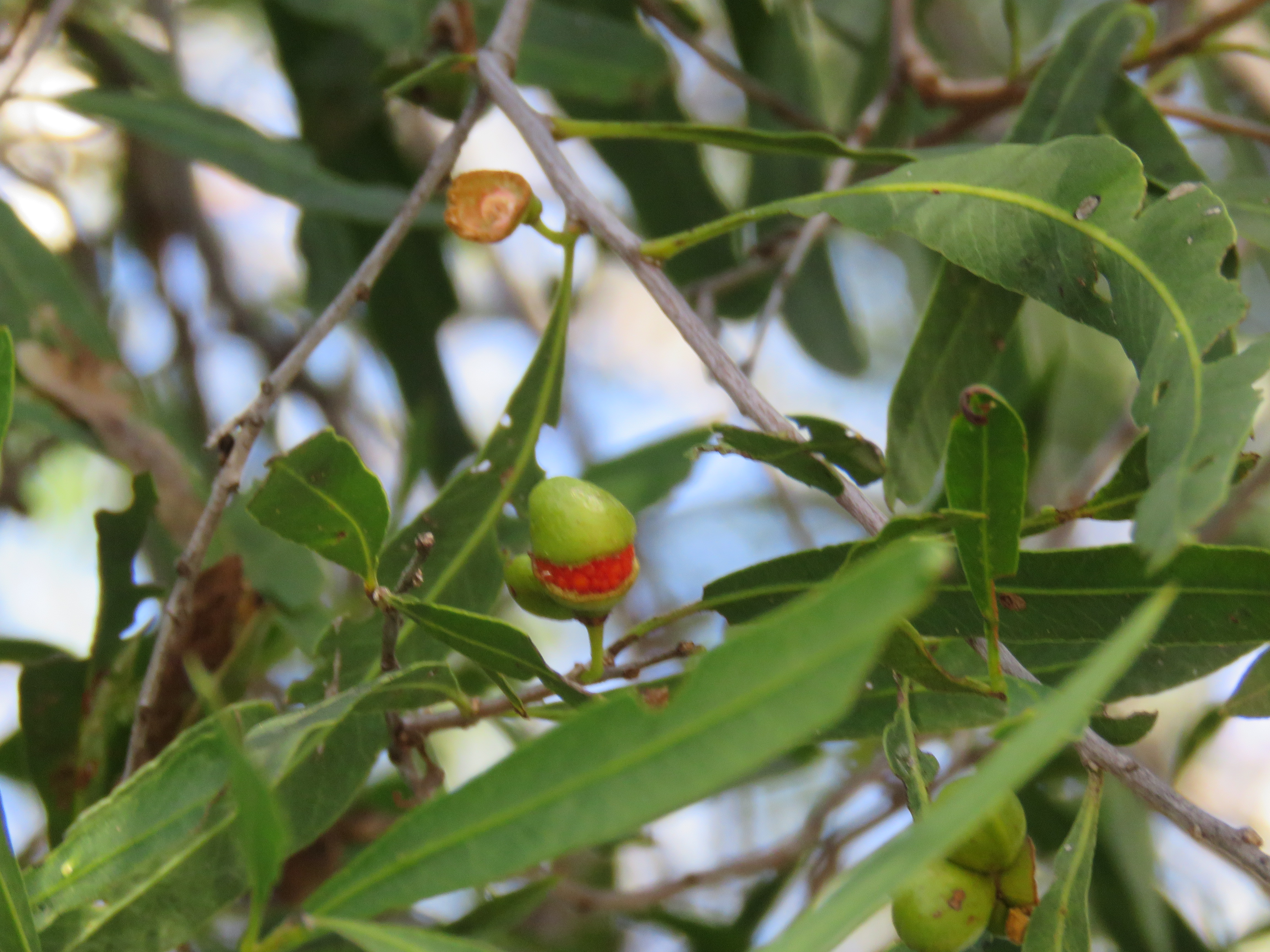
Red aril of Alectryon oleifolius Western Rosewood

.

.

.

.

The Alectryon oleifolius Western Rosewood was covered in fruit with some showing the sweet red aril that attracts birds to spread the seeds embedded in the aril.

Tagged , , , , , , , , , , | Leave a comment

Tree Troff Water for Koalas

Mt Gravatt Environment Group's avatarMount Gravatt Environment Group

By: Michael Fox

Artist: Chrys O’Hare

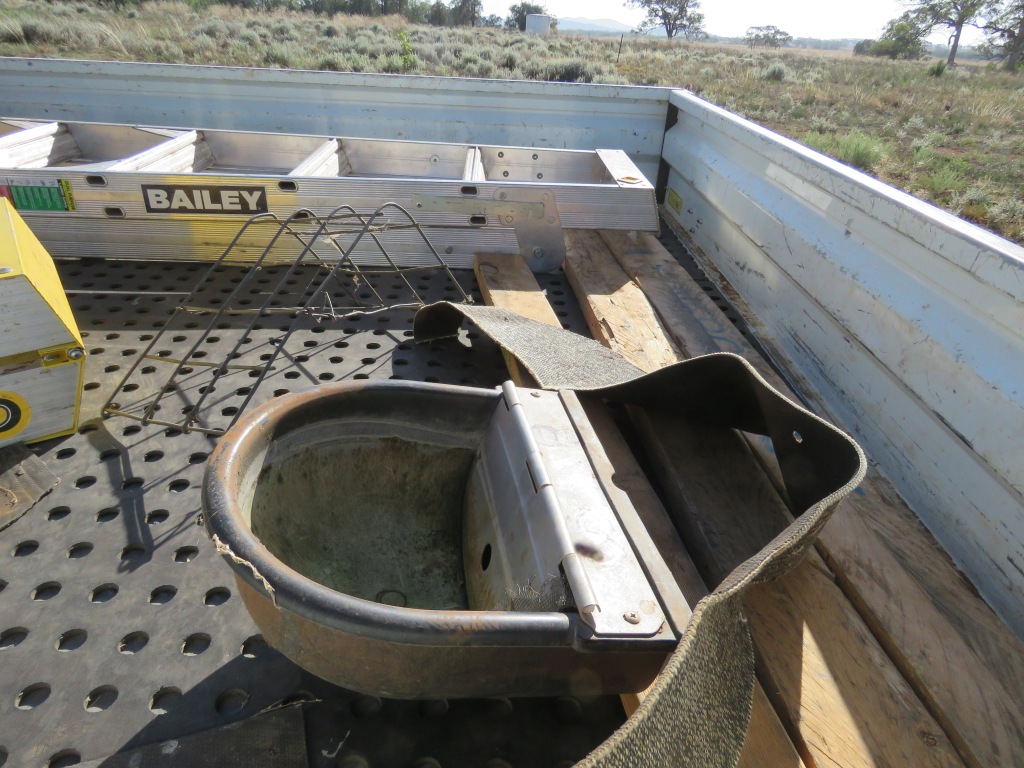
Phil checking installation of water trough.

When leaf moisture is not high enough, this can lead to dehydration and large-scale mortality events as koalas are forced to search the ground for alternative water sources, exposing them to additional threats such as cars and dogs. Conditions in which koalas will need to search for water are only expected to increase in frequency due to climate change. (Watkins, A, Schlagloth, R. and Santamaria, F. (2021) Qld Naturalist 59 (1-3))

Koalas and other wildlife living in urban Island Habitats like Mt Gravatt Conservation Reserve are particularly vulnerable as access to water requires crossing busy roads and facing dogs in backyards.

The Tree Troff Koala drinkers have been developed by a Gunnedah farmer working with researchers from University of Sydney and WIRES (Wildlife Information, Rescue and Education Service Inc.)

First version of Koala drinker

.

.

Last year…

View original post 283 more words

Posted in Uncategorized | Leave a comment

Fun in the Sun Pollinator Link Bushcare Sunday 29th Aug

This is fun!

By: Laurie Deacon

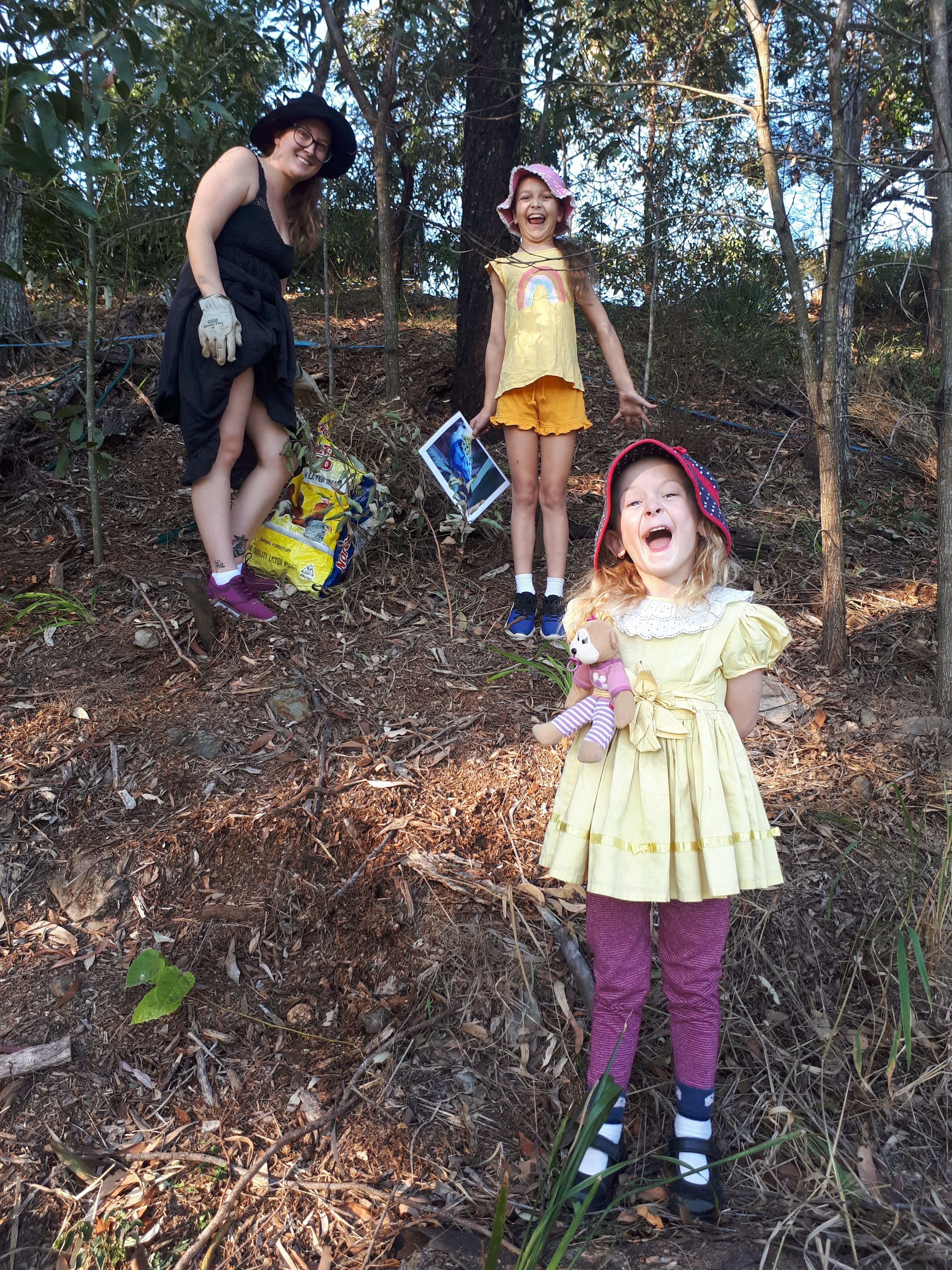
When do we have fun?  We meet last Sunday of the Month from 3pm to 5 pm, with Tea and Cakes and pack up after. Sometimes we do outdoor games or Yoga on the green until sunset.

Location:  Mount Gravatt State High School Ovals

Number of Volunteers: there were 9 attendees and 8 Apologies on the day.  Six new locals came today for the first time. And we had a lass nine years old who had come with her Grandma when she was 8 months old and planted a tree!!

Total Number of hours gardening in Bird Bee Butterfly Corridor on Sunday Total 29.5 Hours. (Number of attendees x hours spent)

Bushcare activities done on Sunday Arvo 29th Aug 2021.

Site Supervisor on the job
  • Orientation of Volunteers to Bushcare and aims of creating a Pollinator Link Corridor for our Suburban health!
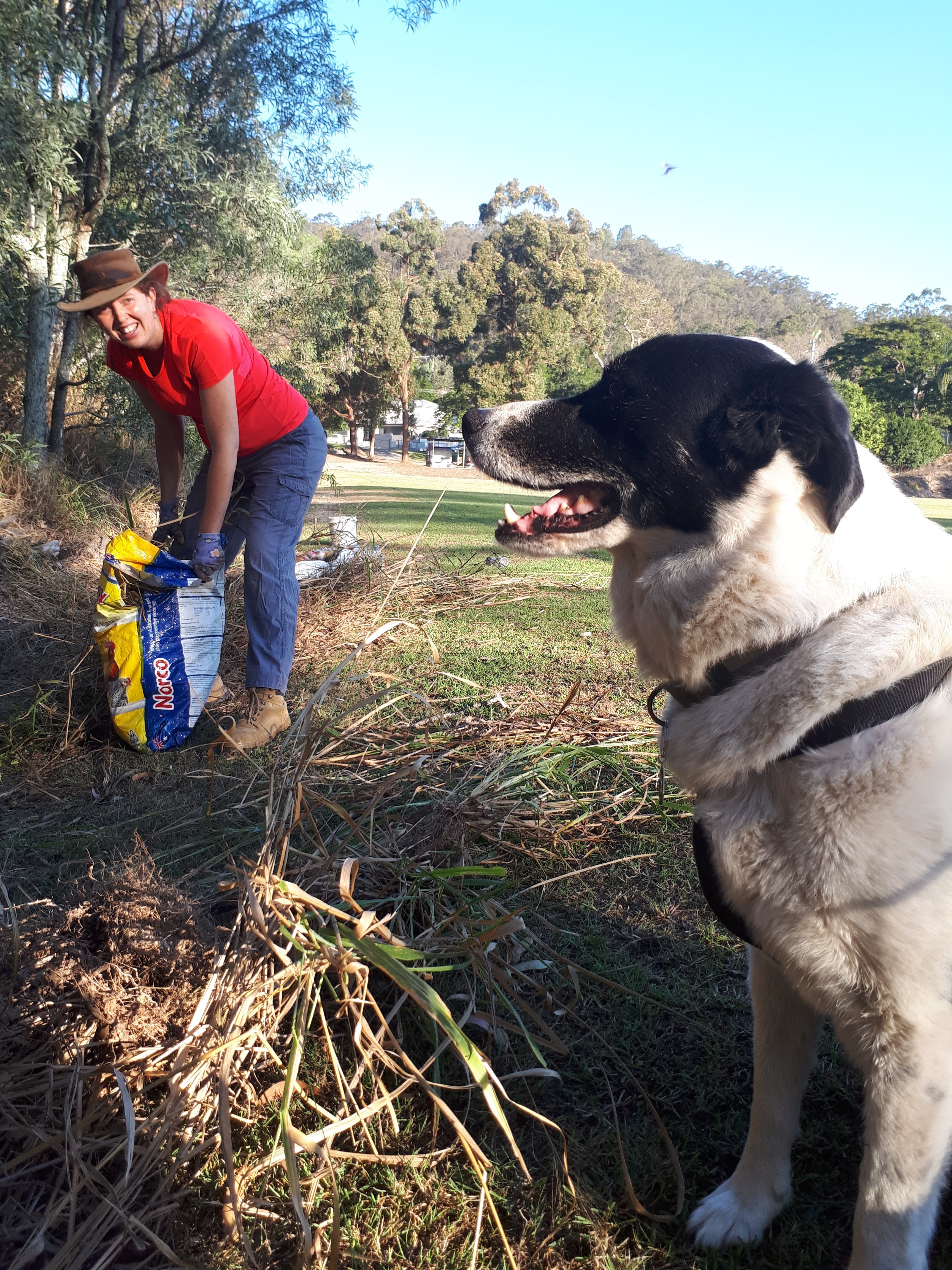
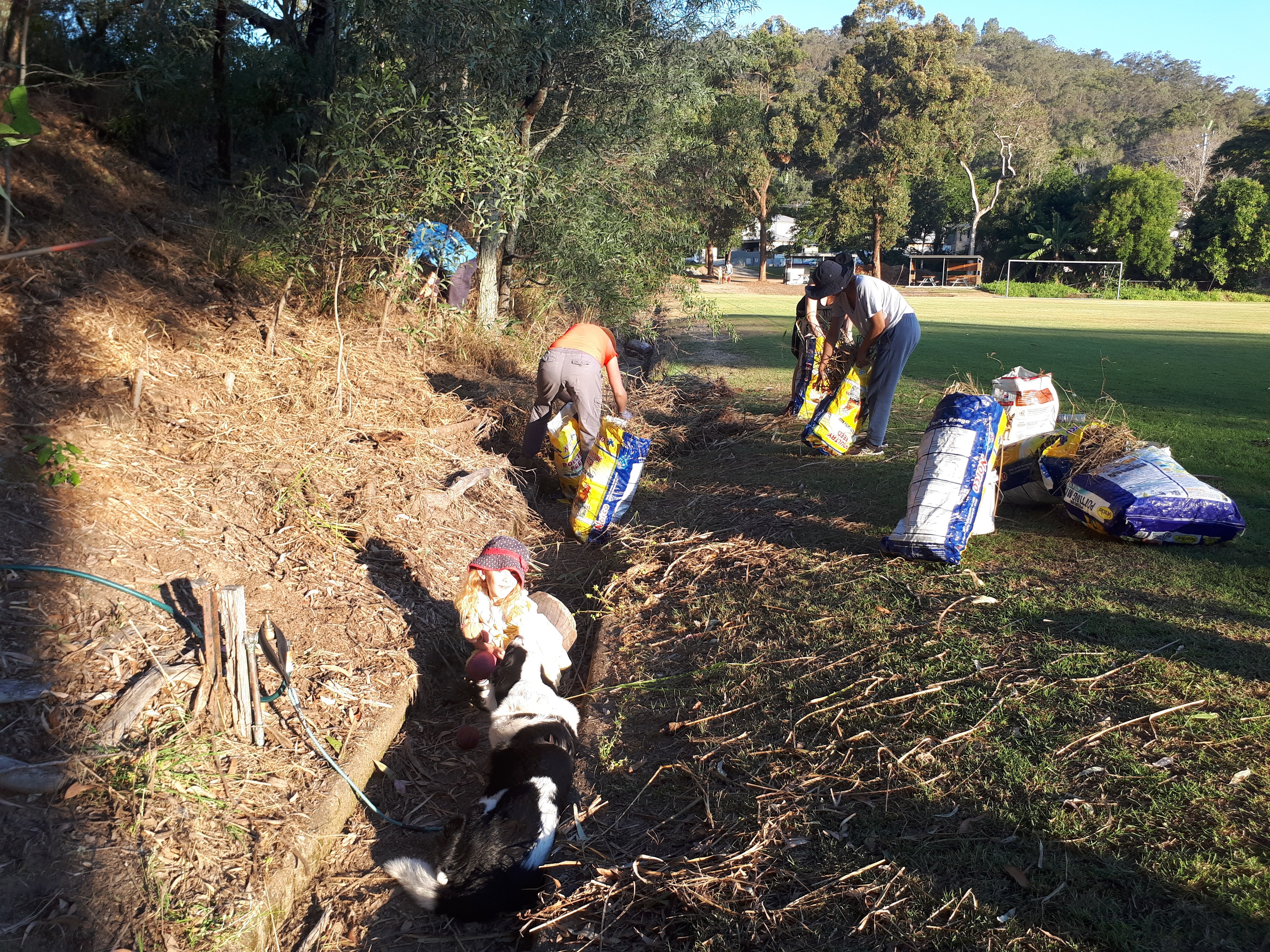
  • Weeding Guinea grass and Mother of Million plants and we got 20 Bushel bags full!
  • Mulching after weeding site to keep weeds down.
  • Teaching locals about weed identification and how to reduce them.
  • Teaching correct way to plant natives to survive. 
  • Teaching children about Pale-headed Rosella Platycercus adscitus birds who live in the School and what they look like and sound like so they can spot them.
  • Children enjoyed learning about Butterflies and hanging Woodened Butterfly’s art in the Corridor made by Men’s Shed Mount Gravatt.
  • Planted two trees brought by a local who had just gained her Citizenship and was given the plants as part of the Ceremony; She wanted to plant  the bottle brush trees  in “Bird Bee Butterfly” Corridor for all to enjoy for the Future!
  • Live Music: a Flute played by local to practise for her Concert.
  • Socialising, storytelling about “our hood”, welcoming and making friends with new neighbours.
Twenty bushel bags of weeds!

Number of plants put into the Corridor:  Two trees a Bottle brush and a Black Bean.  We were preparing the site ready for a larger Spring Planting on Sept 21.

Worthy Hearts and Minds moments of the Day:

  • We had a young lass join in, now nine years old, who had come previously with her Grandma and planted a tree 8 years ago, when she was 12 months old!  I still have her baby photo planting with her Gran and her Mum. “
  • We had a lovely local lady who planted her two trees given to her at her Citizenship Ceremony; She wanted to plant the bottle brush trees in “Bird Bee Butterfly” Corridor for people all to enjoy into the Future!

Wildlife seen or heard: 2 Pale-headed Rosellas; Plovers, Noisy Miner Manorina melanocephala, kookaburras, magpies. No obvious butterflies or reptiles seen this time.

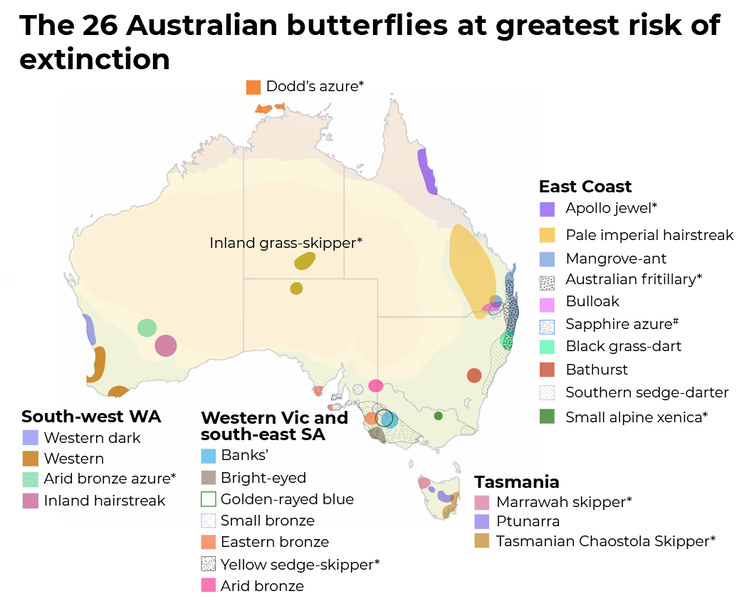
Science Reading FYI: Next time you see a butterfly, treasure the memory: scientists raise alarm on these 26 species (theconversation.com)

Learnings for Kids  FYI : Curious Kids: Do butterflies remember being caterpillars? (theconversation.com)

Thanks to the following good folks:

  • Norman Creek Catchment and Bulimba Creek catchment Groups for your scientific support (eg tools, plants, knowledge, insurance)
  • For the MG SHS School Groundsmen for their help in our Combined Beautification projects for their school,
  • For the MG SHS Principal and Community Liaison Officer who understand that local community can build health and wealth into schools for the benefit of all.
  • Neighbours and friends who make it all possible.
Posted in Pollinator Link | Tagged , , , , , , , | Leave a comment

Register your Pollinator Link garden: Free

Pollinator Link® is a non-profit initiative of Mt Gravatt Environment Group.

The Pollinator Link® project aims to bring wildlife back to our urban by providing Water, Food and Shelter for birds, butterflies and bees. Your free garden registration will support our work with local councils as well as helping us influence plant nurseries to stock local native species.

Imagine your backyard alive with colour and birdsong. The quiet hum of bees in your veggie patch. You leave the city behind as you come home and relax with the peaceful sounds of nature.

Three Easy Steps to vibrant backyards

Click to register your Pollinator Link garden:

Posted in Pollinator Link | Tagged , , , , | Leave a comment

Ginninderry is Planting for Pollinators

By: Michael Fox

Watching bushland being bulldozed to build more houses is always heart-breaking so it was inspiring to learn about a developer, Ginninderry, that is restoring, not destroying habitat.

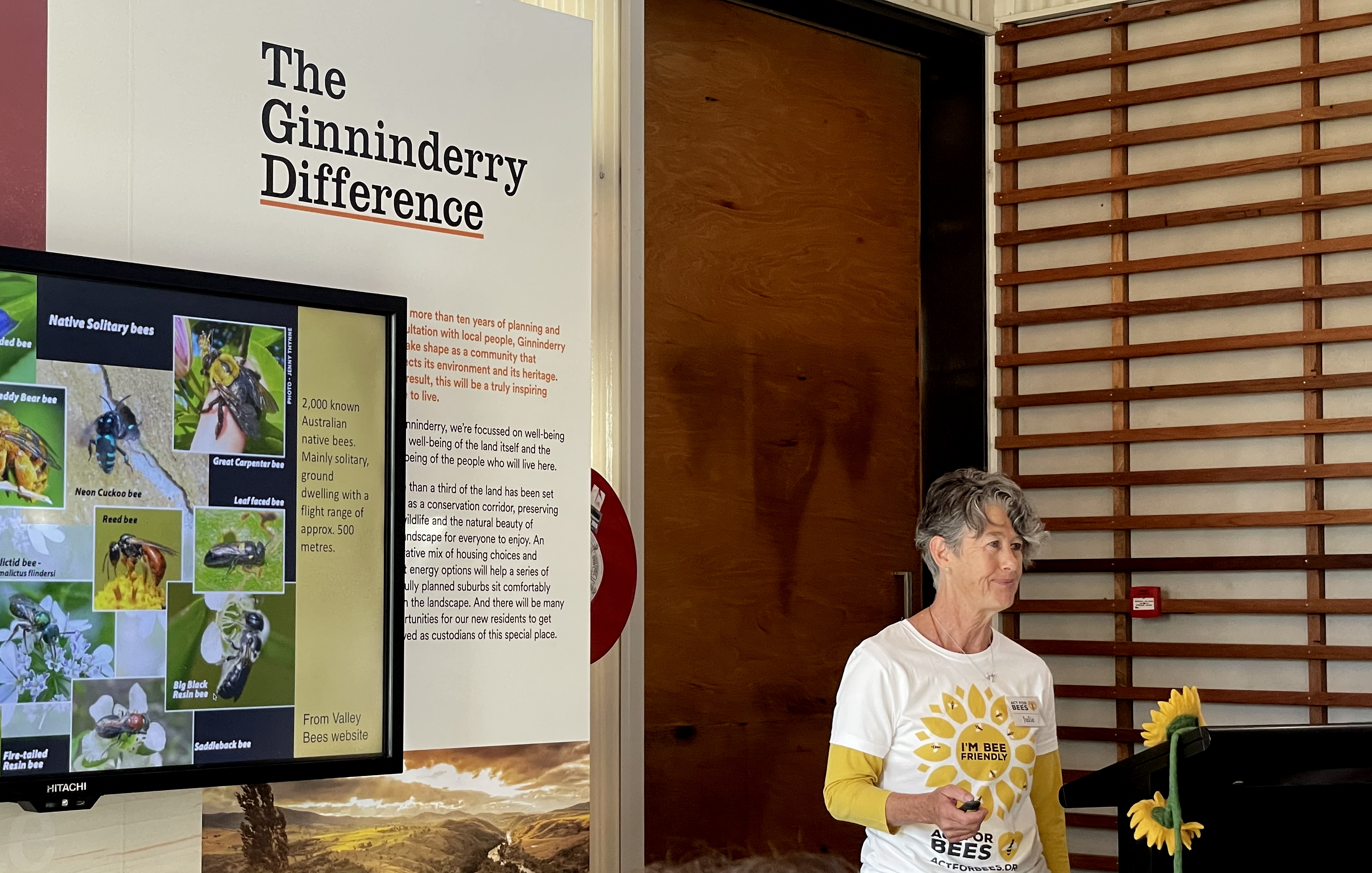
Julie Armstrong ACT for BEES

April in Canberra, I attended the inspiring Planting for Pollinators: Maximising Biodiversity in Urban Design conference hosted by ACT for BEES and Ginninderry.

I was particularly keen to take part, as the conference set out to show that it is possible to profitably create new housing stock and strong liveable communities, while maintaining or creating urban wildlife habitat.

“This conference was specifically targeted for those within the Urban Design, Landscape Architect, Planning and Development Industries – both private and government sectors and included speakers from industry and government to inform why pollinator corridors are important, the planning process including how RedBox Designs planned for 200 metre grids of year-round flowering for native bees, the use of ACT Govt Plant Species for Urban Landscape Projects, climate adaptation and tree selection and community support.” Julie Armstrong ACT for BEES.

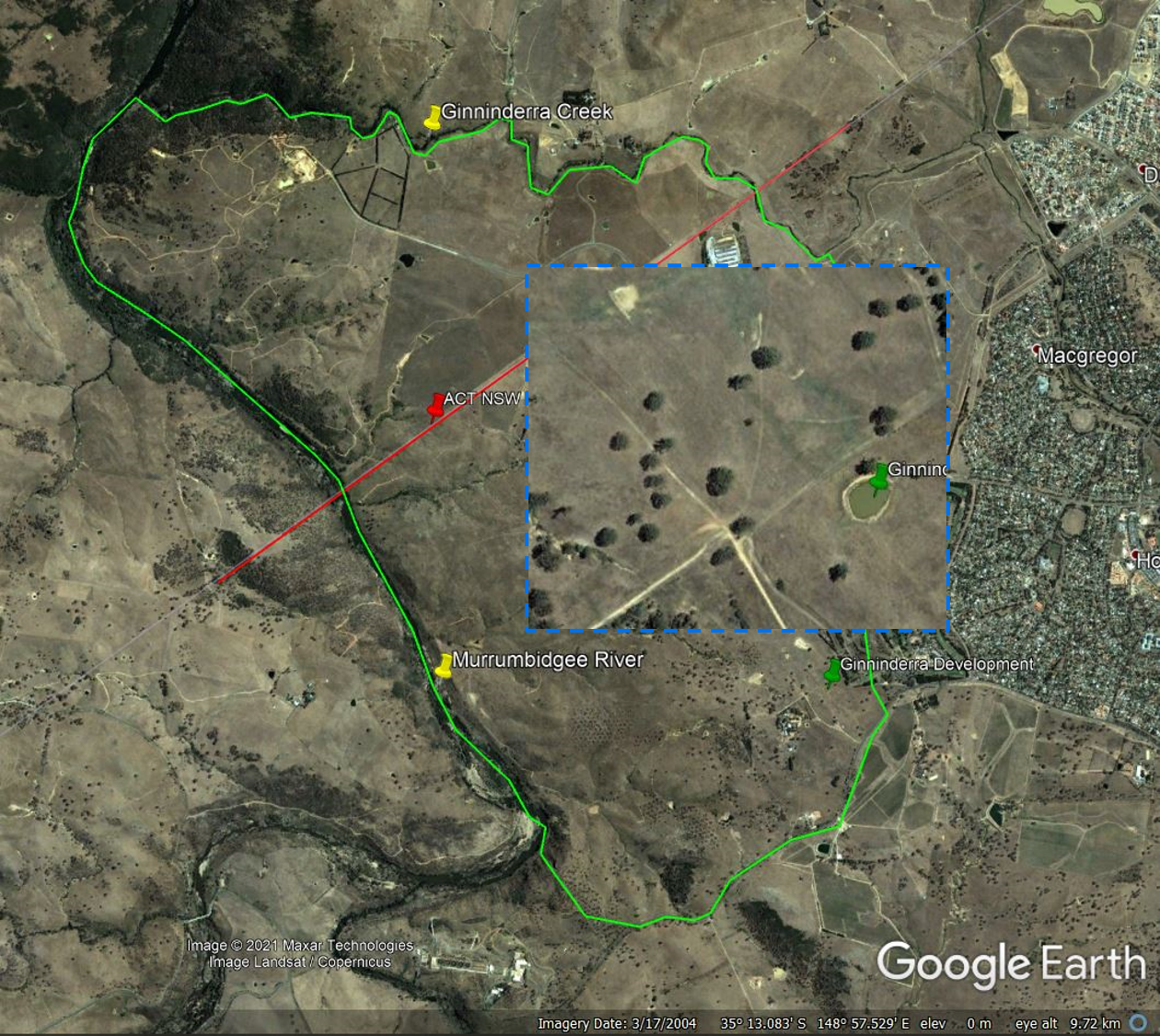
Ginninderry development site 2004

Dr Matthew Frawley, Landscape Manager, Ginninderry made some significant points that particularly struck me as aligning with the Pollinator Link #WaterFoodShelter in urban habitat.

“More than a third of the land at Ginninderry is being set aside as a Conservation Corridor. The Corridor will total 577 hectares and will include the land adjacent to the Murrumbidgee River and Ginninderry Creek. The size and boundaries of the Corridor were determined scientifically to protect the endangered Pink-Tailed Worm Lizard habitat, conserve Yellow Box Red Gum Grassy woodland and to preserve the natural beauty of the landscape.” Ginninderry

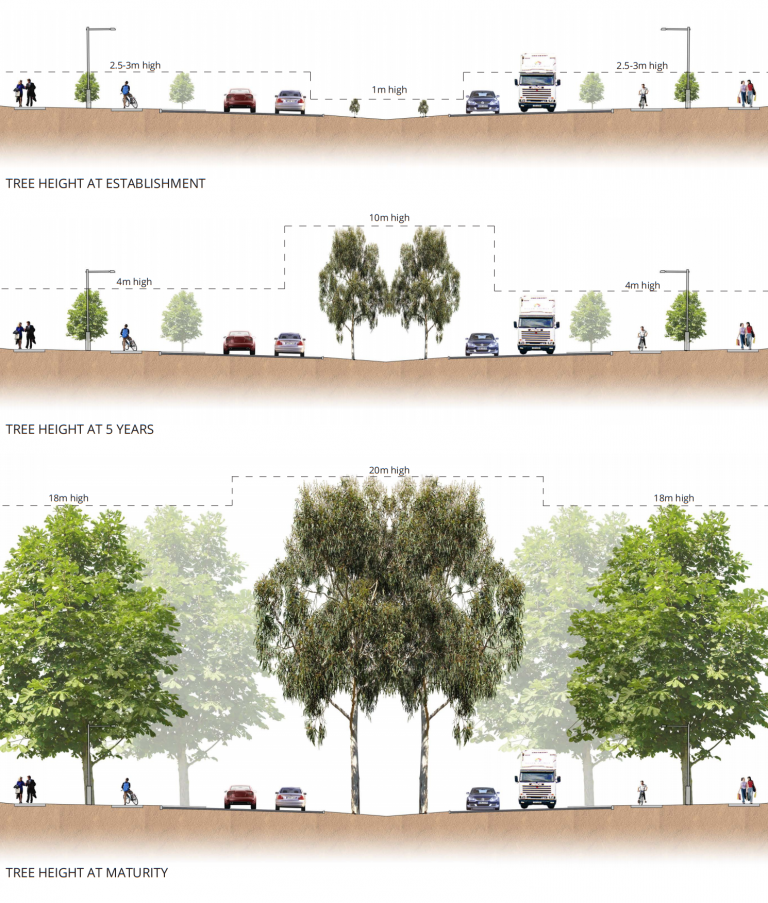
Trees of Ginninderry

Unlike many urban property developments the land being developed is old pastural land with only a scatting of trees. So land set aside as a Conservation Corridor means that over time wildlife habitat will be recreated surrounding the urban being created.

Even within the urban spaces the development team is researching and planning tree lined streets. House buyers are actively supported in establishment of pollinator friendly gardens with landscape designs for formal, informal edible gardens with lists of exotic and native plants.

Other presenters introduced valuable information on everything from choice of plants for pollinators, managing community expectations around street trees, research on Climate Adaptation Guided Tree Selection QPRC and engaging community support.

Posted in Pollinator Link, Wildlife Corridor | Tagged , , , , | 2 Comments

Don’t treat it like dirt!

By: Michael Fox

Watch the Dirt Guru, Sandra Tuszynska’s, excellent video to learn about the diverse flora and fauna that lives underground in your garden feeding thriving flowers, shrubs and vegetables.

Posted in Uncategorized | Tagged , , | Leave a comment

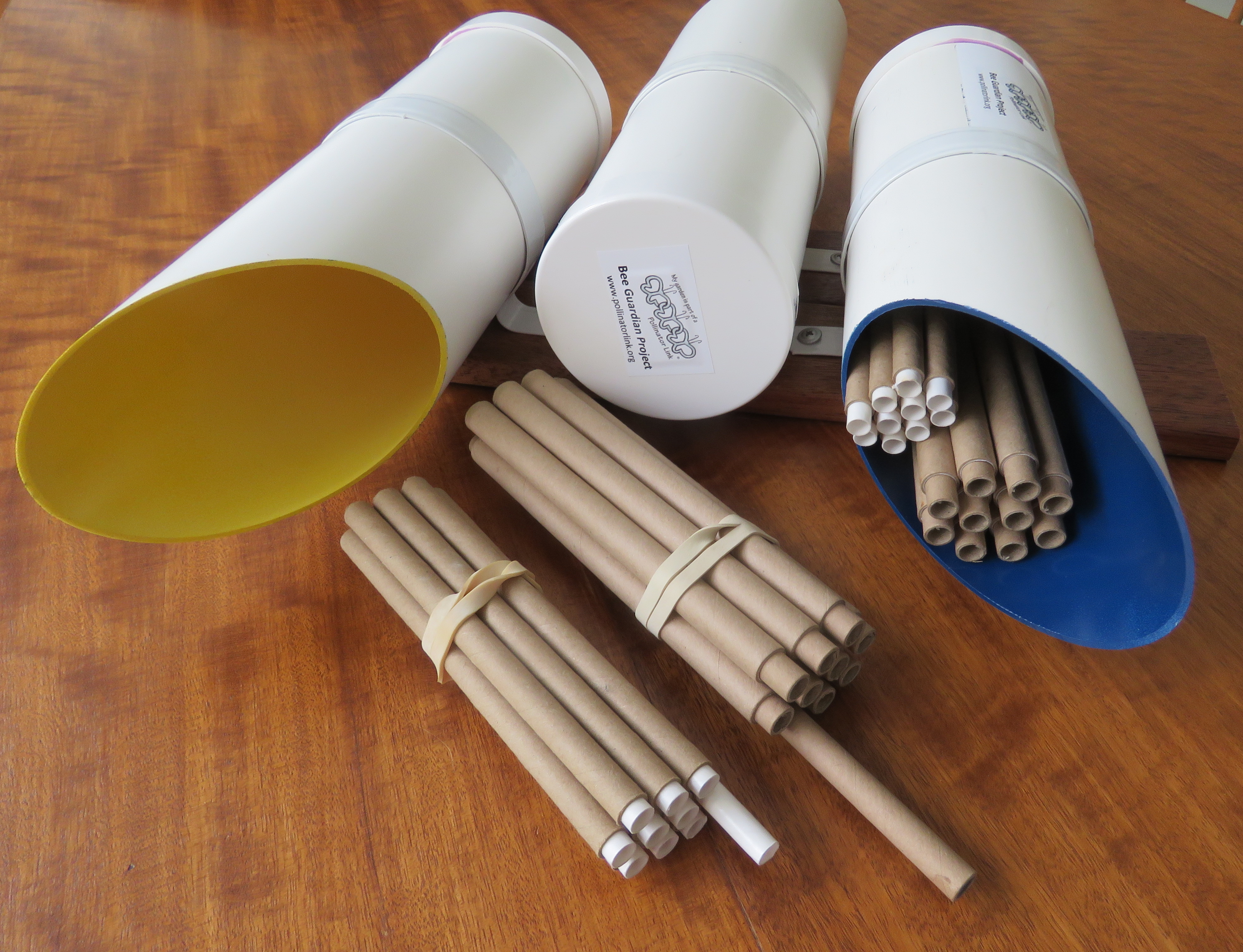
Become a Bee Guardian today for $33

Choose Yellow, White or Blue

By: Michael Fox

“Do you have a registered Pollinator Link® garden?”

As a registered Pollinator Link® garden you can become a Bee Guardian and citizen scientist researching ways to repopulate our city gardens with native solitary bees and answer the question: “How do I to get native bees to move into my Bee Home?”

Leafcutter Bee cocoon

Brisbane City Council sponsored the initial solitary bee home trial in three northside parks That trial proved the design works, with local Leafcutter bees using Native sarsaparilla Hardenbergia violacea for nesting materials. The design also survived Queensland’s storm season with no damage to the nesting tubes.

We are now recruiting gardens for larger city-wide trial will confirm those results and provide a core resource of Leafcutter bee cocoons to start repopulating urban habitats. Nesting tubes will allow cocoons to be collected and shared with new recruits.

The trial will again use a mix of different nesting tubes from Mason Bees UK and Crown Bees USA. Three different coloured Bee Homes will be used to test variations in nesting success.

Your Bee Guardian pack will include guides on where to place your Bee Home, suggestions on local bee attracting plants and guides to survey your garden and using iNaturalist to collect your findings.

Pollinator Link® fence sign

After the trial Bee Guardian packs are expected to sell for $88. So take advantage of the trial and order your Bee Guardian pack for $33: available to registered Pollinator Link® gardeners.

Want to participate in trial but not a registered Pollinator Link® garden? Register your garden today to take advantage of the trial price for you Bee Guardian home.

Posted in Uncategorized | Tagged , , , , , , , , , | 2 Comments

Butterflies in your garden

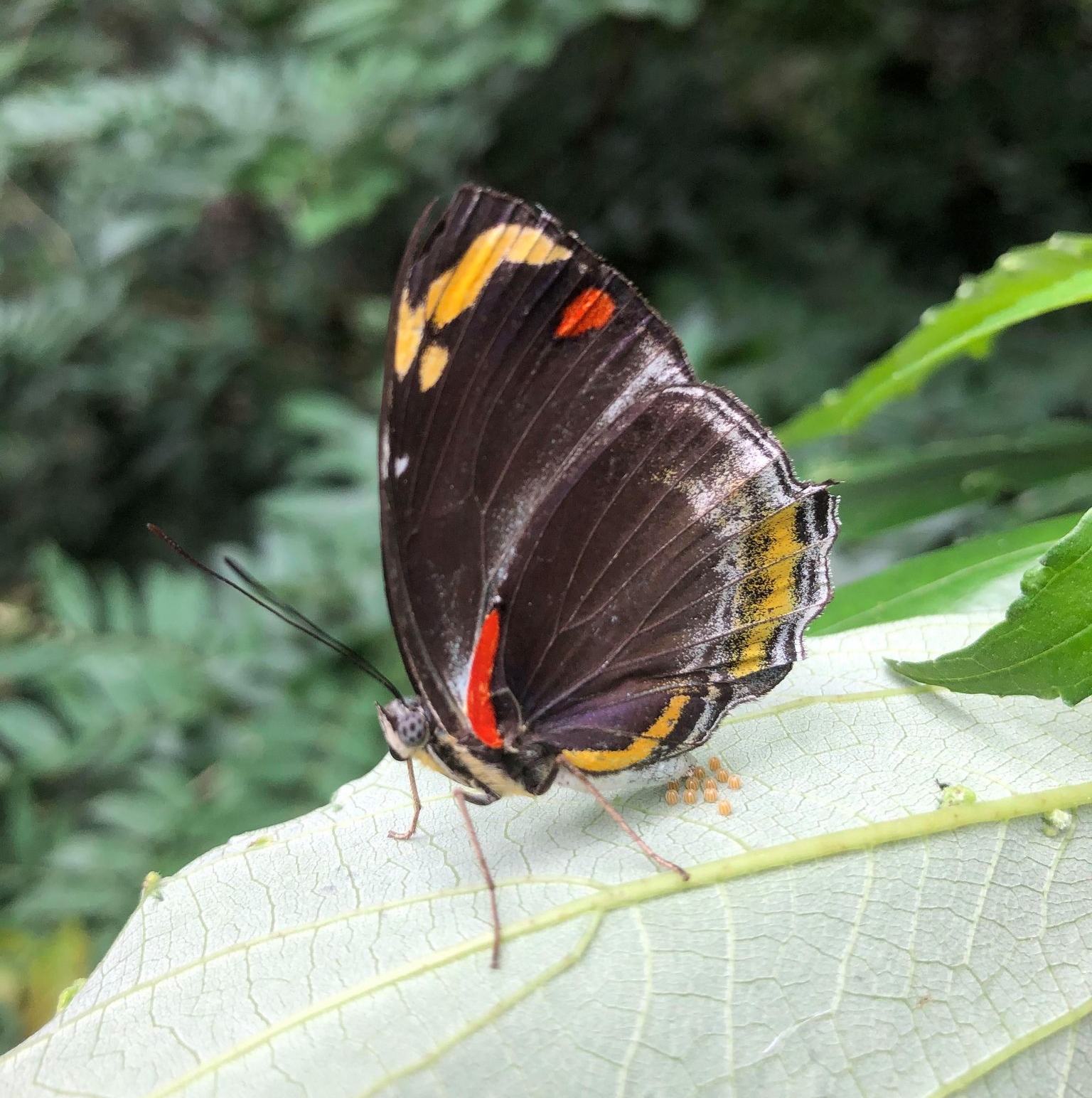
Jezebel Nymph Mynes geoffroyi

By: Michael Fox

Miranda a Fox Gully Bushcare neighbour sent me an exciting photo: a female Jezebel Nymph Mynes geoffroyi laying her eggs on a Native Mulberry Pipturus argenteus.

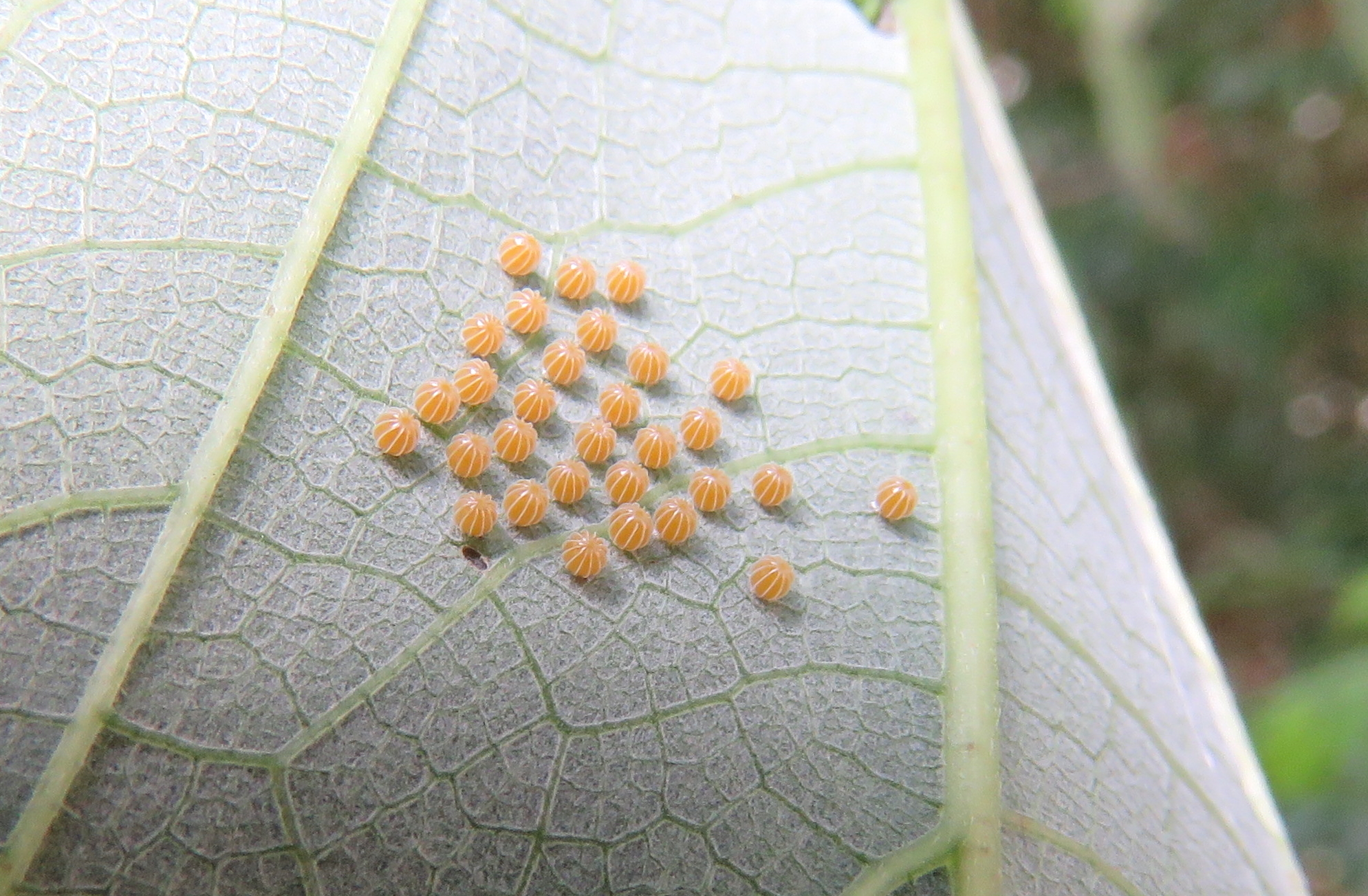
Jezebel Nymph eggs

A close up look at her eggs shows an interesting and distinctive shape.

Native Mulberry fruit is edible and this tree was planted as part of our 2013 Community Gully Day with property owners and other community members coming together to restore the Fox Gully Wildlife corridor. Koalas Phascolarctos cinereus and Squirrel Gliders Petaurus norfolcensis are now breeding in the gully between the houses.

Cr Steve Huang is aiming to build on our community effort a wildlife bridge across Klumpp Road to Roly Chapman Reserve. Steve advised just last week that Federal Government funding has been sourced for a feasibly study.

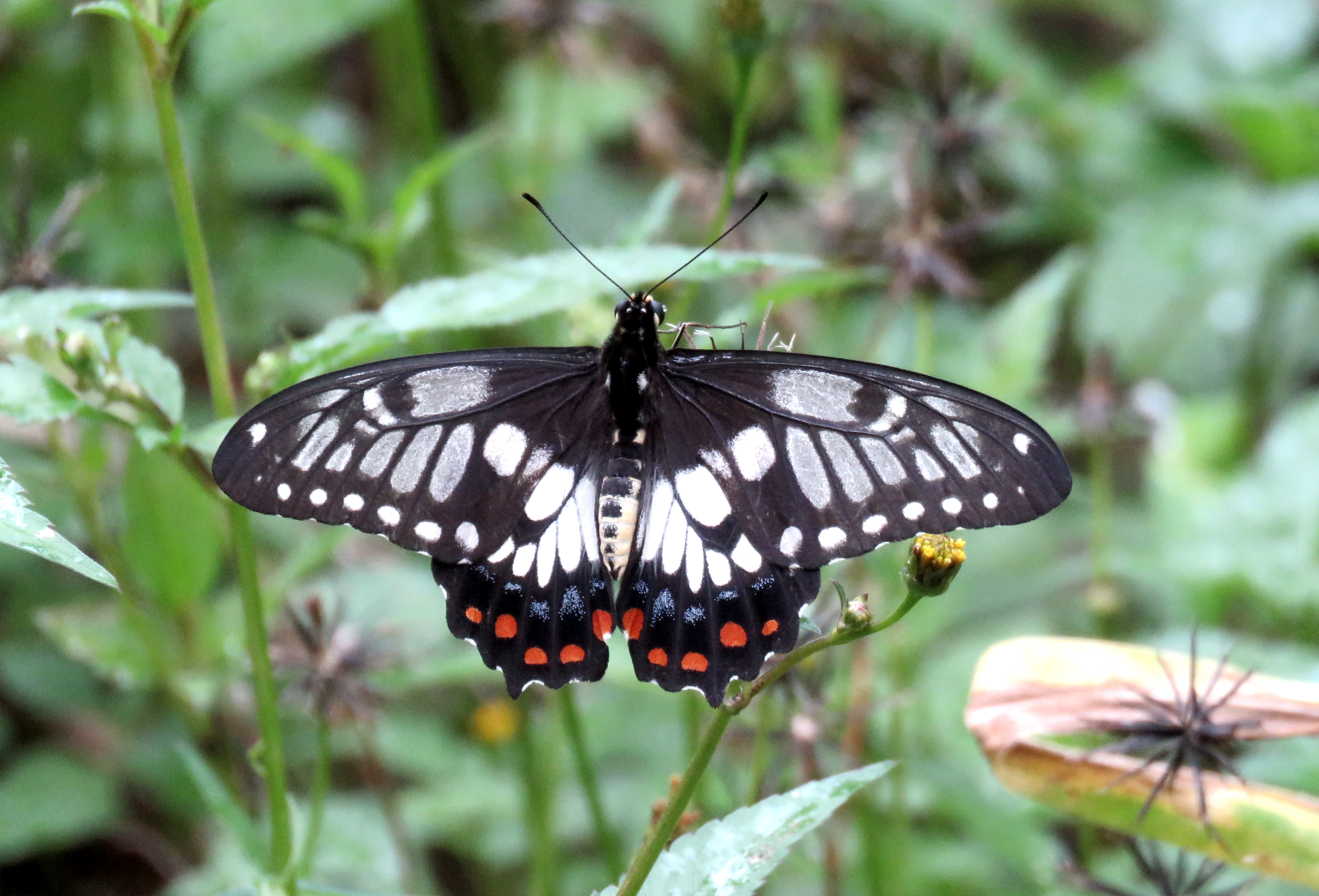
Dainty Swallowtail
Dainty Swallowtail caterpillar

Look out for Dainty Swallowtail Papilio anactus checking out your backyard citrus as a place to lay eggs.

Like Orchard Swallowtail butterflies Dainty Swallowtail caterpillars are often found on cultivated citrus as well as Australian natives like south-east Queensland local Finger Lime Microcitrus australasica.

The caterpillars will not eat a lot of your fruit tree while they reward you with extra colour as these beautiful butterflies flit around your garden. The caterpillars have a curious defence mechanism extending orange osmeterium that produce a decaying citrus smell to discourage predators.

Posted in Uncategorized | Tagged , , , , , , , , , , | Leave a comment

Mossies in your birdbath?

Mt Gravatt Environment Group's avatarMount Gravatt Environment Group

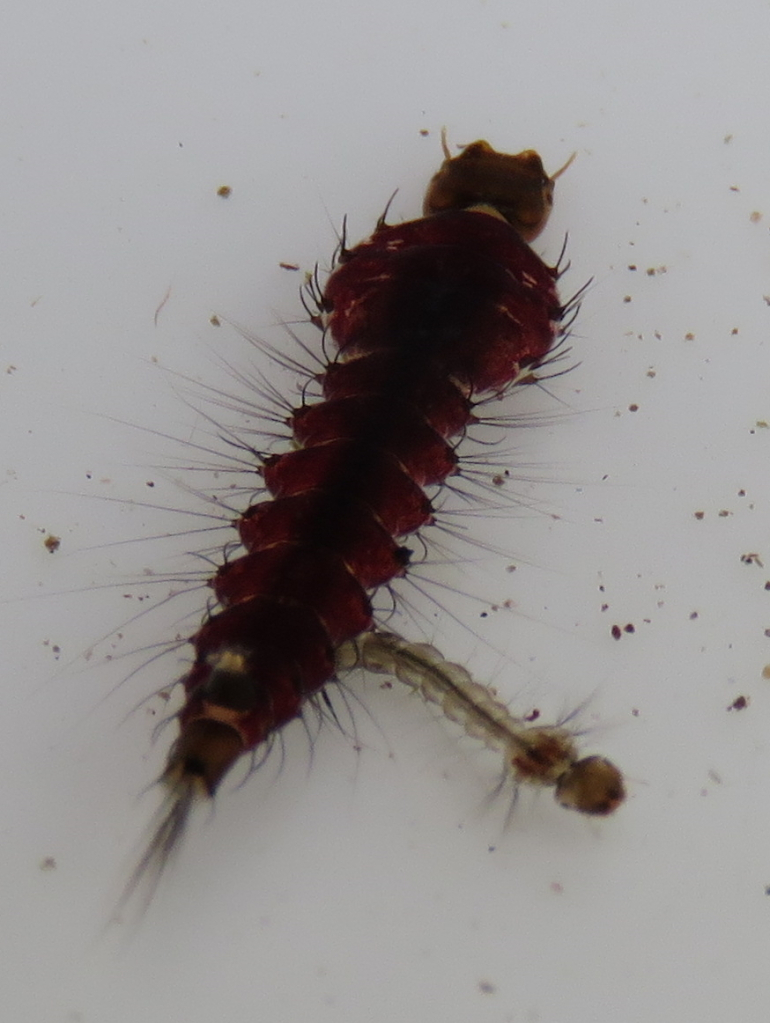
Toxorhynchites speciosus
and Culex sp. larvae

By: Michael Fox

Our Koala Drinker research has identified more than birds and Lace Monitors.

It is mosquito season so we regularly check the drinkers for mossie larva. Something we were not expecting was finding mossie larvae that feed on other mossies and not people. Adult Toxorhynchites speciosus feed on plant juices not blood.

Toxorhynchites speciosus larvae are huge, approx 25mm, by comparison with common mossie larvae like Brown House Mosquito Culex quinquefasciatus approx 8mm.

Check before you flush the mossie larvae in your birdbath. If you have some Toxorhynchites speciosus larvae perhaps scoop them out ready to return once your birdbath is refilled. Remember to also catch some of the small larvae to feed the mossie eating Toxorhynchites speciosus.

View original post

Posted in Uncategorized | Leave a comment