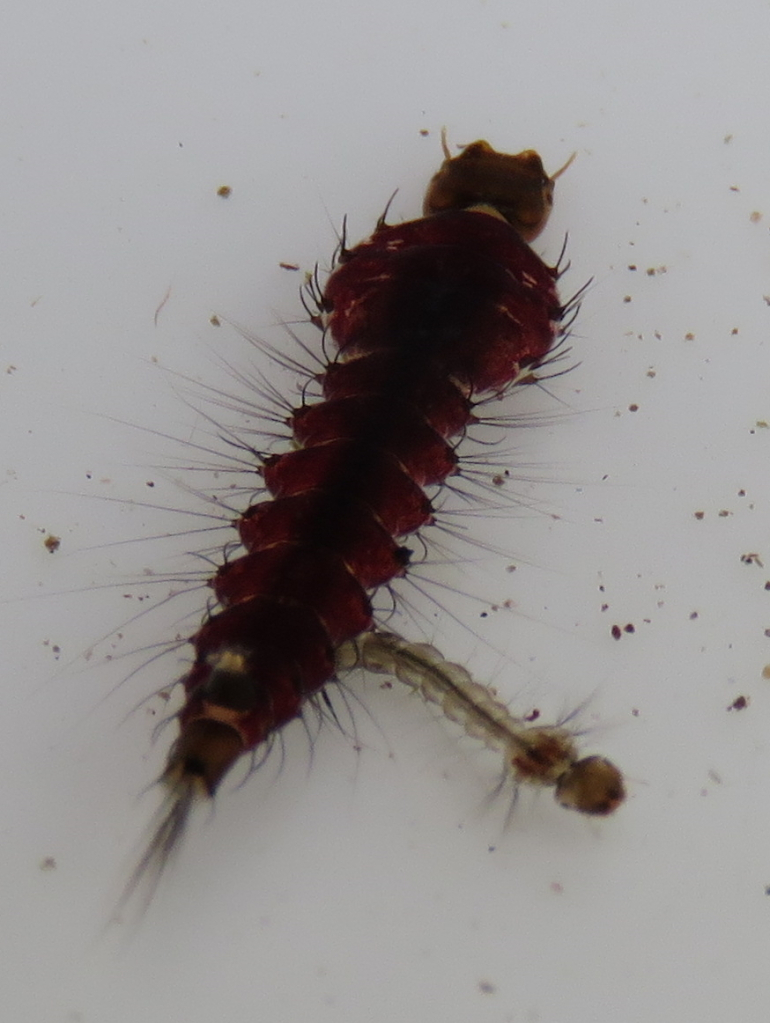
It is mosquito season so we regularly check the drinkers for mossie larva. Something we were not expecting was finding mossie larvae that feed on other mossies and not people. Adult Toxorhynchites speciosus feed on plant juices not blood.
Check before you flush the mossie larvae in your birdbath. If you have some Toxorhynchites speciosus larvae perhaps scoop them out ready to return once your birdbath is refilled. Remember to also catch some of the small larvae to feed the mossie eating Toxorhynchites speciosus.
I am often asked: “How do I to get native bees to move into my Bee Home?”
People are often thinking of the Native Stingless Bees Tetragonula sp. which, unlike solitary native bees, form colonies and make honey. The colonies can be housed in hives allowing people to purchase a hive to install in their garden.
Solitary native bees make individual nests which are filled with pollen and nectar: not honey, for the bee larvae to feed on when hatched.
Leafcutter and Resin Bee reports on iNaturalist
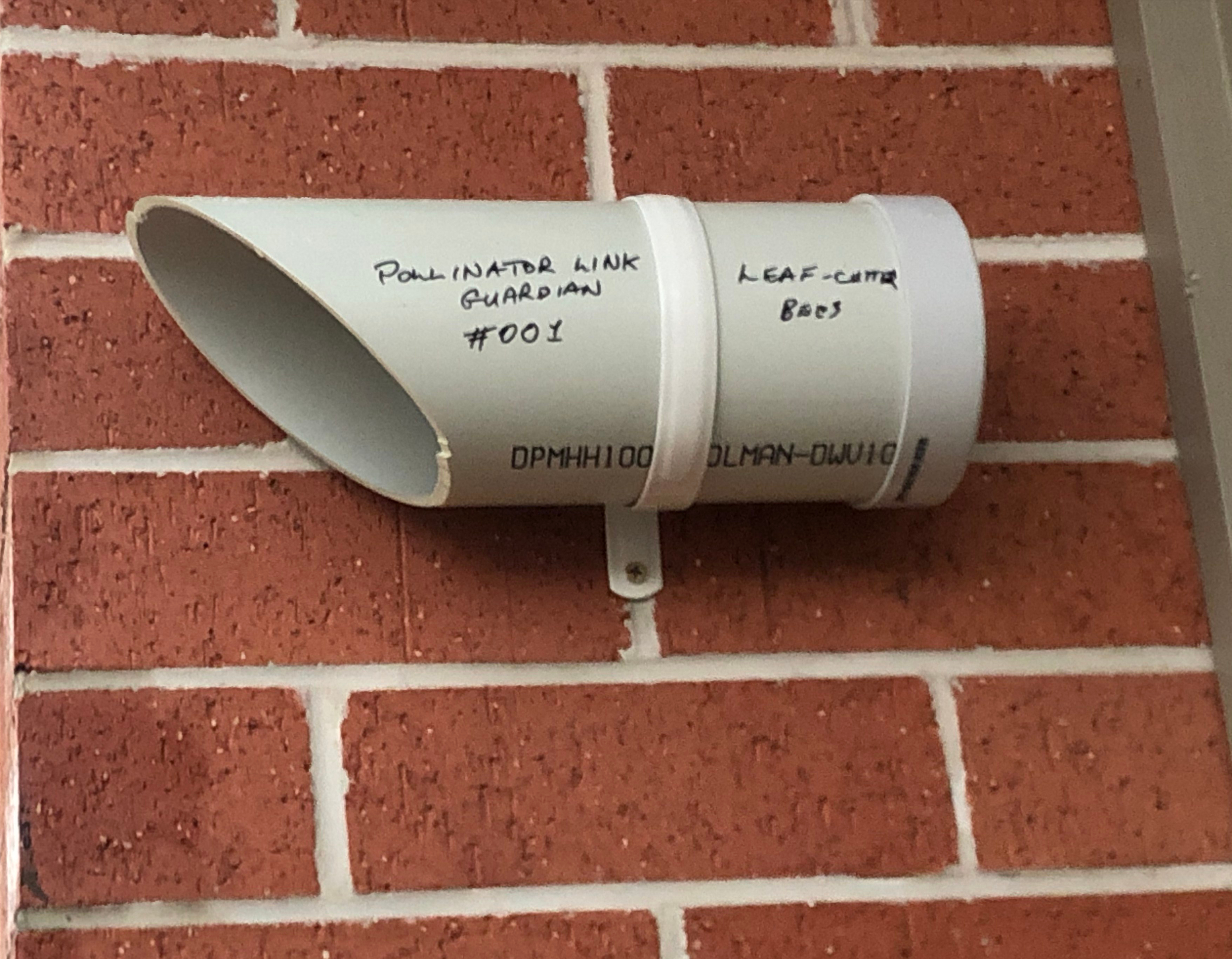
Bee Guardian Homes
.
We know from iNaturalist there are Leafcutter and Resin Bees in the Brisbane area. However, getting them to move into your Bee Guardian Home may take time. Therefore, we are researching ways to encourage Borders to move into your bee home.
.
Based on advice from Bee Scientist: Kit Prendergast the Stage 2 Trial will use a mix of yellow, blue and white bee homes to test any difference in take-up.
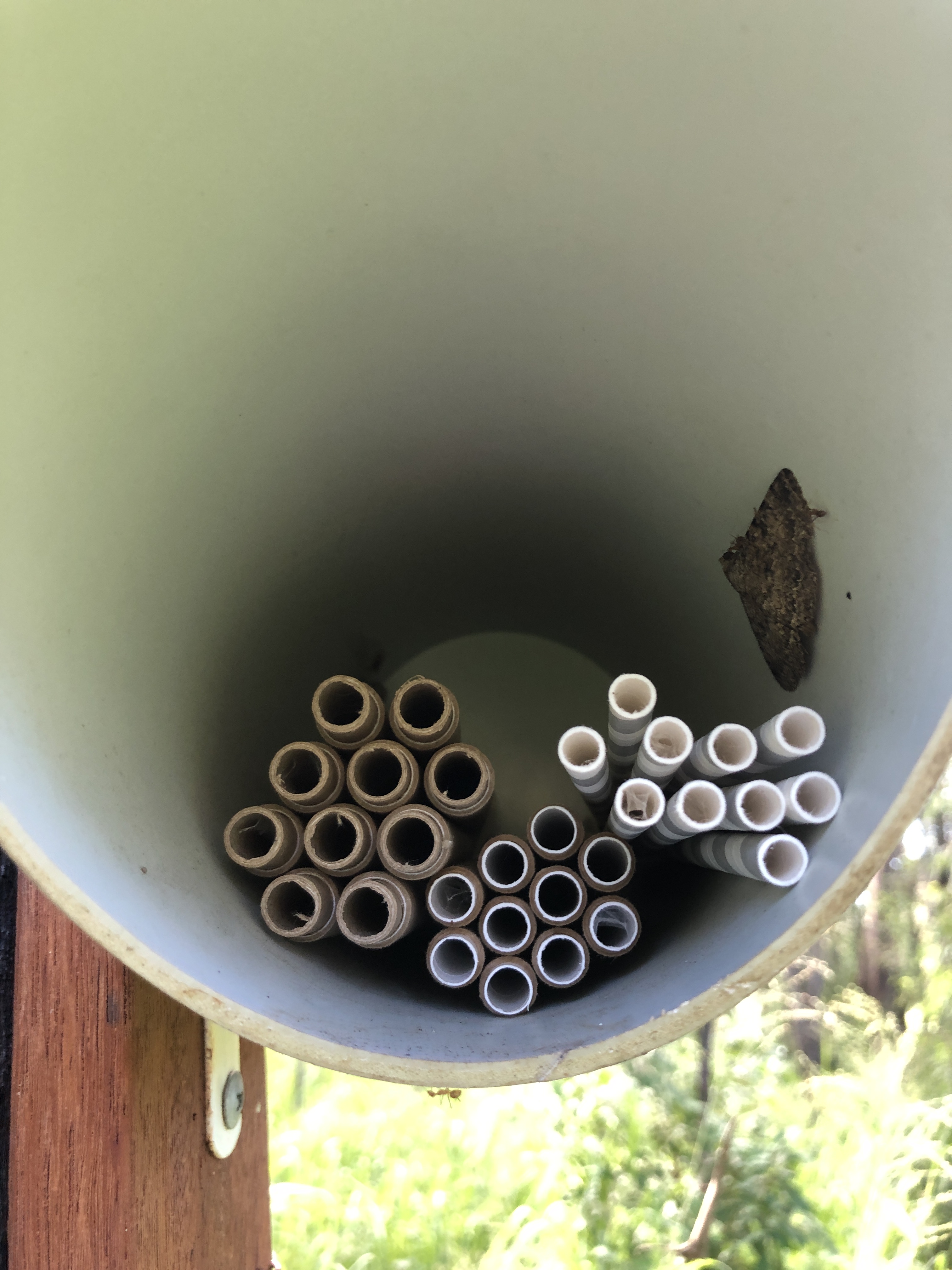
A mix of nesting tubes from Mason Bees UK and Crown Bees USA with removal inners will be tested again: 15 to 16 cm long 7mm diameter.
Removable inners create an opportunity to proactively bring solitary native bees to our urban backyards.
Similar to the Mason Bees UK and Crown Bees USA programs, filled tubes can be collected at a central location and replacement inners returned to prepare for the next season.
Filled tubes will be inspected then some returned and some used to send out to new Bee Guardians to hatch. Working this way we can maintain and build exiting populations while re-establishing solitary native bees in other urban spaces.
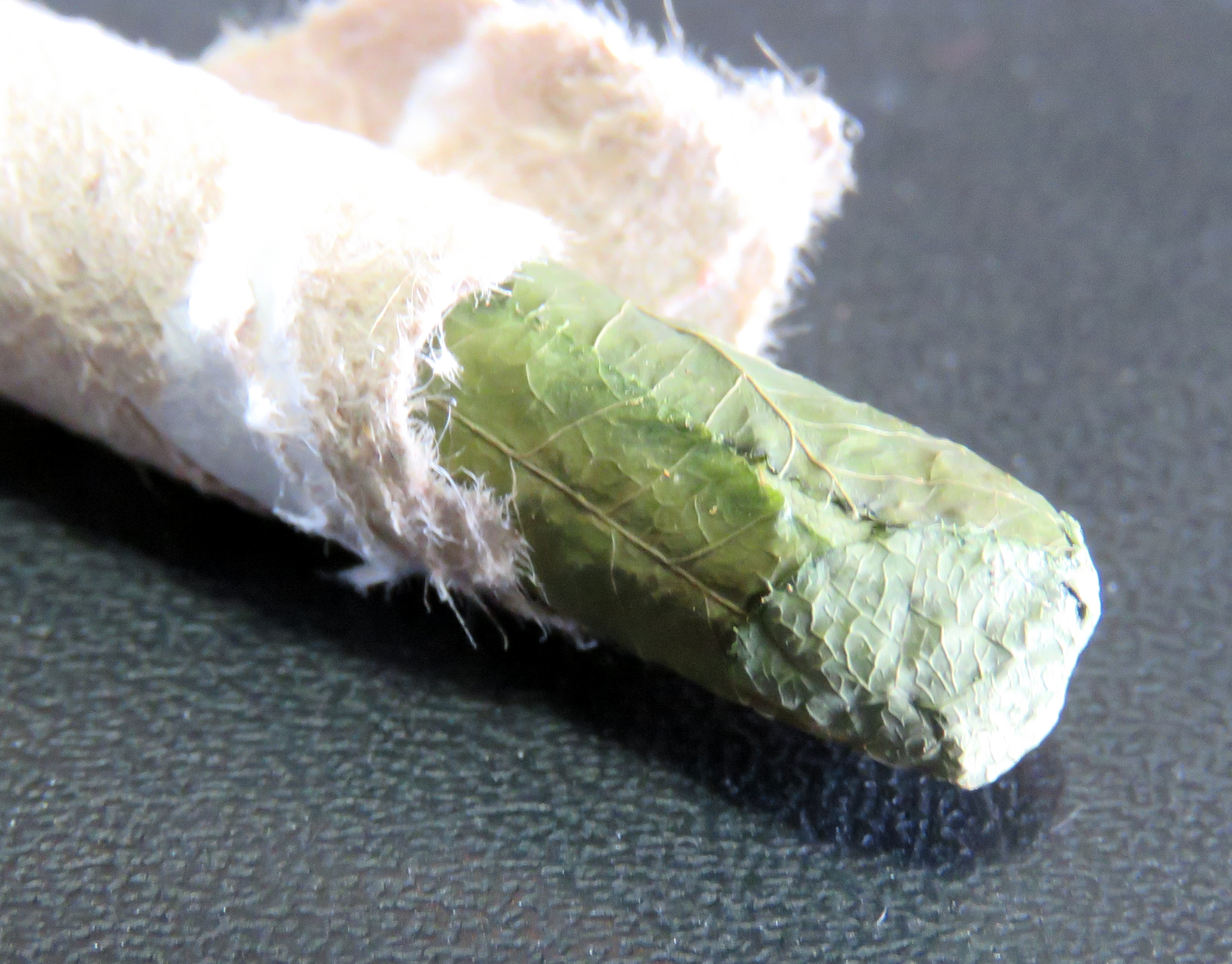
Australia has over 2,000 species of solitary native bees of which twelve have been identified within Mt Gravatt Conservation Reserve. My first introduction to these special locals was wondering about the green insect flying past while we were having coffee outside. A video captured this female Leafcutter Bee flying into the back of the cat’s scratching post with pieces of leaf rolled between her legs to make a nest for her eggs. Solitary native bees do not form colonies and make honey.
Guardian Bee Home with Bunnings Bee Home
The initial aim of the Pollinator Link® project was to create wildlife links between urban bushland with Water, Food and Shelter in backyards, balcony gardens, schoolyards, etc. Pollinator Link® team is proactively increasing invertebrate diversity with the Guardian Bee Home project and promoting the importance of Plant Local to Feed Local.
Part of the trial was to test the effectiveness of the Mr Fothergill’s Small Bee And Insect House from Bunnings, which we believed were poorly designed: tubes too short and diameters too large, and likely to damage to our native bee population rather than help. Bunnings “Bee Houses” were co-located with with the Guardian Bee Homes for comparison.
(l-r) UK Mason Bee, Crown Bee tubes, paper straws
Leaf-cutter Bee cocoon
The target species for the Bee Homes are “Borders” like Leaf-cutter and Resin Bees which find a suitable hollow to make a nest. For the trial we used a mix of tubes from UK Mason Bees (7mm), Crown Bees USA (7mm) and simple paper straws (6mm) from BigW.
The tubes 15 to 16 cm long allowing for a healthy mix of female (laid first) and male eggs. Males bees hatch first then wait for the females to hatch. The females are also the most important: they do all the work, so having male eggs at the front of the tubes adds a layer of protection from attack by predators.
.
The UK and USA tube have removable inners that allow for filled tube to sent to a central location for processing and distribution to other locations. Replacing the inners each season reduces the risk of parasite build-up keeping keep the solitary bee population healthy.
Native sarsaparilla Hardenbergia violacea
.
.
.
Leaf-cutter Bees at Crosby Road Bushcare used leaves of Native sarsaparilla Hardenbergia violacea. The female cuts circular sections out of the leaves before rolling up to carry off to their nest site.
The most successful Bee Homes were installed between 1 and 1.5m above ground, received morning sun with shade during the middle of the day and afternoon.
.
.
.
Thanks for the nice home out of the rain.
The design successfully handled multiple storms without damage to the bee tubes. However, they did not survive the attention of an enterprising Ringtail Possum Pseudocheirus peregrinus who threw out the bee nesting tubes and moved in.
Understanding the motivations and challenges of community members already engaged in creating urban wildlife habitat, is a valuable step in building communications strategies to drive behaviour change across the broader community. Therefore, Jake Slinger’s university research thesis Understanding community participation in urban conservation is a valuable resource for our aim of registering 30,000 Brisbane Pollinator Link® to create over 800 hectares of city wide wildlife habitat.
The research was conducted by questionnaire sent to 276 community members who currently received the Pollinator Link® newsletter with participants limited to the Greater Brisbane region.
What lives in your backyard?
The top three motivations identified for creating habitat gardens are:
• General environmental interest: a general interest or concern for nature. • Interest in flora/fauna: motivated by learning about flora and fauna. • Inspired by others: motivated by friends and family and/or events.
Challenges of providing resources for pollinators include some hard to fix factors like Council regulation. However, participants suggestions point to a range of action we can take to engage and empower community members to create wildlife habitat in their backyard or on their balcony garden.
Engaging kids by helping them learn to see interesting butterflies, beetles and bugs then be citizen scientists recording their finds in iNaturalist.
Help SEQ gardeners learn to Plant Local to Feed Locals with free GroNative app for smartphones. GroNative allows uses to input postcode and suburb to identify plants that originally grew in that area.
We have a list of community nurseries that typically stock local natives however the research suggests we need to promote this more aggressively.
Helping people think differently about their gardens will help address “societal dilemmas” like balancing what looks good to neighbours versus what is good for pollinators: rather than have a scrubby untidy backyard build a unique garden feature that provides safe shelter and food for small birds.
The Cycad Blue Theclinesthes onycha are back for their annual visit. People often worry about the damage to the leaves on their Cycads. However, even being attacked by caterpillars of these…
In 1862 Charles Darwin wrote to a friend at Kew [Gardens] “I have just received such a Box full from Mr Bateman with the astounding Angraecum sesquipedalia [sic] with a nectary a foot long. Good Heavens what insect can suck it”, and in a second letter just a few days later suggested “in Madagascar there must be moths with probosces capable of extension to a length of between ten and eleven inches [25.4–27.9cm]”. The Guardian
It was 130 years later that Darwin’s prediction was confirmed with the observation, in Madagascar, of Hawk Moth Xanthopan morganii praedicta using its 20cm tongue or proboscis [prəˈbɒsɪs] to feed on orchid Angraecum sesquipedalia.
Video: Georgia Nierfeld
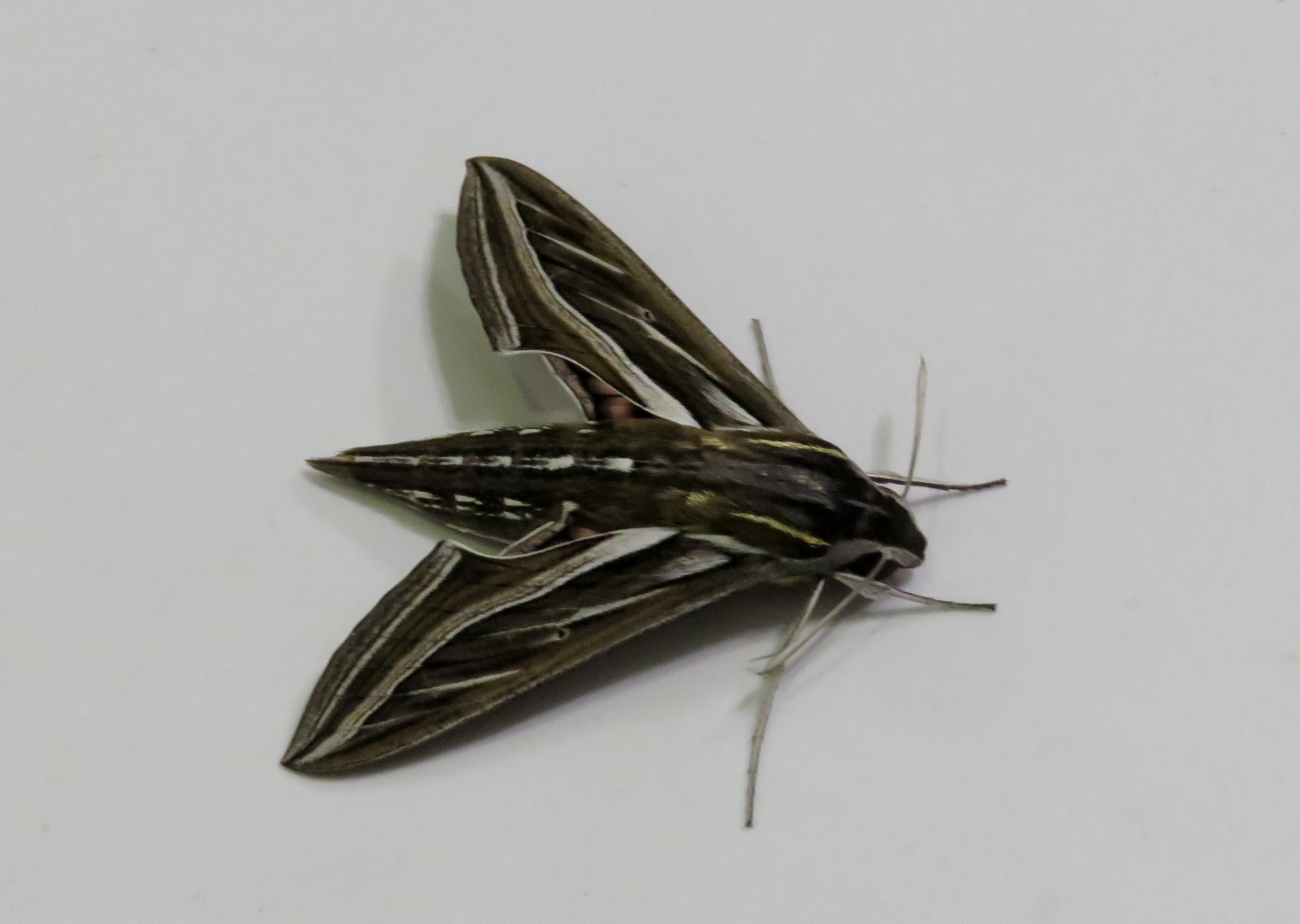
We have 65 species of hawk moths in Australia: like Georgia’s amazing Bee Hawk Moth Cephonodes kingii. While our hawk moths do not have huge 20cm tougues most are in the sub-family Macroglossinae: makros, large + glossa, tongue. Their very long tongues (proboscis) allow them to hover in front of flowers while they access the plant nectar.
Hawk moths hovering in front of flowers are often mistaken for Hummingbirds which are only found in the Americas. The Bee Hummingbird is the smallest bird in the world and at 6cm it is similar in size to our Australian hawk moths.
Explore your backyard looking for some of the 2,000 plus species of solitary native bees, or just admire the many butterflies that have appeared since the rain.
Solitary native bees do not form colonies or produce honey. The females create a nest in hollows (Borders), make a nest in the ground (Burrowers) or chew a hollow in soft wood like Lantana stems (Borers).
The female bee then pack the nest with a pollen/nectar food mix then lay their eggs. In spring the next generation of bees emerge to pollinate our gardens.
Take a break to explore your garden and report your findings with the iNaturalist App on your smart phone.
Sunday was International Women’s Day 8th March and I ran the usual Pollinator Link® bush corridor regeneration at Mount Gravatt State High School with the neighbours.
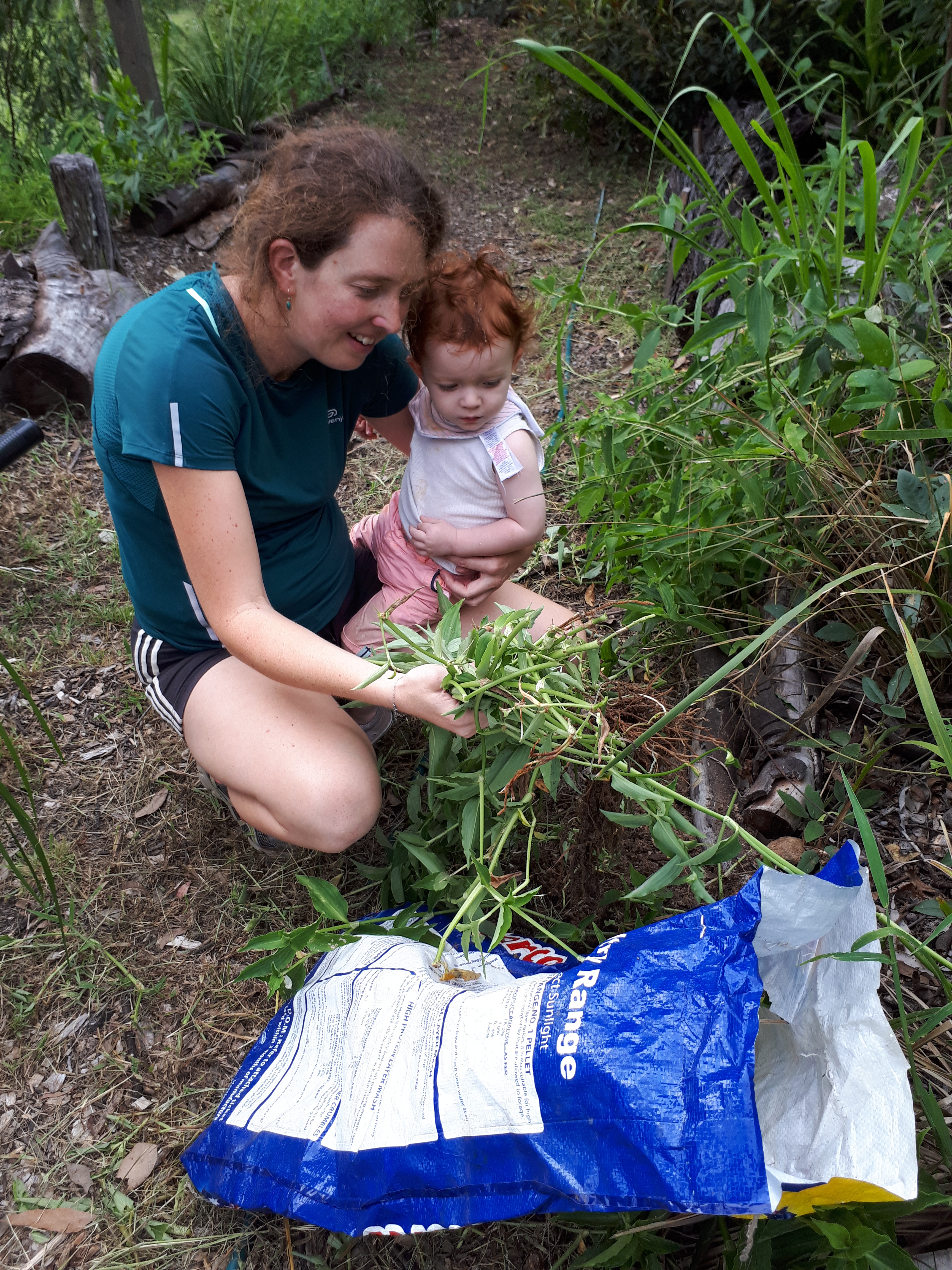
We had three wonderful young local women attend the weeding and planting. Two are mums, each with a toddler and a baby in tow.
One dad also came to set an example for his young son.
Another interesting female participant was a young lass of fourteen years, Bec Morgan who is also a School Vice Captain of Cavendish Road High Junior School and currently completing her Duke of Edinburgh Program.
Marvellous local man David has been coming for eight years now 🌱🌳🐨🌳. We had apologies from a few other folks.
So on International Women’s Day these ladies didn’t just talk … they showed us, as they gifted their precious time to our local community and the School and Nature Care. Their children do not even go to this school!
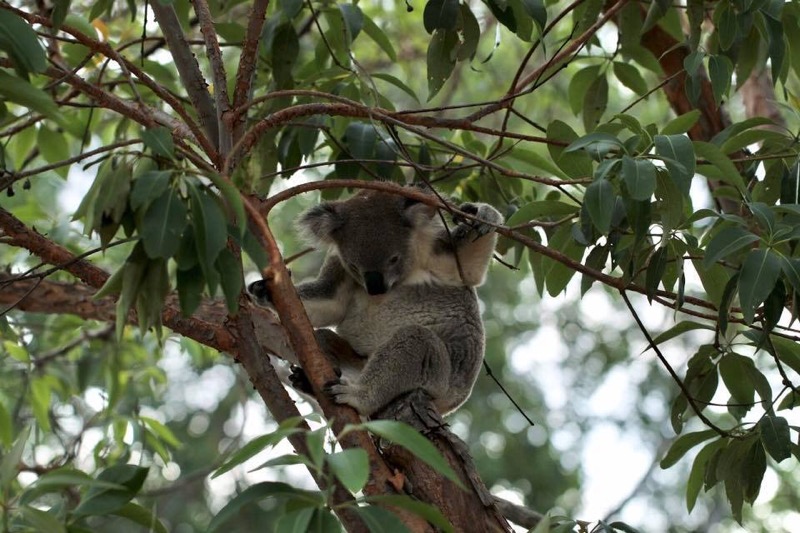
Last word from the School Koala … thanks to all, for your care of my home.
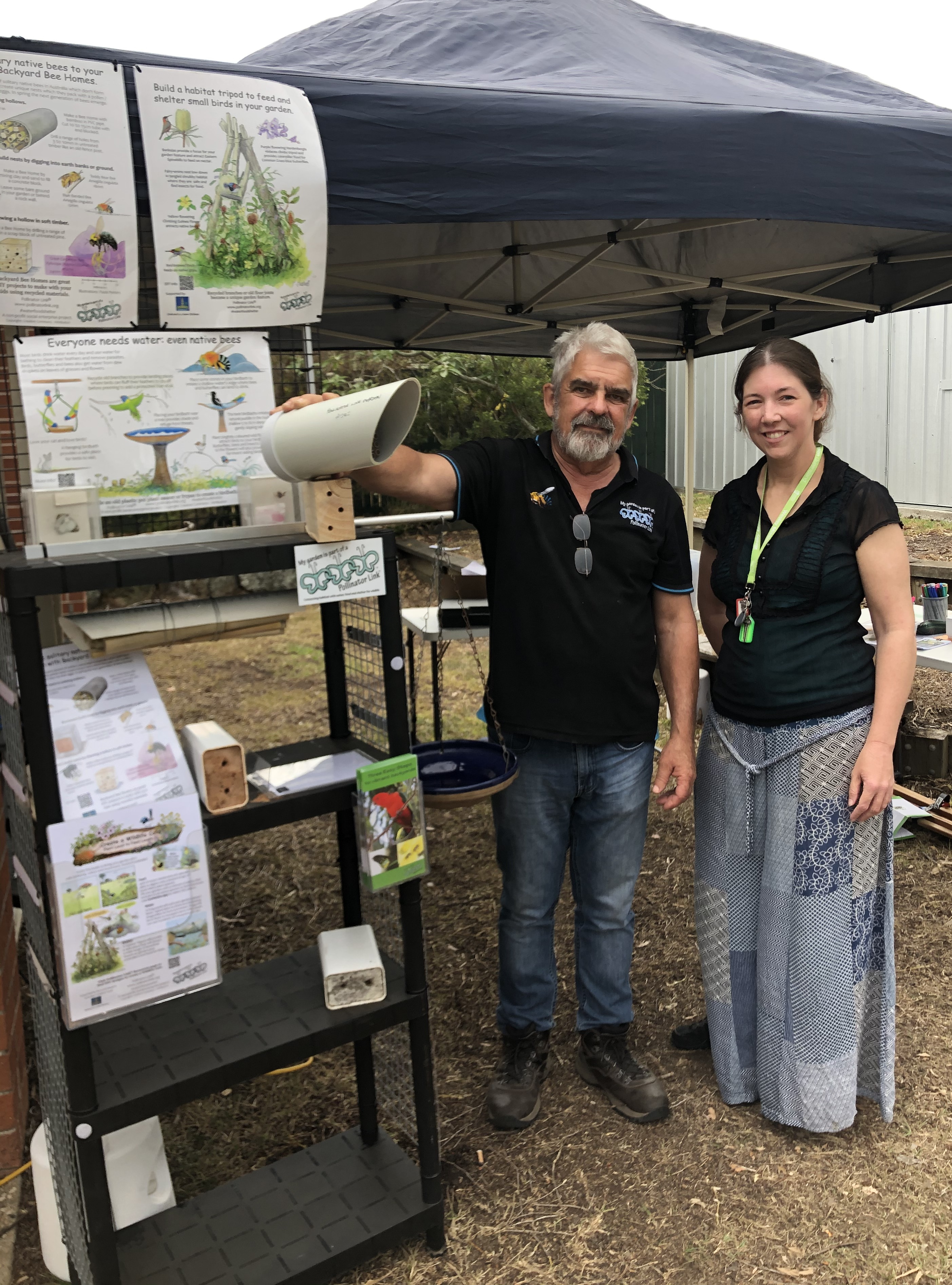
The Pollinator Link® team was proud to be invited to be part of the Health and Wellbeing Expo organised by the Elorac Place Community Centre in Ellen Grove.
It was a pleasure to experience the community spirit created by the Centre team including Tania Kelsey, the energetic Community Capacity Coordinator.
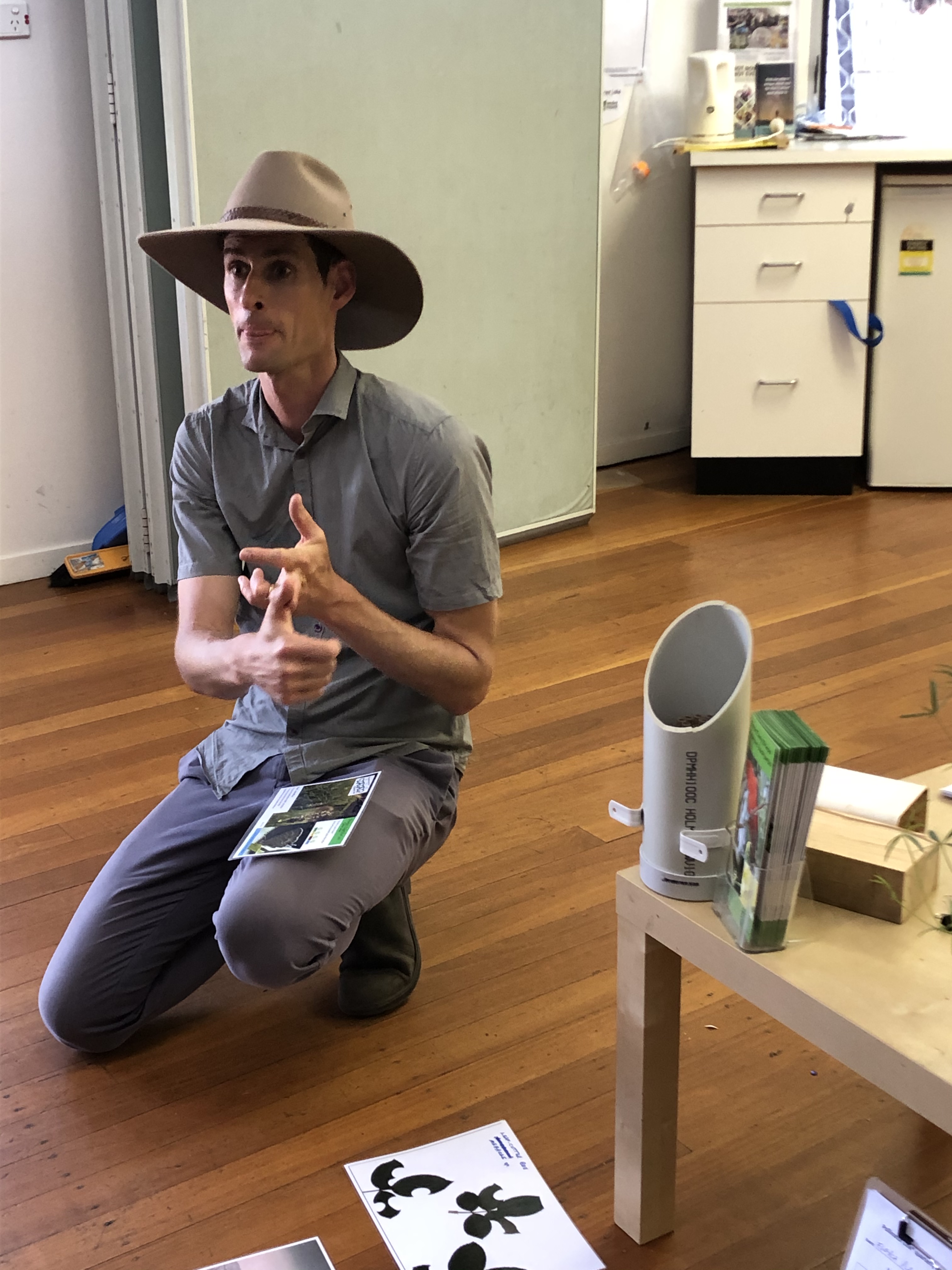
Our newest Pollinator Link® volunteer Andy Howe shared his passion for pollinators with the audience introducing them to our amazing solitary native bees.
Andy Howe Ecologist
Andy has recently returned from Denmark where his research was focused on pollinators using wildflowers on nature strips in urban spaces. Andy also worked with local government to design of storm water infrastructure to retain more water for the attractive wildflower nature strips.
One of Andy’s tips is to plant blue, yellow and white flowering plants. For plants that will thrive in your garden download GroNative app. Plant Local to Feed Locals will also bring more butterflies, as well as bees, to your garden. Blue Pincushion Brunonia australis is an attractive local that would typically have grown in the Ellen Grove area.
The Expo was also a soft launch for the Pollinator Link® Guardian scheme which aims to bring our solitary native bees back to urban habitats. The Guardian scheme is based on a similar scheme in the UK: Mason Bees UK, with formal roll-out depending on research of specifications required for local species.

















 Pollinator Link